
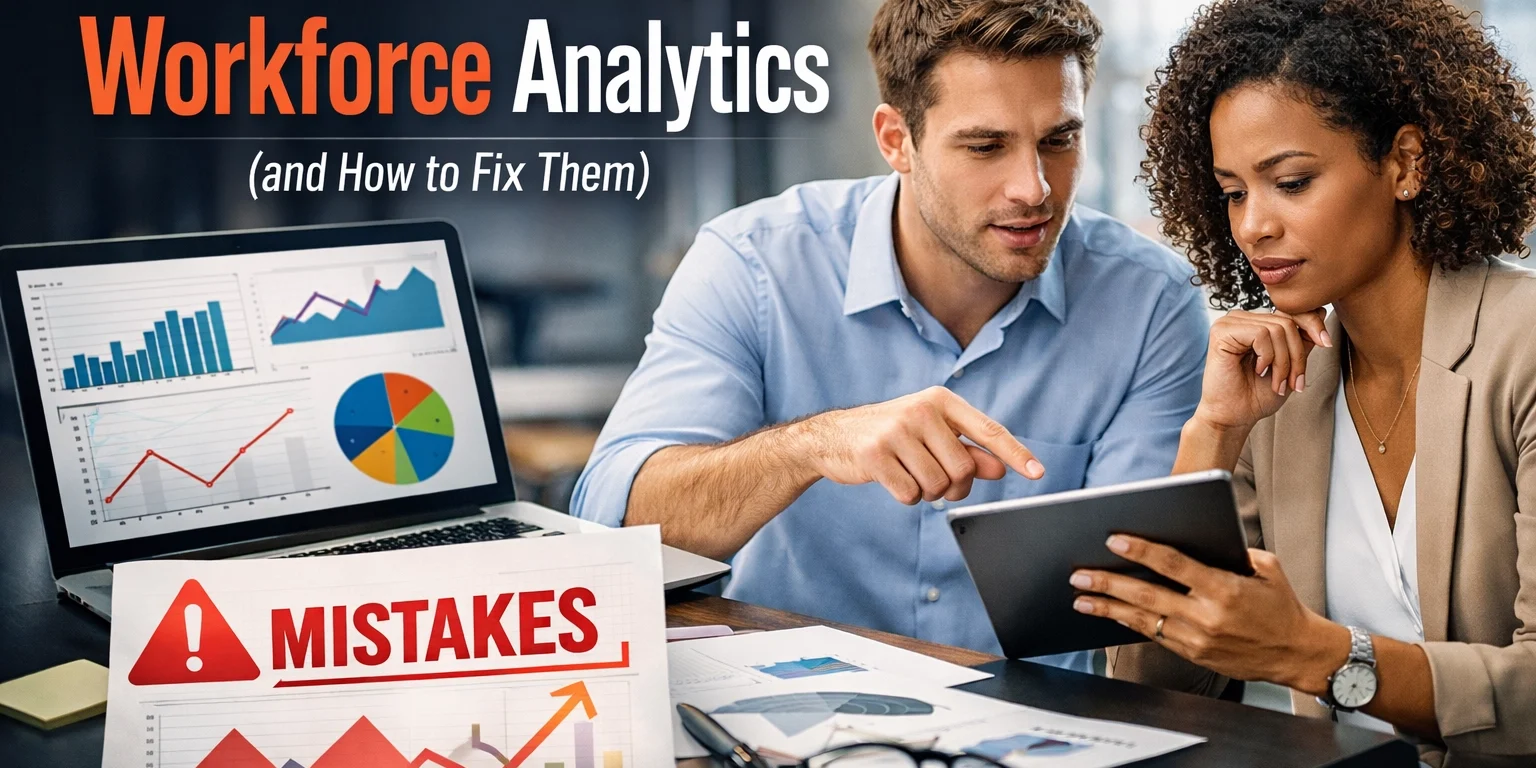
In the current landscape of 2026, data isn't just a byproduct of business; it is the primary engine of growth. For executives and school administrators alike, the ability to interpret workforce and student data determines who leads and who follows. At USA Entertainment Ventures LLC, we’ve observed a recurring theme: organizations are drowning in data but starving for insights.
The transition to becoming a "Future Ready" institution: whether that’s a corporate office or a high school: requires a shift from retrospective reporting to predictive analytics. We’re seeing a massive evolution in how talent is managed, particularly with the integration of Name, Image, and Likeness (NIL) education and media literacy into standard development programs. However, even the best intentions can be derailed by common analytical pitfalls.
Here are the seven most critical mistakes organizations make with workforce analytics and the strategic steps required to fix them.
1. Ignoring Future Growth in Current Planning
Most organizations build their analytics models based on where they are today. They look at current headcount, immediate vacancies, and last quarter's turnover. This is a "rearview mirror" approach that creates significant blind spots when organizational growth or school enrollment accelerates.
The Fix: Implement scalable analytics frameworks from the outset. Your data architecture should be designed to handle your organization at ten times its current size. If you are a school district planning for the next five years, your dashboards need to incorporate growth trajectories into every metric. At USA Entertainment Ventures LLC, we advocate for "Future Ready" modeling that treats your current data as a baseline for projected expansion, not a ceiling.
2. Skipping Comprehensive Skills Gap Analysis
A common error is tracking "productivity" without defining the modern skills required to achieve it. Traditional metrics focus on attendance and tenure, but they often overlook whether the workforce possesses the specific competencies needed for a digital-first economy.
The Fix: Conduct regular skills gap analyses that include modern essentials like media literacy and data interpretation. In an era where misinformation can impact brand reputation in seconds, media literacy is no longer an elective; it is a core workforce requirement. By mapping current competencies against strategic objectives, you can identify exactly where your training budget needs to go. This turns your analytics from a report card into a roadmap for development.

3. Prioritizing Short-Term Hiring Over Strategic Alignment
Reactive hiring is the enemy of strategic growth. Filling a seat because it’s empty, without considering the long-term direction of the department, produces data that describes what happened rather than predicting what should happen next. This is particularly prevalent in the education sector where the sudden influx of NIL (Name, Image, and Likeness) opportunities has caught many off guard.
The Fix: Use workforce analytics to identify skill requirements two to three years ahead. For schools, this means integrating NIL education into the curriculum now, so students are prepared for the professional landscape they will enter. By aligning your hiring and education programs with future market demands, you ensure that every new addition to your team or student body is a step toward your long-term vision. Position your institution as an anchor for "Future Ready" outcomes by measuring how well your "graduates": whether they are employees or students: align with industry needs.
4. Limiting Metrics to Headcount Alone
If your dashboard only shows how many people are in the building, you aren't doing analytics; you’re doing attendance. Relying on "too big to assess" metrics prevents leadership from seeing the nuances of organizational health. You might have 500 employees, but if your high-performers are leaving at a 20% higher rate than average, your total headcount is a vanity metric that masks a crisis.
The Fix: Expand your analytics frameworks to include granular, actionable data points. A high-level dashboard should visualize:
- Voluntary vs. Involuntary Turnover: Segmented by department and tenure.
- Risk of Loss Distribution: Identifying high-potential individuals who may be disengaged.
- Time-to-Productivity: How long it takes for a new hire or a student to reach full competency.
- Media Literacy Outcomes: Measuring the effectiveness of communication and information-processing training.

5. Failing to Forecast Financial Implications
Data and finance are often siloed. Organizations frequently implement workforce changes: like a new training program or a restructuring: without modeling the true financial impact. This leads to underestimated costs and unrealistic expectations of ROI.
The Fix: Build financial modeling directly into your workforce analytics platforms. Every decision, from implementing an NIL education program to adopting new data analytics dashboards, should include projected costs for onboarding, technology requirements, and productivity ramp-up periods. When you can show a direct correlation between media literacy training and a reduction in communication-related errors, you transform a "cost center" into a "value driver."
6. Working with "Dirty" or Messy Data
The principle of "garbage in, garbage out" is the ultimate law of analytics. If your HR data contains mislabeled functions, inconsistent department names, or incomplete employment histories, your analysis will be distorted. We often see schools and businesses trying to implement high-level AI insights on top of a foundation of messy, unstandardized spreadsheets.
The Fix: Establish rigorous data governance practices. Before you invest in the next flashy dashboard, invest in cleaning your data. Standardize job classifications, unify department naming conventions, and ensure that your data entry processes are consistent across the organization. This foundational work is what allows for the sophisticated "Future Ready" outcomes that USA Entertainment Ventures LLC helps organizations achieve.
7. Treating Analytics as Annual Events
The final mistake is treating workforce analysis as a yearly exercise tied to the budget cycle. In a fast-moving economy, a report from six months ago is ancient history. Organizations that only look at their data once a year miss dynamic shifts in employee sentiment, market demands, and emerging skill gaps.
The Fix: Shift to real-time analytics. Leadership teams should have access to live dashboards that update continuously. This allows for "pulse checks" on organizational health and the ability to adjust strategies rapidly. Whether it's monitoring the success of a new NIL education initiative or tracking the media literacy levels of a graduating class, real-time data allows you to be proactive rather than reactive.
The Path Forward: Becoming "Future Ready"
At USA Entertainment Ventures LLC, we believe that the goal of workforce analytics isn't just to gather data: it's to foster a culture of media literacy and strategic foresight. By avoiding these seven common mistakes, you can position your organization as a leader in the "Future Ready" movement.
The integration of advanced data analytics dashboards with practical education: specifically in areas like NIL and media literacy: creates an environment where individuals are not just prepared for the jobs of today, but for the opportunities of tomorrow. As a business consulting partner, we focus on providing the tools and insights necessary to bridge the gap between current operations and future potential.
If you are looking to refine your approach to data or want to learn more about how to implement these "Future Ready" strategies in your school or business, explore our resources at usaentertainmentventures.com.

Key Takeaways for the Executive Newsletter:
- Scalability: Design your data framework for the organization you want to be, not just the one you are.
- Competency over Headcount: Focus on skills like media literacy and NIL education as core workforce metrics.
- Integration: Ensure your analytics dashboards are tied directly to financial outcomes and strategic goals.
- Real-Time Review: Move away from annual reports and toward continuous, data-driven decision-making.
By focusing on these areas, you ensure that your investment in analytics yields more than just charts: it yields a competitive advantage. The future belongs to those who can see it coming, and with the right workforce analytics, you’ll have the clearest view in the room.





