
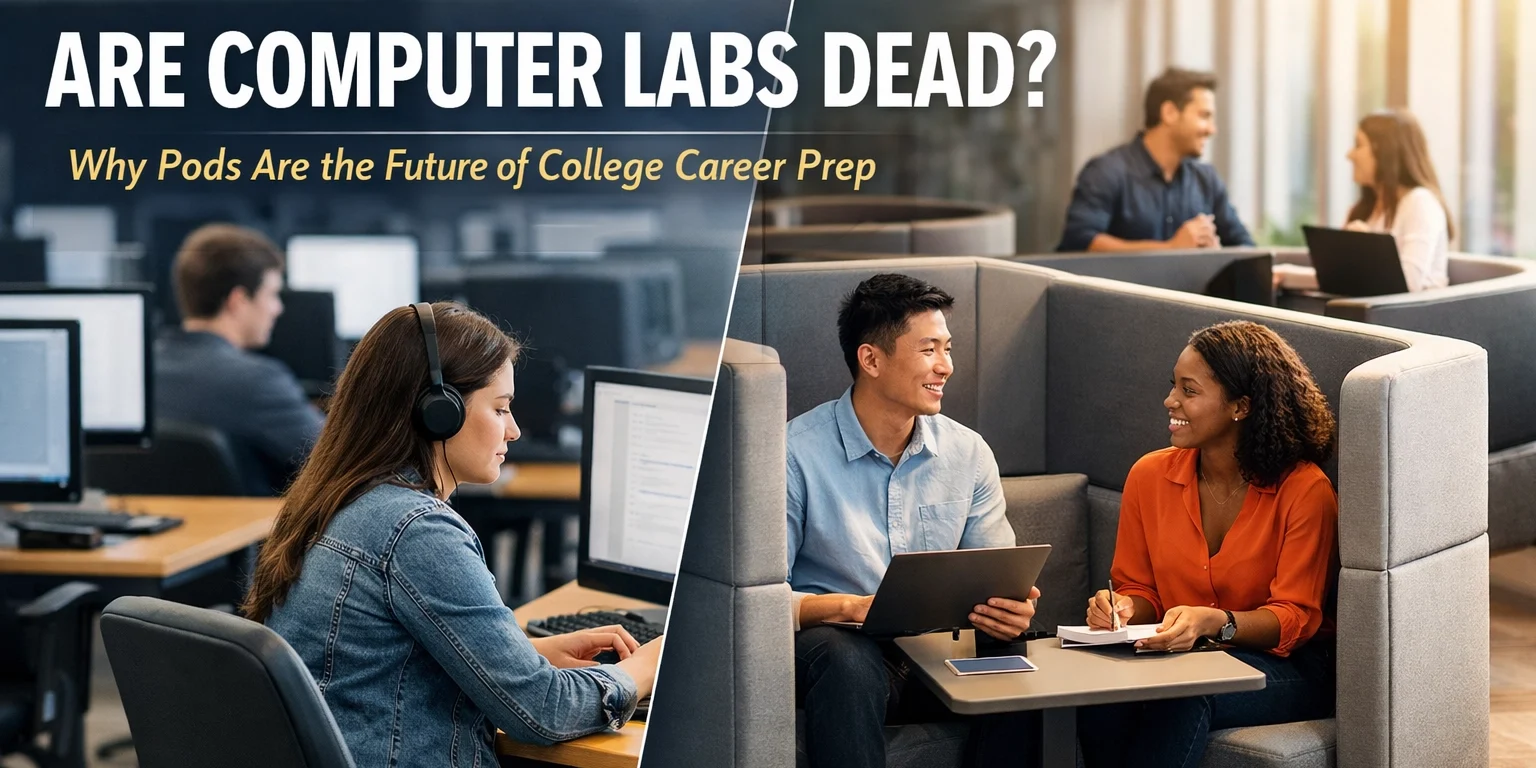
Remember those windowless rooms filled with rows of humming desktop computers, where you'd fight for a workstation during finals week? Those classic college computer labs have been a fixture of higher education for decades. But as we move deeper into 2026, a fundamental question looms: are traditional computer labs still serving students effectively, or have they become relics of a different era?
The answer isn't that computer labs are dead exactly: it's that they're being fundamentally reimagined. Enter the concept of learning pods: purpose-built platforms designed specifically for career skill development rather than general computing access. The shift represents more than just a hardware upgrade. It signals a complete rethinking of how educational institutions prepare students for actual employment.
The Critical Flaws in Traditional Computer Labs
Traditional computer labs face three interconnected challenges that have steadily eroded their effectiveness as career preparation tools. First, access remains frustratingly inconsistent. Labs operate on limited schedules, typically aligning with building hours and staff availability. This scheduling constraint prevents the kind of repetitive practice necessary for genuine skill mastery. Students cannot log additional hours when they need them most, and the "use it or lose it" nature of computing skills means sporadic access translates to stalled progress.
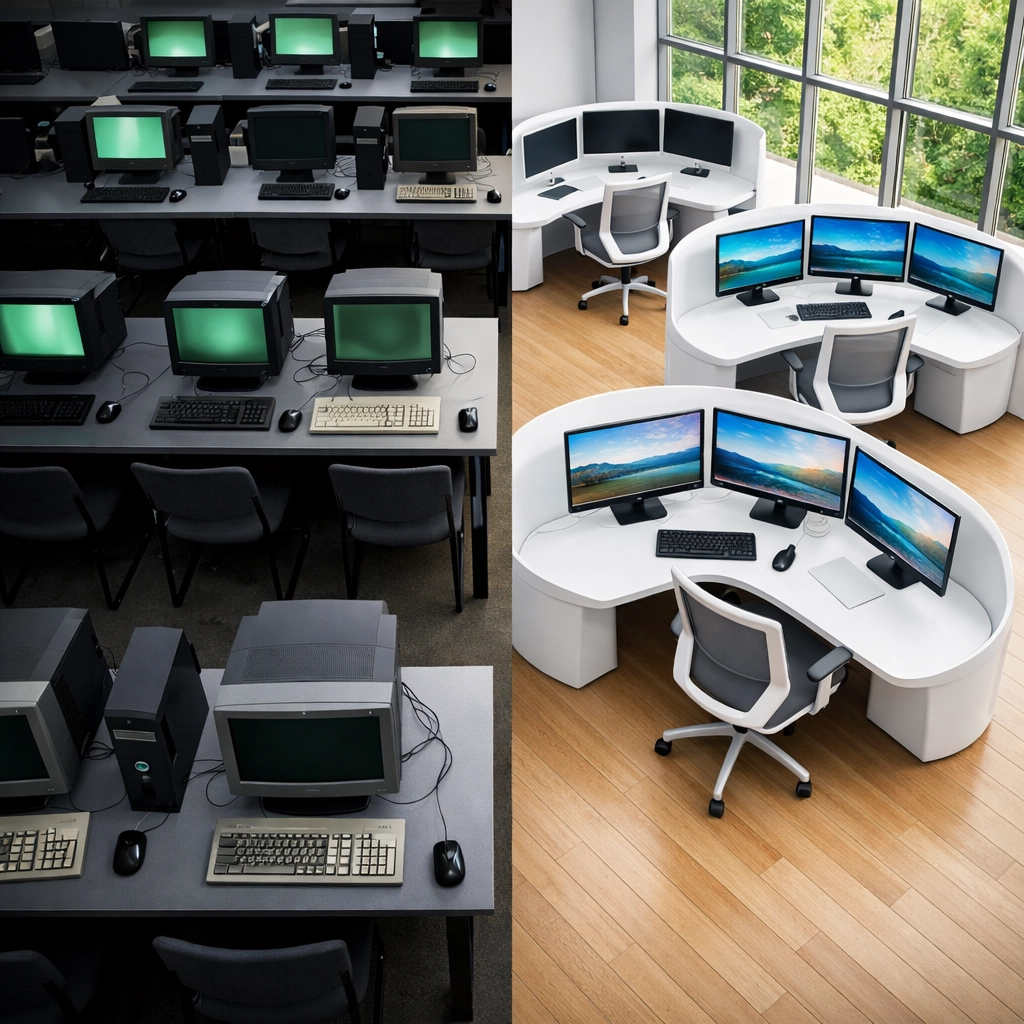
Second, equipment cycles cannot keep pace with technological advancement. Hardware ages faster than institutional budgets can refresh it, leaving students working on systems that barely resemble the tools they'll encounter in professional environments. A student learning cybersecurity on five-year-old machines misses critical exposure to current threat landscapes and modern defense architectures. The gap between classroom technology and workplace reality widens with each budget cycle.
Third, and perhaps most damaging, traditional labs offer zero measurement infrastructure. Schools can track attendance and monitor usage hours, but they cannot measure actual competency development. There's no built-in mechanism to assess whether a student has progressed from novice to proficient, no dashboard showing certification readiness, and no pathway markers indicating career trajectory. Students learn generic computing skills without clear connections to employment outcomes, leaving them unprepared for actual job requirements.
These limitations create a disconnect between educational investment and workforce readiness. Institutions spend considerable resources maintaining lab facilities while employers report that graduates lack job-ready technical skills. The model clearly requires rethinking.
Learning Pods: A Purpose-Built Alternative
Learning pods represent a fundamental redesign rather than an incremental improvement. Instead of general-purpose computing stations available for any task, pods function as specialized talent development platforms aligned to specific industries. Each pod integrates cloud computing curriculum access through virtual desktop infrastructure, streaming studio capabilities for content creation, real-time analytics dashboards tracking learner progress, career pathway modules aligned to industry certifications, and collaborative workspace designed for team-based projects.
The standardization aspect proves particularly valuable. Every pod in a network delivers identical experiences and curricula across different locations. A student in Colorado encounters the same training environment, software configurations, and assessment criteria as a student in Florida. This consistency enables meaningful comparisons and ensures that certification credentials carry equivalent weight regardless of geographic location.

Pods also address the measurement gap that plagues traditional labs. Built-in analytics infrastructure tracks competency achievement rates, time-to-proficiency metrics, certification completion rates, and career pathway progression. Educational institutions can now demonstrate concrete outcomes: how many students achieved specific certifications, average time from enrollment to job readiness, and success rates in career placement. This transforms career training from an unmeasured cost center into an investment with demonstrable returns.
Three Career Pathways Taking Shape
The pod model shows particular promise in three high-demand fields: cybersecurity, logistics, and content creation. Each pathway requires specialized infrastructure that traditional computer labs struggle to provide.
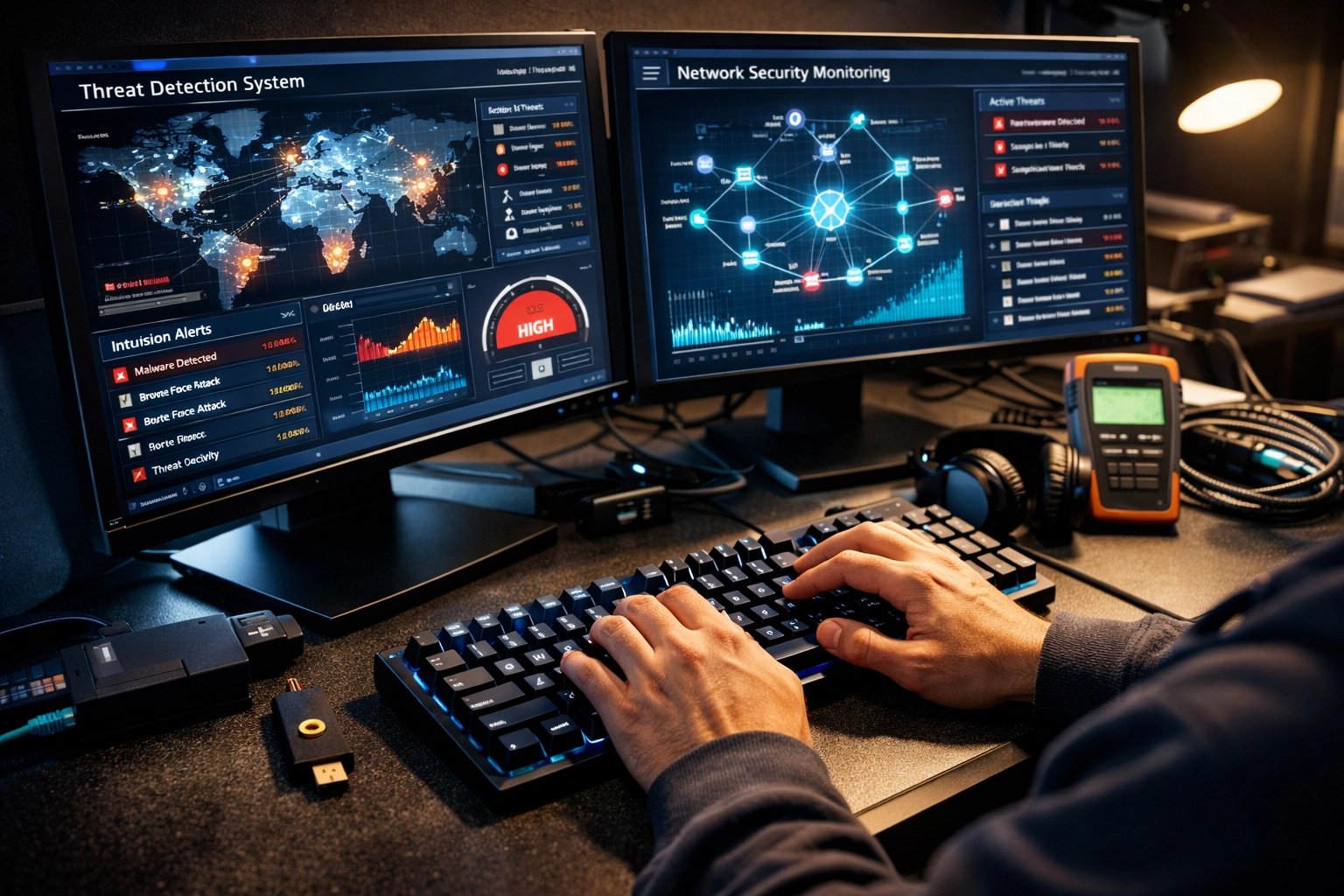
Cybersecurity pods create environments that mirror real-world security challenges. Rather than studying theoretical concepts on generic workstations, students work with actual network vulnerabilities, current threat simulation tools, and industry-standard defensive protocols. They practice penetration testing on isolated network segments, analyze malware behavior in sandboxed environments, and develop incident response procedures using the same platforms employed by corporate security teams. The hands-on nature accelerates learning while building muscle memory for critical security operations. Students emerge with demonstrable skills in threat detection, vulnerability assessment, and security architecture: competencies that translate directly to employment.
Logistics pods bridge the substantial gap between academic understanding and operational reality. These specialized stations include the same warehouse management systems, inventory tracking software, and supply chain optimization tools students will use on day one of employment. Rather than learning logistics through case studies and spreadsheets, students manipulate actual logistics platforms, troubleshoot real inventory discrepancies, and optimize delivery routes using professional-grade software. They understand how RFID systems track products through distribution networks, how algorithms optimize warehouse layouts, and how data analytics drive supply chain decisions. This familiarity eliminates the steep learning curve that typically accompanies logistics positions.
Content creation pods provide professional-grade infrastructure rather than consumer substitutes. Students work with broadcast-quality cameras, professional audio equipment, commercial editing software, and studio lighting systems that match production company standards. They learn color grading on calibrated monitors, audio mixing on industry-standard interfaces, and video compression using professional codecs. The difference between learning content creation on consumer equipment versus professional tools is substantial: professional environments demand different workflows, higher quality standards, and more complex technical specifications. Students who master professional-grade systems enter the workforce without the awkward transition period that hampers many entry-level content creators.
Measurable Returns and Industry Integration
The measurable nature of pod-based training creates opportunities for industry partnerships that traditional labs cannot support. Companies can identify high-potential candidates years before they enter the job market by reviewing competency data, certification completion records, and project portfolios generated through pod curricula. This early visibility allows employers to establish relationships with promising students, offer mentorship or internship opportunities, and create talent pipelines aligned to their specific needs.
The economic argument for pods strengthens when examining long-term outcomes. Traditional labs require continuous hardware refresh cycles, software licensing fees, and maintenance overhead while delivering uncertain workforce preparation. Pods standardize costs through cloud infrastructure, reduce physical hardware requirements, and produce quantifiable skill development. Institutions can demonstrate return on investment through certification rates, employment placement percentages, and starting salary data: metrics that resonate with administrators, accreditors, and prospective students.
Moreover, pods create feedback loops between education and industry. When employers report specific skill gaps among new hires, curriculum adjustments can propagate across the entire pod network within weeks rather than academic years. If cybersecurity employers note that graduates struggle with a particular security framework, that framework receives increased emphasis in pod curricula. This responsiveness ensures training remains aligned with evolving industry requirements.
The Infrastructure Shift Ahead
The transition from traditional computer labs to specialized learning pods reflects broader changes in how we conceptualize career preparation. The old model assumed that general computing literacy plus theoretical knowledge would suffice for workforce entry. The emerging reality demands demonstrable competency in specific tools, platforms, and workflows that employers actually use.

This shift creates implications beyond hardware and software choices. It requires educational institutions to think differently about partnerships, measurement, and student outcomes. It demands closer collaboration between academia and industry to ensure curricula match actual job requirements. It necessitates investment in analytics infrastructure that tracks student progress toward concrete career milestones rather than credit hours and grade point averages.
Traditional computer labs will likely persist in settings where general access matters more than specialized workforce development. Students still need basic computing access for research, writing, and general coursework. But for career-focused technical training, the evidence increasingly favors purpose-built pod infrastructure designed around specific industries and measurable skill development.
The question for educational institutions becomes: what role do we want to play in workforce preparation? Institutions committed to producing job-ready graduates with demonstrable skills in high-demand fields will find pods offer infrastructure that traditional labs simply cannot match. Those seeking to provide general computing access alongside theoretical education may find traditional labs adequate.
As we look toward the remainder of 2026 and beyond, the pod model represents not just a technological upgrade but a philosophical shift: from providing access to technology toward building verified competency in specific career pathways. For students entering fields like cybersecurity, logistics, and content creation, that shift could mean the difference between graduating with credentials that employers recognize and graduating with skills that remain disconnected from actual opportunity.





