

The conventional approach to talent acquisition: posting positions when needs arise and screening applicants from a reactive stance: no longer delivers competitive advantage in markets defined by rapid technological change. Companies seeking expertise in cloud infrastructure, artificial intelligence, and data analytics face a persistent mismatch between available talent and organizational requirements. The solution requires a fundamental shift in timeline and strategy: engaging potential talent years before hiring needs emerge.
The Strategic Case for Early Engagement
Traditional recruiting models operate on compressed timelines. Organizations identify a need, post a position, review applications, conduct interviews, and extend offers: all within weeks or months. This reactive framework assumes sufficient qualified candidates exist within immediate reach. Current labor market data challenges this assumption, particularly for specialized technical roles.
The gap between employer demand and candidate supply in emerging technology fields continues to widen. By the time students complete university programs in computer science or data analytics, employers compete for the same limited pool. Those who wait until graduation to begin talent conversations face inflated compensation expectations and high candidate selectivity. Organizations that establish relationships earlier: during secondary education: position themselves ahead of this competitive bottleneck.

Early engagement generates multiple strategic advantages. First, it allows organizations to shape talent development rather than simply selecting from existing options. Second, it builds familiarity and preference before students consider alternative employers. Third, it creates pathways for diverse talent pools that might not otherwise pursue technical careers. The return on investment materializes not in months but across years, as these relationships convert into hires, reduce onboarding time, and improve retention rates.
Why High Schools Represent the Next Competitive Frontier
The rationale for high school engagement extends beyond simple pipeline development. Secondary education represents a critical decision point where students form perceptions about career possibilities and begin building foundational knowledge. Students who receive exposure to cloud computing, artificial intelligence, or data analytics during high school develop both technical familiarity and career interest that compounds through subsequent education.
Research consistently demonstrates that early exposure influences career trajectory. Students who participate in technology-focused programs during secondary education show higher rates of pursuing related fields in post-secondary institutions. More significantly, they develop realistic expectations about these careers, reducing attrition during university programs and early employment. Organizations that facilitate this exposure create a self-selecting pipeline of candidates who understand the work and remain committed to the field.
The competitive dimension becomes apparent when considering adoption rates. Currently, most organizations focus talent acquisition on university partnerships, professional networks, and experienced hire recruiting. Few have established systematic high school engagement programs. This creates a first-mover advantage for organizations willing to invest in longer-term talent development. As competition intensifies for university graduates and experienced professionals, early-stage pipelines provide access to talent before peers enter the market.

Building Infrastructure for Early Talent Development
Effective high school engagement requires structured programs rather than sporadic outreach. Organizations should establish repeatable frameworks that scale across multiple schools and geographies while maintaining quality and consistency.
Begin by identifying high schools with existing STEM programs, technology tracks, or demonstrated interest in expanding technical education. Partner with school administrators and teachers to understand curriculum constraints and identify integration opportunities. These partnerships should offer mutual value: schools gain access to industry expertise and real-world applications while organizations build talent relationships and contribute to workforce development.
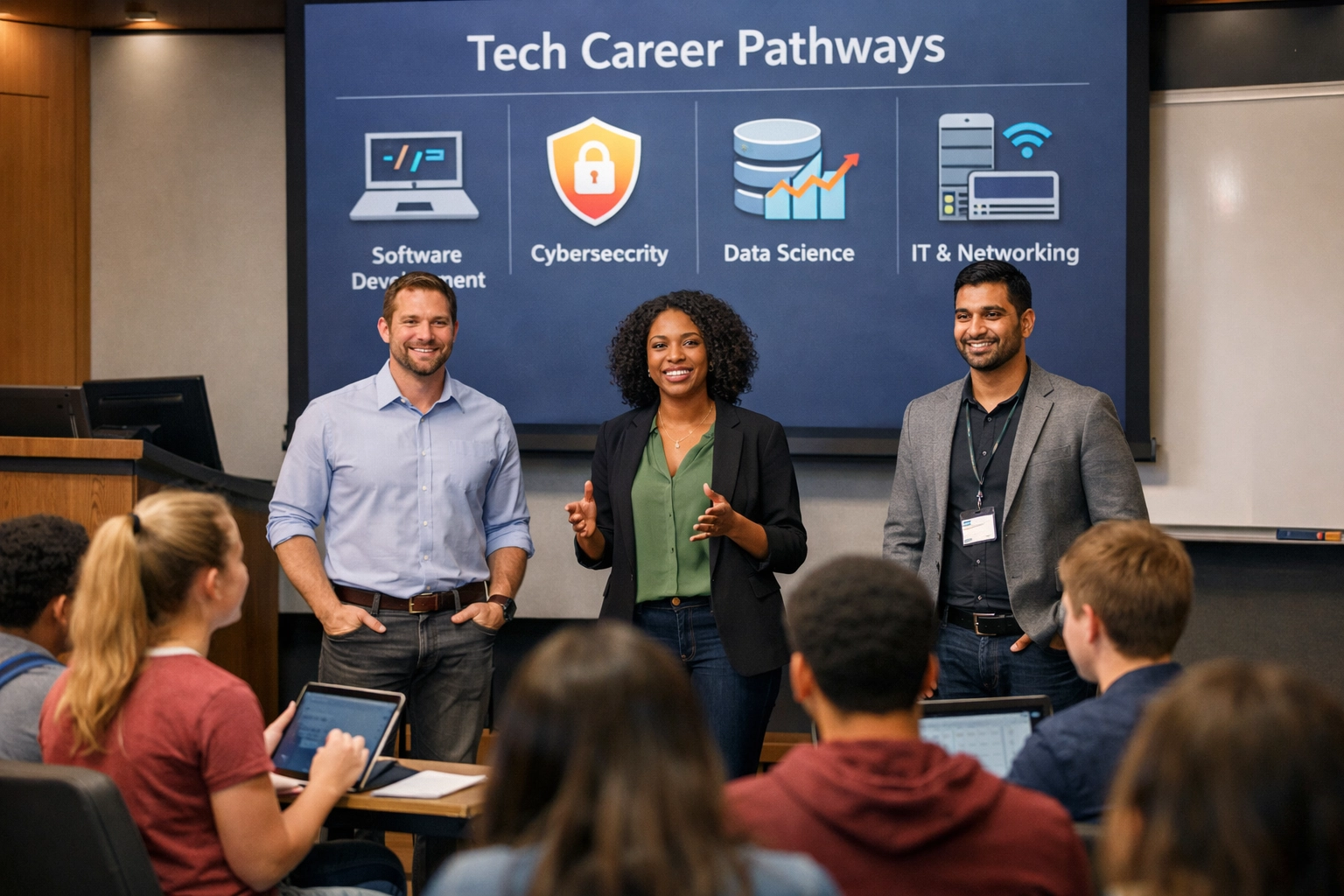
Develop tiered engagement programs that accommodate different levels of student interest and commitment. Entry-level activities might include guest speaker sessions, facility tours, or industry awareness presentations that introduce students to career possibilities. Intermediate programs could involve semester-long mentorship arrangements, project-based collaborations, or virtual workshops that build specific technical skills. Advanced engagement might include internship opportunities, capstone project sponsorships, or scholarship programs that deepen organizational relationships with high-performing students.
Virtual platforms extend reach beyond geographic limitations. Organizations can deliver webinar series on cloud architecture fundamentals, host coding challenges focused on data analytics problems, or create online communities where students engage with industry professionals. These digital touchpoints generate engagement data that identifies highly motivated students while providing value to participants regardless of location.

Creating Authentic Value for Students
The effectiveness of high school talent programs depends on delivering genuine educational value rather than functioning as extended recruitment marketing. Students and educators quickly recognize purely promotional content, which undermines credibility and reduces engagement.
Structure programs around skill development that benefits students regardless of future employer decisions. Teaching cloud computing fundamentals, introducing machine learning concepts, or demonstrating data visualization techniques provides transferable knowledge that serves students across career paths. This approach builds organizational reputation as a contributor to education rather than simply a talent consumer.
Incorporate authentic work examples that illustrate how technical skills solve real business problems. Rather than abstract exercises, present scenarios drawn from actual organizational challenges: how data analytics identified operational inefficiencies, how artificial intelligence improved customer service, or how cloud infrastructure enabled business expansion. These concrete applications help students connect technical concepts to meaningful outcomes.
Ensure programs reflect diverse representations of technical careers. Include professionals from varied backgrounds who can speak to different pathways into technology roles. Highlight both technical and business dimensions of careers in cloud, AI, and data analytics to appeal to students with different strengths and interests. This inclusive approach expands the talent pool while addressing persistent diversity challenges in technology fields.
Measuring Program Effectiveness and Long-Term ROI
Early-stage talent programs require different metrics than traditional recruiting initiatives. Standard hiring metrics: time-to-fill, cost-per-hire, or application-to-offer ratios: measure immediate outcomes but miss the strategic value of long-term talent development.
Track engagement metrics across program touchpoints to understand which activities generate sustained student interest. Monitor participation rates, completion percentages for multi-session programs, and student-initiated follow-up as indicators of genuine engagement. Collect feedback from both students and educators to identify program strengths and improvement opportunities.
Establish longitudinal tracking systems that follow students through education and into careers. Maintain relationships with program participants as they progress through university, enter the workforce, and develop professional experience. This extended timeline reveals conversion rates from high school participants to eventual employees while providing data on career trajectories and retention outcomes.

Calculate return on investment using multi-year horizons rather than quarterly cycles. Factor in reduced recruiting costs for eventual hires who require less screening and onboarding, improved retention rates among employees with longer organizational exposure, and enhanced employer brand within target talent communities. Compare these benefits against program costs including staff time, materials, technology platforms, and partnership maintenance.
Competitive Timing and Market Position
The strategic advantage of high school talent programs derives partially from limited current adoption. Organizations that establish these pipelines before market saturation gain access to talent ahead of competitive pressure. As more employers recognize the value of early engagement, the relative advantage diminishes but the fundamental benefits remain.
Consider program launch timing carefully. Establishing high school partnerships requires relationship development, program design, and operational infrastructure that spans multiple quarters. Organizations beginning this work now position themselves to realize benefits as current high school students complete university programs and enter the workforce in three to six years. Delaying program launch extends this timeline while competitors potentially establish similar initiatives.
The technology landscape reinforces urgency around cloud, AI, and data analytics specifically. These fields continue rapid expansion with sustained employer demand exceeding qualified candidate supply. Educational institutions struggle to update curricula at the pace of technological change, creating persistent skill gaps. Organizations that supplement formal education through direct engagement help address these gaps while building talent pipelines aligned with actual business requirements.
Implementation Considerations
Successful program implementation requires cross-functional coordination. Recruiting teams provide expertise in talent assessment and pipeline management. Technical staff contribute domain knowledge and authentic work examples. Learning and development professionals design effective educational experiences. Leadership provides strategic direction and resource allocation.
Start with pilot programs in limited geographies or with select schools to test approaches and refine methodologies before broad expansion. Document lessons learned, standardize effective practices, and create scalable frameworks that maintain quality across growth. Establish clear program ownership and accountability to ensure consistent execution over the multi-year timeframes required for results.
Integrate high school programs within broader talent acquisition strategy rather than treating them as isolated initiatives. Connect early-stage engagement to university recruiting, internship programs, and entry-level hiring to create continuous pathways from introduction through employment. This integration maximizes conversion rates while providing clear progression for students who engage with organizational programs.
The competitive landscape for technical talent continues evolving toward earlier engagement, longer relationship development, and proactive pipeline building. Organizations that recognize this shift and invest accordingly will access talent pools unavailable to those maintaining reactive hiring approaches. The question facing business leaders is not whether to build early-stage talent programs but how quickly they can establish effective initiatives before competitors secure similar advantages.





