
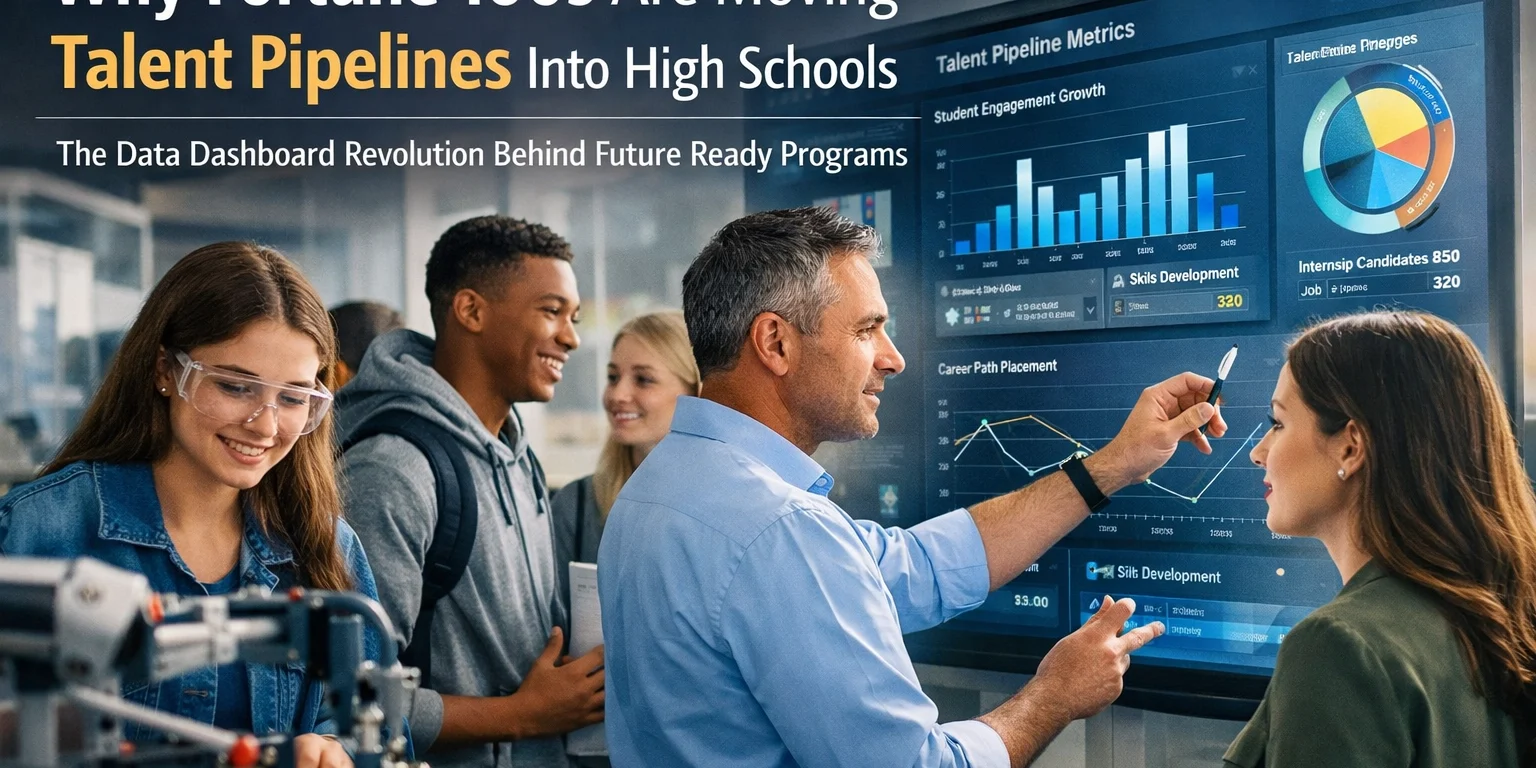
The talent acquisition landscape has undergone a fundamental transformation. Fortune 100 companies are no longer waiting for college graduation ceremonies to begin their recruiting efforts. Instead, they're establishing infrastructure directly inside high schools, building talent pipelines years before traditional hiring cycles begin. The catalyst behind this shift isn't simply about earlier access to candidates: it's about data-driven workforce development that provides measurable outcomes and strategic intelligence.
The Strategic Shift in Corporate Recruiting
Recent workforce research indicates that over a quarter of surveyed companies now recruit from a select list of schools, representing a significant increase from just 17% in 2022. This evolution reflects a calculated response to persistent talent shortages in high-demand sectors. Companies in the top tier for early hiring are 4.3 times more likely to hire entry-level workers than other large firms, creating a competitive advantage that extends far beyond traditional campus recruiting.
The economics are straightforward: identifying and developing workforce-ready candidates before they enter the general labor market reduces recruiting costs, shortens onboarding timelines, and increases retention rates. But the most significant advantage lies in the data these programs generate: information that informs not just hiring decisions but long-term workforce planning.

The Learning Lab Infrastructure
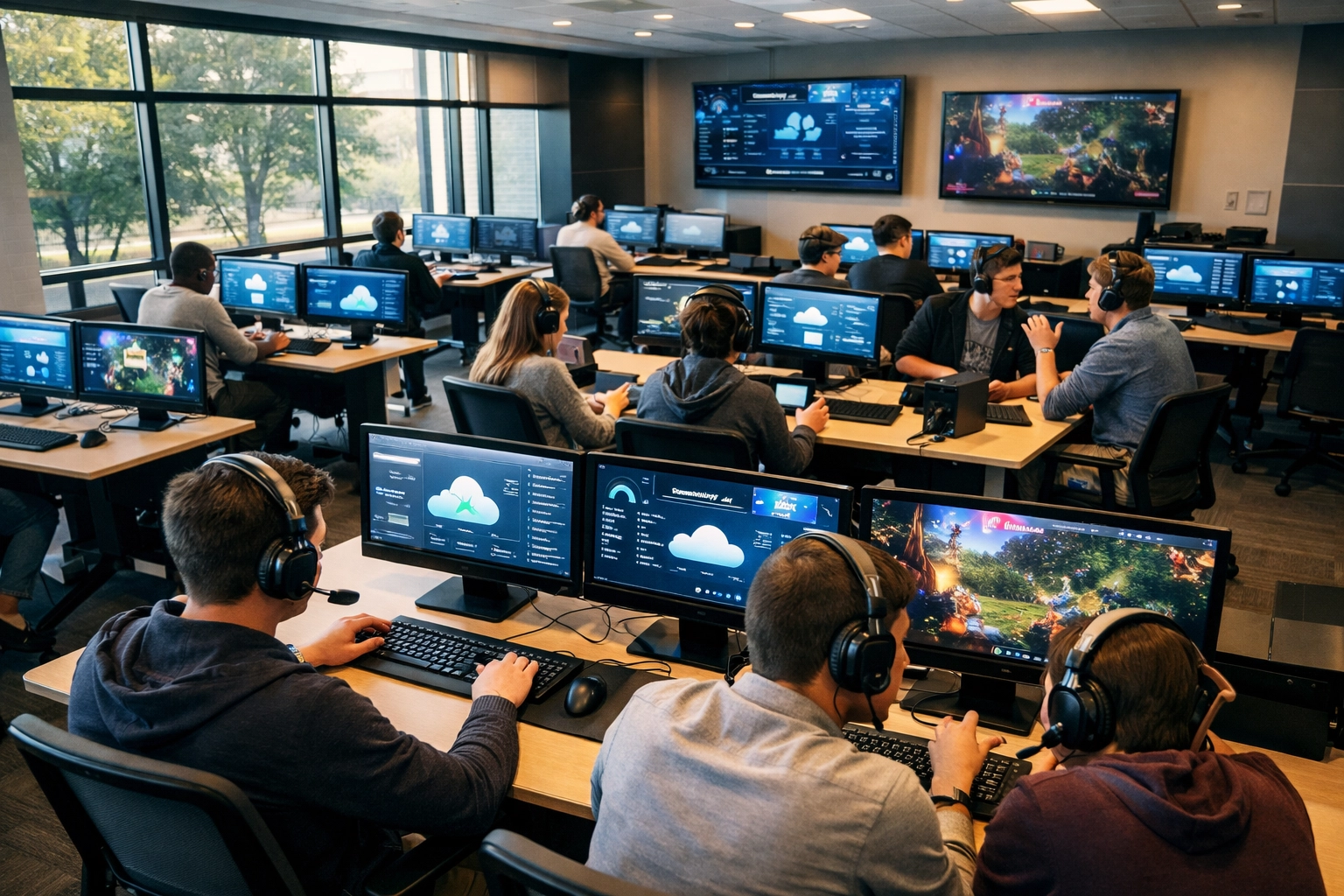
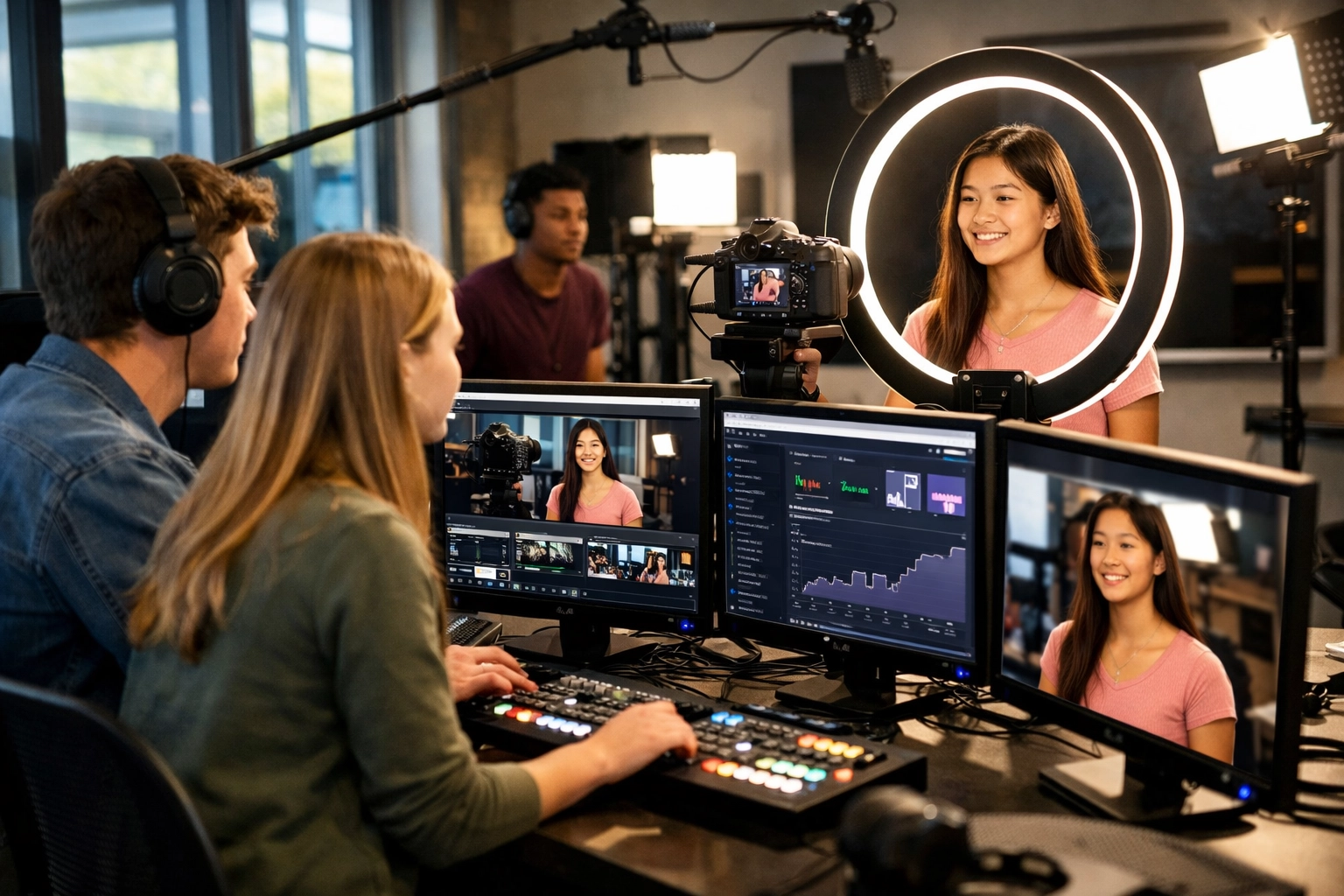
Fortune 100 companies are deploying what industry leaders call "learning labs": physical spaces within high schools that combine competitive esports, cloud curriculum, data analytics training, artificial intelligence literacy, and digital content creation. These environments serve dual purposes: they provide students with career-relevant skills while simultaneously generating performance data that companies use to assess potential talent.
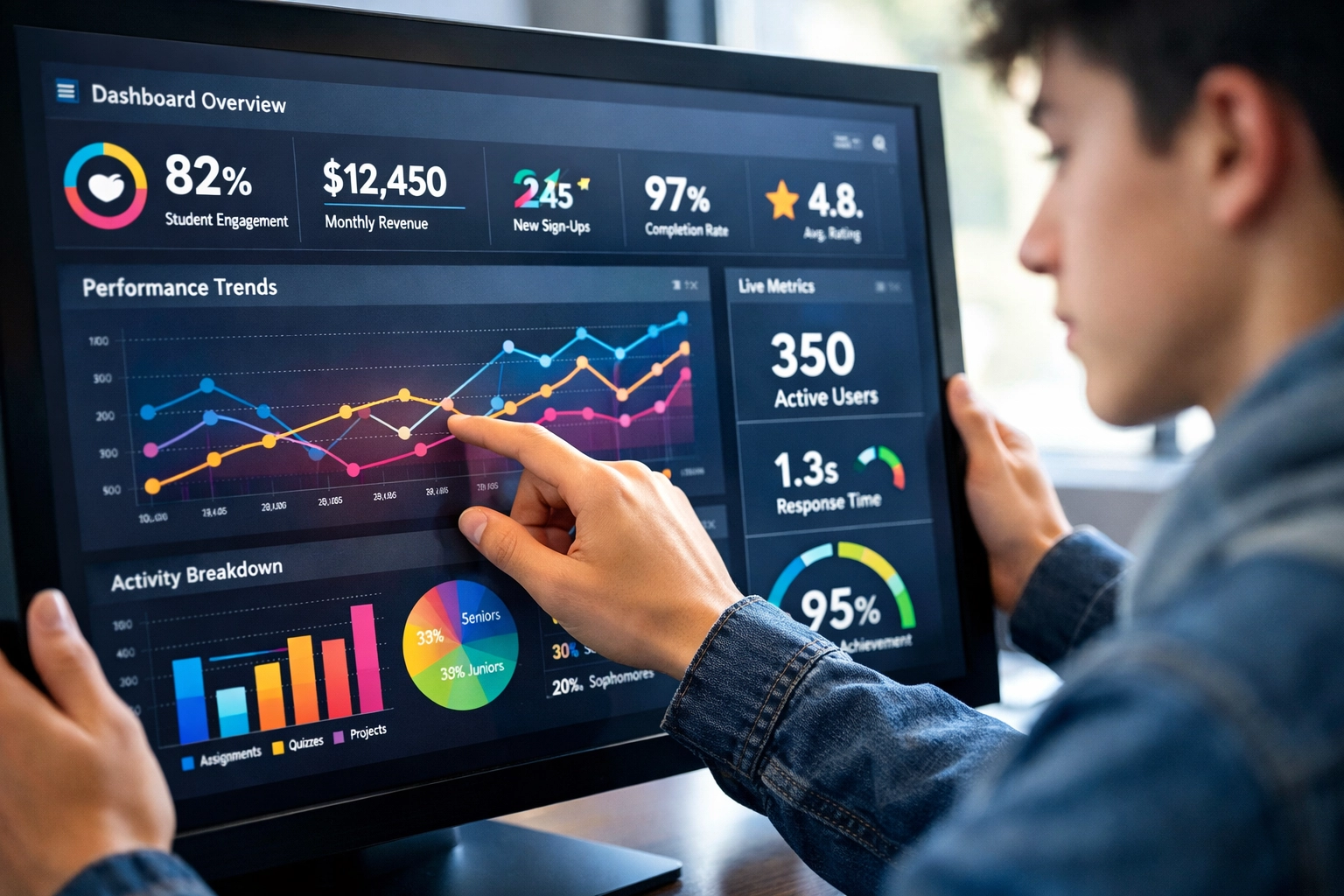
The infrastructure typically includes real-time performance dashboards that track student engagement, skill development trajectories, and career interest patterns. Every interaction within these labs: from completing cloud computing modules to participating in esports competitions: produces usable data points. This information feeds directly into corporate workforce planning systems, providing detailed intelligence about student capabilities, learning velocities, and professional interests.
Data Analytics as Core Curriculum
At the center of these Future Ready programs sits data literacy education. Students learn to read, interpret, and act on real-time performance metrics: the same foundational competencies required in modern corporate environments. The data dashboard component introduces students to business intelligence concepts, key performance indicators, and analytics-driven decision making before they enter the workforce.
This approach addresses a critical gap in traditional education. While conventional curricula may teach mathematics and statistics in isolation, these programs demonstrate how data drives operational decisions across industries. Students see immediate correlations between their actions and measurable outcomes, developing intuitive understanding of analytics principles that typically requires years of professional experience to acquire.
The NIL Education Component
Name, Image, and Likeness education has emerged as an unexpected but valuable element of these talent pipeline programs. As students create digital content, compete in esports tournaments, or develop streaming channels within learning labs, they encounter practical questions about personal branding, intellectual property, and digital rights management.
Fortune 100 companies recognize that tomorrow's workforce will need sophisticated understanding of digital identity management and content monetization: skills that have traditionally been absent from both high school and college curricula. By incorporating NIL education into Future Ready programs, companies ensure their talent pipelines include candidates who understand the intersection of personal brand, digital media, and commercial opportunity.
The data generated from NIL activities provides additional workforce intelligence. Companies can identify students who demonstrate entrepreneurial thinking, understand digital platforms, and navigate complex intellectual property considerations: all valuable indicators of potential corporate performance.
Media Literacy Outcomes and Measurement
Media literacy has evolved from a peripheral concern to a core competency requirement. Fortune 100 companies need employees who can evaluate information sources, detect misinformation, understand algorithmic content distribution, and communicate effectively across digital platforms. Future Ready programs embed media literacy training throughout their curriculum, with measurable outcomes tracked through the same dashboard systems that monitor other skill development.
Students learn to analyze streaming content, evaluate esports broadcasts, assess social media campaigns, and understand content creation ethics. These competencies translate directly to corporate communications, marketing analysis, and digital strategy roles. The data dashboards track media literacy progression through specific benchmarks: source verification accuracy, content analysis depth, and digital communication effectiveness.
Companies gain actionable intelligence about which students demonstrate advanced media literacy competencies: information that proves particularly valuable when hiring for roles in communications, marketing, brand management, and digital strategy.
Career Pathway Alignment with Workforce Gaps
The career pathways embedded in these learning labs directly correspond to persistent workforce shortages: cloud computing, artificial intelligence, game development, streaming and broadcasting, cybersecurity, and supply chain logistics. This strategic alignment transforms education investment from philanthropic gesture to workforce development solution.
By training students on specific platforms and technologies before graduation, companies create talent pools familiar with their technical infrastructure. Students graduate with practical experience in enterprise cloud systems, analytics platforms, and industry-standard software: reducing training costs and accelerating productivity timelines.
The competitive advantage extends beyond individual companies. Industries struggling with critical talent shortages benefit from increased pipelines of qualified candidates, while students gain marketable skills regardless of which specific employer they ultimately join.
The Intelligence Advantage
Every interaction within Future Ready programs generates workforce intelligence. Dashboard systems track not just what students learn, but how they learn it. Companies gain insights into learning pattern preferences, problem-solving approaches, collaboration tendencies, and adaptability to new challenges: all before making hiring decisions.
This data-driven approach allows companies to identify candidates whose learning profiles align with specific roles or departments. A student who demonstrates rapid skill acquisition in cloud infrastructure might be flagged for IT positions, while someone showing strong performance in content creation and analytics could be tracked for marketing roles.
The intelligence advantage extends to long-term workforce planning. Aggregate data from multiple schools reveals broader talent development trends, helping companies anticipate future candidate availability and adjust recruiting strategies accordingly.
Implementation and Scale
Fortune 100 companies are positioning these initiatives as anchor programs for "Future Ready" schools: educational institutions that prioritize workforce-relevant skills alongside traditional academics. The model creates natural expansion opportunities: successful programs in initial school districts become templates for broader regional implementation.
The scalability depends on standardized metrics and transferable infrastructure. Data dashboard systems must produce consistent, comparable outcomes across different schools and geographic regions. Companies investing in these programs are establishing measurement frameworks that allow for meaningful performance comparison and continuous improvement.
The Strategic Imperative
The movement of talent pipelines into high schools represents more than early recruiting: it's a fundamental recalibration of how companies approach workforce development. By establishing presence in educational environments, Fortune 100 companies gain years of performance data, create familiarity with their technologies and cultures, and develop relationships with potential talent before competition intensifies.
The data dashboard revolution enables this strategy. Without real-time performance tracking, media literacy measurement, and career interest mapping, these programs would lack the intelligence component that justifies their investment. With robust analytics infrastructure, every student interaction becomes valuable workforce planning data.
As talent competition intensifies across industries, the companies building these Future Ready pipelines are establishing advantages that competitors cannot easily replicate. The question for other Fortune 100 organizations is no longer whether to move talent development into high schools, but how quickly they can deploy comparable infrastructure and analytics capabilities.





