
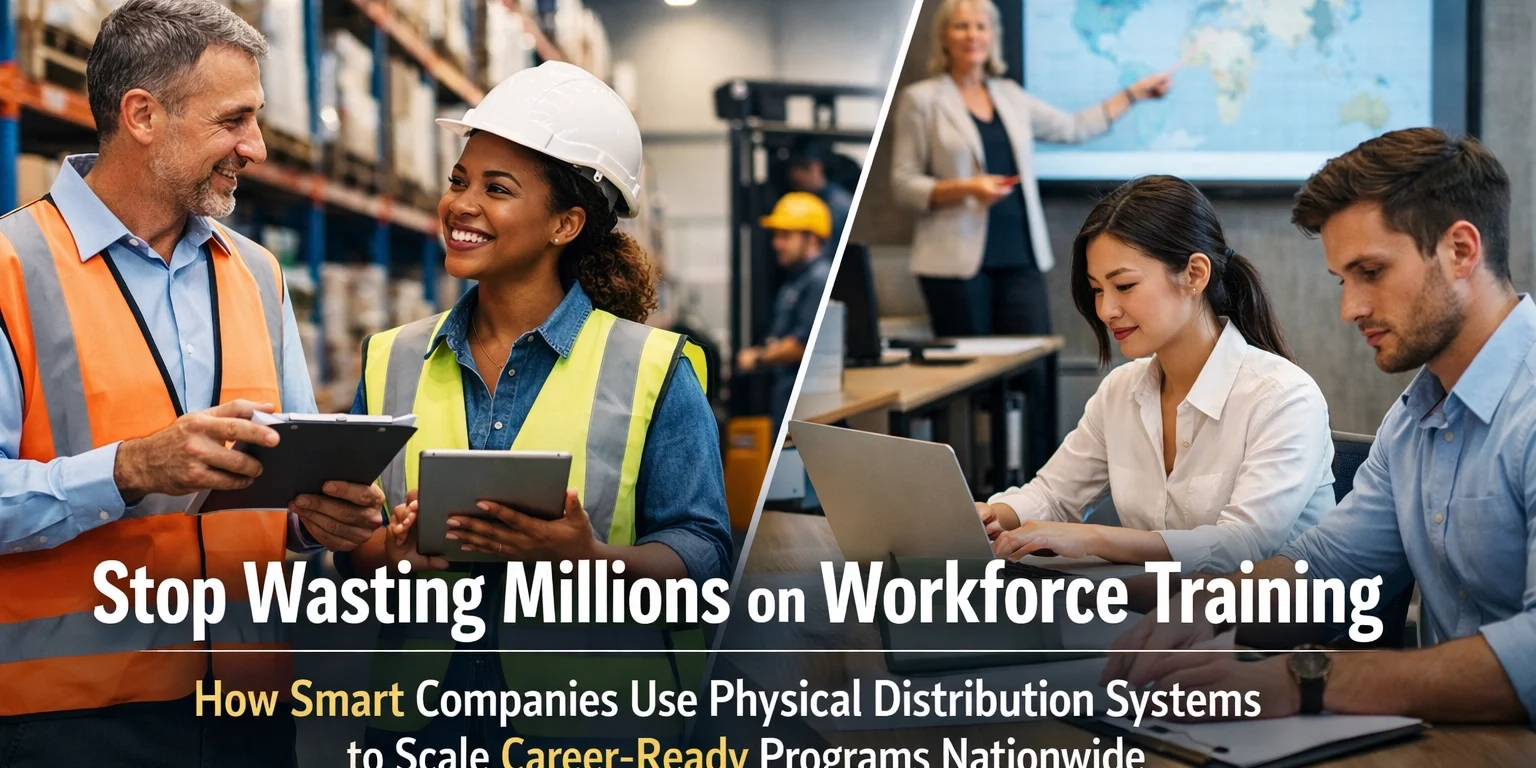
Corporate America invests approximately $92 billion annually in workforce training and development. Yet study after study reveals that between 40% and 70% of these initiatives fail to produce measurable results. The disconnect isn't about curriculum quality or instructor expertise: it's about distribution infrastructure. While companies pour resources into developing training content, they overlook the fundamental challenge: getting career-ready programs physically deployed to communities where workforce gaps exist most acutely.
A new approach is emerging that repurposes existing physical distribution networks to solve this challenge. Rather than building training infrastructure from scratch, forward-thinking organizations are leveraging established distribution systems to deploy workforce development programs at scale. The results represent a paradigm shift in how companies can address talent pipeline challenges while simultaneously creating measurable community impact.
The Physical Distribution Advantage
Traditional workforce training programs suffer from a critical flaw: they require significant upfront capital investment in facilities, equipment, and ongoing operational support. This financial barrier limits scalability, particularly in underserved communities where training is needed most but economic conditions make traditional investment models unfeasible.
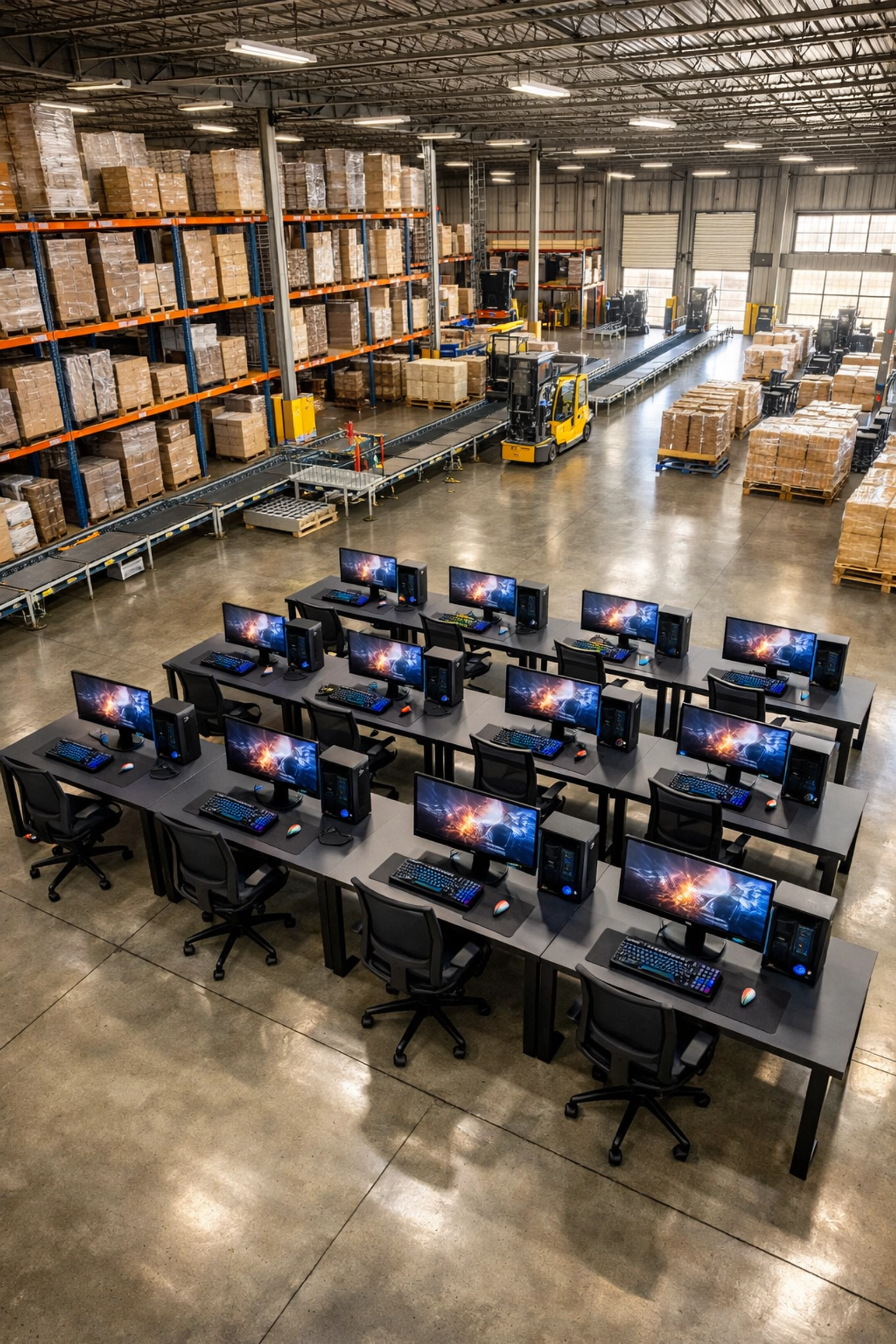
Physical distribution systems solve this problem by utilizing infrastructure that already exists. Distribution networks spanning thousands of locations nationwide provide ready-made venues for deploying training equipment, curriculum materials, and program support. These networks have proven logistics capabilities, established community presence, and operational frameworks designed for efficiency at scale.
The model works because it transforms distribution centers, fulfillment facilities, and logistics hubs into dual-purpose spaces. During standard operating hours, these facilities serve their primary distribution function. During non-peak hours or in designated spaces, they become workforce training centers. This approach eliminates the single largest barrier to scaling career-ready programs: the cost and complexity of establishing physical presence in communities nationwide.
Recent implementations have demonstrated the viability of this model. Programs operating through distribution networks have achieved deployment across 31 locations in 16 states, training over 300 participants with measurable employment outcomes. The key distinction is that these programs didn't build new infrastructure: they utilized existing distribution footprints to achieve rapid, cost-effective scaling.
Esports: The Trojan Horse for Cloud and AI Literacy
The most innovative aspect of this distribution-based training model lies in how organizations attract participants. Traditional workforce training programs, particularly in technical fields like cloud computing and artificial intelligence, struggle with recruitment. The subject matter appears intimidating, the career pathways seem unclear, and potential participants often don't see themselves in these roles.
Esports solves this recruitment challenge while simultaneously building foundational technical competencies. Competitive gaming requires cloud infrastructure, relies on AI-driven systems, and engages participants through interactive, high-interest content. Young adults who might never attend a traditional cloud computing course will enthusiastically participate in an esports program.

This approach functions as what industry analysts call a "Trojan Horse" strategy. Participants enter through gaming but emerge with legitimate cloud and AI literacy. They learn server architecture by understanding game hosting. They encounter artificial intelligence through game mechanics and opponent algorithms. They develop troubleshooting skills, system optimization thinking, and digital collaboration capabilities: all within a context they find engaging and relevant.
The technical parallels are substantial. Cloud gaming platforms mirror enterprise cloud infrastructure. Esports tournament management requires the same server provisioning, load balancing, and performance optimization skills that drive IT operations. AI concepts embedded in modern games: from procedural generation to adaptive difficulty systems: introduce machine learning fundamentals without requiring participants to first master abstract mathematical concepts.
Programs utilizing this approach report engagement rates exceeding 85%, compared to typical technical training completion rates below 60%. More importantly, participants demonstrate transferable competencies. Skills developed through esports programs translate directly to entry-level positions in cloud operations, technical support, and emerging AI implementation roles.
Scaling Career-Ready Infrastructure Through Distribution Networks
The distribution-based model achieves scale through replication rather than customization. Standardized program modules deployed across network locations ensure consistency while allowing for local adaptation. Each location receives identical training equipment, curriculum materials, and operational guidelines. Local teams then integrate these standardized components with regional employer partnerships and community connections.
This standardization enables rapid deployment. A program tested and refined at a dozen locations can expand to hundreds of sites within months rather than years. The distribution network provides logistics support, ensuring training equipment reaches each location efficiently. Centralized program management maintains quality standards while local coordinators handle community relationships and participant recruitment.
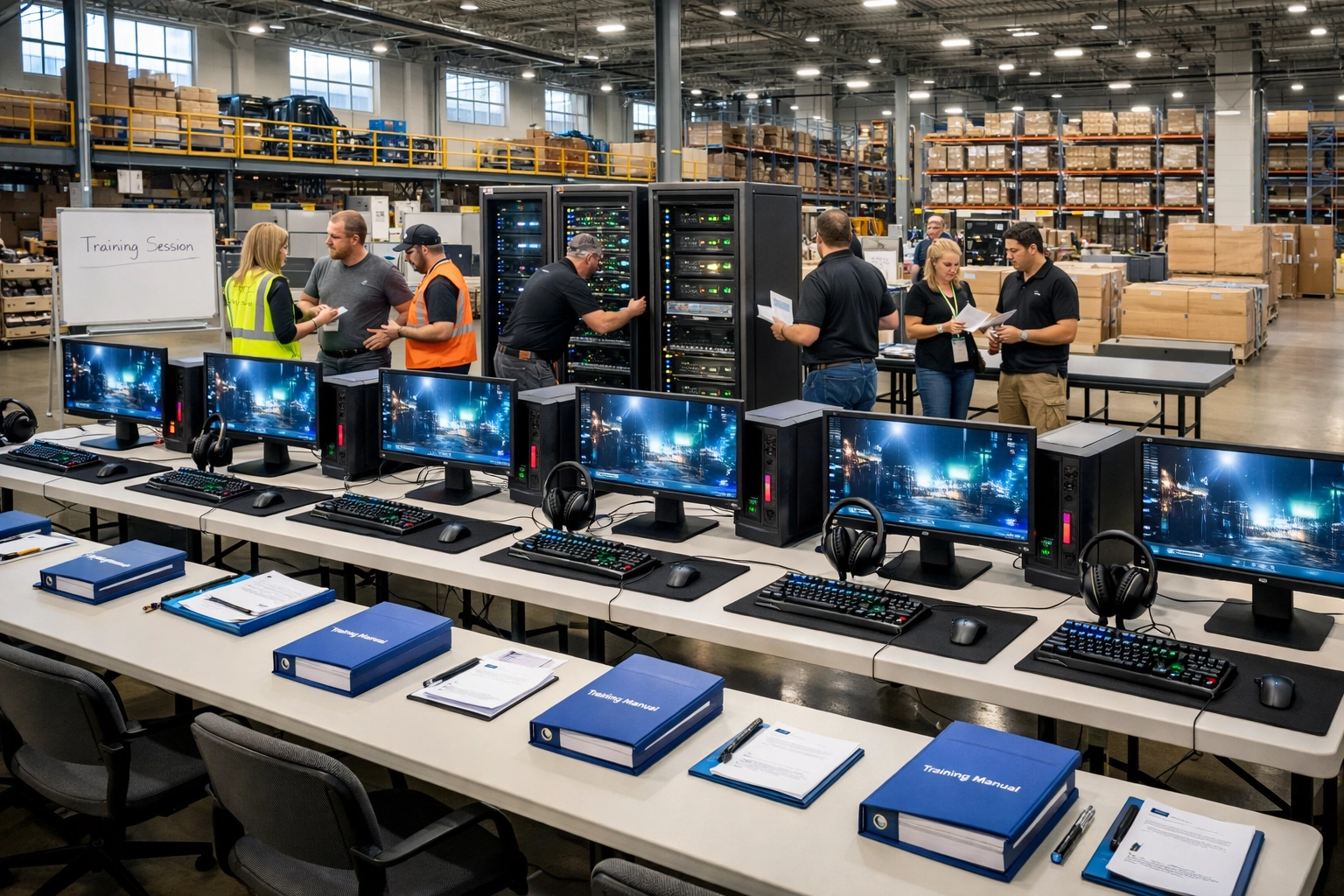
The employer partnership component proves critical. Distribution networks already maintain relationships with regional businesses for operational purposes. These existing relationships facilitate workforce placement conversations. When a training program operates within a distribution facility, local employers gain confidence in program quality because they see the infrastructure investment firsthand. They observe the equipment, meet instructors, and understand the seriousness of the initiative.
Data from existing programs validates this approach. Locations utilizing distribution infrastructure for training deployment report 73% participant placement rates within six months of program completion. These outcomes significantly exceed traditional workforce training programs, which average 45-50% placement rates. The difference stems from three factors: program quality assured through standardized deployment, employer confidence generated by physical presence, and ongoing support enabled by established operational infrastructure.
The Business Case for Fortune 100 Implementation
For large enterprises, the distribution-based training model offers compelling strategic advantages. First, it addresses talent pipeline challenges in a scalable, cost-effective manner. Rather than competing for limited qualified candidates in tight labor markets, companies can develop talent pipelines in communities they already serve through distribution networks.
Second, it generates measurable community impact without requiring dedicated philanthropic budgets. Training programs operated through existing distribution infrastructure become operational enhancements rather than separate corporate social responsibility initiatives. They utilize assets during non-peak periods, creating value from capacity that would otherwise remain idle.
Third, it provides competitive advantage in workforce recruitment. Companies implementing these programs establish presence as workforce development leaders in their communities. This reputation advantage proves particularly valuable in competitive talent markets where employer brand increasingly influences candidate selection.

The financial model supports executive-level consideration. Traditional workforce training centers require capital investments ranging from $500,000 to $2 million per location. Distribution-based deployment reduces this cost by 60-75% through infrastructure sharing. Operating expenses decrease similarly, as logistics personnel can support training operations during slower periods without additional full-time staffing requirements.
Perhaps most importantly, the model creates optionality. Companies can test programs at a handful of locations with minimal risk, validate outcomes, and then scale rapidly if results warrant expansion. This staged approach aligns with corporate decision-making processes while still offering meaningful scale potential.
Implementation Considerations
Successful deployment requires careful attention to several operational factors. Facility teams need clear guidelines on space allocation, scheduling coordination, and safety protocols. Training equipment must meet both educational requirements and facility standards for security and operational compatibility. Program coordinators require authority to build local employer relationships while maintaining alignment with centralized program standards.
The esports component demands particular consideration. Equipment specifications must support both competitive gaming and broader technical learning objectives. Curriculum development should balance engagement through gaming with explicit connections to workplace competencies. Participant recruitment must reach beyond traditional gaming communities to ensure diversity and broad opportunity access.
Measurement frameworks prove essential. Programs should track not only completion rates but also employment outcomes, wage progression, and employer satisfaction. These metrics demonstrate program value to internal stakeholders while providing data necessary for continuous improvement.
Moving Forward
The convergence of physical distribution infrastructure, esports engagement strategies, and career-ready program development represents a genuine innovation in workforce development scaling. Organizations with established distribution networks possess an underutilized asset for addressing talent pipeline challenges while creating community impact.
The question for executive leadership is not whether workforce development matters: that debate concluded years ago. The question is whether current approaches will achieve necessary scale before talent shortages constrain growth. Distribution-based deployment offers a path forward that leverages existing infrastructure, reduces capital requirements, and enables rapid national scaling.
As workforce challenges intensify and community expectations for corporate engagement grow, the organizations that pioneer distribution-based training models will establish competitive advantages difficult for competitors to replicate. The infrastructure exists. The need is documented. The only remaining requirement is the leadership decision to transform distribution networks into workforce development engines.





