
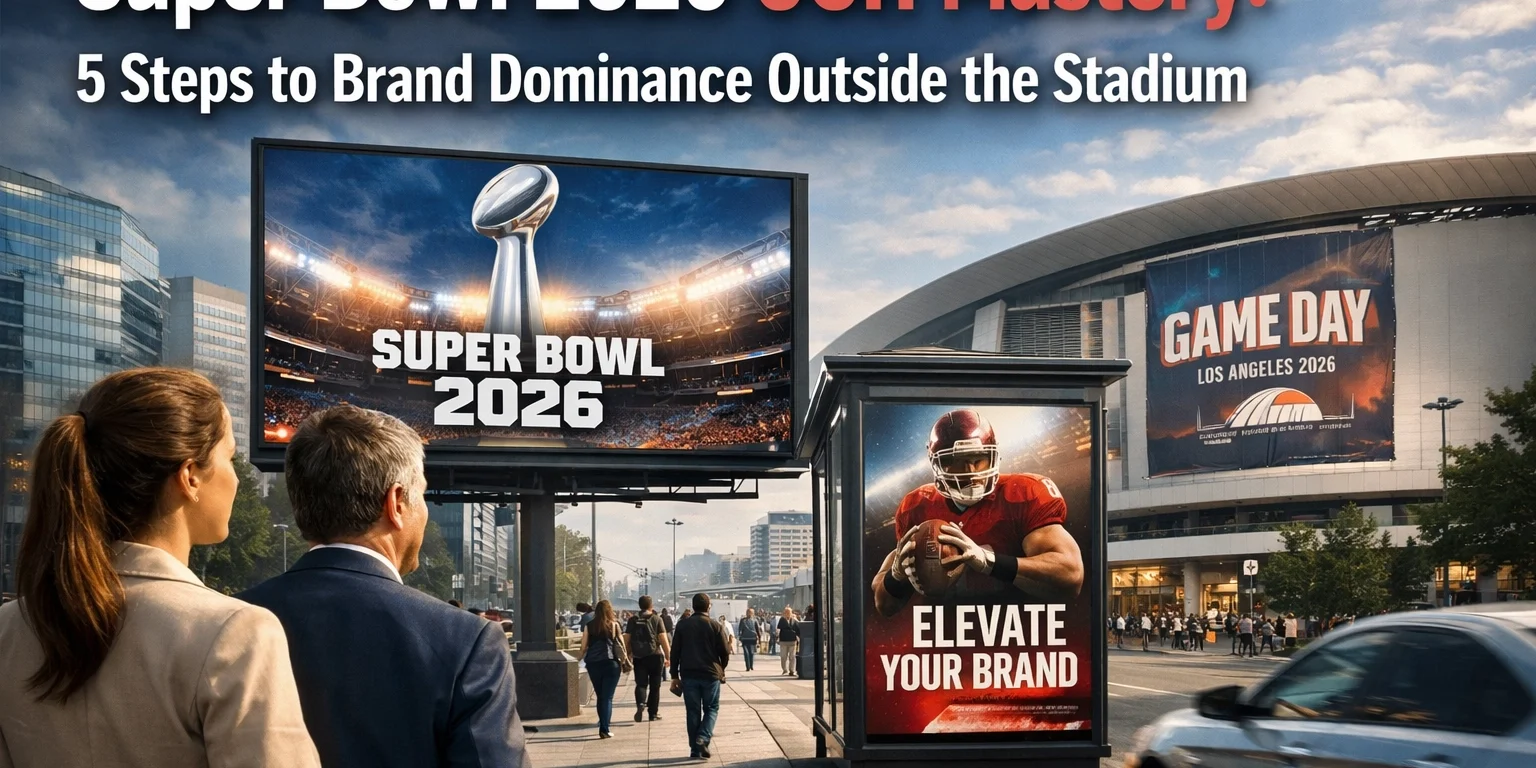
The Super Bowl remains advertising's most coveted stage, but here's a reality check: a 30-second TV spot during the Big Game now costs approximately $10 million. That's $333,333 per second of fleeting attention, competing with bathroom breaks, second-screen scrolling, and party conversations.
Smart brands are rewriting the playbook. Out-of-home (OOH) advertising: from digital billboards to interactive floor placements: offers sustained visibility, guaranteed eyeballs, and a fraction of the cost. While competitors burn budgets on broadcast seconds, forward-thinking marketers are owning the physical environment where Super Bowl fans actually spend their time: highways, airports, stadiums, entertainment districts, and hotels.
The Sporttron Digital Network exemplifies this shift, delivering immersive brand experiences that reach audiences before, during, and after the game. Watch how modern OOH networks are transforming sports marketing:
https://www.youtube.com/watch?v=l6J-0zileKE
Here are five strategic steps to dominate the out-of-home landscape at Super Bowl 2026 and turn environmental presence into lasting brand impact.
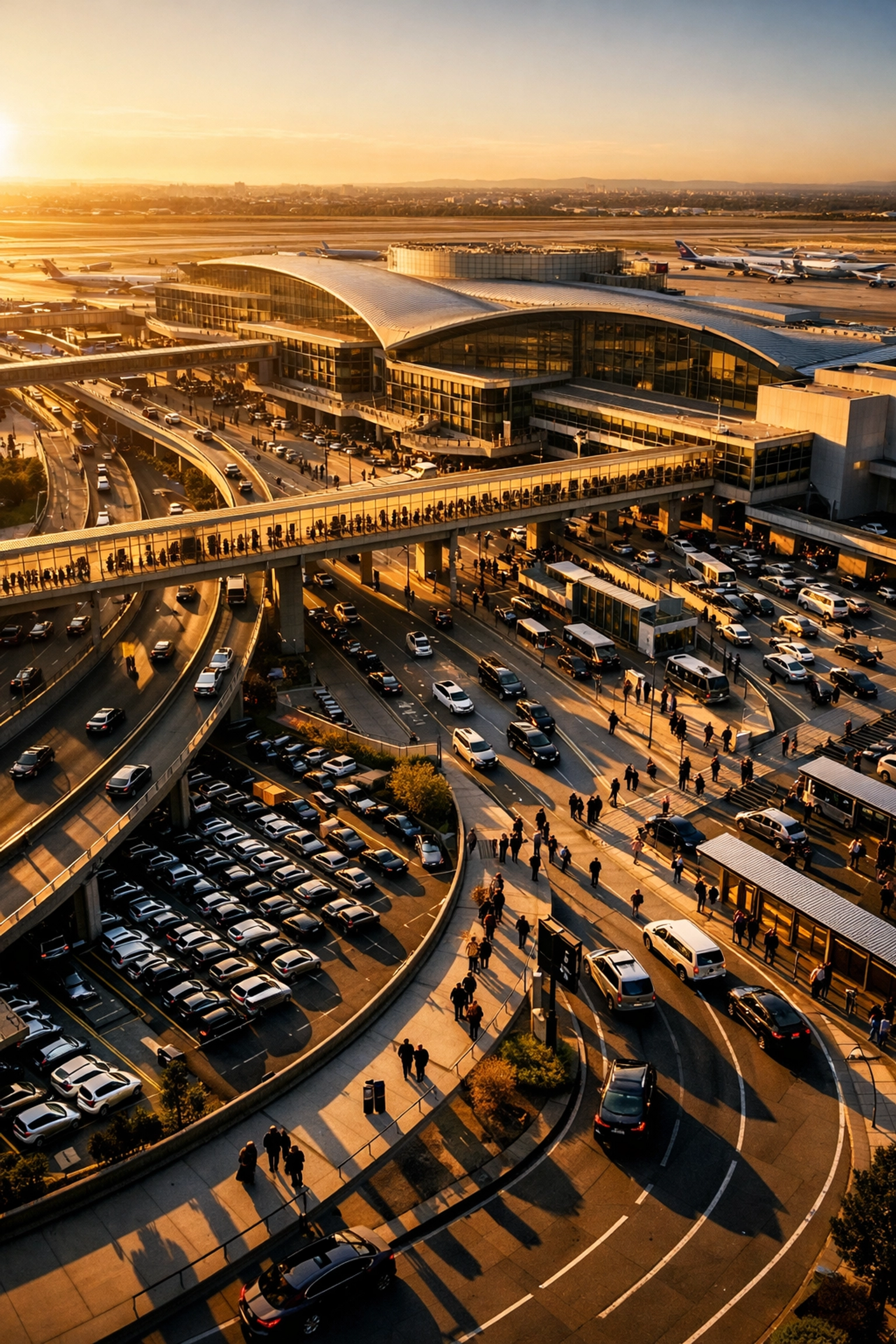
Step 1: Map the Fan Journey from Airport to Arena
Super Bowl attendees don't teleport to their seats. They navigate a predictable path: airport arrival, hotel check-in, restaurant visits, pre-game festivities, stadium approach, and post-game celebrations. Each touchpoint represents an OOH opportunity.
Data from recent Super Bowls shows that the average attendee spends 48-72 hours in the host city, creating multiple high-engagement moments. A wallscape on Interstate 95 in Miami, for example, costs approximately $130,000 for four weeks: meaning an $8 million budget (equivalent to one TV spot) could maintain that placement for nearly five years of continuous visibility.
Strategic OOH planning begins with audience movement analysis. Where do premium ticket holders congregate? Which routes see the heaviest foot traffic on game day? Airport terminals, rideshare pickup zones, and hotel lobbies serve distinct demographic segments with different messaging needs.
The most effective campaigns layer placements across this journey, creating repeated brand exposures that reinforce messaging through physical presence rather than digital interruption. When a fan sees your billboard driving from the airport, encounters your floor graphic in the hotel lobby, and passes your transit shelter ad walking to the stadium, you've achieved the frequency that television advertisers chase with far less efficiency.
Step 2: Embrace Multi-Format Environmental Ownership
Traditional OOH thinking stops at billboards. Modern strategies recognize that brand dominance requires owning the full sensory environment through diverse formats working in concert.
Digital billboards deliver dynamic content that can shift messaging throughout the day: promoting breakfast offerings at 8 AM, game-time specials at noon, and post-game celebration venues by evening. Street-level placements, including transit shelters and kiosks, capture pedestrian attention with detailed messaging that highway speeds don't permit. Floor graphics in high-traffic areas like convention centers and transportation hubs create impossible-to-ignore brand moments.
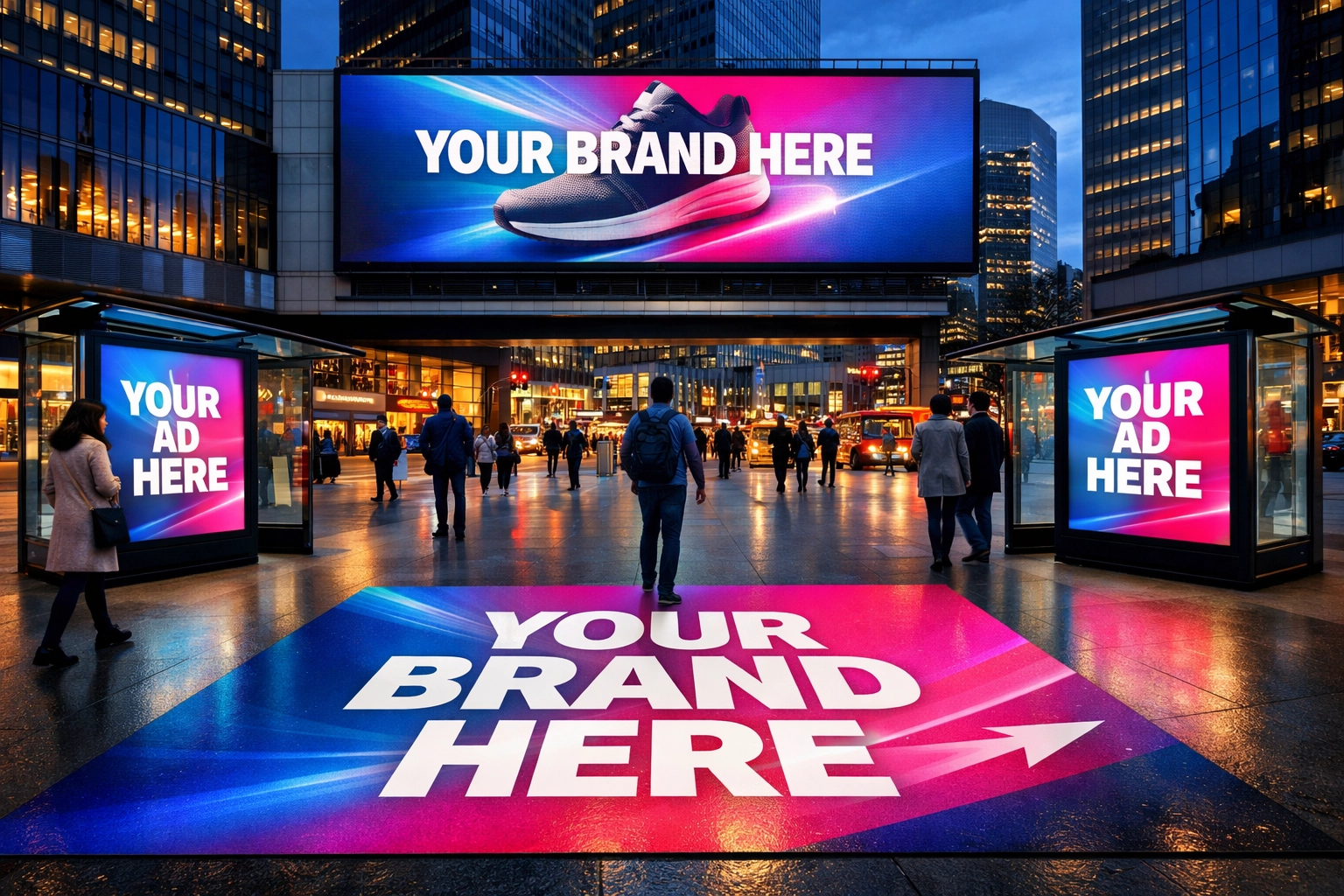
Networks like Sporttron integrate multiple OOH formats into unified campaigns, ensuring consistent brand storytelling across vertical billboards, horizontal floor placements, and everything in between. This multi-format approach mirrors how consumers actually experience environments: they don't just look straight ahead; they scan 360 degrees.
The objective isn't saturation for its own sake. It's about creating a cohesive brand ecosystem where every angle reinforces your message. When executed properly, attendees remember your brand not as an advertisement they saw, but as an omnipresent part of their Super Bowl experience.
Step 3: Integrate OOH with Digital and Social Channels
The most sophisticated OOH campaigns don't exist in isolation. They function as physical anchors for broader multi-channel strategies that extend reach and drive measurable engagement beyond the placement itself.
A billboard cannot be advertised the same way as an Instagram post: different formats demand different creative approaches. However, OOH excels when paired with social media and second-screen strategies. QR codes on transit ads drive immediate mobile engagement. Branded hashtags on digital billboards encourage social sharing. Location-based mobile campaigns can retarget audiences who pass specific OOH placements.
Consider this approach: your digital billboard near the stadium features a live social media feed of fan photos using your branded hashtag. Simultaneously, your Instagram campaign encourages fans to post selfies with your OOH placements for contest entry. The billboard becomes content, the content drives more OOH interaction, and the cycle compounds brand visibility organically.
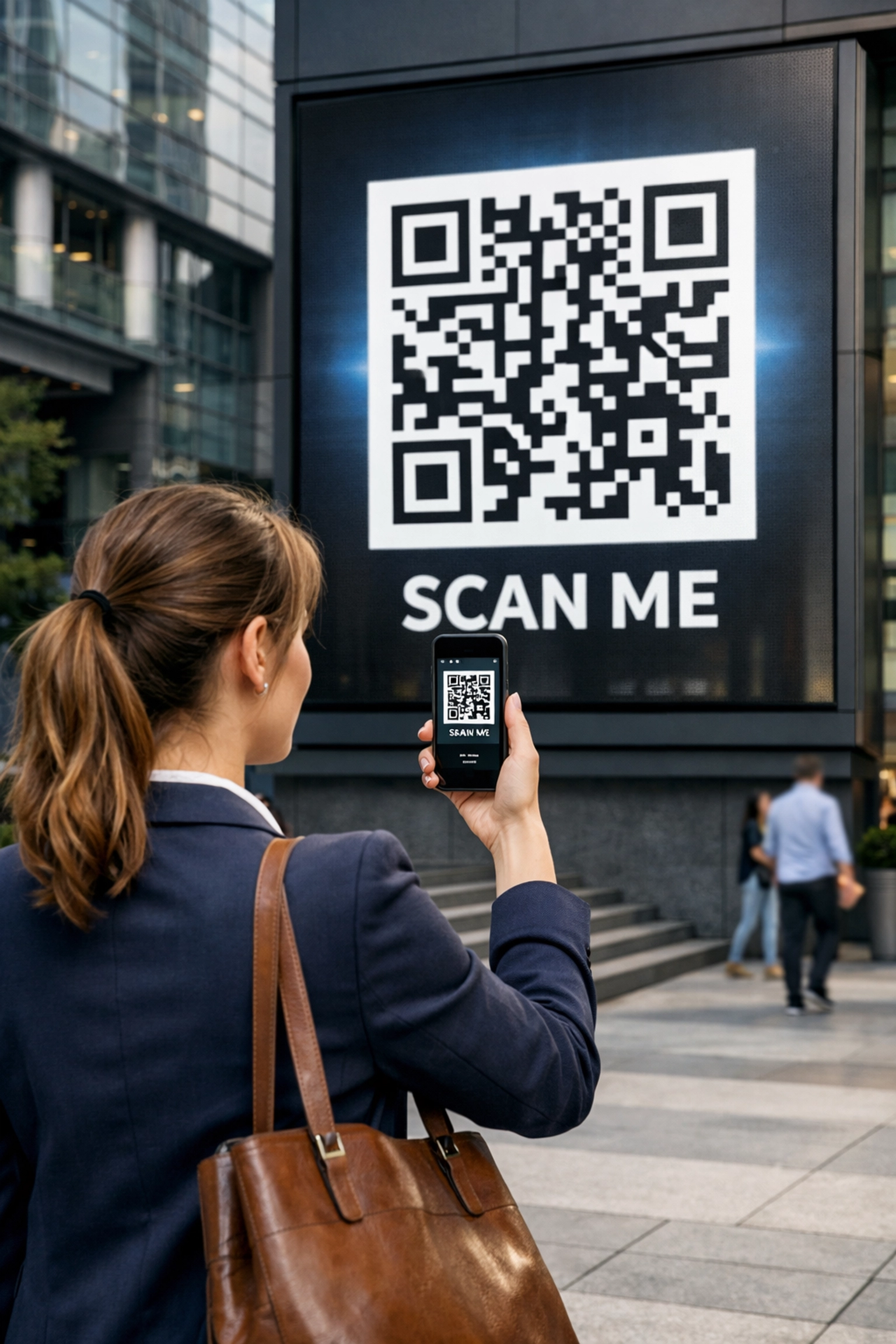
This integration transforms OOH from one-way broadcasting to two-way conversation. You're not just displaying a message; you're creating a participatory brand experience that fans actively choose to amplify through their own networks.
Step 4: Prioritize Sustained Visibility Over Momentary Spikes
Television spots vanish in 30 seconds. Digital ads disappear with a scroll. OOH operates on an entirely different temporal scale, offering continuous presence that accumulates impression value over days and weeks.
The timing advantage of OOH becomes particularly powerful during the Super Bowl season. While TV advertisers compete for seconds during the game itself, OOH campaigns can dominate the entire event window: from the moment the championship matchup is confirmed through the week of arrival and beyond.
A four-week billboard placement captures not just game-day attendees but also the hundreds of thousands of locals who pass that location daily throughout the Super Bowl period. The cost efficiency becomes clear: sustained exposure to multiple audience segments without the fragmented attention challenges that plague broadcast and digital advertising.
This extended timeline also allows for message evolution. Early placements can build anticipation and brand awareness. Closer to game day, messaging can shift to specific calls-to-action. Post-game placements can capitalize on the emotional aftermath and cement brand associations with the event itself.
Step 5: Leverage Technology for Measurement and Optimization
The historical knock against OOH: lack of measurement: no longer applies. Modern digital networks provide impression data, dwell time analytics, and even audience demographic profiling through mobile device tracking and computer vision technology.
Advanced OOH platforms now offer capabilities that rival digital advertising: A/B testing different creative executions, dayparting to show different messages at different times, and dynamic content triggered by real-time factors like weather, traffic patterns, or game developments.
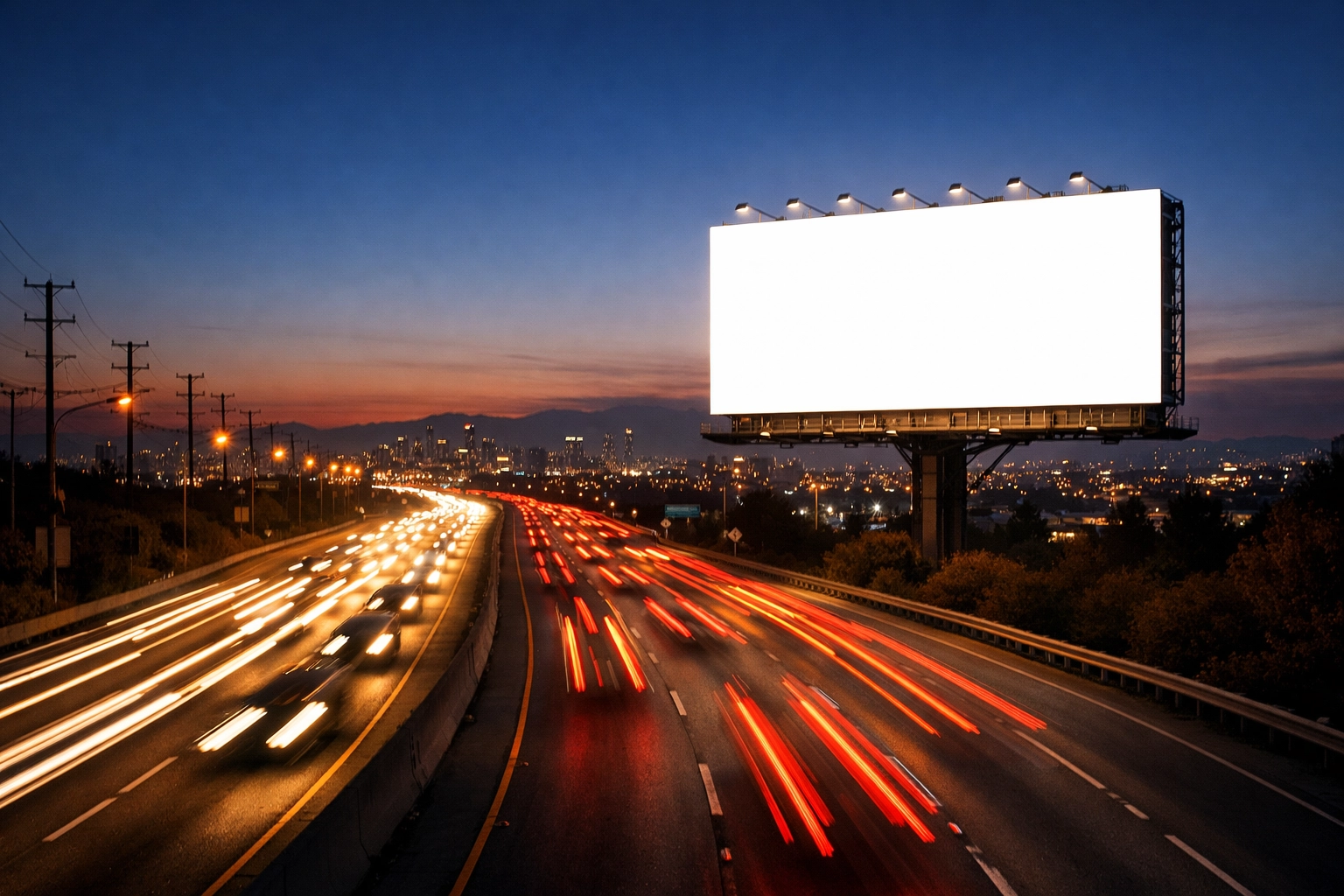
Attribution has improved dramatically as well. Geo-fencing around OOH placements allows marketers to track mobile behaviors of exposed audiences, measuring foot traffic to retail locations, website visits, and app downloads. Post-campaign surveys can assess brand lift and message recall with precision comparable to digital channels.
This measurement revolution means OOH decisions can be data-driven rather than instinctual. You can identify which formats deliver the strongest ROI, which locations generate the most engagement, and how OOH exposure correlates with downstream conversion behaviors.
The OOH Advantage in an Attention-Scarce World
Super Bowl advertising has always been about commanding attention when it matters most. But attention itself has fragmented across an ever-expanding array of screens, apps, and distractions.
Out-of-home advertising cuts through this noise by existing in the physical world where audiences cannot swipe away, skip ahead, or install ad blockers. When someone is driving down the highway or walking through an airport terminal, your billboard owns that moment with zero competition from other advertisers in that exact space and time.
The brands that dominate Super Bowl 2026 will be those that recognize this fundamental shift. The game itself remains important, but the real opportunity lies in owning the complete environment surrounding it: the journey, the atmosphere, the entire experience.
Digital networks like Sporttron are making this environmental dominance more accessible and measurable than ever before. The strategic question isn't whether OOH belongs in your Super Bowl marketing mix. It's whether you can afford to cede the physical environment to competitors while you chase expensive broadcast seconds.
For brands ready to think beyond the 30-second spot, out-of-home offers something increasingly rare in modern marketing: guaranteed, sustained, unmissable presence where your audience actually is.
The Big Game happens once a year. Your brand's presence in the environment can last far longer: and cost far less: than you think.
Ready to explore how environmental branding can amplify your next campaign? Learn more about USA Entertainment Ventures LLC and our approach to strategic marketing solutions.





