

The advertising landscape surrounding major sporting events has undergone a fundamental transformation. While brands once competed primarily for television airtime and digital impressions, the most sophisticated advertisers now understand that the physical environment holds untapped potential for audience engagement. This shift becomes particularly evident when examining strategies deployed during the Super Bowl, where every surface, screen, and touchpoint represents an opportunity to connect with millions of fans.
The Environment Domination Strategy
Environment domination refers to a comprehensive approach where brands establish presence across multiple physical touchpoints within a venue ecosystem. Rather than relying on a single advertisement placement, this strategy involves creating a coordinated brand experience that follows fans from the moment they approach a venue through their departure. The objective extends beyond simple visibility: it aims to create persistent brand recall through strategic repetition across varied formats.
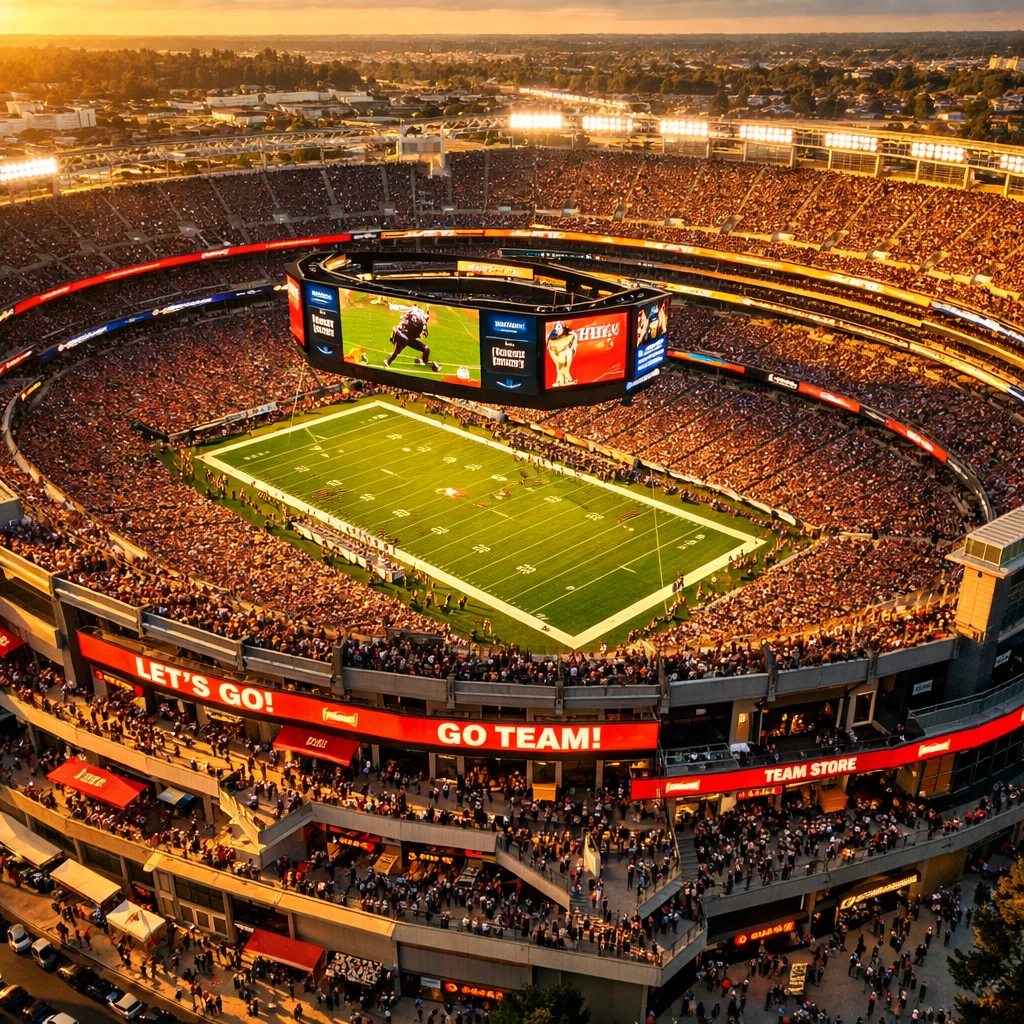
This approach recognizes a critical insight: fans attending major sporting events are in a heightened emotional state, making them particularly receptive to messaging when delivered through the right channels at optimal moments. The physical environment offers something digital advertising cannot replicate: unavoidable presence in spaces where audiences have chosen to be, creating organic rather than intrusive brand interactions.
The Sporttron Digital Network Advantage
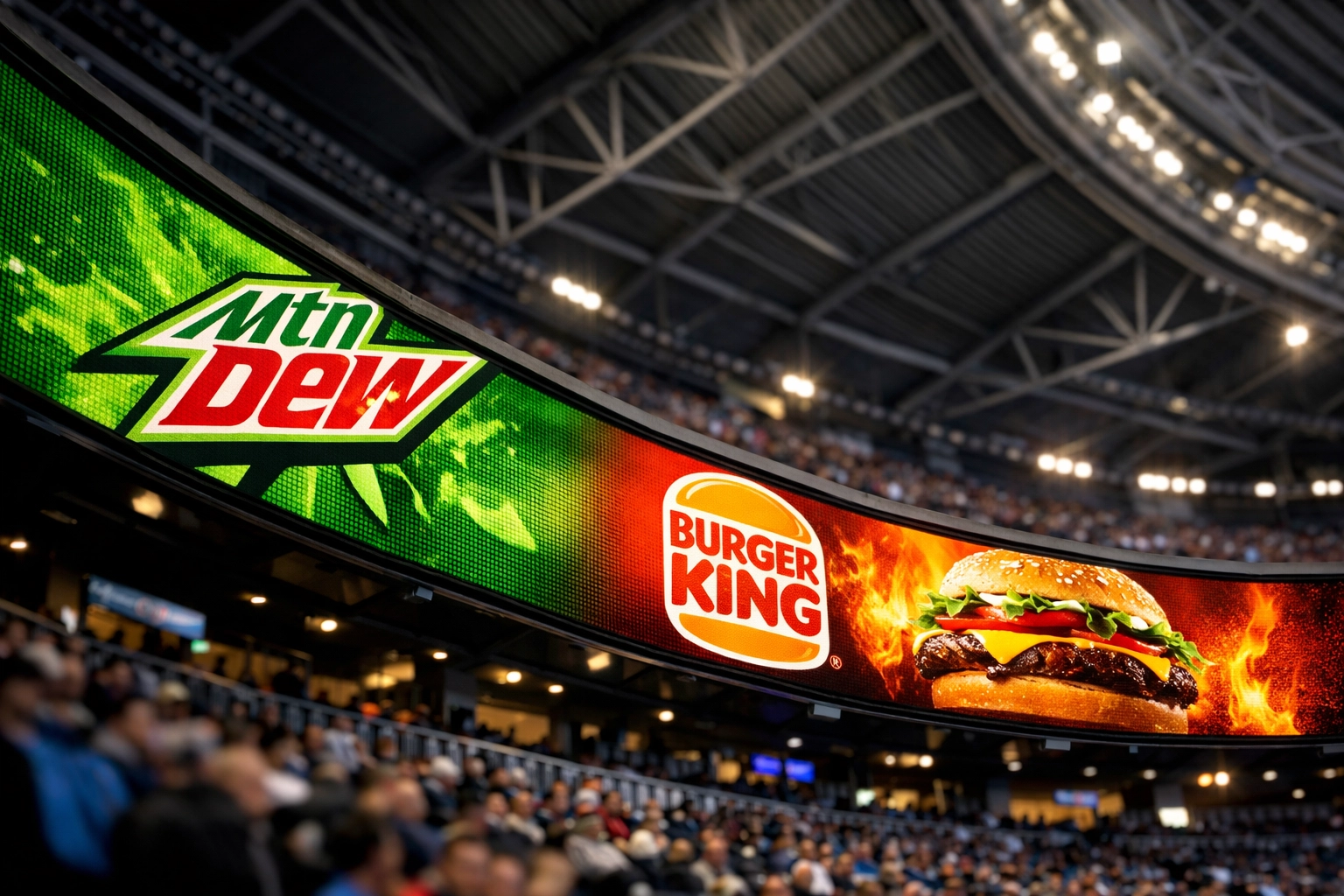
Sports Media Inc. developed the Sporttron Digital Network as a proprietary system addressing a persistent challenge in venue advertising: fragmented access. The network provides centralized entry to ribbon boards and jumbotrons across more than 780 venues nationwide, fundamentally changing how brands approach large-scale sporting event campaigns.
The consolidation of inventory access represents a significant operational advancement. Previously, brands seeking national presence across multiple venues faced separate negotiations with individual facility managers, athletic departments, and venue operators. This fragmentation created inefficiencies, inconsistent pricing, and logistical complications that limited campaign scale. The Sporttron network eliminates these barriers, enabling brands to execute coordinated campaigns across the nation's major sports facilities simultaneously.
For Super Bowl 2026 and beyond, this infrastructure delivers particular strategic value. Brands can establish presence not only at the championship game itself but across the entire sports ecosystem: from regular season games through playoffs: building cumulative exposure that reinforces messaging throughout the athletic calendar.
Beyond Digital Displays: The OOH Revolution
The Sporttron network functions as one component within Sports Media Inc.'s broader Out-of-Home advertising strategy, which they frame as an "OOH Revolution." This comprehensive approach extends beyond digital screens to encompass diverse physical touchpoints throughout the venue environment.
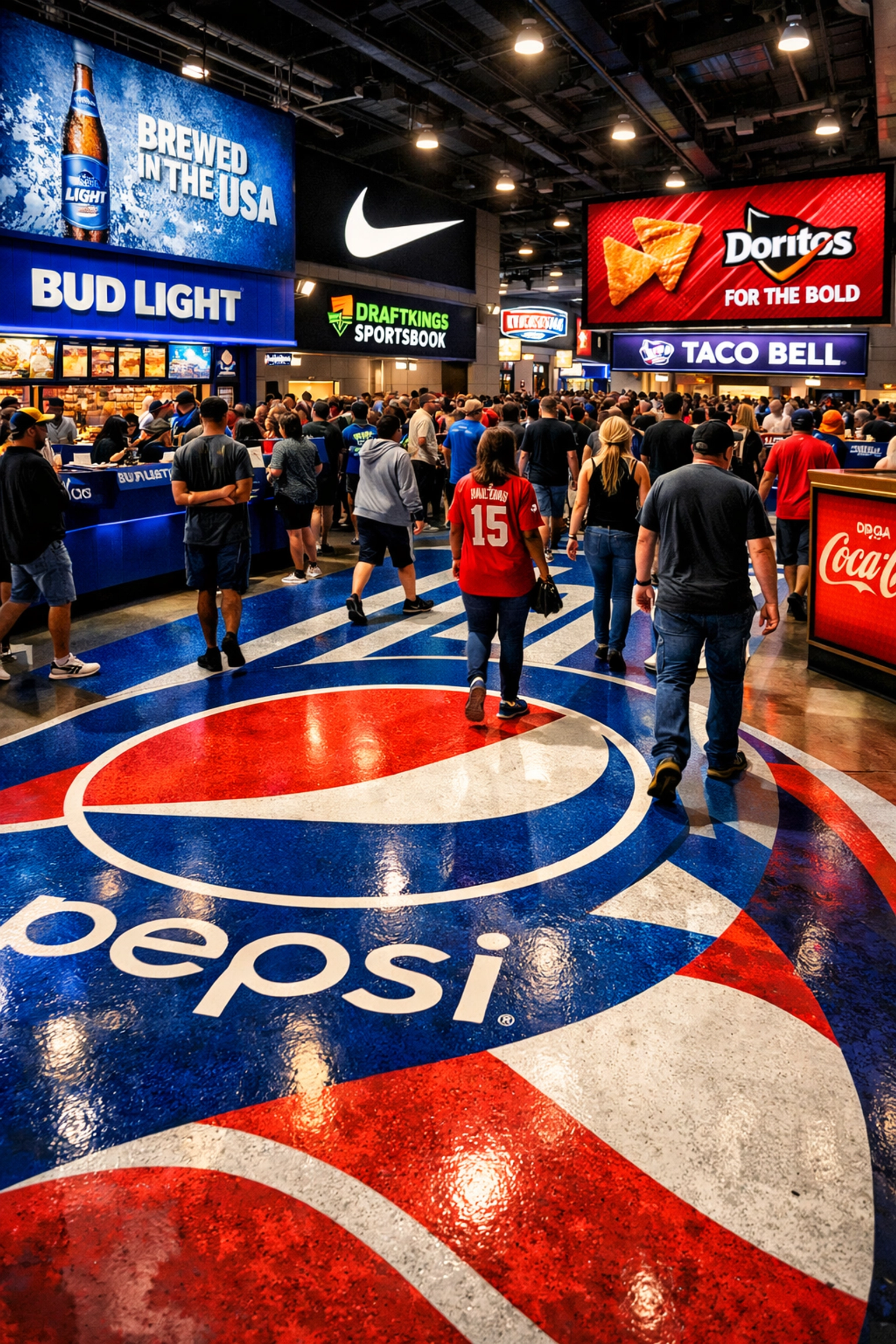
The strategy incorporates Times Square billboards for pre-event awareness building, concourse floor graphics that capture attention during high-traffic moments, and what the company describes as "high-touch concession platforms" that engage fans during natural pause points in their venue experience. Even elements like cup holders for charity serve dual purposes: supporting community initiatives while maintaining brand presence during consumption moments.
This multi-layered approach reflects an understanding that effective environment domination requires varied engagement points. Different fans respond to different stimuli at different times. Some notice digital displays during game breaks, while others engage more with physical touchpoints during concourse navigation. By establishing presence across multiple formats, brands increase the probability of meaningful audience connection.
The cumulative effect creates what advertising strategists call "surround sound" brand presence: where messaging reinforces itself through repetition across channels without appearing redundant. Each touchpoint serves a distinct function while contributing to unified brand recall.
Data-Driven Precision in Physical Spaces
Sports Media Inc. positions its OOH infrastructure as part of a broader sports marketing ecosystem that combines physical advertising with digital analytics and fan sentiment analysis. This integration represents an important evolution in Out-of-Home advertising, bringing data-driven decision-making to traditionally instinct-based media placement.
The company's management of partnerships with over 20,000 athletes through NIL (Name, Image, Likeness) agreements provides additional data streams about fan preferences and engagement patterns. This information informs not only digital campaigns but also physical placement strategies, helping determine which venue locations generate optimal visibility and which messaging resonates most effectively with specific audience segments.
The term "veteran-grade precision" appears in Sports Media Inc.'s promotional materials, suggesting an approach that applies systematic methodology to campaign execution across youth sports through major stadium events. This consistency allows for performance benchmarking and continuous optimization: bringing accountability to a medium that has historically operated with limited measurability.
Strategic Implications for Brands
The centralized infrastructure approach offers brands several competitive advantages beyond simple convenience. First, it enables rapid campaign deployment. When time-sensitive messaging requires swift execution: product launches, crisis response, or opportunistic marketing: centralized access eliminates approval delays inherent in multi-venue negotiations.
Second, it facilitates testing and iteration. Brands can deploy varied creative across different venue types or geographic markets, measure relative performance, and adjust strategy based on observed results. This experimental capability was previously impractical given the administrative burden of coordinating with numerous independent venues.
Third, centralized systems support consistency. Brand guidelines can be enforced uniformly across hundreds of locations, ensuring visual identity remains intact regardless of where fans encounter the messaging. This consistency strengthens brand recognition and prevents the dilution that occurs when implementations vary significantly across touchpoints.
For Super Bowl 2026, these advantages compound. The championship game itself represents a singular moment of peak attention, but the surrounding weeks generate substantial audience interest. Brands leveraging infrastructure like Sporttron can establish presence early, build momentum through consistent messaging, and maintain visibility beyond the game itself: maximizing return on advertising investment.
The Future of Physical Advertising Infrastructure
The development of centralized OOH networks signals a broader industry trend toward consolidation and standardization in physical advertising. As measurement capabilities improve and performance data becomes more accessible, expect increasing sophistication in how brands approach venue advertising.
Future iterations will likely incorporate real-time optimization, where messaging adjusts based on game developments, crowd demographics, or external factors like weather and social media trends. Dynamic creative capabilities already common in digital advertising will migrate to physical displays, enabling personalized messaging that responds to specific contexts.
The integration of physical and digital strategies will also deepen. QR codes on concourse graphics, social media integration with jumbotron displays, and mobile app synchronization with in-venue experiences will create seamless transitions between physical and digital brand interactions.

For venue operators, centralized networks offer revenue optimization tools that were previously unavailable. Rather than managing inventory manually, automated systems can price placements dynamically, maximize fill rates, and match brands with audiences based on demographic alignment. This efficiency benefits both venues and advertisers, creating marketplace dynamics that improve outcomes for all participants.
Practical Takeaways
Brands considering major sporting event advertising should evaluate environment domination strategies alongside traditional media buys. The question shifts from "Should we advertise at the Super Bowl?" to "How can we establish meaningful presence across the entire fan journey?"
Infrastructure solutions like Sporttron Digital Network provide accessible entry points for brands that previously lacked resources to execute national venue campaigns. The operational simplification allows marketing teams to focus on creative strategy rather than logistical coordination.
Most importantly, the physical environment offers something increasingly scarce in modern advertising: undivided attention. In an era where digital audiences multitask, skip ads, and employ blocking technology, fans in sporting venues represent a captive audience predisposed to engagement. Smart brands recognize this opportunity and allocate resources accordingly.
As Super Bowl 2026 approaches, the most sophisticated advertisers won't simply purchase a commercial slot. They'll orchestrate comprehensive environmental campaigns that surround fans with cohesive brand experiences across multiple touchpoints, creating lasting impressions that extend well beyond game day.





