
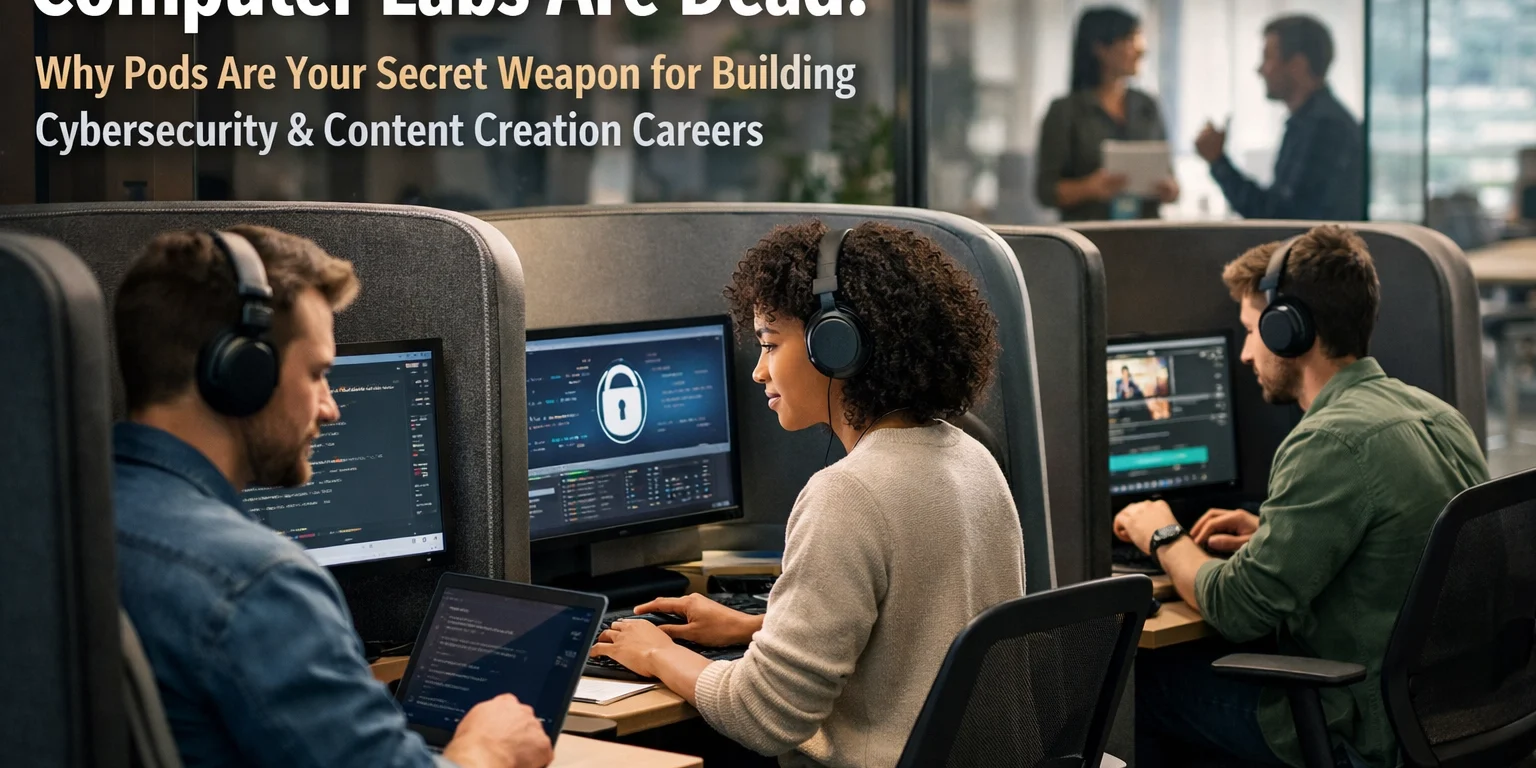
Remember those computer labs? You know the ones, thirty desktops in perfect rows, everyone staring at identical beige monitors, the teacher at the front droning on while you pretended to practice Excel formulas but actually played Minesweeper? Yeah, those are going the way of the floppy disk.
The future of tech education isn't about sitting in isolation. It's about pods, collaborative, flexible workspaces that mirror how actual cybersecurity teams, content studios, and modern businesses operate. And if you're trying to break into fields like cybersecurity or content creation, understanding this shift isn't just interesting. It's essential.
What Exactly Are Pods, Anyway?
Think of pods as the anti-lab. Instead of straight rows designed for individual work, pods cluster computers and workstations in small groups of four to six. Students face each other. They can see each other's screens. They're forced: in the best way possible: to collaborate, troubleshoot together, and learn how real-world teams function.
This isn't some trendy educational fad. Research comparing pod-arranged classrooms to traditional computer labs found that students in pod configurations demonstrated significantly more student-to-student and student-to-teacher interactions, better collaboration, and fewer off-task behaviors. When students can actually see and talk to each other without craning their necks around monitors, they learn differently. They learn better.

But here's where it gets interesting for career-minded individuals: pods don't just improve grades. They teach the soft skills that cybersecurity analysts, content creators, and operations specialists actually need in the field.
The Cybersecurity Connection: Why Isolation Fails
Cybersecurity isn't a solo sport. Despite what Hollywood would have you believe, the hoodie-wearing hacker working alone in a dark basement isn't the industry standard. Real cybersecurity work happens in Security Operations Centers (SOCs), where teams monitor threats, share intelligence, and coordinate responses across multiple screens and systems simultaneously.
Traditional computer labs prepare you for… traditional computer labs. You learn technical skills in isolation, troubleshoot problems alone, and never develop the communication patterns that separate good security analysts from great ones. When a potential breach occurs at 2 AM, you can't quietly Google the answer while avoiding eye contact. You need to communicate clearly with your team, explain technical concepts to non-technical stakeholders, and make collaborative decisions under pressure.
Pods replicate this environment. When you're working through a penetration testing exercise or analyzing network traffic patterns, having teammates right there forces you to articulate your thinking. You can't just know something: you have to explain why you know it, defend your reasoning, and incorporate others' perspectives. Studies of active learning classrooms with pod-based layouts showed students performed marginally better on papers and overall course grades compared to traditional setups, with the advantage stemming from design that facilitates collaboration.

This matters because cybersecurity job postings increasingly emphasize "communication skills" and "ability to work in team environments" alongside technical requirements. Employers aren't just looking for people who can spot vulnerabilities. They need professionals who can explain those vulnerabilities to executives, collaborate with development teams to implement fixes, and work alongside other security specialists without stepping on toes.
Content Creation: Where Collaboration Is Currency
Content creation has exploded from a niche field into one of the fastest-growing career pathways. But here's what most people miss: successful content creators aren't lone wolves. They're part of production teams, creative partnerships, and collaborative networks.
Whether you're producing video content, managing social media campaigns, or creating digital marketing materials, you're coordinating with writers, designers, editors, and clients. The YouTube creator needs thumbnail designers. The podcast host works with audio engineers. The social media manager collaborates with graphic artists and copywriters.
Traditional computer labs teach you software: Premiere Pro, Photoshop, Final Cut. Pods teach you workflow. When you're sitting in a pod environment working on a video project, you're naturally dividing tasks. One person handles footage, another works on graphics, someone else manages audio. You're giving real-time feedback, catching mistakes before they become problems, and learning to balance creative vision with practical constraints.
Research consistently shows that pod arrangements lead to instructors spending more time consulting with individuals and small groups rather than lecturing to the entire class. For content creation, this is gold. Instead of following rigid tutorials, students get personalized feedback on their creative choices, learn to critique each other's work constructively, and develop the collaborative rhythm that defines professional production environments.
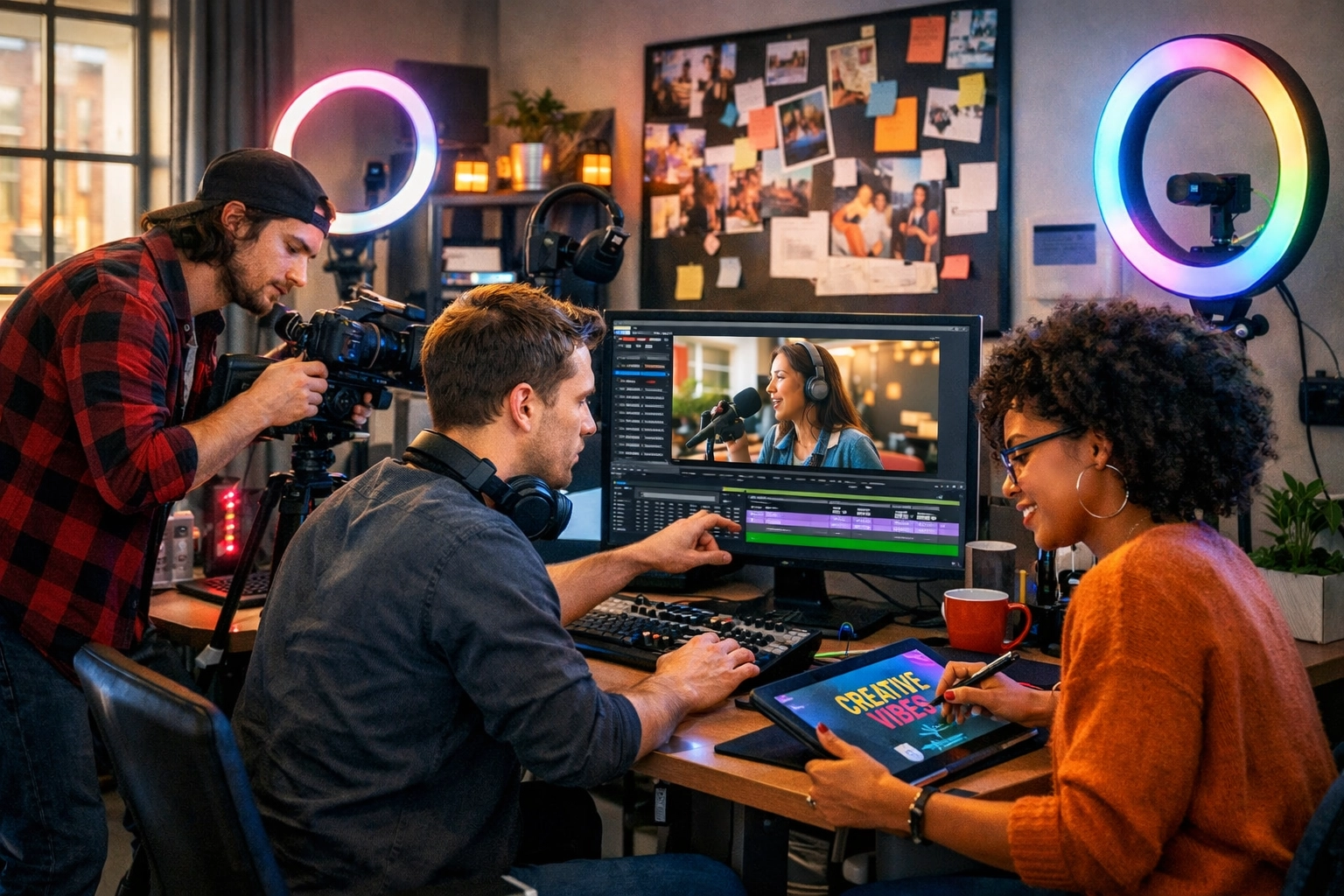
The content creation industry doesn't hire based solely on portfolio quality anymore. They want people who can take direction, incorporate feedback without ego, and contribute to team projects without dominating or disappearing. Pods naturally cultivate these skills because you physically cannot hide in the back and work alone.
The Hidden Career Path: Logistics and Infrastructure Management
Here's something most people overlook: someone has to manage these pods. Someone designs the physical infrastructure, maintains the network, handles the logistics of shared resources, and ensures security protocols work in collaborative environments.
This creates an entirely new career pathway that blends IT knowledge with operations management. Pod-based learning environments require sophisticated network architectures that handle multiple users accessing different resources simultaneously. They need security measures that protect individual work while enabling collaboration. They demand IT professionals who understand both the technical requirements and the human factors of shared workspaces.
Traditional computer labs had it easy: thirty identical machines running identical software with identical configurations. Pods are messier, more complex, and more interesting. They require professionals who can think systemically about infrastructure, anticipate conflicts before they occur, and design solutions that balance security with accessibility.
These skills translate directly to careers in logistics and operations management across industries. The person who can successfully manage pod infrastructure can manage cloud deployments, coordinate remote team resources, and handle the complex logistics of modern distributed workforces. The demand for these hybrid IT-operations roles continues growing as companies abandon traditional office setups for more flexible, collaborative arrangements.
What Traditional Labs Still Do Well (And Why That Matters)
Let's be fair: traditional computer labs aren't entirely obsolete. They ensure every student has dedicated computing resources, provide focused environments for learning technical skills, and work well for schools with limited budgets or infrastructure.
But that's precisely the point. Traditional labs prepare you for traditional environments. If your career goal involves working in legacy systems, maintaining existing infrastructure, or operating in highly controlled environments, traditional lab experience remains valuable.
The problem is that most growth careers: especially in cybersecurity and content creation: aren't happening in traditional environments. They're happening in dynamic, collaborative, constantly evolving spaces that look a lot more like pods than labs.
The Practical Takeaway
If you're currently in school or considering returning for technical training, pay attention to the physical setup of your learning environment. Programs using pod-based arrangements aren't just following trends: they're preparing you for how these careers actually work.
Look for training programs that emphasize collaboration alongside technical skills. Seek out learning environments where you'll work with others, not just around them. And if you're already working in the field, consider how your physical workspace either supports or hinders the collaborative skills that increasingly define career success.
The death of computer labs isn't about nostalgia or technology upgrades. It's about recognizing that the skills required for cybersecurity, content creation, and modern operations work have evolved beyond what isolation-based learning can provide. Pods represent a fundamental shift in how we prepare people for technical careers: one that finally matches the learning environment to the actual working environment.
For anyone serious about building a career in these fields, that alignment might be the most valuable lesson of all. The future of work is collaborative, adaptive, and fundamentally team-based. Your learning environment should be too.





