
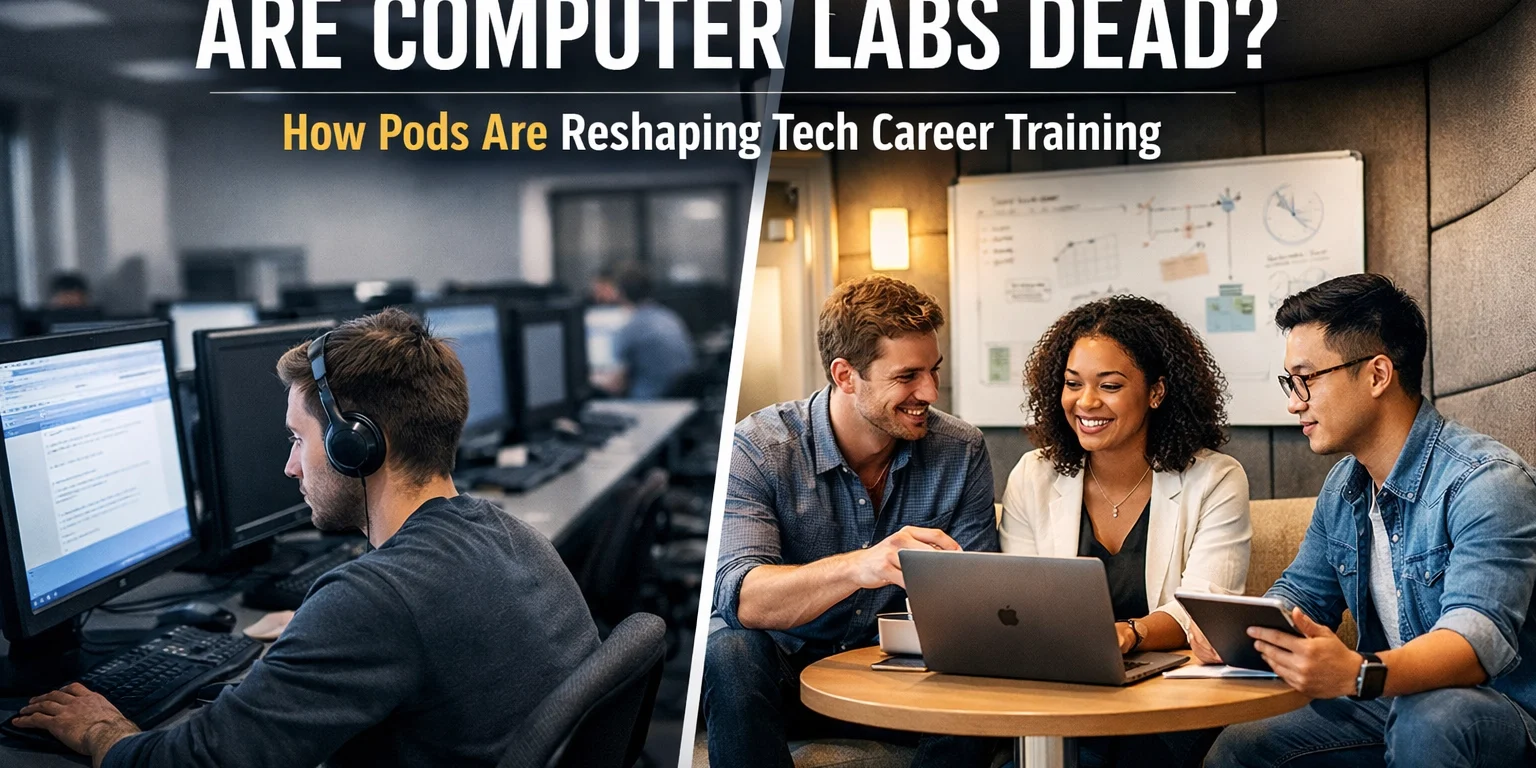
Remember the computer lab? Rows of identical beige towers, everyone staring at their own screen, a teacher circulating through the silent aisles. That familiar scene is quietly disappearing from educational institutions across the country. Not because technology is becoming less important: quite the opposite. Traditional computer labs are being replaced by something fundamentally different: learning pods designed around specific career outcomes rather than general-purpose computing.
The numbers tell a compelling story. Usage patterns for traditional computer labs have declined steadily over the past decade as students increasingly bring their own devices for basic tasks like word processing or web browsing. But simultaneously, demand for specialized technical training in fields like logistics, cybersecurity, and content creation has surged. This paradox revealed a critical insight: students don't need more access to generic computers. They need purposefully designed spaces that mirror the collaborative, multi-platform environments they'll encounter in their careers.
Defining the New Learning Environment
At its most basic level, a computer pod consists of a cluster of three to five computers configured in flexible spaces: classrooms, libraries, or even hallways. But contemporary learning pods extend far beyond this simple definition. Modern pods integrate collaborative workspaces specifically designed for team-based projects, streaming studio capabilities, real-time analytics dashboards, and industry-aligned career pathway modules.
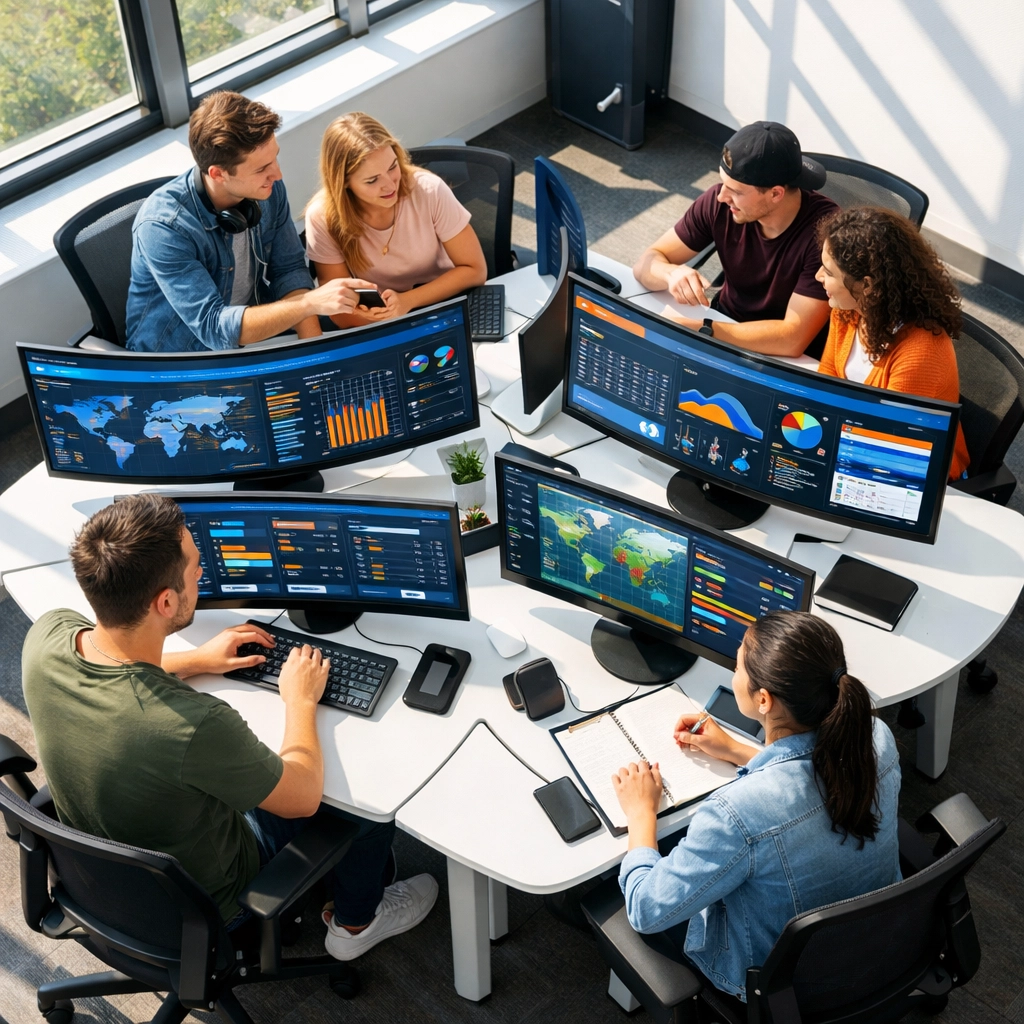
The fundamental distinction lies in purpose. Traditional computer labs offered the same software and configurations to every student, regardless of their educational goals or career aspirations. Pods, by contrast, function as purpose-built platforms organized around specific skill pathways. This targeted approach transforms how students develop both technical competencies and the project management abilities that employers consistently identify as critical workplace skills.
Logistics and Supply Chain Management Training
Consider how pods reshape logistics education. Rather than learning spreadsheet formulas in isolation, students in logistics-focused pods work with integrated transportation management systems, inventory control software, route optimization tools, and real-time tracking dashboards. They navigate scenarios requiring simultaneous coordination of multiple platforms: precisely the kind of multi-system orchestration that defines contemporary supply chain operations.
This environment develops project management competencies organically. Students must establish priorities when system alerts compete for attention, allocate limited resources across competing demands, communicate status updates to team members working on interconnected tasks, and adapt plans when circumstances change. These aren't theoretical exercises added to a curriculum. They emerge naturally from the structure of pod-based learning.
The specialized nature of logistics pods also forces students to work within constraints: limited terminal access, specific software configurations, time-bound scenarios. Far from being limitations, these constraints breed creativity and adaptability. Students learn to leverage available resources efficiently, a hallmark of effective project managers in any field. Real-time analytics built into many pod systems provide immediate feedback on progress, helping students develop habits of measurement, adjustment, and continuous improvement that transfer directly to professional environments.
Cybersecurity Operations Centers
Cybersecurity-focused pods demonstrate even more dramatically how physical learning infrastructure shapes skill development. These specialized spaces provide access to network monitoring tools, vulnerability scanning platforms, incident response frameworks, and threat intelligence feeds. Students can safely conduct penetration testing and analyze malware samples in isolated environments that protect broader institutional networks.
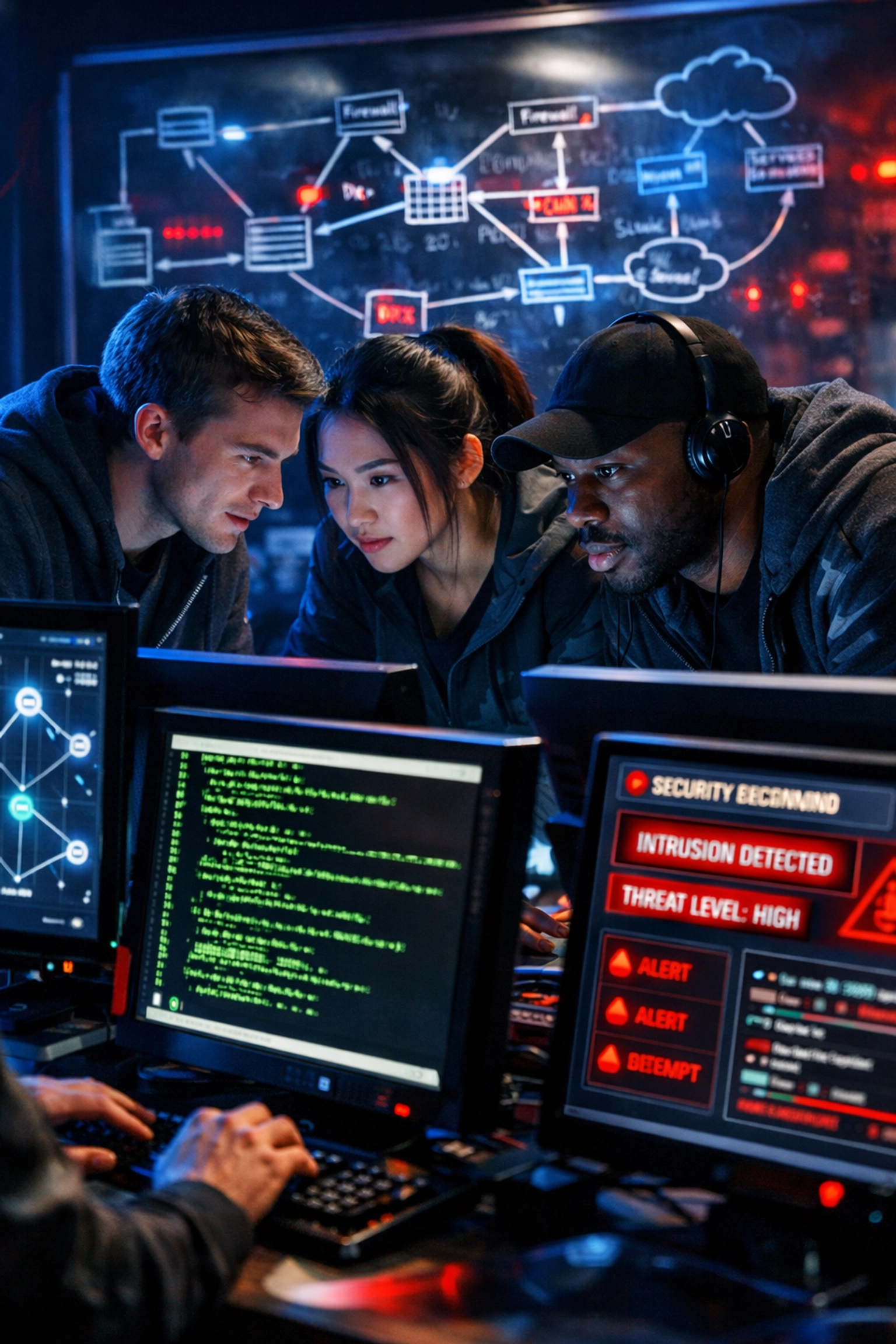
But the collaborative configuration of pods enables something traditional isolated workstations actively hindered: red team versus blue team exercises. In these scenarios, some students attempt to penetrate networks while others defend them. This requires constant communication, strategy adjustment, and real-time collaborative problem-solving. Students on the red team must coordinate their approach, identifying which vulnerabilities to probe and when. Blue team members must allocate defensive resources, communicate threat assessments, and adjust their posture based on emerging attack patterns.
Critically, these exercises develop technical skills and communication abilities simultaneously. Students learn to articulate technical findings to non-technical team members: a skill repeatedly identified as the difference between junior and senior cybersecurity professionals. In traditional labs where students worked independently, this communication competency developed separately, if at all. Pod environments integrate it into the fundamental learning process.
The physical proximity of pod members also facilitates knowledge transfer that formal instruction often misses. When one student identifies an unusual network pattern, nearby team members can observe the discovery process in real time, asking questions and building shared understanding. This peer learning accelerates skill development across the entire group.
Content Creation Studios
Content creation pods maintain access to professional-grade tools like Adobe Creative Suite and video editing platforms: computing power that exceeds what many students can afford personally. But the configuration of these spaces transforms how students develop creative and professional skills.
Unlike traditional labs where each student worked on individual projects in isolation, content creation pods enable collaborative workflows. Students provide feedback on each other's work in progress, learning to offer constructive criticism and incorporate suggestions: essential skills in professional creative environments where projects move through multiple rounds of review before publication.
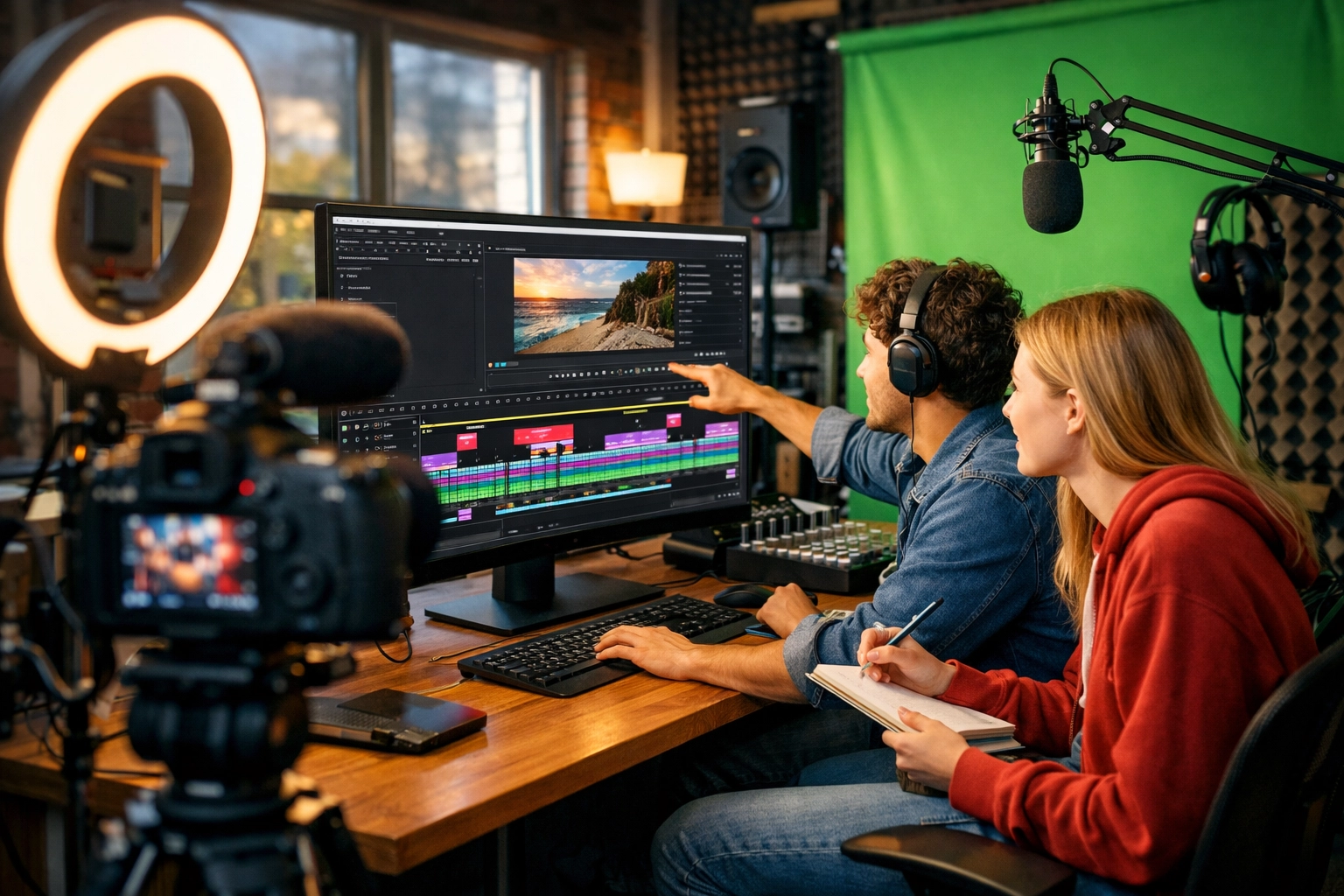
The physical setup often includes large monitors that facilitate group review sessions, dedicated spaces for recording audio or video, and lighting configurations that support various production needs. Students learn not just how to use editing software, but how to manage projects through production pipelines involving multiple contributors. A student filming interview footage learns to coordinate with another managing audio levels and a third monitoring visual composition. This mirrors professional production workflows far more accurately than individual assignments ever could.
Extended hours characteristic of many pod installations accommodate diverse student schedules, bringing specialized tools to where and when students need them rather than forcing everyone into rigid time blocks. This flexibility proves particularly valuable for content creation, where inspiration and productivity don't always align with institutional schedules.
The Integration Advantage
Perhaps the most significant benefit of pod-based learning environments is that technical skills and project management capabilities develop simultaneously rather than sequentially. Traditional educational models often taught technical competencies first, then expected students to separately develop soft skills like communication, collaboration, and resource management. This sequential approach created graduates who understood their technical domains but struggled to function effectively in collaborative professional environments.
Pod configurations integrate these skill sets from the beginning. Students can't complete logistics scenarios without coordinating with team members. Cybersecurity exercises fail if red and blue teams don't communicate effectively. Content projects stall when collaborators can't manage competing creative visions. These challenges aren't obstacles to learning: they're the learning itself, preparing students for the complex collaborative work that defines contemporary careers in these fields.
Looking Forward
Educational institutions redesigning their technology infrastructure have recognized that open floor plans enable spontaneous team formation, that flexible scheduling accommodates diverse student needs, and that purpose-built environments produce better outcomes than general-purpose spaces. The question is no longer whether traditional computer labs will disappear: usage trends have already answered that definitively. Instead, the question is what replaces them.
Pod-based environments represent thoughtful evolution rather than simple elimination. They maintain the accessibility and specialized resources that justified computer labs while eliminating the isolation and inefficiency that made those spaces increasingly obsolete. As career pathways in logistics, cybersecurity, and content creation continue expanding, the physical infrastructure supporting education must evolve accordingly.
The death of traditional computer labs shouldn't be mourned. What's emerging in their place: specialized, collaborative, career-focused learning pods: better serves both students and the industries they'll join. This transformation reflects a broader understanding: effective technical education requires more than access to computers. It requires environments purposefully designed to develop the integrated skill sets that contemporary careers demand.





