
The Super Bowl represents the apex of American advertising. Each year, companies invest millions in 30-second spots hoping to capture the attention of over 100 million viewers. Yet the most successful campaigns share a common trait that extends far beyond the television screen: they build emotional connections through multi-platform storytelling that begins weeks before kickoff and continues long after the final whistle.
This strategic approach isn't reserved exclusively for major corporations with multi-million dollar budgets. The framework underlying successful Super Bowl advertising: integrating social media campaigns, influencer partnerships, and real-time engagement: offers valuable lessons for businesses of any size seeking to build inspiration-driven brands.
The Three-Phase Marketing Framework That Drives Success
The most effective Super Bowl campaigns follow a deliberate timeline designed to maximize engagement while optimizing advertising spend. This three-phase approach transforms a single event into an extended brand-building opportunity.
Pre-Game Hype (Mid-January through Early February): This critical phase establishes brand presence before attention peaks. Strategic brands begin seeding content, expanding audience reach, and building retargeting pools using lower cost-per-click rates available in the weeks preceding the event. Launching campaigns early allows companies to position themselves top-of-mind while capturing both dedicated sports enthusiasts and casual viewers drawn to the cultural phenomenon.
The pre-game phase serves multiple purposes beyond awareness. Early campaign launches create data pools for optimization, test messaging variations, and establish narrative frameworks that will be activated during the event itself. Brands that wait until game week face significantly higher advertising costs and miss opportunities to build anticipation.
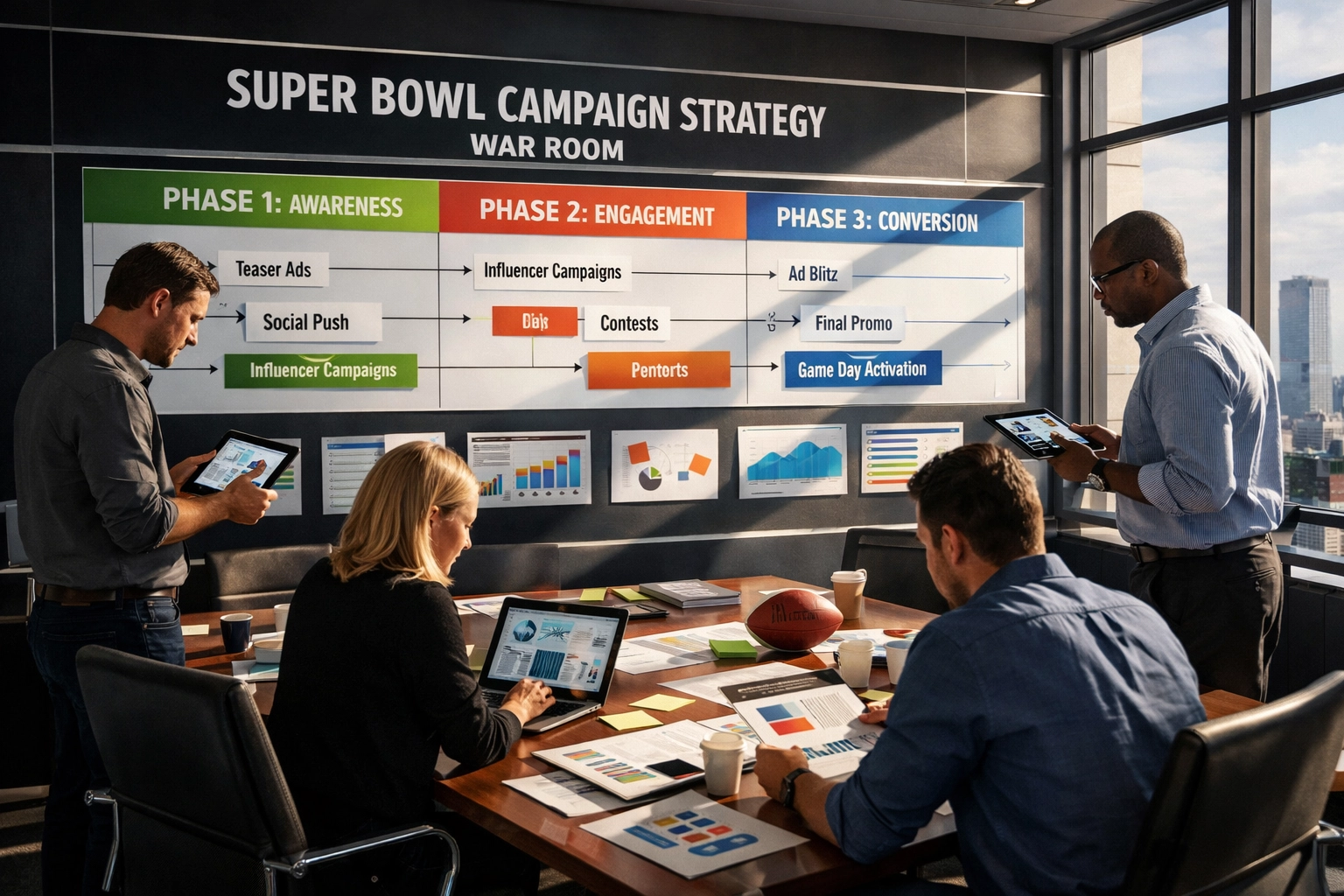
Game Day Execution: Peak attention during the Super Bowl requires flexible, responsive advertising strategies. Successful brands prepare multiple ad sets ready to react in real-time to team victories, viral halftime moments, and trending conversations. The objective shifts from building awareness to converting fleeting attention into immediate brand interaction and engagement.
Despite higher advertising costs on game day, the concentration of attention creates unique opportunities for brands prepared to capitalize on cultural moments as they unfold. Real-time marketing: responding to unexpected events with relevant, timely content: has become increasingly sophisticated, with brands maintaining dedicated teams monitoring conversations and ready to activate pre-approved creative assets.
Post-Game Momentum: The most overlooked phase in Super Bowl advertising strategy is the period immediately following the event. Strategic campaigns sustain engagement after attention disperses, keeping brands top-of-mind and converting initial awareness into lasting brand associations. Post-game content extends campaign life, captures search traffic spikes related to viral moments, and reinforces messaging introduced during the event itself.
Cost-Effective Alternatives to Traditional Broadcast Advertising
While traditional 30-second television spots during the Super Bowl now cost upward of $7 million, emerging strategies demonstrate that effective brand building doesn't require broadcast budgets. Influencer-driven content has emerged as the critical alternative for 2026, prioritizing authenticity over production polish.
Consider the Carl's Jr. campaign that partnered with influencer Alix Earle. Rather than investing in a single television spot, the brand created behind-the-scenes content and authentic product integration across social platforms. The result: 91% follower growth and a 47% engagement rate. A month-long influencer campaign costs significantly less than a single second of broadcast airtime while often generating superior engagement metrics among target demographics.
Platform-specific tactics optimize budget allocation across the digital ecosystem. YouTube and Meta platforms benefit from contextual targeting around NFL-related interests, fantasy football participation, and sports-related search behavior. View-focused campaigns achieve 56-64% view rates when launched up to three weeks before the event, while clicks-focused campaigns drive results with up to 70% cost-per-click efficiency on Meta platforms.

Timing strategy proves equally important to platform selection. Cost-per-click rates predictably peak during Super Bowl week as competition for attention intensifies. However, the weeks immediately surrounding the event offer 16-30% higher efficiency, making them prime windows for sustained campaigns that capture interest without peak-pricing penalties.
Building Emotional Connections Through Strategic Storytelling
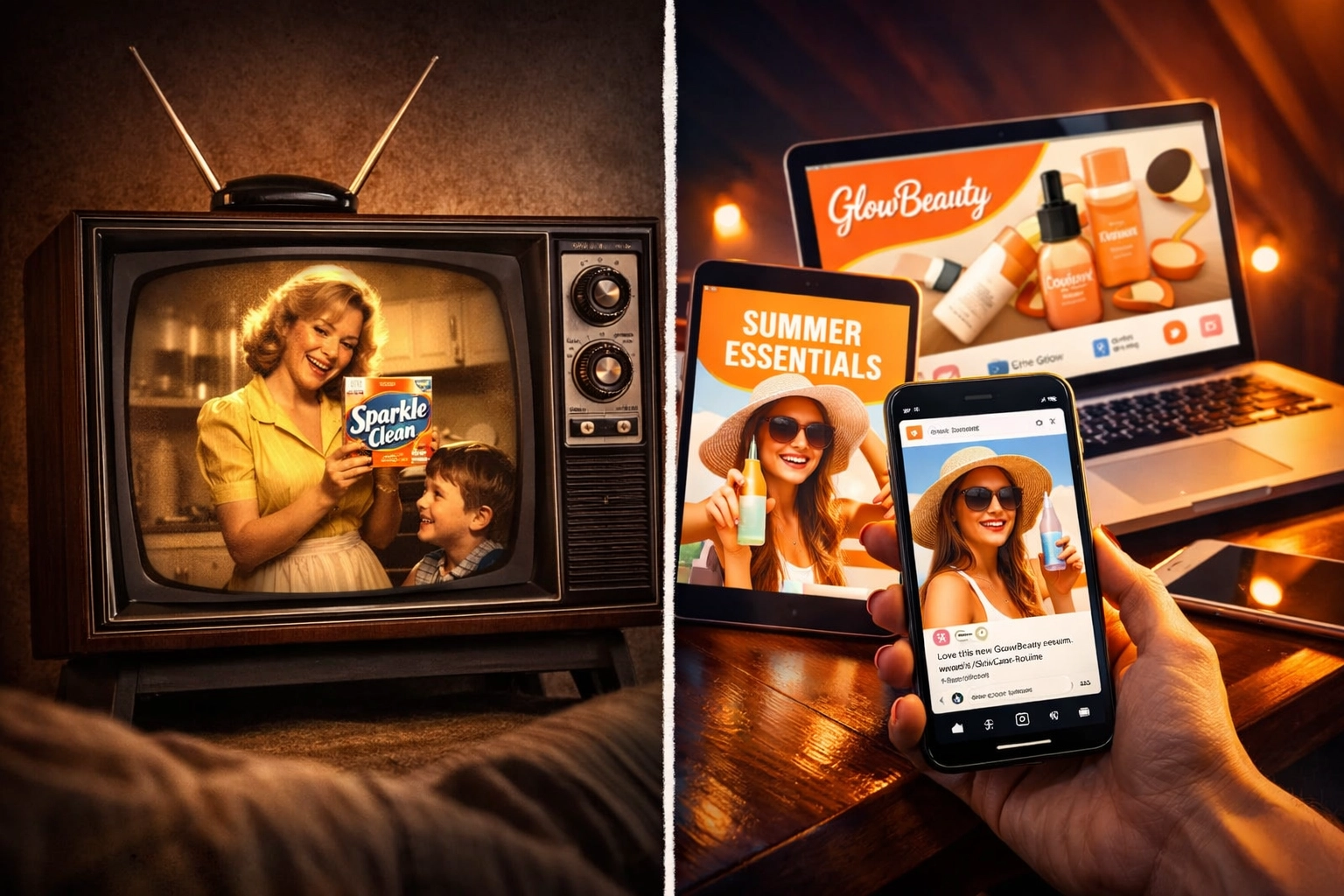
The brands that succeed at Super Bowl advertising understand a fundamental truth: people don't remember advertisements: they remember stories that resonate emotionally. Recent campaigns increasingly leverage nostalgia, reuniting beloved television characters or referencing cultural touchstones that evoke powerful memories.
PopCorners reunited Breaking Bad actors, Verizon paid homage to Grease, and Rakuten featured Alicia Silverstone reprising her iconic Clueless role. These campaigns succeed not through product features but through emotional associations that create lasting brand connections. When viewers feel something: joy, nostalgia, inspiration: they form memories that extend far beyond the advertising moment itself.
The 2026 Super Bowl advertising landscape also revealed strategic decisions about what to avoid. Established brands leaned heavily on star power and broadly appealing patriotic imagery while intentionally avoiding polarizing political messaging. In an increasingly fragmented media environment, successful brands seek common ground rather than risk alienating segments of their potential audience.
This approach to emotional storytelling applies regardless of budget or industry. Businesses of any size can identify emotional touchstones relevant to their target audiences: whether nostalgia for particular eras, aspirational lifestyle imagery, or stories of overcoming obstacles. The key lies in authentic storytelling that resonates with audience values rather than forced emotional manipulation.
Integrated Media Strategy: Orchestrating Paid, Owned, and Earned Channels
Successful Super Bowl campaigns integrate three distinct media types into cohesive brand experiences. This holistic approach ensures consistent messaging across touchpoints while maximizing reach and frequency.
Paid Media extends beyond television spots to include sponsored pre-game or post-game coverage, strategic partnerships with complementary brands for amplified exposure, and newswire distribution for press releases announcing campaign launches. Each paid channel serves specific objectives within the broader campaign architecture.
Owned Media: including websites, social channels, email newsletters, podcasts, and mobile applications: allows brands to control messaging and timing. Successful campaigns leverage owned channels to share teaser content, capture search traffic spikes related to viral campaign moments, and maintain engagement between paid media touchpoints.
Earned Media represents the most valuable yet least controllable component. Activating brand ambassadors, influencers, and employees to seed campaign hints weeks before the event generates organic sharing and conversation. Establishing branded hashtags, providing talking points that encourage authentic advocacy, and creating shareable content increases the likelihood that campaigns achieve viral momentum.
Teaser videos have become particularly effective at extending campaign life cycles. Short clips or behind-the-scenes footage build anticipation while maintaining brand relevance long after the event concludes. These assets serve multiple purposes: they generate early buzz, provide content for owned channels, and create opportunities for earned media as outlets cover creative or innovative campaign approaches.
Practical Takeaways for Your Business
The fundamental lesson from Super Bowl advertising strategy applies to businesses across industries and budget levels: success comes from combining social media campaigns, influencer content, and real-time engagement to capture attention before, during, and after defining moments relevant to your audience.
You don't need a Super Bowl-sized budget to implement these principles. Identify the moments that matter to your customers: industry events, seasonal peaks, or cultural touchstones: and build integrated campaigns around those opportunities. Launch early to build momentum and optimize costs. Prepare flexible content ready to activate in response to real-time developments. Sustain engagement after peak attention disperses.
Authentic storytelling that resonates emotionally with target audiences while maintaining strategic consistency across platforms forms the foundation of inspiration-driven brands. Whether you invest in premium advertising placements or pursue entirely digital strategies, the underlying principle remains constant: people connect with brands that tell stories reflecting their values, aspirations, and experiences.
The brands that win at Super Bowl advertising aren't necessarily those with the largest budgets: they're the ones that understand how to build emotional connections through strategic, multi-phase campaigns that turn fleeting attention into lasting brand relationships. That approach works regardless of whether you're advertising during the Super Bowl or building your brand through more accessible channels.
For businesses seeking to apply these principles, the path forward is clear: identify your defining moments, build integrated campaigns that tell authentic stories, and create experiences that resonate emotionally with the audiences you serve. The strategies that work at the highest levels of advertising scale effectively to businesses of any size willing to invest in strategic, story-driven brand building.





