
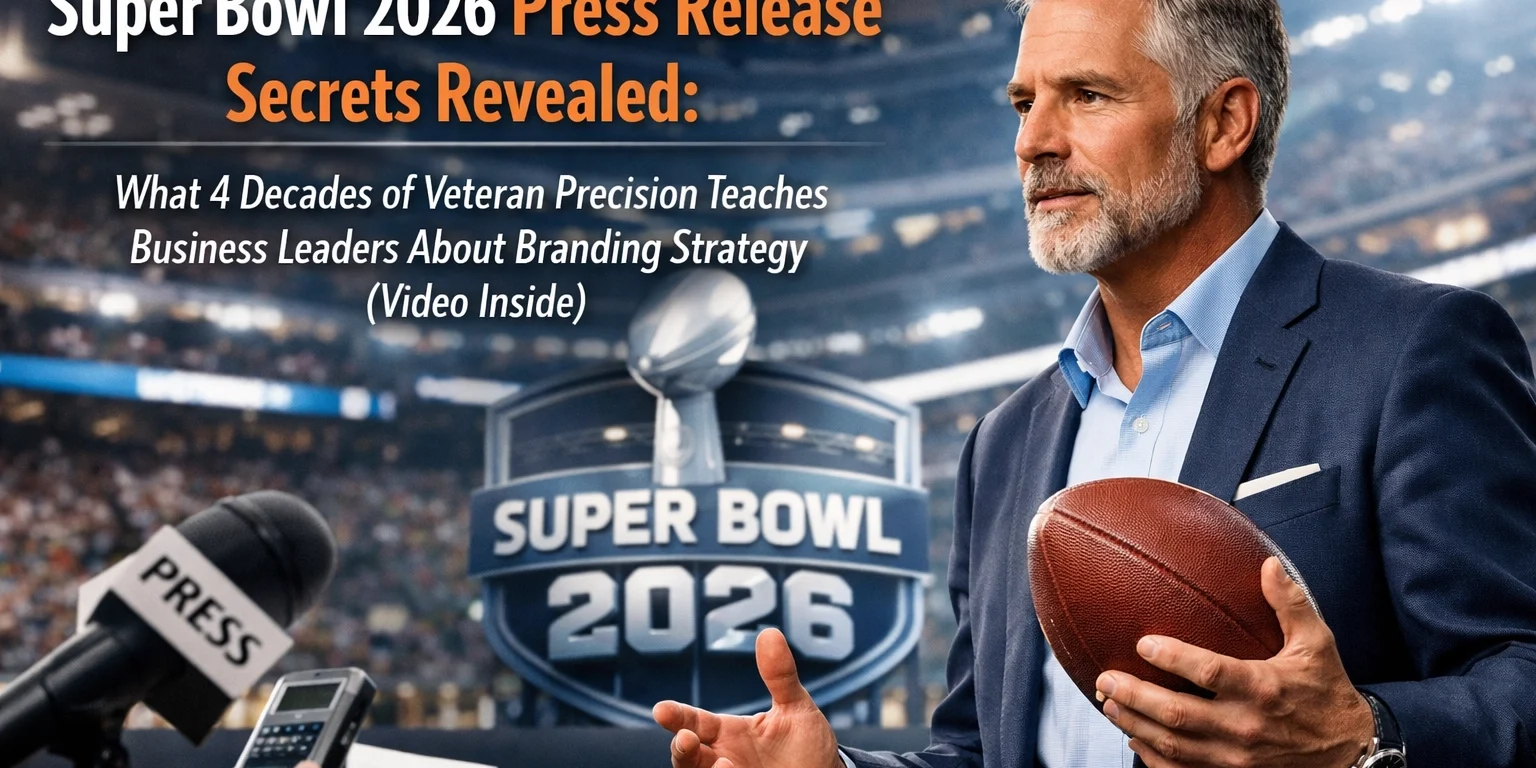
The Super Bowl represents more than athletic competition: it functions as America's largest annual marketing laboratory, where brands invest millions to capture fleeting attention spans and convert viewers into customers. Yet beneath the spectacle of celebrity endorsements and high-production commercials lies a lesser-examined aspect of sports marketing excellence: the strategic precision that veteran media professionals bring to press release execution and brand narrative development.
For business leaders seeking to refine their branding strategies, examining the methodologies employed by sports media veterans with four decades of experience offers instructive parallels. These professionals have navigated technological revolutions, shifting consumer behaviors, and evolving media landscapes while maintaining consistent results. Their approach to Super Bowl coverage and client representation provides actionable insights that extend far beyond the sports entertainment industry.

The Evolution of Sports Media Precision
Sports media professionals who have operated for 40 years have witnessed and adapted to fundamental transformations in how audiences consume content. The transition from print-dominant coverage in the 1980s to today's multi-platform digital ecosystem required continuous recalibration of messaging strategies, timing protocols, and distribution channels.
This adaptive expertise becomes particularly valuable when examining Super Bowl press strategies. According to recent industry analysis, brands that launched their Super Bowl 2026 campaigns three or more weeks in advance achieved view rates between 56 and 64 percent, establishing retargeting audiences before game day arrived. This finding reinforces what veteran media professionals have long understood: strategic timing matters as much as creative execution.
The principle translates directly to business branding. Companies that treat major announcements or product launches as isolated events rather than multi-phase campaigns frequently underperform their potential reach and impact. Veteran precision involves understanding the entire narrative arc: building anticipation, delivering the core message, and sustaining momentum through follow-up engagement.
Press Release Architecture as Brand Foundation
The construction of effective press releases in high-stakes environments like Super Bowl coverage reveals fundamental principles applicable to any business communication strategy. Veteran sports media professionals approach these documents with architectural precision, understanding that each element serves specific strategic functions.
A well-structured press release accomplishes multiple objectives simultaneously: it provides journalists with ready-made narratives, establishes SEO-friendly digital footprints, creates shareable social media content, and positions clients as authoritative voices within their domains. This multiplicity of purpose reflects decades of refinement in understanding how single communications pieces can generate compounding returns across multiple channels.

For business leaders, this principle suggests that every major brand communication should be engineered with similar intentionality. The question becomes not merely "What do we want to say?" but rather "How can this message generate sustained value across our entire ecosystem?" Veteran precision means considering second and third-order effects before initial distribution.
Multi-Platform Integration: Lessons from Super Bowl 2026
Analysis of successful Super Bowl 2026 campaigns reveals a decisive shift away from television-only strategies. Leading brands deployed integrated approaches that leveraged YouTube, TikTok, and Meta ecosystems alongside traditional broadcast advertising. This multi-platform methodology created sustained engagement through short-form video content and influencer partnerships rather than relying solely on the momentary impact of a 30-second spot.
This evolution mirrors broader trends in business branding that veterans have observed across decades. The most effective brand strategies no longer depend on dominating a single channel but rather on creating coherent narratives that adapt appropriately to each platform's unique characteristics and audience expectations.
The implication for business consulting becomes clear: companies must develop platform-specific expressions of their core brand narrative rather than simply replicating identical content across channels. This requires the kind of strategic sophistication that comes from extensive experience observing what works, what fails, and why certain approaches generate disproportionate returns on investment.
ROI Measurement and Veteran Accountability
Four decades of sports media experience instills particular discipline regarding return on investment measurement. When clients invest substantial resources in Super Bowl-related press activities, they expect quantifiable results. Veteran professionals have developed sophisticated frameworks for tracking media impressions, engagement metrics, conversion pathways, and long-term brand lift.
These measurement practices offer valuable templates for businesses in any sector. Effective branding strategies require clear definitions of success, baseline metrics for comparison, and honest assessment of which tactics generate meaningful results versus those that merely create the appearance of activity. Veteran precision means distinguishing between vanity metrics and genuine indicators of brand strength and market position.
Recent data indicates that brands incorporating authentic subject matter experts and digital-native creators achieved stronger performance than those relying exclusively on traditional celebrity endorsements. This finding reinforces a principle that experienced professionals understand: credibility and relevance often outperform pure star power, particularly when targeting sophisticated audiences capable of distinguishing substantive value from manufactured spectacle.

The Narrative Arc Strategy
Perhaps the most transferable lesson from veteran sports media professionals involves understanding narrative arc development. Successful Super Bowl 2026 campaigns did not treat the game as an isolated moment but rather as the climax of a carefully constructed story that began weeks earlier and continued through post-game analysis and social media conversation.
This approach contrasts sharply with how many businesses handle major announcements. Companies frequently concentrate all resources on launch day without adequately preparing audiences beforehand or sustaining engagement afterward. The result resembles a firework: briefly impressive but quickly forgotten.
Veteran precision means architecting campaigns with distinct phases: anticipation building, core message delivery, and momentum extension. Each phase serves specific purposes and requires tailored tactics. The anticipation phase primes audiences and establishes context. The delivery phase provides the promised value or information. The extension phase converts initial interest into sustained engagement and tangible business outcomes.
Authenticity as Competitive Advantage
Analysis of Super Bowl 2026 branding strategies reveals another critical insight: authenticity increasingly functions as competitive advantage. Audiences have developed sophisticated filters for detecting manufactured narratives, particularly in an era of widespread marketing saturation and declining trust in institutional messaging.
Sports media veterans with four decades of experience have observed this evolution firsthand. Early-career practices that emphasized pure promotional amplification have given way to approaches that prioritize genuine expertise, transparent partnerships, and narratives grounded in verifiable achievement rather than aspirational positioning alone.
For business leaders, this shift suggests that branding strategies should emphasize demonstrable competence and authentic value delivery rather than relying primarily on image management. Companies that can credibly document their expertise, showcase real client results, and speak with authority about their domain will increasingly outperform competitors who depend on carefully curated appearances divorced from substantive capability.
Implementation Framework for Business Leaders
Translating these insights into actionable strategy requires systematic approach. Business leaders should begin by auditing current branding practices against veteran precision standards. Key questions include:
Does your communication strategy employ multi-phase narrative development, or do you treat announcements as isolated events? Have you developed platform-specific expressions of your core brand message, or do you simply replicate identical content across channels? Do your measurement systems distinguish between vanity metrics and genuine indicators of brand strength? Does your messaging prioritize demonstrable expertise and authentic value, or does it rely primarily on aspirational positioning?
These questions help identify gaps between current practice and the standards that veteran professionals maintain through decades of experience and continuous refinement.
The Compounding Value of Strategic Precision
The fundamental lesson from examining 40 years of sports media excellence centers on compound returns. Individual tactical decisions may seem minor in isolation, but their cumulative effect over time creates substantial competitive advantages. This principle applies equally to Super Bowl press strategies and broader business branding approaches.
Strategic precision means making consistently sound decisions across hundreds of micro-choices: word selection in press releases, timing of social media posts, selection of spokespersons, framing of key messages, and allocation of resources across platforms. Each decision either compounds positively or negatively over extended periods.
Business leaders who embrace this long-term perspective position their organizations to build enduring brand equity rather than pursuing temporary visibility spikes that fade quickly and require constant renewal. The veteran approach prioritizes sustainable systems over heroic individual efforts, recognizing that reliable processes outperform occasional brilliance when measured across years rather than quarters.
Future Applications and Emerging Opportunities
As media landscapes continue evolving, the principles derived from veteran sports media experience will remain relevant while their specific applications adapt to new technologies and platforms. Business leaders who understand the underlying strategic frameworks can apply them flexibly as circumstances change, rather than becoming dependent on tactics that may quickly become obsolete.
The core insights: multi-phase narrative development, platform-specific optimization, authentic expertise demonstration, rigorous ROI measurement, and compound strategic precision: transcend particular media technologies or cultural moments. These principles reflect fundamental aspects of how human attention functions, how trust develops, and how brands achieve sustained relevance in competitive environments.
Organizations that internalize these lessons position themselves to navigate future disruptions effectively, applying time-tested strategic frameworks to emerging opportunities while competitors repeatedly start from scratch with each new platform or trend that appears.





