
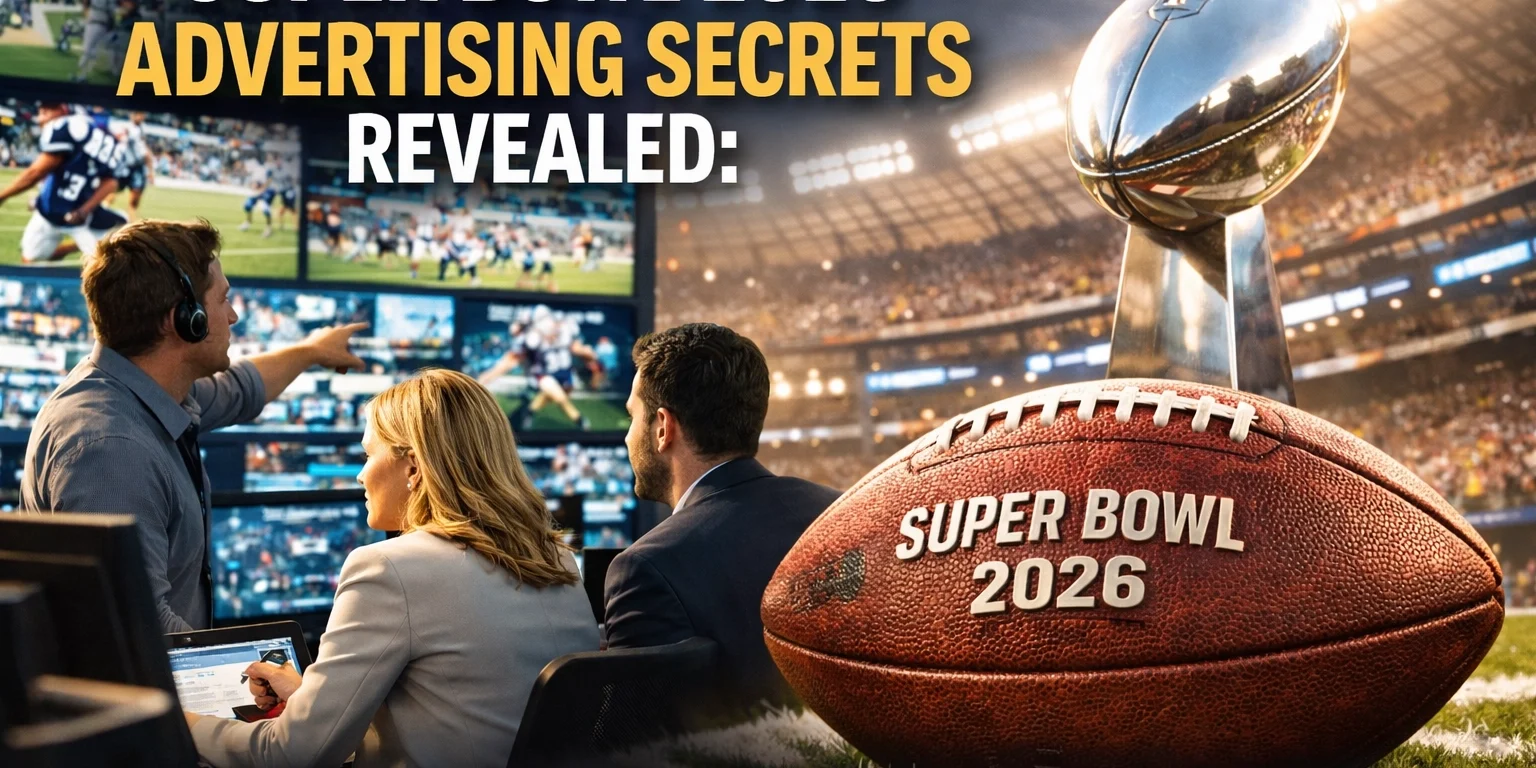
The landscape of Super Bowl advertising has undergone a fundamental transformation. While brands continue investing millions in broadcast slots, the winners of Super Bowl 2026 recognized a critical truth: the game is no longer confined to television screens. The most successful campaigns this year demonstrated that standalone 30-second spots, once the gold standard of advertising achievement, have become insufficient in capturing and maintaining audience attention across an increasingly fragmented media ecosystem.
This shift represents more than incremental evolution. It signals a complete recalibration of how brands must approach major sporting events, particularly the Super Bowl, which remains the single largest advertising stage in American media. The strategies that separated winners from expensive failures in 2026 provide a blueprint for understanding the future of sports media advertising.
The Multi-Platform Imperative
The traditional Super Bowl advertising playbook centered on a singular moment: crafting the perfect broadcast commercial that would capture audience attention during the game itself. This approach has become obsolete. Successful 2026 campaigns extended their presence across YouTube, TikTok, Meta, and other digital platforms, recognizing that audiences no longer experience major sporting events exclusively through linear television.

This multi-platform approach requires more than simply repurposing broadcast content for digital channels. Winning strategies involved creating platform-specific content that aligned with how users engage with each medium. The data supporting this approach is compelling: brands that executed coordinated multi-platform campaigns achieved significantly higher engagement rates than those relying solely on broadcast exposure.
Consider the Carl's Jr. campaign, which partnered with influencer Alix Earle to generate pre-game excitement through behind-the-scenes content and sneak peeks on Instagram. This strategy produced measurable results: 91% follower growth and 47% engagement rates. These metrics demonstrate that audiences actively seek supplementary content around major events, creating opportunities for brands willing to meet them where they already spend time.
The implications extend beyond simple reach metrics. Multi-platform presence allows brands to control their narrative throughout the entire Super Bowl experience, from anticipation-building in preceding weeks through post-game conversation. This extended timeline creates multiple touchpoints, each reinforcing brand messaging while adapting to the specific context of each platform.
Contextual Targeting Over Interruption
A fundamental principle emerged from 2026's successful campaigns: relevance matters more than volume. Contextual targeting: placing advertisements alongside content that aligns with viewer interests and behaviors: proved far more effective than traditional interruptive advertising models. This approach acknowledges a basic truth about modern media consumption: audiences have become adept at filtering out content that feels disconnected from their immediate interests.
Five dominant interest areas characterized Super Bowl 2026 viewership: fantasy football and sports betting analysis, food and game-day recipes, halftime show coverage, team and player profiles, and watch party organization. Advertisements that connected to these surrounding behaviors felt native to the viewing experience rather than intrusive. Brands that ignored these contextual elements risked becoming invisible, drowned out by the sheer volume of competing messages.
This contextual approach requires deeper audience understanding than demographic targeting alone can provide. It demands insight into behavioral patterns, content consumption habits, and the emotional state of viewers at different points in their Super Bowl experience. Advertisements placed alongside betting analysis, for instance, reach audiences in a fundamentally different mindset than those watching halftime performances. Effective campaigns recognized and capitalized on these distinctions.

Product Primacy in the Age of Celebrity Saturation
One of the most counterintuitive findings from Super Bowl 2026 involves the role of celebrity endorsements. While star power continued to attract attention, the campaigns that generated lasting impact made products: not celebrities: the central focus of their messaging. This represents a significant departure from the celebrity-driven approach that has dominated Super Bowl advertising in recent years.
The Pringles campaign exemplified this product-first philosophy. By reviving the iconic "Once you pop, you can't stop" tagline while incorporating contemporary cultural figures, the brand demonstrated how to refresh creative execution without abandoning core brand identity. The celebrities in these successful campaigns served as supporting elements that enhanced product appeal rather than overshadowing it entirely.
This shift reflects growing audience sophistication. Modern consumers, particularly younger demographics, have developed immunity to celebrity endorsement as a standalone value proposition. They seek authentic connections between endorsers and products, demanding that celebrity presence contribute meaningfully to brand storytelling rather than serving as mere attention capture.
The data supports product-focused messaging: campaigns that emphasized category appeal points: taste, quality, desire, indulgence: generated stronger recall and purchase intent than those relying primarily on celebrity recognition. This finding suggests that while celebrity can open doors, product substance must close the deal.
Strategic Timing Across Three Distinct Phases
Winning campaigns in 2026 recognized that Super Bowl advertising encompasses three distinct phases, each requiring tailored strategies and messaging. The pre-game phase, running from mid-January through February 7, focused on building anticipation and establishing brand presence. Game day itself, February 8, delivered the high-impact broadcast moments that justify massive media investments. The post-game phase extended conversations and capitalized on earned media generated during the event.
This three-phase approach offers practical advantages beyond extended exposure. Cost-per-click metrics in the weeks surrounding the Super Bowl demonstrate significantly lower rates than peak game day pricing, allowing strategic brands to achieve greater overall reach within similar budget constraints. Brands that concentrated spending exclusively on game day paid premium rates without capturing audiences in pre-game research mode or post-game discussion phases.
The pre-game phase proved particularly valuable for establishing narrative frameworks that broadcast spots could then reinforce. Audiences who encountered brand messaging during their Super Bowl preparation: whether researching recipes, organizing watch parties, or studying betting lines: arrived at game day with existing awareness. The broadcast commercial then served as a reinforcement mechanism rather than an introduction, significantly improving message retention.
Post-game engagement extended campaign life and captured audiences processing their viewing experience. Brands that maintained presence during this phase participated in organic conversations already occurring across social platforms, positioning themselves within the cultural moment rather than attempting to create isolated brand experiences.
Balancing Distinctiveness with Cultural Currency
The most effective Super Bowl 2026 campaigns navigated a delicate balance between maintaining brand distinctiveness and engaging with contemporary cultural elements. This balance proves challenging: lean too heavily toward tradition, and brands risk appearing out of touch; embrace trends too aggressively, and core identity dissolves into momentary relevance.

Successful examples demonstrated that these objectives need not conflict. Brands can honor their heritage while acknowledging cultural evolution, using contemporary references to make classic brand attributes feel fresh rather than abandoning those attributes entirely. This approach requires confidence in brand identity and sophisticated understanding of which elements constitute core versus peripheral brand characteristics.
The principle extends beyond creative execution to strategic positioning. Brands must determine which cultural conversations warrant participation and which feel forced or inauthentic. Not every trend deserves engagement; selectivity signals brand confidence and helps maintain distinctiveness in an environment where many competitors chase identical cultural moments.
Implications for Future Sports Media Strategy
The strategies that defined Super Bowl 2026 success point toward broader implications for sports media advertising. As audiences continue fragmenting across platforms and viewing contexts, the integrated multi-platform approach will become standard rather than innovative. Brands that fail to develop sophisticated cross-platform capabilities will find themselves increasingly unable to compete for attention during major sporting events.
Contextual targeting capabilities will grow in importance as audiences expect increasingly personalized experiences even during shared cultural moments. The technical infrastructure supporting these capabilities: from advanced analytics to real-time content optimization: represents necessary investments for brands serious about sports media effectiveness.
The emphasis on product primacy suggests that creativity must serve strategic objectives rather than pursuing novelty for its own sake. As production costs for high-quality content decrease and distribution channels multiply, the differentiating factor will increasingly become strategic clarity rather than execution quality alone.
For business consulting firms and agencies guiding brands through this evolving landscape, these insights provide a framework for developing comprehensive sports media strategies. The Super Bowl remains the premier American advertising moment, but success now requires thinking beyond the broadcast to embrace the full ecosystem of content, conversation, and context surrounding the event. The brands that mastered this approach in 2026 have established a template that will define sports media advertising for years to come.





