

The Infrastructure Workforce Gap Meets the Digital Skills Crisis
Over 30 governors have identified career and technical education as a top priority for their states, recognizing that current workforce supply cannot meet the demands of modern infrastructure investment. At the same time, Fortune 100 companies face an acute shortage of cloud computing and artificial intelligence talent: a gap that traditional education pathways have struggled to close at scale.
These two challenges are not separate problems. They represent a single opportunity: the need for a unified, national framework that delivers career-ready digital skills through physical infrastructure.
The economics are straightforward. Federal infrastructure investments have created unprecedented demand for skilled workers across multiple sectors, yet significant gaps in training capacity threaten to undermine potential returns. Meanwhile, cloud and AI roles remain among the fastest-growing and hardest-to-fill positions in the American economy. The convergence of these trends demands a new approach: one that leverages existing physical distribution networks to deploy digital literacy at scale.

Why Traditional Pathways Cannot Scale
Conventional workforce development models face three fundamental constraints. First, geographic limitations restrict access to quality training, particularly in rural and underserved communities where infrastructure investment is most needed. Second, the speed of technological change outpaces curriculum development in most educational institutions. Third, engagement remains a persistent challenge when technical training lacks immediate relevance to students' lived experiences.
Research from infrastructure workforce initiatives confirms that the existing supply of skilled workers is insufficient to meet current demand. Partnership development, strategic planning, and proven workforce strategies are essential components of any effective framework. Yet even with these elements in place, physical access barriers continue to limit participation.
The traditional model assumes that students will come to training centers, that curricula will remain relevant for multi-year development cycles, and that abstract technical concepts will sustain engagement. These assumptions no longer hold in a rapidly evolving digital economy where cloud architecture and AI systems update continuously.
The Career-Ready Infrastructure Model
A proven framework for national-scale workforce development combines three core elements: distributed physical infrastructure, engagement-driven learning pathways, and industry-aligned skill certification. This model recognizes that career readiness in the digital economy requires both technical competency and practical application.
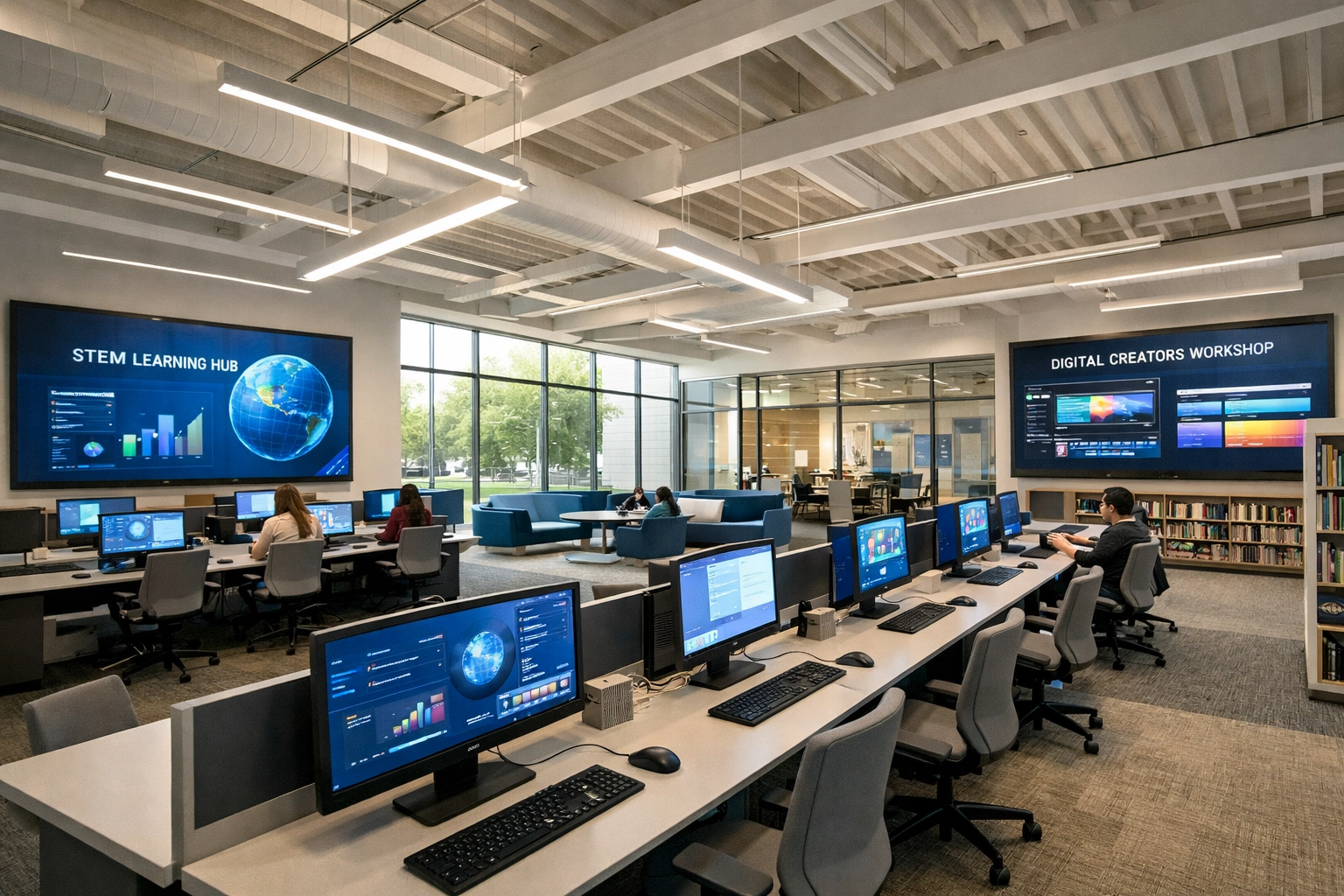
The infrastructure component addresses geographic barriers through physical distribution networks that deliver standardized training environments to communities nationwide. Rather than requiring students to travel to centralized facilities, this approach brings career-ready learning experiences to existing community spaces: schools, libraries, community centers, and youth organizations.
Physical distribution solves multiple problems simultaneously. It ensures consistent training quality across diverse geographic locations. It reduces barriers to access by meeting students where they already gather. It creates economies of scale that make advanced technical training financially sustainable in communities that could not otherwise support such programs.

Esports as the Engagement Catalyst
The second element of this framework addresses the engagement challenge through competitive gaming: what industry observers have termed the "Trojan Horse" for digital literacy. Esports provides an immediate, compelling reason for young people to engage with cloud infrastructure and computational systems.
This approach is not about gaming for its own sake. Competitive multiplayer environments require cloud computing architecture, distributed systems management, and real-time data processing: the same foundational concepts that underpin enterprise cloud platforms and AI systems. Students learning to optimize gaming performance are, simultaneously, learning to manage cloud resources, understand network architecture, and troubleshoot distributed systems.
The engagement value is measurable. Work-based learning strategies that connect technical skills to immediate, tangible outcomes have proven effective in preparing students for long-term career success. Esports creates a natural bridge between recreational interest and technical competency, transforming abstract concepts into concrete problem-solving challenges.
More importantly, this engagement pathway scales. Competitive gaming has universal appeal across demographic groups and geographic regions. It requires no prerequisite knowledge, creating an accessible entry point for students who might otherwise never consider technical careers. The competitive structure provides natural motivation for skill progression, while team dynamics teach collaboration and communication skills essential in professional environments.

From Gaming Competency to Cloud Literacy
The pathway from esports engagement to career-ready cloud and AI skills follows a structured progression. Initial participation develops baseline familiarity with distributed systems, network performance, and resource optimization. As students advance, they encounter increasingly sophisticated technical concepts embedded in competitive play.
This progression aligns with proven workforce development strategies, including apprenticeships, career pathways, and integrated education and training. The difference is context. Rather than presenting cloud computing as an abstract subject, the framework embeds technical learning within a high-engagement activity that students have chosen to pursue.
Advanced participants naturally progress toward formal certification in cloud architecture, systems administration, and AI fundamentals. Industry-recognized credentials provide clear signals to employers while giving students tangible milestones that validate their growing competency. The competitive gaming context remains the engagement engine, but the learning outcomes are designed to meet enterprise workforce requirements.
This model has proven particularly effective in expanding and diversifying the skilled worker pipeline: a key priority for infrastructure workforce initiatives. Students who might never enroll in traditional computer science programs discover technical aptitude through gaming, then transition into formal career pathways as their skills develop.
The Physical Distribution Advantage
National scale requires physical infrastructure that can deliver consistent experiences across thousands of communities simultaneously. This is where distributed deployment models demonstrate clear advantages over centralized training facilities or purely digital platforms.
Physical spaces create accountability structures that online-only programs struggle to replicate. They provide supervised environments where students can access equipment and bandwidth that may not be available in their homes. They enable peer learning and mentorship relationships that accelerate skill development. They signal institutional commitment in ways that purely digital offerings cannot match.
More strategically, physical distribution networks create partnerships with community organizations that already serve youth populations. Schools, libraries, and community centers become career-ready infrastructure hubs, leveraging existing relationships and trust to maximize program participation. This partnership model aligns with research showing that sector partnerships and community engagement are essential for effective workforce development at scale.
The distribution model also creates feedback loops that improve program effectiveness. Local facilitators observe which learning pathways work best for different student populations. They identify barriers to participation and develop solutions tailored to community-specific challenges. This ground-level intelligence informs continuous improvement while maintaining standardized quality across the national network.
Measuring Career-Ready Outcomes
Effective workforce development requires clear metrics that track progression from initial engagement through career placement. The infrastructure model enables measurement at multiple levels: participation rates, skill acquisition, certification achievement, and ultimately, employment outcomes.
Early indicators focus on engagement breadth: how many students across how many communities are participating in technical learning through the esports pathway. As the framework matures, metrics shift toward competency validation through industry-recognized certifications in cloud platforms, AI fundamentals, and related technical domains.
The ultimate measure is career placement. Students who progress through the full pathway should transition into cloud computing and AI roles within enterprise organizations, addressing the talent shortage while validating the framework's effectiveness. Partnership development with Fortune 100 employers creates clear pathways from certification to employment, closing the loop between training and workforce needs.
These outcomes matter because infrastructure investments only deliver full economic value when skilled workers are available to support implementation and ongoing operations. Career-ready frameworks that produce measurable results at scale transform infrastructure spending from a short-term stimulus into a long-term competitive advantage.
Building for National Scale
The proven framework for career-ready infrastructure development operates on principles that enable exponential growth. Physical distribution networks can expand rapidly because they leverage existing community spaces rather than requiring new facility construction. Standardized training environments ensure consistent quality regardless of location. Industry partnerships create clear employment pathways that validate the value proposition for students, parents, and community leaders.
Over 30 states have already identified workforce development as a top priority, creating policy environments supportive of innovative approaches to technical training. Federal infrastructure investments provide resources that can support distributed deployment. Industry demand for cloud and AI talent remains acute, ensuring that students who develop these competencies will find career opportunities.
The convergence of these factors creates unprecedented opportunity for frameworks that can deliver proven results at scale. The combination of distributed physical infrastructure, engagement-driven learning pathways, and industry-aligned skill certification represents a scalable model for addressing both the infrastructure workforce gap and the digital skills crisis simultaneously.
For Fortune 100 executives evaluating workforce development strategies, the implications are clear. Career-ready frameworks that leverage physical distribution networks, engagement catalysts like esports, and structured pathways to cloud and AI competency can deliver the scale needed to meet enterprise talent requirements. The proven infrastructure model transforms workforce development from a regional initiative into a national capacity-building system: one that aligns community investment with enterprise needs while creating measurable pathways to technical careers for thousands of young people across diverse communities.





