
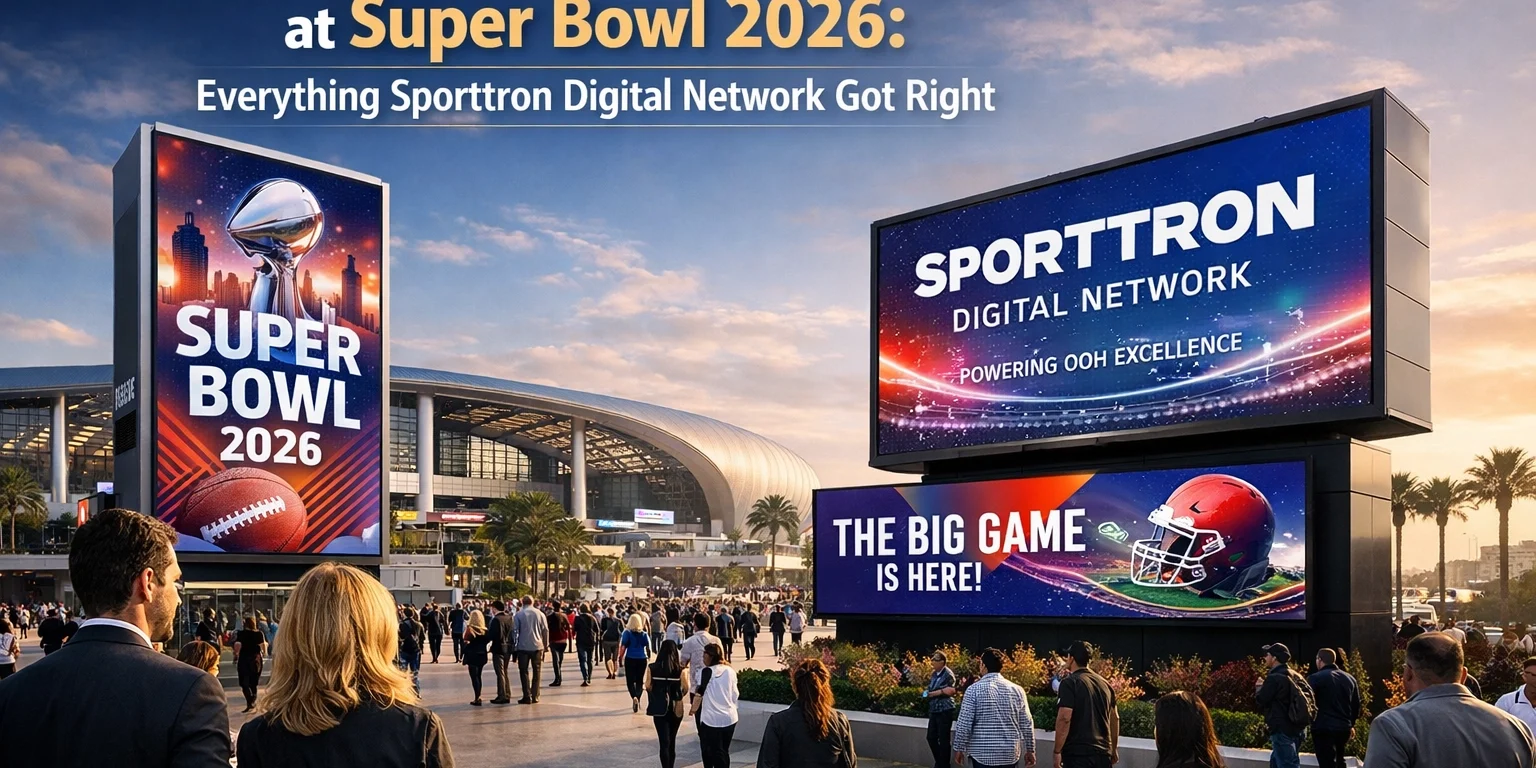
Out-of-home advertising at major sporting events has traditionally operated on a simple premise: secure a billboard, display a message, hope someone notices. Super Bowl 2026 demonstrated that this approach is fundamentally outdated. Sporttron Digital Network's execution at the game revealed a more sophisticated understanding of how audiences experience large-scale events, transforming isolated placements into comprehensive environmental strategies that surrounded attendees throughout their entire journey.
The shift represents a fundamental evolution in OOH strategy. Rather than treating billboards as standalone touchpoints competing for attention, Sporttron orchestrated multiple advertising formats into cohesive brand ecosystems that built frequency through sustained physical presence. The results speak to both the immediate effectiveness of this approach and its implications for future large-scale event marketing.
Rejecting Traditional Billboard Models for Environmental Ownership
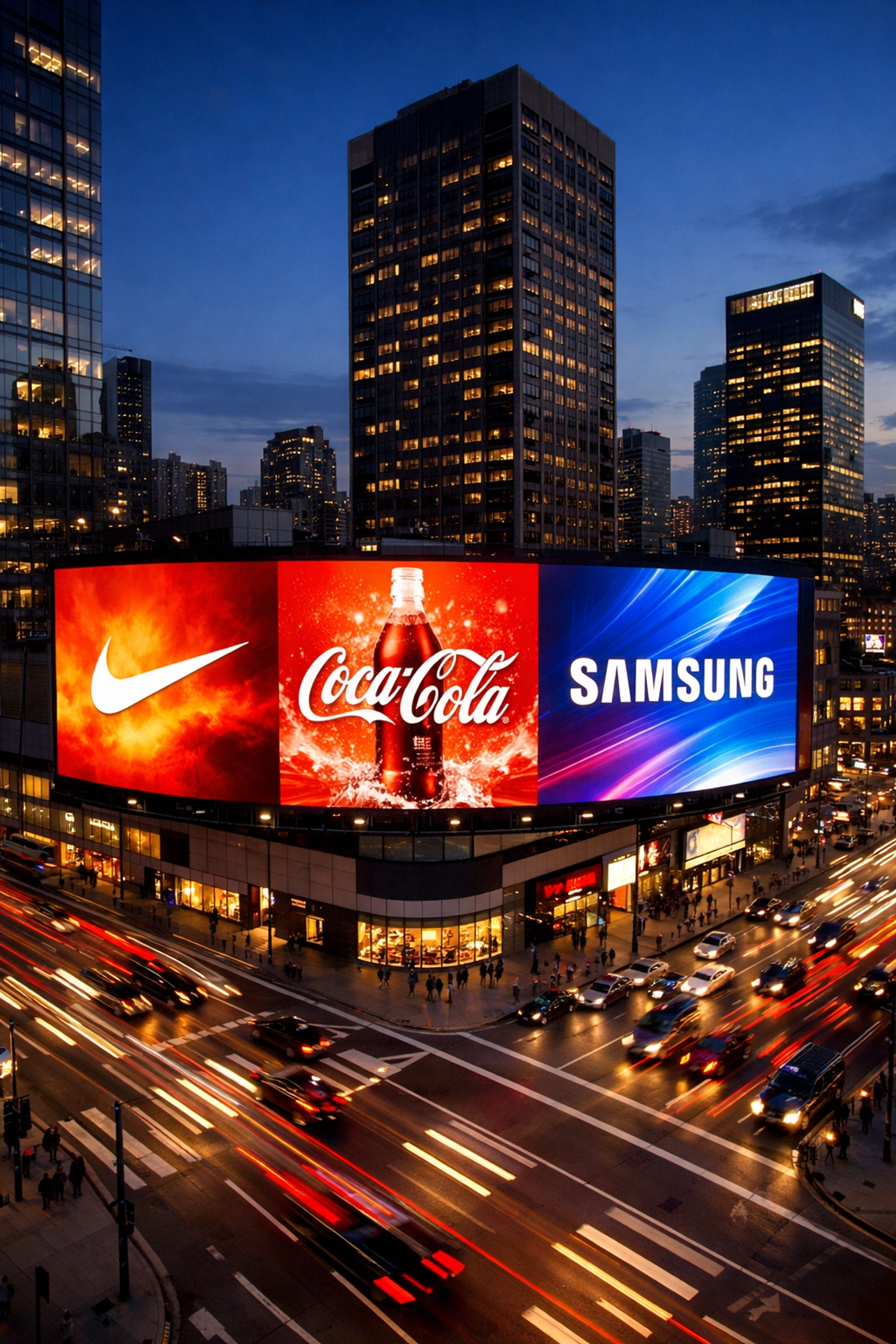
Sporttron's primary innovation lay in abandoning the traditional billboard mindset entirely. Where conventional OOH strategies position each placement as an independent unit, Sporttron created what industry analysts now refer to as "environmental ownership": the strategic coordination of multiple touchpoints that surround audiences throughout extended timeframes.
This distinction matters because human attention operates differently in event contexts compared to daily commutes. A person driving to work processes billboard messaging as fleeting interruption. A person attending the Super Bowl exists within a heightened psychological state across multiple days, moving through predictable corridors with consistent brand exposure accumulating at each stage. Sporttron's approach recognized that six exposures across a three-day journey create fundamentally different cognitive impact than six isolated exposures to different brands.
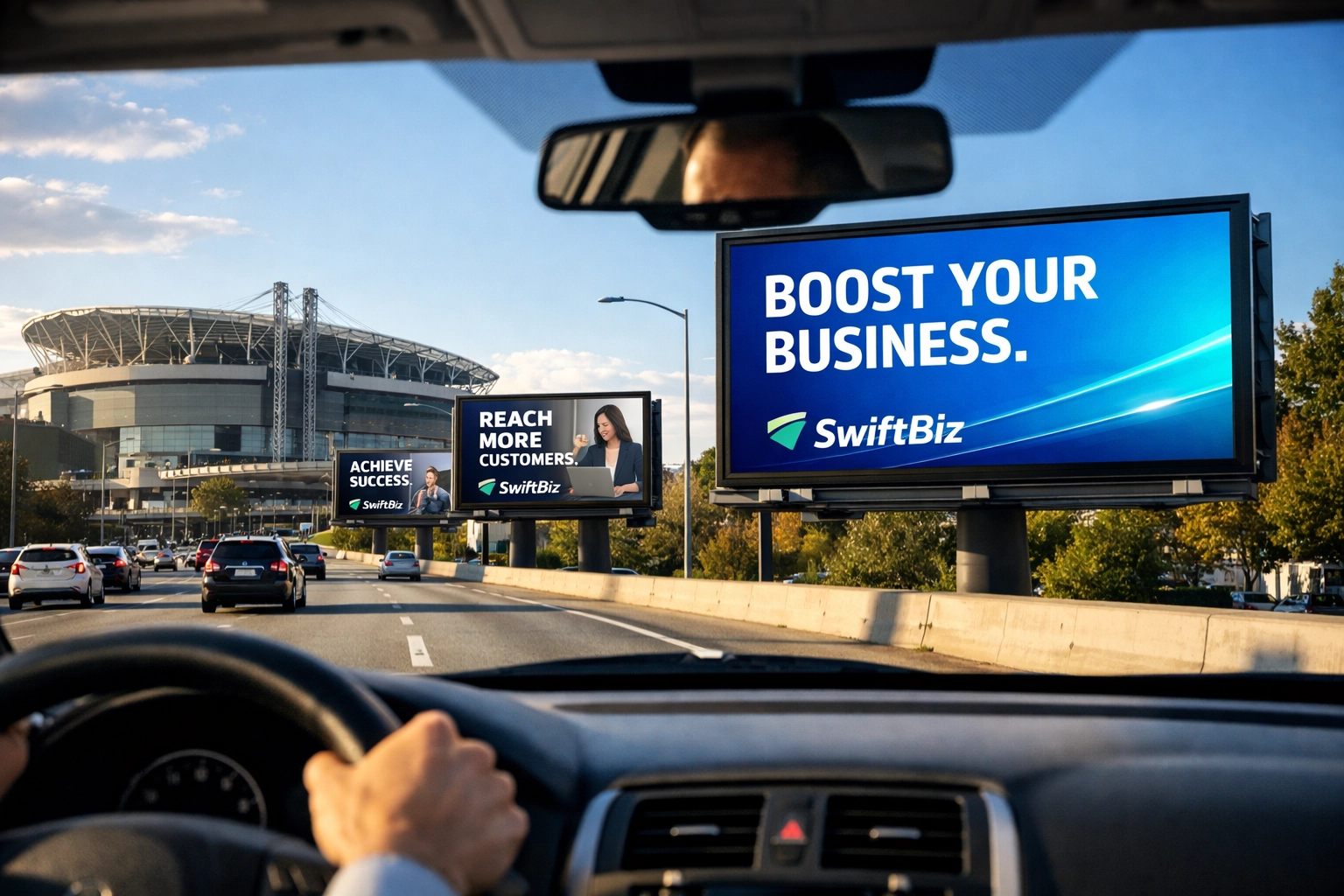
The network synchronized digital billboards, transit advertising, and location-based mobile campaigns into what effectively functioned as singular brand experiences spanning entire geographic areas. Brands didn't rent individual signs; they controlled environments.
Temporal Adaptation and Audience Mapping
Digital billboard technology enabled Sporttron to implement temporal adaptation strategies that fundamentally altered traditional OOH limitations. Static billboards display identical messages regardless of when audiences encounter them. Digital infrastructure allows messaging to shift based on time of day, proximity to game time, and specific audience demographics present at different moments.
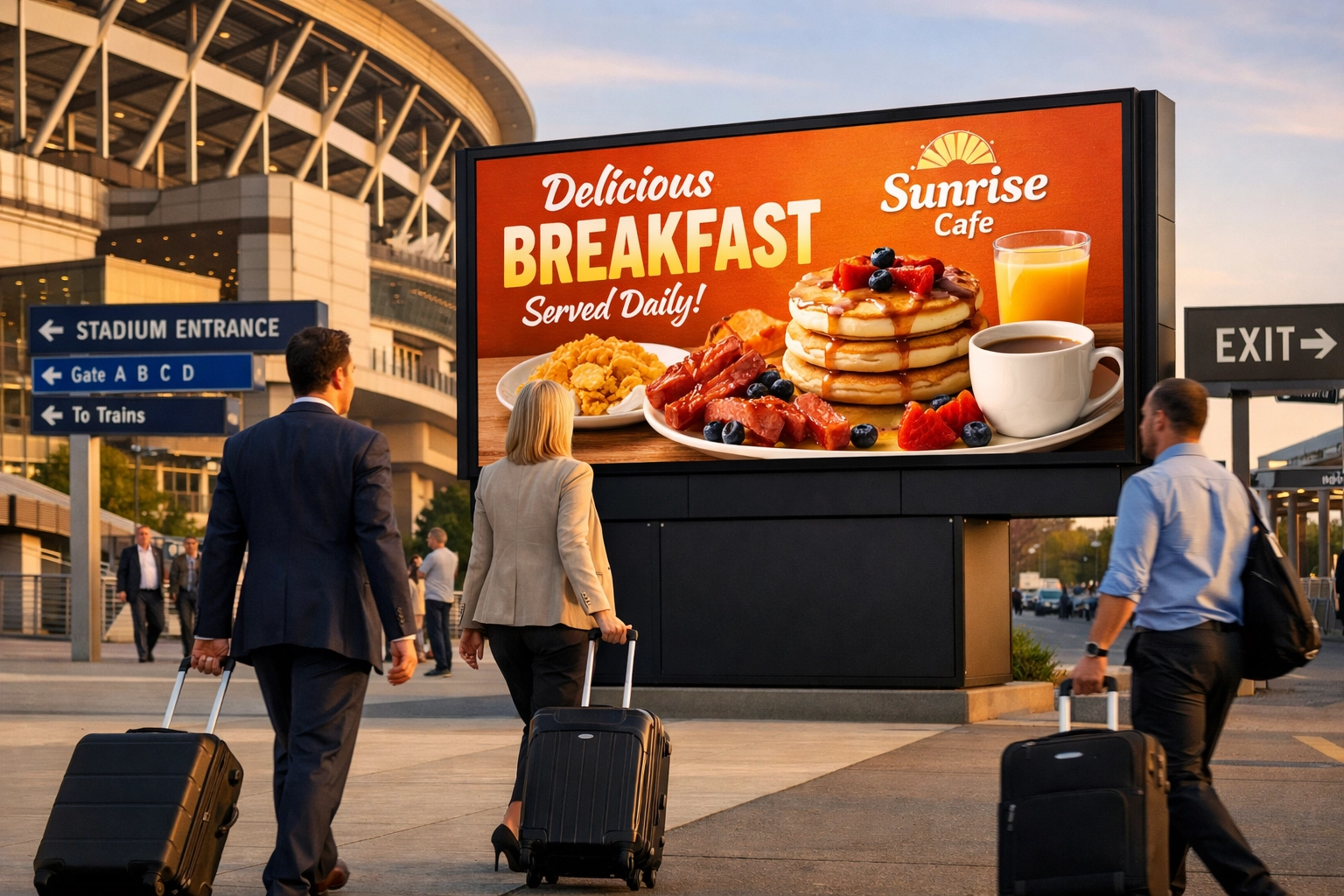
A restaurant brand participating in Sporttron's network could promote breakfast specials at 8 AM for early-arriving business travelers, shift to game-time viewing information and lunch specials by noon for local fans, and highlight post-game venue options and dinner reservations by evening for celebrating attendees. This temporal flexibility transformed a single placement into multiple targeted campaigns occupying the same physical space across different time windows.
Sporttron also employed layered placement strategies that recognized how demographic segments experience events differently. Business executives arriving Thursday afternoon occupy entirely different psychological contexts than families arriving Sunday morning. Conference attendees, local residents attending parties, and out-of-state superfans all move through the event geography at distinct times with distinct needs.
The most sophisticated campaigns in Sporttron's network tailored messaging to both location and the specific moment within the overall event experience. An attendee might encounter a brand's messaging six to ten times through natural movement patterns: airport arrival, hotel check-in routes, stadium approach paths, entertainment districts: with each exposure building on previous encounters rather than repeating identical content.
Participatory Experiences and Digital Integration
Sporttron transformed OOH from one-way broadcasting into interactive engagement channels that bridged physical and digital worlds. QR codes on transit ads enabled immediate mobile engagement, connecting physical exposure to app downloads, reservation systems, and social media follows. What began as a billboard impression could convert to a measurable digital action within seconds.
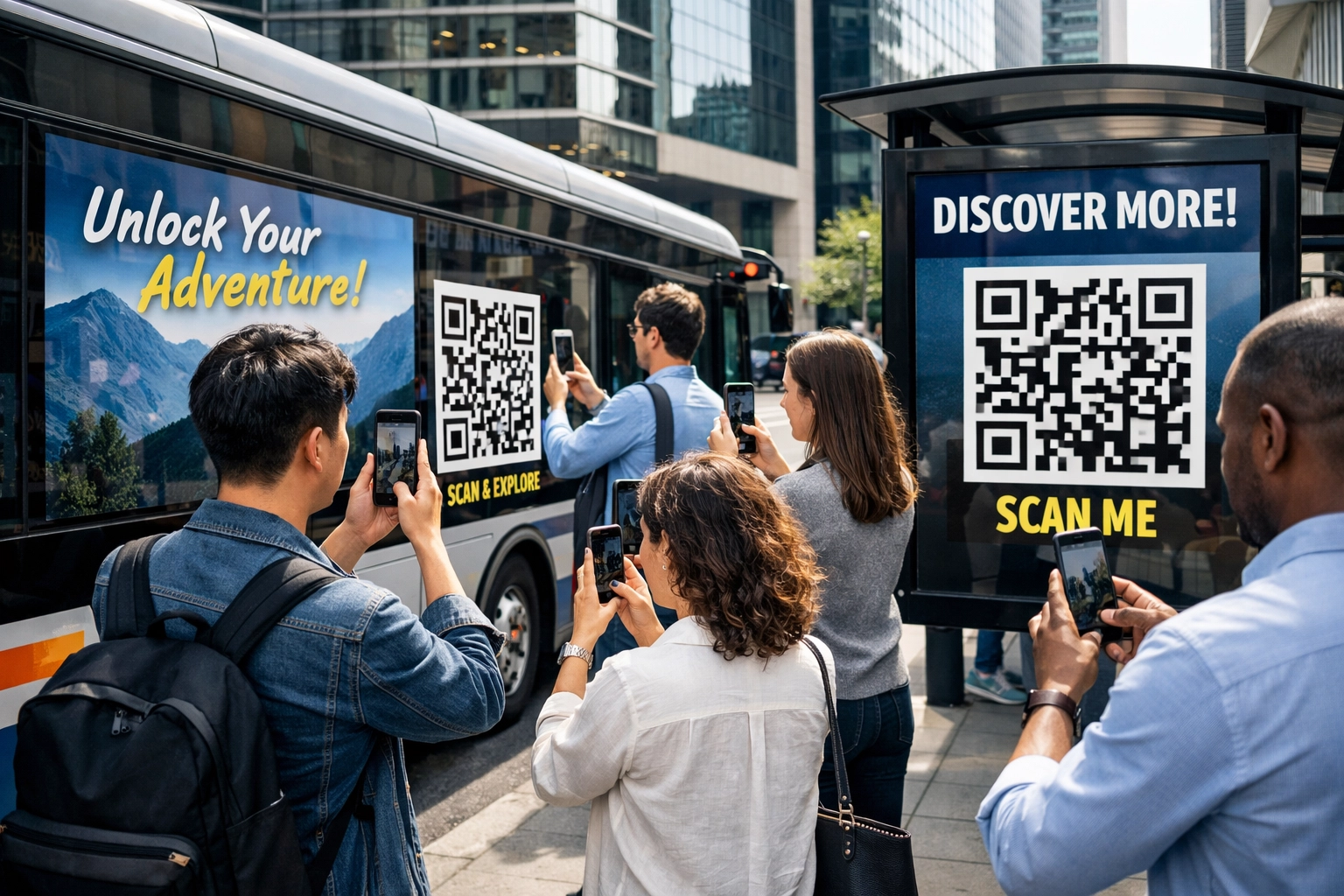
Branded hashtags displayed prominently on digital billboards encouraged attendees to become content creators themselves. When audiences photograph stadium approaches, share pre-game excitement, or document their Super Bowl experience on social media platforms, branded hashtags visible in their environment naturally integrate into that content. This transforms passive viewers into active participants who organically extend brand reach through their own networks.
The integration strategy also enabled real-time campaign optimization. Digital systems tracked engagement rates from QR code scans and social media hashtag usage, providing immediate feedback on which creative executions resonated most effectively with different audience segments at different times. Campaigns could adjust messaging mid-event based on actual performance data rather than relying solely on post-event analysis.
The Sustained Visibility Advantage
Perhaps Sporttron's most significant strategic insight involved recognizing the temporal advantage OOH maintains over broadcast advertising. A thirty-second television spot during the Super Bowl broadcast represents extraordinary visibility compressed into an extremely brief window. The moment concludes, the opportunity vanishes, and the brand must rely on memory retention alone.
OOH campaigns through Sporttron's network operated across entirely different timeframes. Visibility began when championship matchups were confirmed, continued through arrival periods spanning multiple days, dominated stadium approach routes, and even captured departing audiences. This extended timeline accumulated impression value far exceeding what broadcast spots could achieve regardless of production budget or celebrity involvement.
The sustained presence also enabled different creative strategies. Television spots must communicate complete messages in thirty seconds, requiring compression that often sacrifices nuance. OOH campaigns can employ sequential storytelling where early exposures introduce concepts and later exposures build complexity, knowing that audiences will encounter multiple touchpoints across their journey.
Implementation Requirements and Best Practices
Sporttron's success also revealed practical requirements for brands considering similar environmental ownership strategies. Early planning emerged as non-negotiable: premium placements along predictable audience movement corridors required negotiation months in advance. Brands that approached planning with traditional last-minute billboard booking timelines found optimal locations already secured by competitors who recognized the strategic value earlier.
Geographic analysis proved essential. Not all locations offered equivalent value; placement effectiveness correlated directly with understanding actual audience movement patterns. Brands needed to map where attendees would naturally travel rather than assuming all high-traffic areas provided similar opportunity. Airport exit routes, hotel concentration zones, and direct stadium approaches represented premium positioning that justified significantly higher investment.
Creative coordination across multiple formats also required upfront strategy rather than adaptation of existing materials. The most effective campaigns developed cohesive visual and messaging systems specifically designed to function across digital billboards, transit ads, street furniture, and mobile integration simultaneously. Repurposing television creative or print advertisements rarely delivered comparable results to campaigns conceived from inception as multi-format environmental experiences.
The Future of Event-Based OOH Strategy
Sporttron Digital Network's execution at Super Bowl 2026 represents more than a successful campaign; it establishes a framework for how brands should approach large-scale event marketing moving forward. The transition from isolated placements to environmental ownership reflects broader shifts in how audiences consume media and experience physical spaces.
As digital infrastructure continues expanding and data integration improves, the gap between brands employing sophisticated environmental strategies and those maintaining traditional billboard approaches will only widen. Organizations planning for major events in 2026 and beyond should evaluate whether their OOH strategies prioritize environmental ownership, temporal adaptation, digital integration, and sustained visibility: or whether they remain anchored to outdated models that treat each placement as an independent gamble rather than components of comprehensive systems.
The evidence suggests that future competitive advantage belongs to brands willing to invest in coordinated, data-informed, digitally-integrated environmental strategies rather than simply purchasing individual placements and hoping for attention. Sporttron's Super Bowl 2026 execution provides both proof of concept and operational blueprint for that evolution.





