
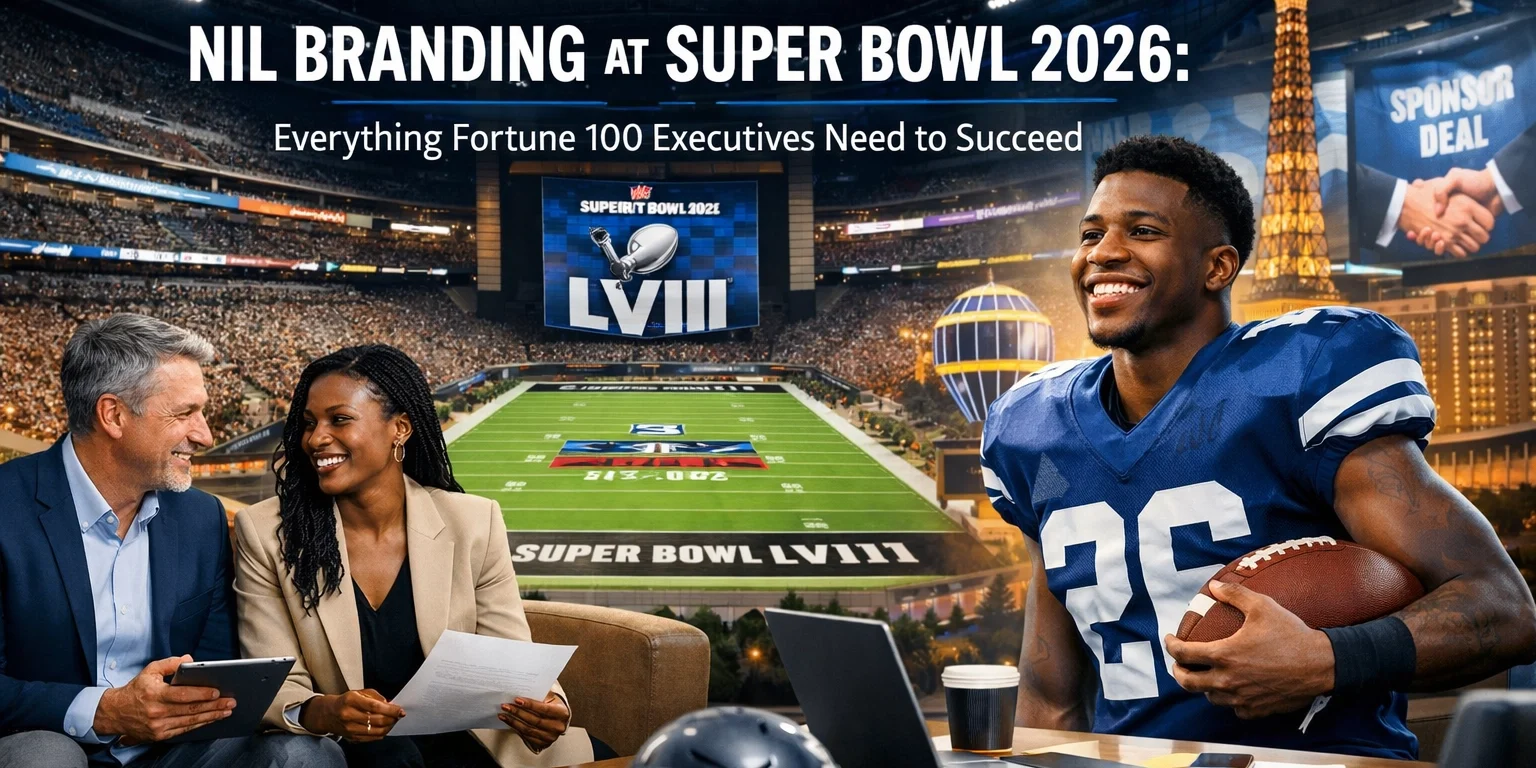
The landscape of sports marketing transformed dramatically in 2026, and nowhere was this more evident than at Super Bowl LX in Phoenix. Fortune 100 brands that succeeded didn't simply purchase ad spots and celebrity endorsements: they reimagined Name, Image, and Likeness (NIL) partnerships as strategic talent investments that extended far beyond game day.
The most successful brands at Super Bowl 2026 approached NIL not as traditional endorsements, but as talent pipeline development and authentic content generation strategies. This fundamental shift represents a paradigm change in how major corporations engage with sports marketing events, moving from broadcast-focused campaigns to ecosystem-building initiatives that create lasting value.
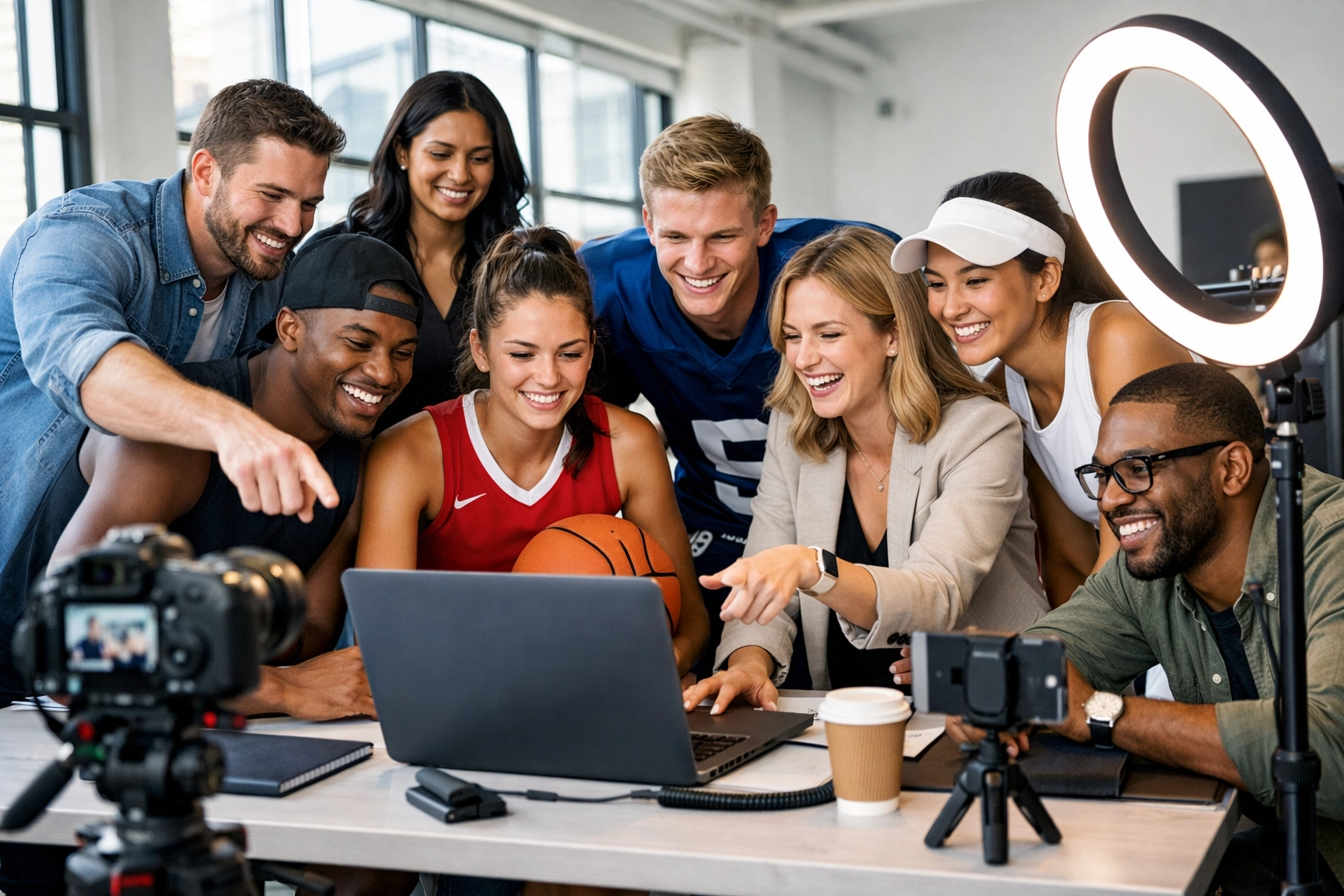
The Fundamental Shift: From Spectators to Participants
The traditional Super Bowl playbook: secure a 30-second spot, feature a celebrity, measure impressions: no longer delivers the return on investment that Fortune 100 executives expect. Data from the 2026 event revealed a critical insight: fans no longer wanted to consume content passively. They wanted to create, compete, and build careers around sports marketing.
This behavioral shift necessitated a strategic response. Leading brands repositioned their Super Bowl presence from a single-event broadcast opportunity to a year-round talent development platform. Rather than treating NIL athletes as endorsers who deliver scripted messages, forward-thinking executives recognized them as potential future employees, content collaborators, and brand builders.
The implications of this shift are substantial. When brands invest in NIL partnerships with a talent development mindset, they simultaneously achieve marketing objectives while building a pipeline of marketing professionals who already understand their brand values, target audiences, and communication strategies.
Strategic Pillars for Fortune 100 Success
Talent Pipeline Development Over Transactional Endorsements
The most sophisticated brands at Super Bowl 2026 treated NIL partnerships as extended job interviews. This approach involved sponsoring student-athletes' content creation today with the explicit goal of hiring them as marketing coordinators, content creators, or brand ambassadors after graduation.
This strategy delivers multiple benefits. First, it provides authentic content during the athletes' college careers while they maintain peak visibility and influence. Second, it creates a natural transition path for talented individuals who understand digital marketing, audience engagement, and personal branding: skills that translate directly to corporate marketing roles. Third, it builds long-term brand affinity with athletes who may become influential voices in their post-athletic careers.
The economic logic is compelling. Rather than paying premium rates for established celebrity endorsers with divided loyalties, brands invest comparable resources in developing exclusive relationships with emerging talent who can grow alongside the brand for decades.
Geographic Flexibility and Market Dominance
Traditional Super Bowl sponsorships concentrate brand presence in a single location during a single weekend. NIL partnerships enable a dramatically different approach: building local credibility across multiple markets simultaneously.
Leading brands in 2026 leveraged NIL relationships with athletes in college towns nationwide, creating a distributed presence that traditional sponsorships cannot achieve. While competitors focused exclusively on Phoenix activations, strategic brands engaged athletes in markets ranging from Ann Arbor to Athens, Tuscaloosa to Eugene, creating authentic local connections that resonated long after the Super Bowl concluded.

This geographic distribution transforms a single-event investment into a national campaign with deep local roots. Each NIL athlete brings their own community, fanbase, and credibility, effectively multiplying the brand's reach without corresponding increases in activation costs.
Student-Athlete Content Studios
The most innovative executions at Super Bowl 2026 deployed mobile content creation pods at fan zones where NIL athletes produced content while communications students worked alongside them on camera operation, editing, and social media strategy.
This approach delivered multiple strategic advantages. It generated professional-quality content featuring authentic athlete perspectives. It provided hands-on training for the next generation of marketing professionals. It created portfolio-building opportunities for students while simultaneously identifying top talent for future recruitment. And it demonstrated corporate commitment to education and career development, enhancing brand perception among key demographics.
These content studios functioned as both marketing assets and recruitment tools, attracting ambitious students who recognized the professional development opportunities these partnerships provided.
The Execution Framework: From Strategy to Implementation
Fortune 100 executives implementing NIL strategies at Super Bowl 2026 followed a systematic approach that ensured strategic alignment and measurable outcomes.
The framework began with an audit of current activations to determine whether they functioned as expenses or investments. This assessment examined whether sponsorships created lasting value through talent development, content libraries, and relationship building, or merely delivered temporary visibility that disappeared once the campaign concluded.
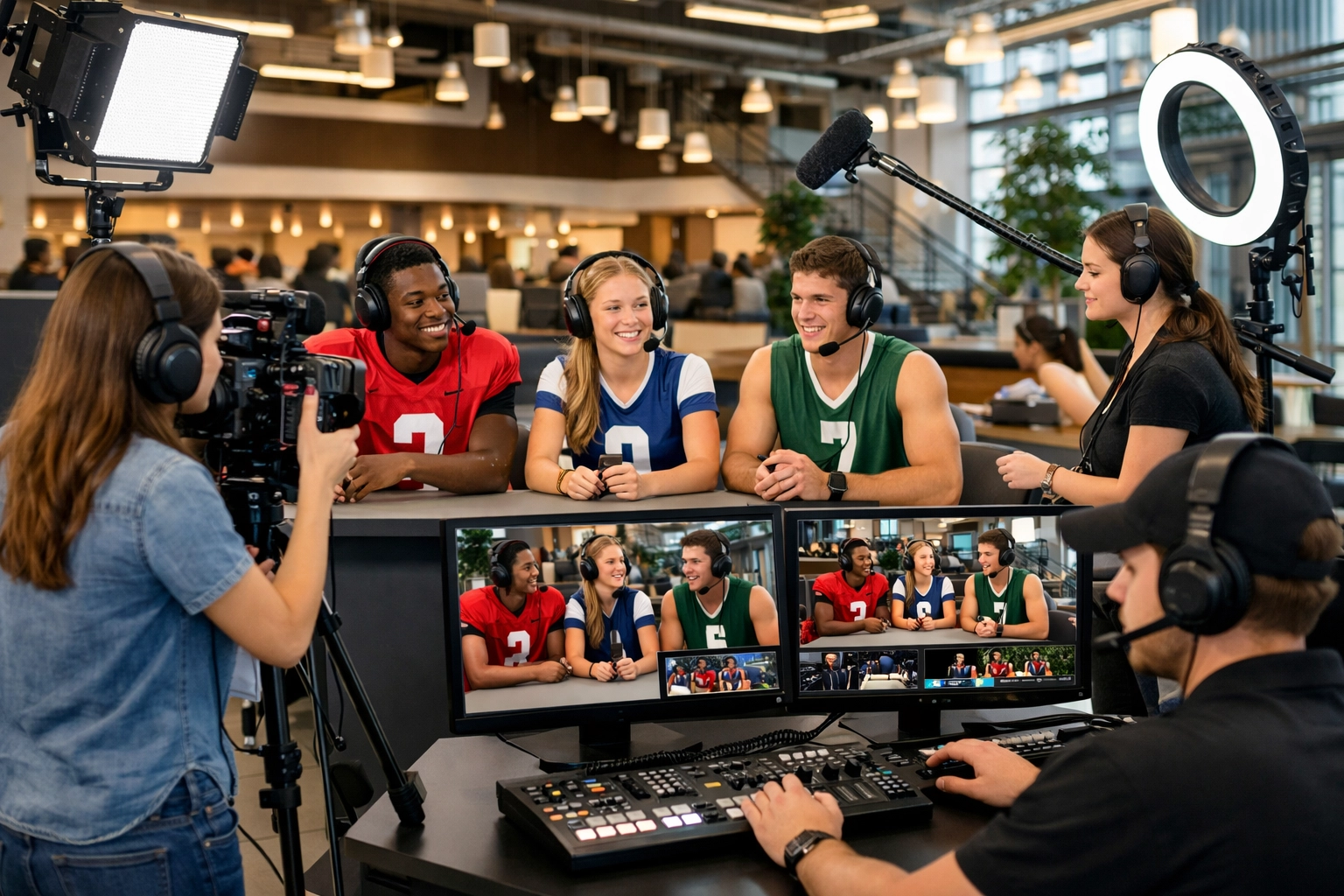
Based on this audit, leading brands restructured their approach. They partnered with NIL athletes as content collaborators and potential future hires, not merely as endorsers who delivered scripted messages. They built education infrastructure: content studios, innovation labs, mentorship programs: designed to outlast the single game and create sustained value.
They also launched talent community programs designed to convert fans into students, interns, and employees. These initiatives recognized that the most valuable outcome of a Super Bowl activation isn't immediate sales, but rather the identification and development of talented individuals who can drive brand growth for years to come.
Measurement frameworks evolved accordingly. While traditional metrics like impressions and engagement remained relevant, the most sophisticated brands added talent pipeline metrics: How many students participated in programs? How many qualified for internships? How many transitioned to full-time employment? What was the quality and volume of content produced?
Economic Considerations and the Ad Landscape
The economics of Super Bowl advertising remained substantial in 2026, with most advertisers paying $8 to $10 million for 30 seconds of national airtime. This significant investment demands strategic deployment to maximize return.
The most effective campaigns succeeded by prioritizing emotional storytelling and authentic brand connection over overt selling. Analysis of top-performing advertisements revealed that brands leveraging narrative transportation: drawing viewers into stories rather than presenting sales pitches: reduced viewer resistance and encouraged organic social sharing.
NIL partnerships complemented these high-cost broadcast investments by extending campaign reach and duration. While a 30-second spot delivers concentrated exposure during the game, NIL content created before, during, and after the event multiplies touchpoints and sustains conversation across digital platforms.
The combined approach: broadcast advertising for mass reach, NIL partnerships for sustained engagement and authenticity: delivered superior results compared to either strategy deployed in isolation.

The Authenticity Advantage
Perhaps the most significant strategic advantage NIL partnerships provided at Super Bowl 2026 was authenticity. Traditional celebrity endorsements carry inherent risks: audience preferences vary, celebrities' personal brands may conflict with corporate values, and oversaturation reduces effectiveness.
NIL athletes, by contrast, function as authentic, relatable content creators whose built-in communities trust their recommendations. These athletes haven't yet achieved celebrity status that creates distance from audiences. They remain accessible, genuine, and credible in ways that established stars often cannot maintain.
This authenticity translates directly to engagement metrics. Content featuring NIL athletes consistently outperformed equivalent content featuring traditional celebrities in terms of comments, shares, and conversion rates. Audiences recognized these partnerships as mutually beneficial relationships rather than purely transactional endorsements.
Building for the Future
The success of NIL strategies at Super Bowl 2026 establishes a new template for Fortune 100 sports marketing. The brands that achieved superior results weren't those with the largest advertising budgets, but those that recognized the strategic opportunity to build talent pipelines, create authentic content, and develop lasting relationships with the next generation of marketing professionals and consumers.
As NIL partnerships continue to evolve, the competitive advantage will increasingly accrue to brands that move earliest and most decisively to implement these strategies. The infrastructure being built today: relationships with athletes, content creation capabilities, talent development programs: will compound in value as these athletes graduate, enter professional sports or corporate careers, and become influential voices in their respective fields.
For Fortune 100 executives, the message is clear: NIL partnerships represent far more than an alternative to traditional endorsements. They constitute a strategic imperative for building sustainable competitive advantage in an era where authenticity, talent development, and long-term relationship building determine marketing success. The brands that recognize this reality and act accordingly will define the next generation of sports marketing excellence.





