

The fluorescent-lit computer lab: rows of identical desktop stations where students hunched over generic Windows installations: is quietly disappearing from American campuses and training facilities. In its place, a new infrastructure model is emerging, one that educational institutions and workforce development programs call "pods."
This isn't merely a cosmetic renovation or rebranding exercise. The transition from traditional computer labs to specialized learning pods represents a fundamental recalibration of how physical infrastructure aligns with career preparation. The shift carries significant implications for anyone currently navigating career pathways or considering skill development in high-demand fields.
The Financial and Pedagogical Collapse of Traditional Labs
Traditional computer labs were designed for a computing paradigm that peaked around 1995. At that time, personal computer ownership was neither universal nor affordable, and institutional labs served a necessary democratizing function by providing access to technology. Three decades later, that infrastructure model has become financially unsustainable and pedagogically obsolete.
The cost structure alone presents a compelling case for change. Institutions maintaining traditional labs face hardware refresh cycles every three to four years, consuming substantial portions of annual budgets. These facilities also occupy valuable real estate that could serve multiple purposes, yet often sit underutilized outside peak hours. Many organizations compounded the problem by simultaneously offering laptop loan programs and cloud-based access to software, effectively duplicating systems and multiplying costs.

Beyond finances, traditional labs failed to prepare students for contemporary professional environments. The model promoted isolated work on general-purpose machines: a stark contrast to the collaborative, specialized tool ecosystems that define modern workplaces. A student learning spreadsheet basics in a generic lab environment bore little resemblance to an operations analyst working within an integrated logistics platform, or a cybersecurity professional navigating proprietary threat detection systems.
Usage data reinforced these shortcomings. When Penn State and Grand Valley State University analyzed computer lab traffic patterns, they discovered that overall visits declined significantly year over year, yet the time students spent per session actually increased. This pattern suggested students were migrating to labs only when substantive, focused work demanded it: precisely the use case that specialized pods now address more effectively.
Understanding the Pod Architecture
Learning pods are purpose-built platforms organized around specific career pathways rather than generic computing access. Each pod functions as an integrated learning environment that combines physical infrastructure, cloud connectivity, specialized software, and collaborative workspace design.
The distinguishing feature is specialization. Rather than housing rows of identical machines, a pod is configured for a particular skill domain. A cybersecurity pod might include network simulation equipment, penetration testing tools, and secure sandbox environments where students can practice defensive techniques without institutional risk. A content creation pod would feature streaming studios, professional-grade editing workstations, and collaborative review spaces where teams can critique and refine media projects.
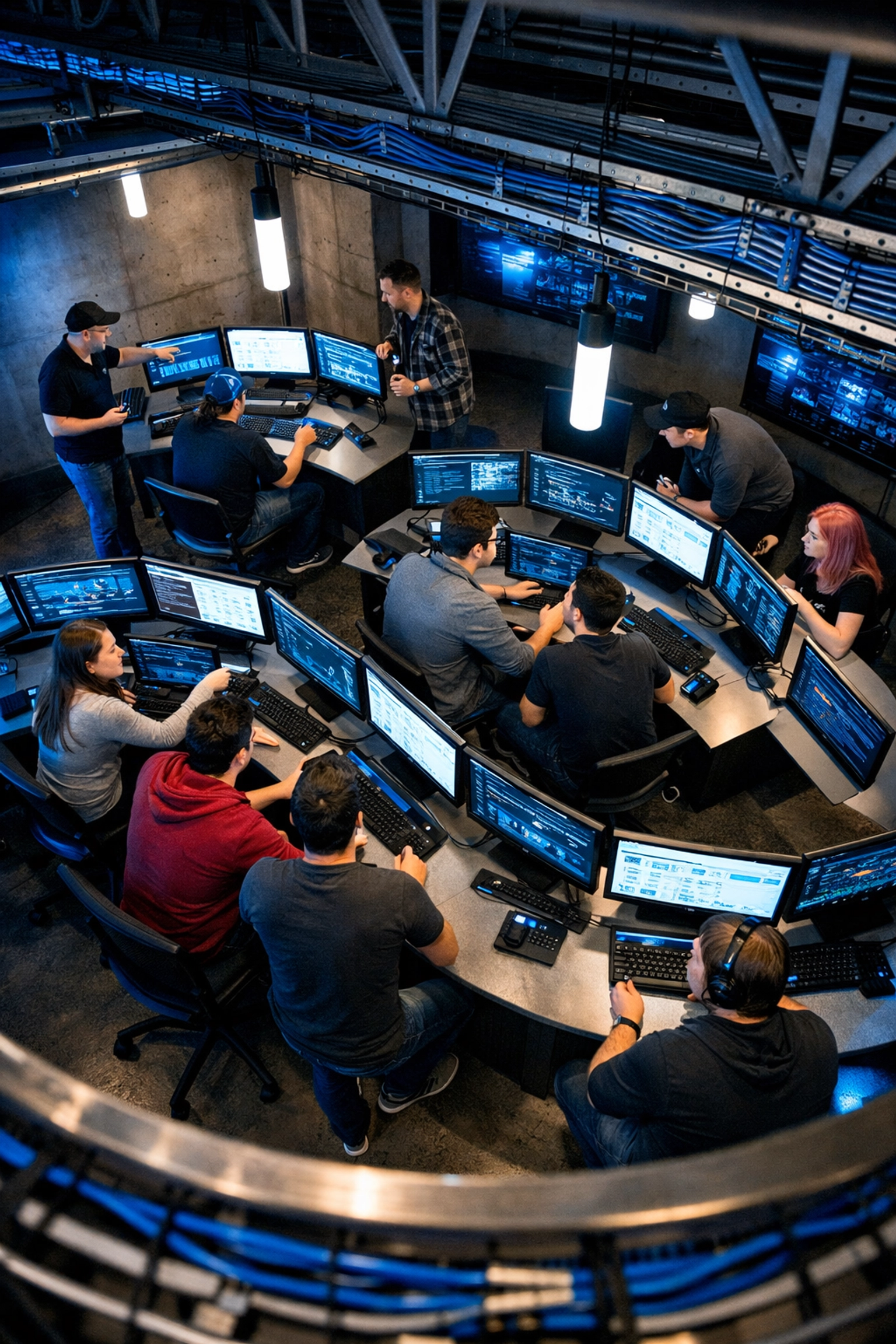
Importantly, pods employ a hybrid architecture. Core computing resources remain local, housed within the physical pod infrastructure, while internet connectivity enhances rather than enables the learning experience. This design addresses a critical equity concern: students in rural areas or underserved communities with inconsistent broadband access can continue learning uninterrupted, as the essential computing power resides on-site rather than depending entirely on cloud services.
The physical layout itself reflects contemporary work environments. Instead of individual carrels promoting isolation, pods feature collaborative workspaces designed for team-based projects. This seemingly minor design choice has profound implications: students develop cross-functional collaboration skills naturally, working alongside peers on projects that mirror actual workplace challenges.
Three Career Pathways Emerging from Pod-Based Learning
The pod model has proven particularly effective in developing talent for three high-demand career areas: logistics operations, cybersecurity, and digital content creation. Each represents a field where traditional computer lab training provided insufficient preparation, yet employer demand continues accelerating.
Logistics and Supply Chain Operations
Modern logistics professionals navigate complex systems integrating inventory management, transportation coordination, demand forecasting, and real-time optimization. A generic computer lab could teach spreadsheet skills, but it couldn't replicate the decision-making environment logistics professionals actually inhabit.
Logistics-focused pods address this gap by providing access to industry-standard platforms and simulation environments. Students work with the same transportation management systems, warehouse optimization tools, and supply chain visibility platforms used by Fortune 500 operations teams. The collaborative workspace design mirrors logistics coordination centers, where professionals must balance competing priorities and communicate across functional boundaries.
Cybersecurity and Network Defense
Cybersecurity represents perhaps the clearest case for specialized pod infrastructure. The field demands hands-on practice with network architectures, threat detection systems, and incident response procedures: experiences that traditional labs simply couldn't provide safely or effectively.
Cybersecurity pods create isolated network environments where students can practice penetration testing, analyze malware behavior, and respond to simulated breaches without endangering institutional systems. These pods often integrate certification preparation directly into the curriculum, aligning coursework with industry-recognized credentials like CompTIA Security+ or Certified Ethical Hacker designations that hiring managers actively seek.
Digital Content Creation
Content creation has evolved from a specialized niche to a universal professional requirement. Organizations across every sector now employ content strategies, and professionals at all levels need competency in video production, audio editing, graphic design, and multi-platform distribution.
Content creation pods function as professional-grade studios accessible to learners at various skill levels. These environments include proper lighting, acoustical treatment, camera equipment, and editing workstations configured with industry-standard software. Equally important, they provide collaborative critique spaces where students give and receive feedback: developing the iterative improvement mindset that distinguishes professional creators from hobbyists.
Implications for Career Development
The transition from labs to pods signals a broader shift in how educational infrastructure connects to employment outcomes. For individuals navigating career development, this evolution carries several important implications.
First, specialized pod environments produce candidates ready for specific roles rather than broadly trained computer users. Your learning experience increasingly mirrors actual workplace conditions, using the same tools and workflows you'll encounter professionally. This alignment means graduates enter the workforce with demonstrable competencies rather than theoretical knowledge requiring extensive on-the-job translation.

Second, pod-based programs frequently integrate industry-recognized certifications directly into the learning pathway. You graduate not only with a transcript but with credentials that validate your competency to hiring managers. In fields like cybersecurity and cloud computing, these certifications often matter more to employers than degree credentials, as they signal specific, verifiable capabilities.
Third, the collaborative nature of pod environments cultivates cross-functional skills that employers consistently emphasize. You develop the ability to work within diverse teams, communicate technical concepts to non-technical stakeholders, and adapt your approach based on colleague feedback. These capabilities often determine career progression more than purely technical proficiency.
Universities and training organizations implementing pod-based models report cost savings between 50 and 75 percent compared to maintaining traditional labs, while simultaneously improving their ability to track learner progress and demonstrate outcomes. This creates measurement-rich environments where your skill development becomes visible and verifiable: a significant advantage when employers seek evidence of capability beyond transcripts and references.
The Standardization Advantage
A subtle but significant benefit of pod-based infrastructure is the standardization it enables across institutions. When multiple training facilities use similar pod configurations aligned to the same industry tools and certification pathways, students develop consistent competencies regardless of geographic location.
This standardization appeals strongly to large employers developing national workforce strategies. A logistics company expanding operations across multiple regions benefits when candidates from different training programs possess equivalent skills developed on similar platforms. The pod model makes this consistency achievable in ways traditional labs never could, as each institution previously made independent decisions about software, hardware, and curriculum alignment.
Looking Forward
The shift from computer labs to specialized learning pods represents more than infrastructure modernization. It signals educational institutions fundamentally realigning physical space with workplace realities, transforming learning environments from cost centers requiring justification into competitive advantages demonstrating measurable outcomes.
For anyone considering career development in high-demand fields, this evolution matters. The infrastructure through which you develop skills increasingly determines not just what you learn, but how prepared you'll be to apply that knowledge professionally. Specialized pods provide pathways into logistics, cybersecurity, and content creation that generic computer labs simply couldn't offer: making the physical space of learning as important as the curriculum itself.
The question facing career-focused individuals is no longer whether you have access to computers, but whether you have access to the specialized, collaborative environments where relevant professional skills actually develop. As pods continue replacing traditional labs, that access increasingly determines career outcomes in the modern economy.





