

The convergence of Name, Image, and Likeness (NIL) rights with the Super Bowl represents a watershed moment for brand strategy. As February 16, 2026 approaches and the Super Bowl draws near, Fortune 100 brands face an unprecedented opportunity: and equally significant legal exposure: in navigating this evolving landscape. The stakes have never been higher, and the complexity demands strategic precision.
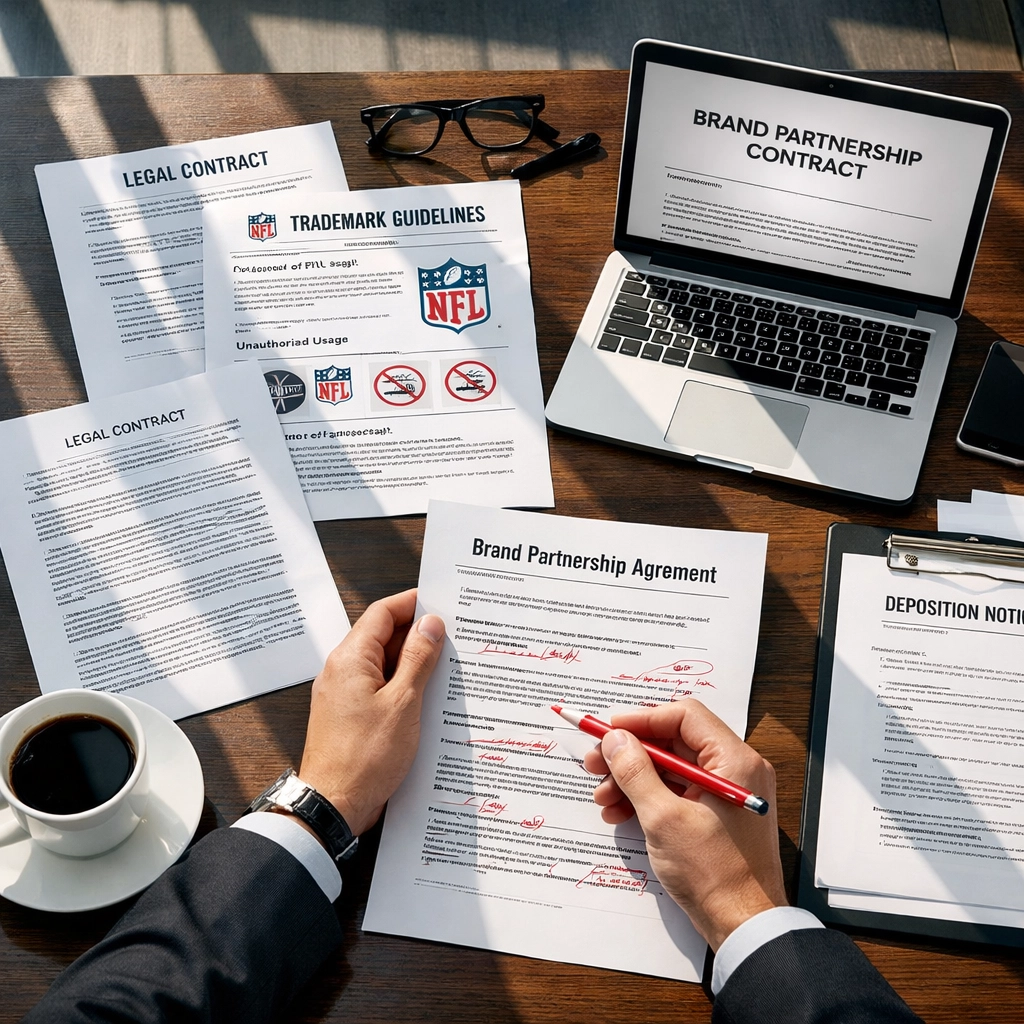
1. The NFL Trademark Wall Remains Impenetrable
Despite the NIL revolution transforming college athletics, the NFL's trademark enforcement strategy has only intensified. Brands cannot use "Super Bowl," "Super Sunday," or any related NFL trademarks in advertising without explicit licensing agreements. The league enforces these restrictions aggressively to protect official sponsors who pay premium fees for exclusive "Official ___ of the Super Bowl" designations.
This enforcement extends beyond obvious violations. Even indirect references or creative wordplay that implies association with the event can trigger legal action. The NFL's intellectual property protection team actively monitors advertising campaigns, social media activations, and promotional materials throughout the Super Bowl period.
2. Individual Player Rights Require Direct Negotiation
Individual players own complete rights to commercial use of their name, image, likeness, voice, and other intellectual property markers. Any commercial application of a player's identity requires permission directly from the athlete, typically negotiated through the NFL Players Association (NFLPA), which administers player NIL licensing agreements.
This represents a fundamental shift from traditional team-based sponsorship models. Brands must now navigate dual licensing requirements: institutional agreements with teams or the league, and separate individual agreements with players featured in campaigns. The complexity multiplies when campaigns involve multiple athletes across different teams.

3. College Athlete NIL Creates Parallel Opportunities
The true revolution occurs at the college level, where athletes competing in events surrounding Super Bowl weekend now possess marketable NIL rights. Division I programs treat NIL as a core compliance concern, creating structured frameworks for brand partnerships that didn't exist three years ago.
College athletes participating in Super Bowl-adjacent events, media appearances, or promotional activities represent accessible partnership opportunities for brands seeking authentic connections without triggering NFL trademark restrictions. These partnerships often deliver higher engagement rates among younger demographics while maintaining significantly lower cost structures compared to professional athlete endorsements.
4. Reporting Requirements Demand Operational Readiness
Third-party NIL contracts valued at $600 or more must be reported to NIL Go within five days of execution, with limited exceptions allowing up to 14 days. For Fortune 100 brands executing multiple NIL agreements during Super Bowl week, this creates substantial administrative burden and compliance risk.
Brands must establish internal processes ensuring rapid contract registration, particularly when dealing with time-sensitive activations around the Super Bowl. Failure to meet reporting deadlines can jeopardize athlete eligibility and expose brands to institutional sanctions. The compliance infrastructure required extends beyond legal review to include dedicated NIL management personnel familiar with institutional reporting protocols.

5. Uniform Commercialization Policy Changes the Game
Effective August 1, 2026, NCAA Division I approved a commercialization policy allowing commercial sponsor patches on uniforms and equipment. This creates both opportunity and conflict potential when athlete personal sponsorships compete with institutional patch sponsors.
Brands must proactively coordinate sponsorship agreements to avoid conflicts between personal athlete deals and institutional partnerships. This requires sophisticated contract language addressing exclusivity clauses, category protections, and visual prominence hierarchies. The most successful brands will establish frameworks that benefit both the institution and individual athletes rather than forcing zero-sum competition.
6. Geographic Proximity Matters More Than Ever
Super Bowl 2026's location creates unique opportunities for regional activation strategies. Brands can leverage college athletes from local universities for community-focused campaigns that avoid NFL trademark issues while building authentic local connections.
These geographically targeted approaches often deliver superior return on investment compared to broad national campaigns. Local athletes bring built-in fan bases, regional media relationships, and community credibility that enhances brand perception. The key lies in matching brand values with athlete personal brands while ensuring campaign messaging aligns with institutional compliance requirements.
7. Social Media Amplification Requires Clear Guidelines
College athletes bring substantial social media followings and engagement rates that often exceed professional athletes in specific demographics. However, brands must establish clear content guidelines addressing NFL trademark restrictions, particularly during Super Bowl week when athlete posts naturally gravitate toward football content.
The challenge involves balancing authentic athlete voice with brand protection requirements. Overly restrictive guidelines diminish the authenticity that makes NIL partnerships valuable. Insufficient guidance exposes brands to trademark violations through athlete-generated content. The solution requires comprehensive pre-campaign education, real-time content review systems, and collaborative relationships built on mutual understanding rather than contractual coercion.
8. Valuation Models Remain Inconsistent
The NIL marketplace lacks standardized valuation frameworks, creating wide disparities in athlete compensation expectations. During Super Bowl week, these valuation challenges intensify as athletes perceive increased leverage based on event proximity and heightened media attention.
Fortune 100 brands must develop internal valuation models based on measurable engagement metrics, audience demographics, and historical campaign performance rather than reactionary decision-making. Data-driven approaches help establish fair market rates while avoiding overpayment driven by artificial scarcity perceptions around major sporting events.
9. Long-Term Relationship Building Trumps Transactional Activations
The most sophisticated brands approach Super Bowl NIL opportunities as relationship-building exercises rather than isolated transactions. Multi-year agreements with college athletes create continuity, deeper brand association, and economies of scale in activation planning.
These extended partnerships allow brands to develop athletes as genuine brand ambassadors rather than temporary spokespersons. The investment in relationship depth pays dividends through authentic advocacy that consumers recognize and reward with increased brand loyalty.
10. Legal Infrastructure Investment Is Non-Negotiable
Successful NIL strategies require dedicated legal infrastructure beyond standard marketing counsel. Brands need specialists familiar with NCAA compliance, state-specific NIL regulations, institutional policies, and federal trademark law.
This legal investment represents a necessary cost of entry rather than discretionary spending. The potential downside of compliance failures: ranging from campaign termination to athlete ineligibility to institutional sanctions: far exceeds the cost of proper legal counsel. Fortune 100 brands must view legal infrastructure as strategic advantage enabling aggressive but compliant NIL activation rather than defensive cost center.
The Path Forward
The NIL revolution at Super Bowl 2026 represents transformation, not disruption. Fortune 100 brands that approach these opportunities with strategic sophistication, operational readiness, and genuine commitment to athlete partnership will establish competitive advantages that extend far beyond a single sporting event. The brands that succeed will be those that recognize NIL partnerships as long-term relationship investments requiring infrastructure, expertise, and authentic engagement rather than transactional marketing expenses.
For brands ready to navigate this new landscape, the opportunity extends well beyond Super Bowl weekend into a fundamentally transformed sports marketing ecosystem where athlete partnerships offer unprecedented access to engaged audiences seeking authentic brand connections.





