
The 2026 federal budget proposal consolidates eleven major workforce programs into a single grant structure. This isn't just administrative streamlining: it's a signal that traditional workforce development models are being fundamentally questioned. For executives building talent pipelines, the question isn't whether these programs are dying, but what's replacing them.
The answer lies in data. While federal programs consolidate and contract, leading organizations are building their own workforce ecosystems grounded in real-time analytics, competency tracking, and measurable outcomes that extend far beyond placement rates.
The Shift from Compliance to Competency
Traditional workforce programs measured success through simple metrics: enrollment numbers, completion rates, and initial job placements. These programs operated on a fundamental assumption that participation itself indicated value. The disconnect between program completion and actual workforce readiness created a gap that employers increasingly refused to accept.
Recent analysis reveals that 51% of employees remain open to leaving their current positions, with inadequate development opportunities cited as a primary factor. This statistic underscores a broader truth: workforce readiness is not a binary state achieved through program completion. It's an ongoing condition that requires continuous measurement and adjustment.

Forward-thinking organizations are abandoning checkbox compliance in favor of competency-based frameworks. These frameworks don't ask whether a candidate completed a program: they ask what specific skills that candidate can demonstrate, how those skills translate to business outcomes, and how quickly those skills can be deployed.
Analytics Dashboards: The New Workforce Command Center
The most significant shift in workforce development isn't happening in classrooms or training centers. It's happening in dashboard interfaces where executives can view real-time competency data across their entire talent pipeline.
These analytics platforms track metrics that traditional programs never considered. Instead of measuring seat time or course completions, modern dashboards display skill acquisition velocity, competency gap identification, peer benchmarking, and predictive retention modeling. Each metric connects directly to business outcomes rather than program outputs.
One critical insight emerging from these analytics platforms: skills decay rapidly without application. Traditional programs that measure success at graduation miss the critical 90-day window where newly acquired competencies either solidify through practice or atrophy through disuse. Analytics dashboards make this decay visible, allowing organizations to intervene before talent investments evaporate.
The data also reveals something unexpected about workforce readiness. Technical skills: the primary focus of most traditional programs: represent only 40% of long-term success predictors. The remaining 60% comprises what organizations now call "digital citizenship competencies": media literacy, information evaluation, digital communication, and ethical technology use.
NIL Education: An Unexpected Workforce Development Model
Name, Image, and Likeness education programs, originally developed for collegiate athletes, provide an unexpected blueprint for workforce development. These programs teach young adults to manage their personal brand, understand contract negotiations, navigate digital platforms, and make informed decisions about partnerships and representation.
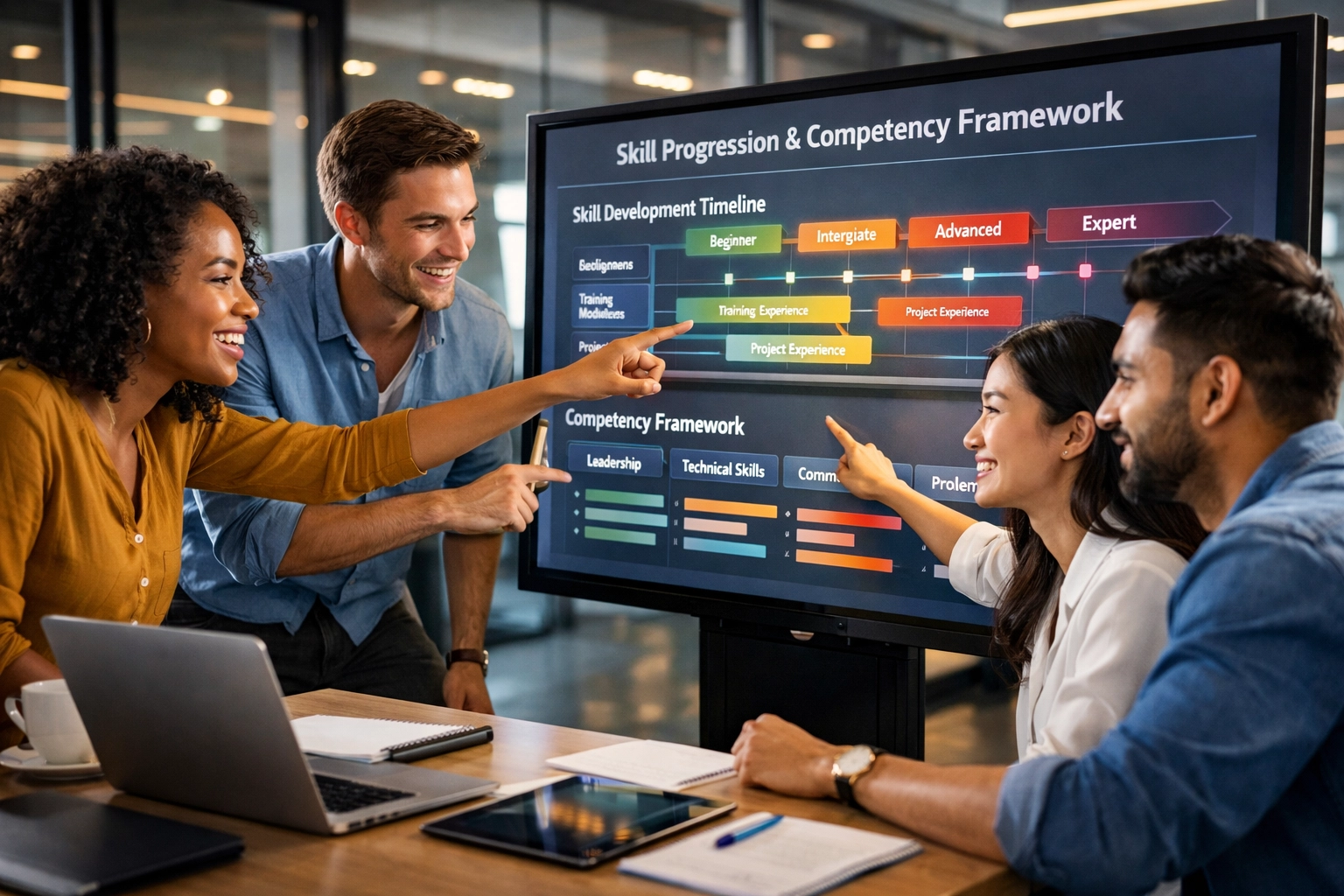
The competencies developed through NIL education mirror the skills that employers increasingly demand: self-advocacy, digital literacy, strategic thinking, and financial literacy. Unlike traditional workforce programs that teach specific job functions, NIL education develops the meta-skills that enable individuals to navigate complex professional ecosystems.
Organizations implementing NIL-style education frameworks report measurably different outcomes. Participants demonstrate higher engagement in professional development, greater comfort with technology adoption, and improved ability to articulate their value proposition to employers. These outcomes emerge not from technical training but from identity development: teaching individuals to see themselves as professionals managing their own career trajectory.
The analytics advantage becomes clear when tracking these outcomes. Traditional metrics would classify NIL education as "non-vocational," but competency-based dashboards reveal its direct correlation with retention, promotion velocity, and lateral skill acquisition.
Media Literacy: The Missing Foundation
The consolidation of federal workforce programs coincides with an explosion of digital misinformation and sophisticated content manipulation. This convergence isn't coincidental: it reveals a fundamental gap in how workforce readiness has been conceptualized.
Media literacy: the ability to evaluate information sources, identify bias, understand algorithmic content curation, and distinguish credible information from manipulation: has emerged as a core workforce competency. Organizations operating in high-consequence environments cannot afford team members who fall for phishing attacks, share proprietary information on unsecured platforms, or make decisions based on algorithmically-manipulated content.
Analytics dashboards tracking media literacy outcomes reveal patterns that traditional education assessments miss. Media literacy isn't knowledge-based: it's behavioral. The competency manifests in daily micro-decisions about information sharing, source evaluation, and digital communication. These behaviors can be measured through interaction patterns, content engagement metrics, and decision-making simulations.
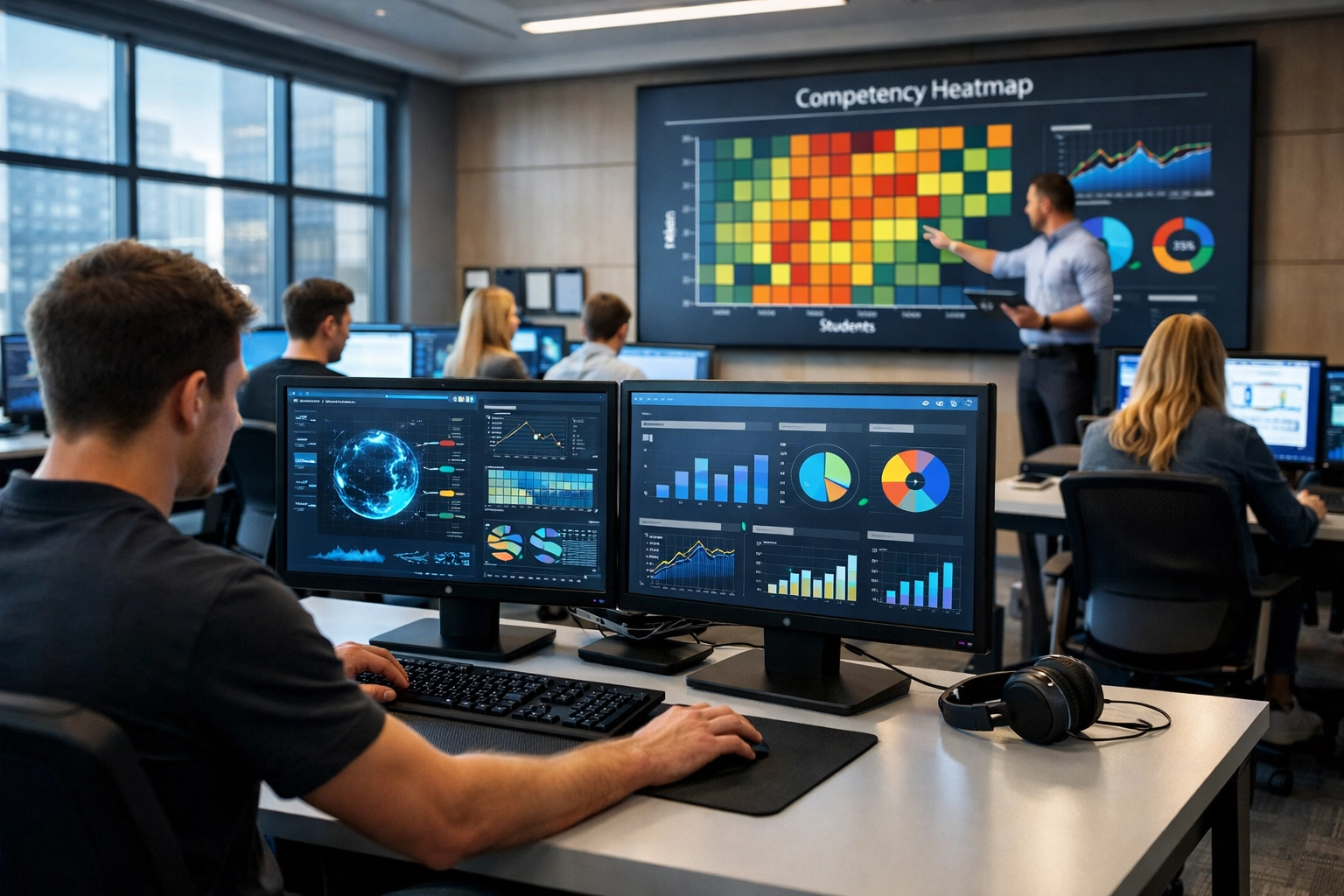
Organizations embedding media literacy into their workforce development report quantifiable security improvements, reduced susceptibility to social engineering, and higher quality internal communication. These outcomes justify investment in a way that generic "digital skills" training never could.
The 'Future Ready' Schools Model
The convergence of analytics, NIL education, and media literacy points toward a new workforce development architecture: the 'Future Ready' schools model. This framework positions educational institutions not as service providers delivering standardized programs, but as data partners generating continuous competency intelligence.
In the Future Ready model, schools function as talent development laboratories. Students engage with real-world business challenges, build portfolios of demonstrated competencies, and generate performance data that employers can access directly. The school's value proposition shifts from credential granting to outcome validation.
This model requires infrastructure that traditional workforce programs cannot provide. Schools need integrated analytics platforms that track competency development across multiple domains simultaneously. They need partnerships with employers that go beyond internships to include co-developed assessment frameworks and shared outcome definitions.
The analytics component makes this model scalable in ways that traditional programs never achieved. Rather than requiring employers to individually evaluate hundreds of applicants, competency data flows directly from educational institutions to hiring teams through standardized dashboards. Employers access verified skill demonstrations rather than proxies like degrees or certifications.
Building Tomorrow's Teams Today
For executives evaluating workforce development investments, the path forward requires three fundamental shifts.
First, abandon program-centric thinking in favor of competency-centric frameworks. The question isn't which program to partner with, but which competencies to develop and how to measure acquisition.
Second, invest in analytics infrastructure that makes workforce readiness visible in real time. Dashboards that display current competency levels across talent pipelines enable proactive rather than reactive development.
Third, recognize that workforce readiness in 2026 requires competencies that traditional programs weren't designed to build. Media literacy, digital citizenship, and professional identity development aren't supplementary skills: they're foundational requirements for operating in modern business environments.

Traditional workforce programs aren't dead, but they're no longer sufficient as standalone solutions. The organizations building tomorrow's teams are constructing their own development ecosystems, anchored by real-time analytics and focused on competencies that traditional programs overlook.
The consolidation of federal workforce funding will accelerate this transition. As standardized programs contract, organizations that have already built analytics-driven development infrastructure will access talent that competitors cannot identify, much less recruit. The workforce development advantage increasingly belongs to organizations that can see competencies that others merely assume.
The question for executives isn't whether traditional programs are dying. It's whether your organization is building the systems to develop and identify talent in their absence.





