
The landscape of Super Bowl advertising has fundamentally transformed. While a 30-second television spot during the 2026 game commands astronomical prices, the most effective campaigns now extend far beyond traditional broadcast advertising. Business leaders who understand this shift are capturing unprecedented returns on investment by embracing multi-platform strategies that begin weeks before kickoff and continue long after the final whistle.
The data tells a compelling story: the 2026 Super Bowl generated $550 million in earned media value for brands on social media platforms, with 764 billion potential impressions and a 0.19% engagement rate. These figures underscore a critical reality: success in Super Bowl advertising no longer hinges solely on securing a coveted broadcast slot. Instead, it requires strategic deployment across digital channels where audiences increasingly consume game-day content.
The Multi-Platform Imperative
Today's Super Bowl viewers experience the game through short-form video and influencer content across social platforms, not exclusively through traditional television broadcasts. This behavioral shift demands a fundamentally different marketing approach. Brands prioritizing YouTube, TikTok, and Meta platforms alongside or instead of expensive TV airtime are seeing measurable results that justify the strategic pivot.
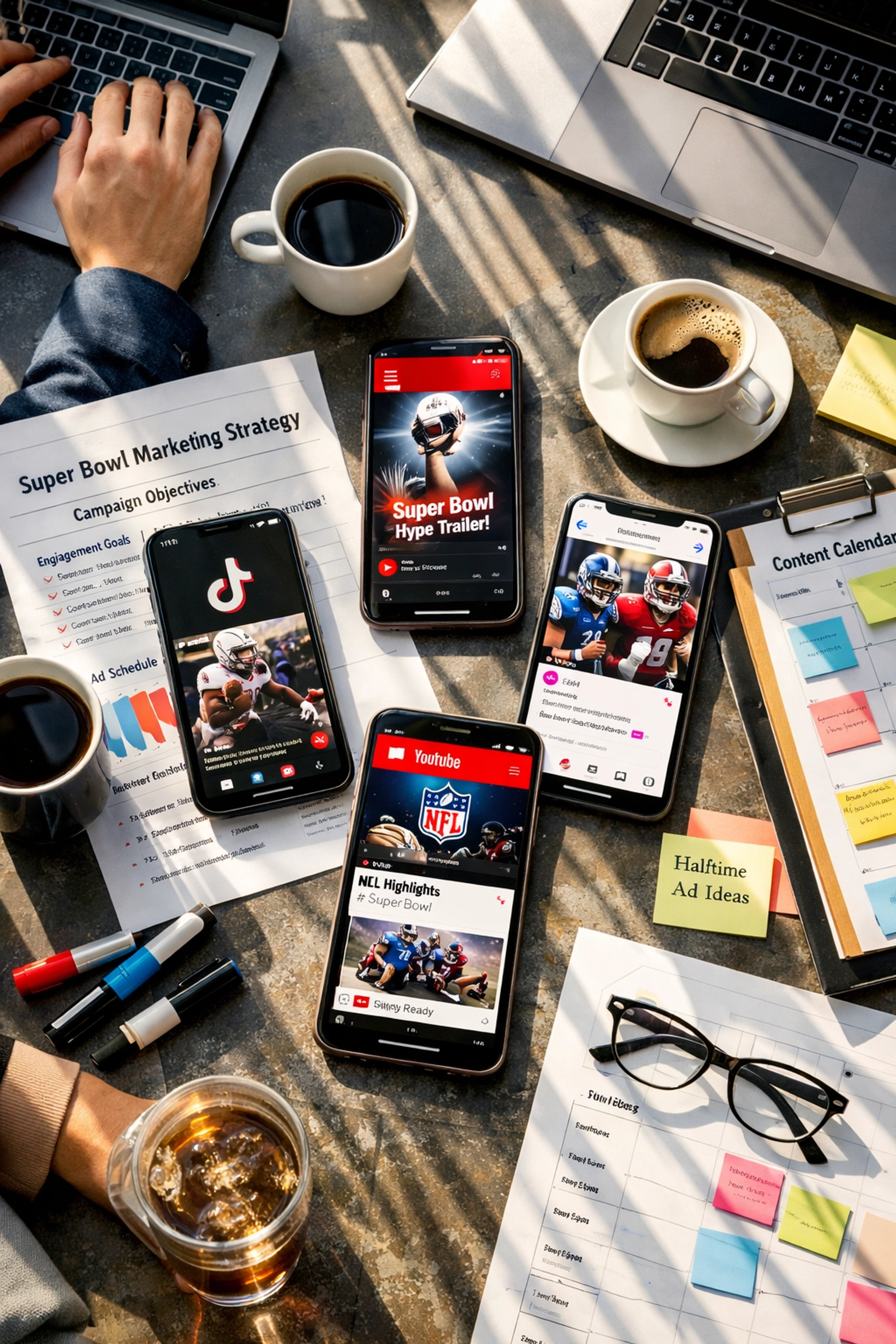
The cost comparison proves instructive. A month-long TikTok campaign can cost less than a single second of Super Bowl TV airtime, delivering highly targeted advertising based on NFL interests, fantasy football participation, and sports content consumption patterns. This economic efficiency, combined with superior targeting capabilities, makes digital platforms increasingly attractive to business leaders seeking measurable return on advertising spend.
The Three-Phase Campaign Framework
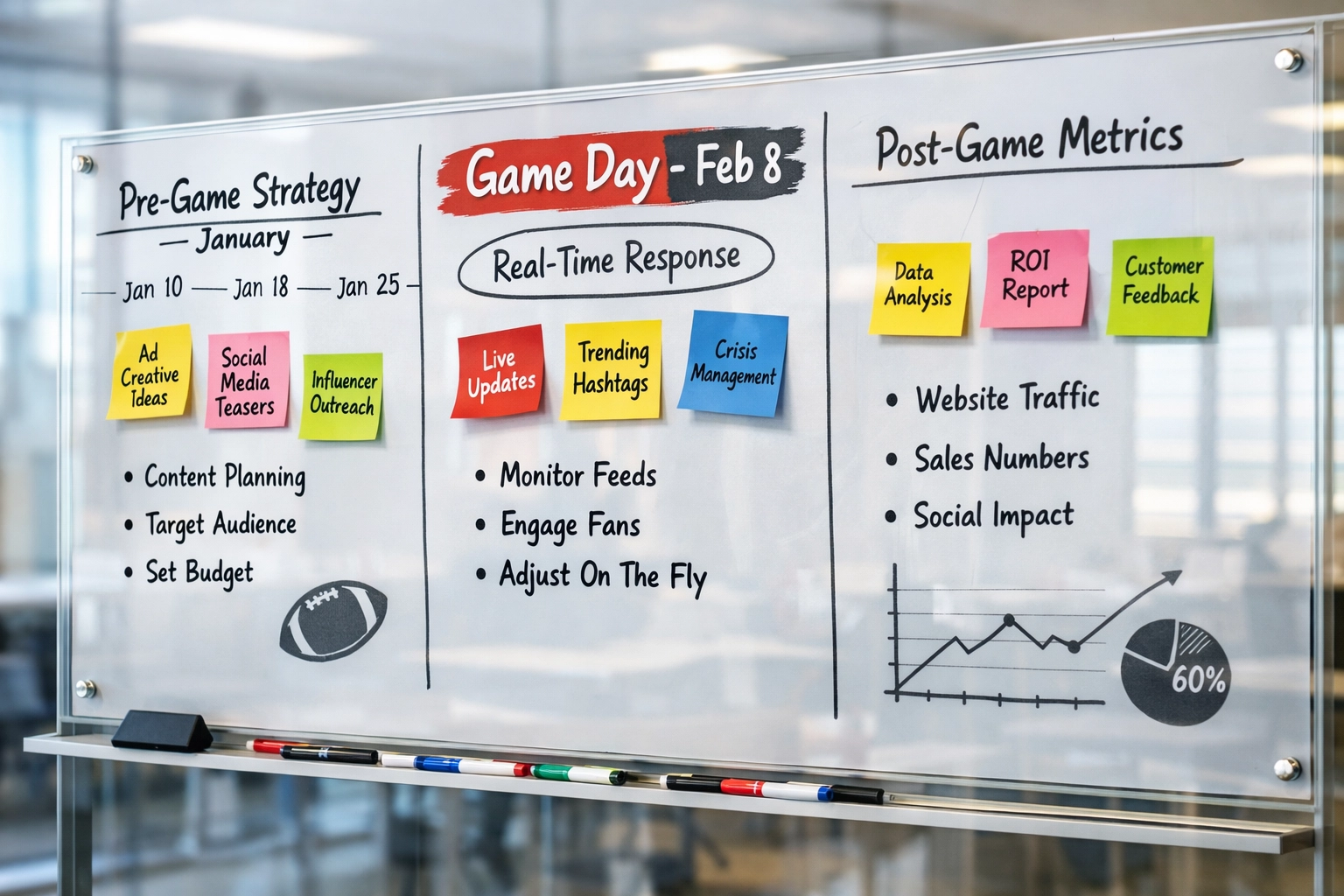
Successful 2026 campaigns followed a structured timeline that maximized engagement across three distinct phases. Organizations implementing this framework reported significantly higher conversion rates compared to those relying on game-day-only tactics.
Phase One: Pre-Game Positioning (January 15 – February 7)
The pre-game phase capitalizes on lower costs-per-click and establishes retargeting audiences before competition intensifies. Brands launching early in this window built awareness momentum and positioned themselves advantageously. Contextual targeting around NFL and sports content during this phase achieved view rates of 56-64%, demonstrating the effectiveness of early engagement strategies.
Phase Two: Real-Time Game Day Execution (February 8)
Game day demands prepared flexibility. Successful brands developed standby ad sets for multiple potential outcomes and viral moments, enabling real-time campaign optimization. Platform-specific posts capturing trending conversations and memes achieved the highest visibility, though costs naturally rose due to increased competition. Organizations that invested in real-time monitoring and rapid response capabilities significantly outperformed those with static campaigns.
Phase Three: Post-Game Amplification (February 9 – February 15)
The week following the Super Bowl sees massive search volume spikes for highlights and viral moments. Aggressive retargeting of engaged audiences during this phase converts interest into measurable business outcomes. Brands extending campaigns to capture viewers seeking ad reactions and commentary reported sustained engagement rates that justified continued investment beyond game day.
Platform-Specific Performance Insights
Different platforms require tailored approaches. Meta platforms demonstrated particular strength when campaigns incorporated user-generated content and influencer-driven material with sophisticated retargeting, achieving up to 70% cost-per-lead-click efficiency. This performance metric represents a significant improvement over traditional advertising channels and validates the strategic emphasis on social media integration.
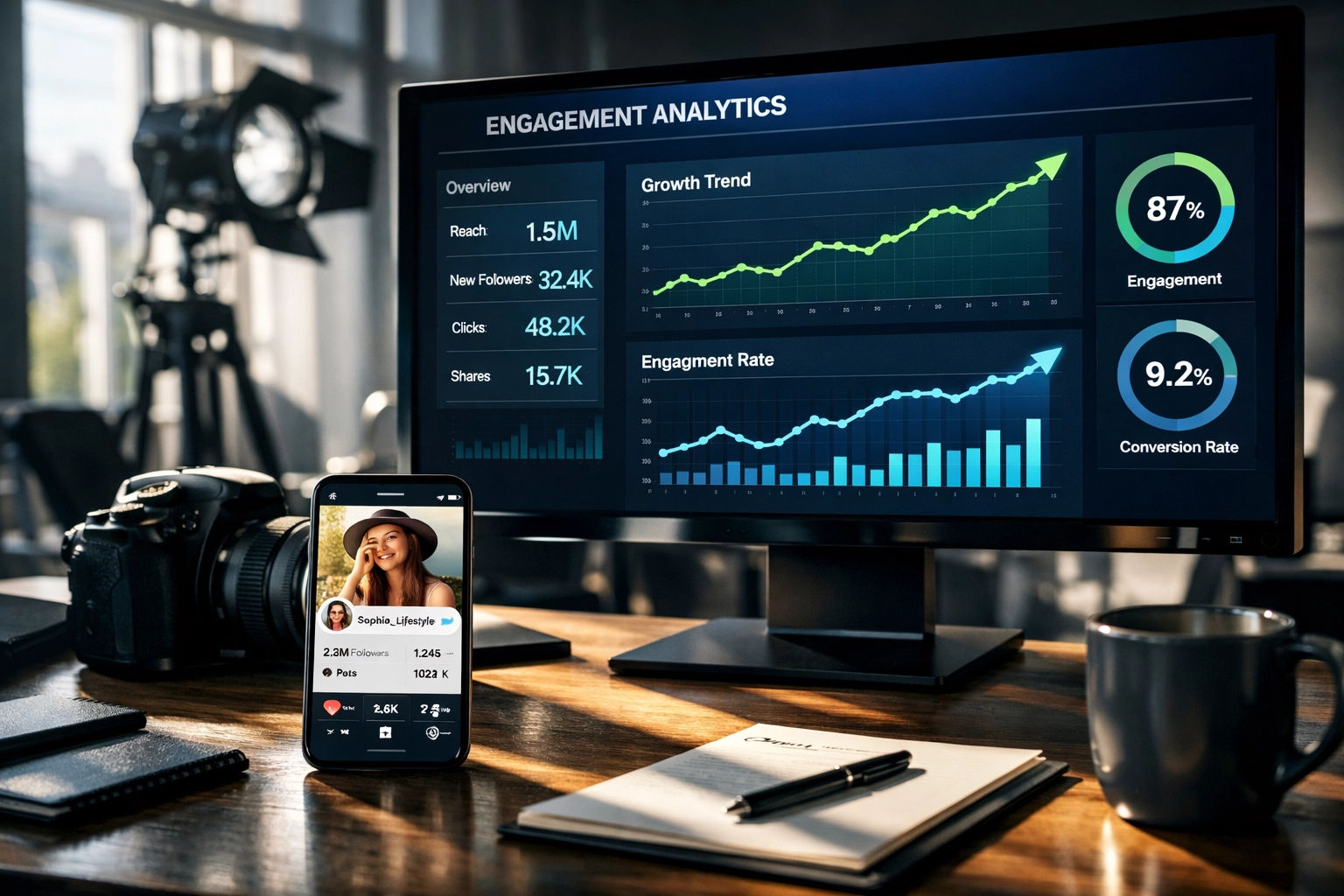
Influencer partnerships delivered quantifiable results that exceeded traditional celebrity endorsements. Carl's Jr.'s collaboration with influencer Alix Earle, featuring behind-the-scenes content and ad sneak peeks, achieved 91% follower growth and a 47% engagement rate. These metrics demonstrate that authentic influencer relationships, particularly when initiated early in the campaign timeline, generate substantial returns.
Watch this analysis of Super Bowl advertising strategies and their evolution:
https://www.youtube.com/watch?v=l6J-0zileKE
The Anatomy of Memorable 2026 Advertisements
Analysis of the most successful 2026 Super Bowl advertisements reveals consistent patterns. The highest-performing spots: including AI.com with 9.1X median engagement and Universal Pictures' Minions advertisement with 9.09X engagement: combined entertainment value with emotional resonance. Notably, these top performers didn't necessarily command the largest budgets; they demonstrated superior understanding of platform audiences and optimization strategies.
Several key elements distinguished successful campaigns. Clear, concise messaging allowed brands to explain their entire concept in a single sentence, cutting through the clutter of competing advertisements. Nostalgia-driven content rose 7% from 2025, but surface-level nostalgia proved insufficient. Top performers combined nostalgic elements with strong production quality and multi-generational casting that resonated across demographic segments.
Trust in creative vision emerged as a critical success factor. Brands that committed to bold creative directors rather than relying exclusively on celebrity power achieved superior results. Squarespace's collaboration with Oscar-nominated director Yorgos Lanthimos and Instacart's partnership with filmmaker Spike Jonze exemplify this approach. These partnerships delivered distinctive creative work that stood out in an increasingly crowded advertising environment.
Social media conversation analysis revealed clear winners. Pepsi dominated with 38,188 mentions, followed by Apple Music and Budweiser. However, raw mention volume didn't directly correlate with conversion rates, reinforcing that engagement quality matters more than quantity in driving business outcomes.
Measuring Success Beyond Impressions

Traditional metrics like impressions and reach provide incomplete pictures of campaign effectiveness. Forward-thinking organizations now emphasize engagement rates, conversion metrics, and earned media value when evaluating Super Bowl advertising investments. The $550 million in earned media value generated across social platforms demonstrates that well-executed campaigns create ripple effects extending far beyond initial paid media investments.
One revealing finding: 2026 advertisements were 9% less likely to amuse audiences compared to 2025, suggesting that humor alone no longer guarantees success. Emotional depth and authentic storytelling increasingly drive engagement, particularly among younger demographics consuming content through social platforms.
Strategic Implementation Guidelines
Business leaders planning 2027 campaigns should adopt a 360-degree approach combining social media campaigns, influencer content, and timely engagement rather than concentrating resources on a single expensive television spot. Budget allocation across multiple channels, prioritizing early campaign launches to capitalize on lower costs-per-click, and preparing real-time response strategies for major game moments represent fundamental best practices.
Authenticity consistently outperformed polished corporate messaging in the social-first landscape. Organizations that embraced genuine storytelling, even when less technically perfect, generated stronger audience connections and higher conversion rates. This finding challenges traditional assumptions about advertising quality and suggests that relatability increasingly trumps production value in digital environments.
The most successful campaigns didn't chase viral moments; they created conditions for organic virality through strategic content planning and audience understanding. This distinction proves critical for business leaders allocating significant advertising budgets and seeking predictable returns on investment.
Looking Forward
The evolution of Super Bowl advertising reflects broader shifts in media consumption and audience behavior. Business leaders who recognize these changes and adapt accordingly position their organizations for sustained competitive advantage. The 2026 data demonstrates that digital-first strategies, when properly executed, deliver measurable results that justify moving resources away from traditional broadcast-only approaches.
Organizations planning 2027 campaigns should begin strategic development immediately, securing influencer partnerships, developing creative concepts, and establishing measurement frameworks that capture the full value of multi-platform engagement. The most memorable and effective campaigns will continue balancing emotional resonance with clear messaging, nostalgic elements with fresh perspectives, and paid media investments with earned media amplification.
As Super Bowl advertising continues evolving, one principle remains constant: understanding your audience and meeting them where they consume content delivers superior results compared to following conventional wisdom about traditional broadcast advertising dominance.





