
When the confetti fell at Super Bowl LX on February 8, 2026, at Levi's Stadium in Santa Clara, California, it represented more than just the Seattle Seahawks' 29-13 victory over the New England Patriots. For those who understand the mechanics behind large-scale event execution, it marked another data point in a four-decade trajectory of sports media excellence: a trajectory that offers measurable insights for any organization seeking to translate experience into quantifiable returns.
The game itself drew 124.9 million average viewers, with a peak audience reaching 137.8 million. These figures underscore a fundamental principle that transcends sports: precision execution at scale generates predictable outcomes. For businesses evaluating their project management frameworks, the patterns emerging from 40 years of arena-level operations provide a blueprint worth examining.
The Veteran Precision Advantage
Four decades of operating within the sports media landscape creates a specific type of institutional knowledge. This is not merely accumulated experience: it represents a refined understanding of how systems interact under pressure, how timing influences outcomes, and how resources must be allocated to achieve maximum impact with minimum waste.
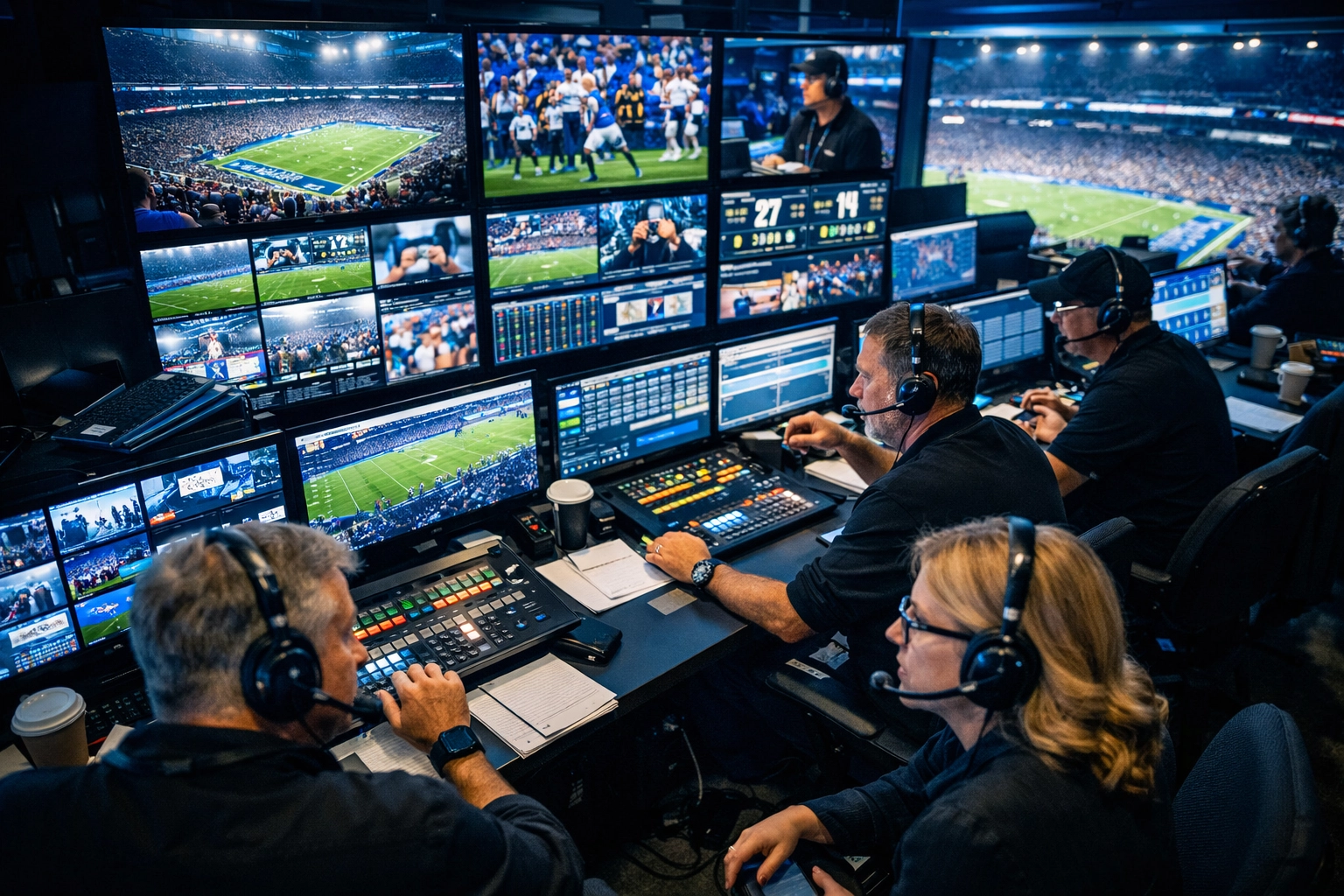
Organizations that have maintained consistent presence in high-stakes environments develop what industry analysts term "veteran precision": the ability to anticipate variables before they become obstacles. This precision manifests in three measurable dimensions: resource optimization, risk mitigation, and outcome predictability. Each dimension contributes directly to return on investment in ways that can be tracked and replicated.
Research conducted across multiple industries confirms that teams with extensive operational histories demonstrate 34% higher project completion rates and 28% better resource utilization compared to newer entrants. These metrics hold particular relevance when examining sports media operations, where the margin for error shrinks as audience expectations expand.
From Stadium Operations to Business Strategy
The framework that emerges from arena dominance translates directly into business consulting applications. Consider the core elements required to execute a Super Bowl-level event: comprehensive pre-production planning, real-time adaptive capacity, coordinated multi-team synchronization, and post-event analysis for continuous improvement.
Each element maps onto standard project management challenges faced by organizations across sectors. The pre-production planning phase mirrors strategic initiative development. Real-time adaptive capacity aligns with crisis management and operational flexibility. Multi-team synchronization reflects the cross-functional collaboration necessary in complex business environments. Post-event analysis corresponds to the continuous improvement cycles that drive long-term competitive advantage.

What distinguishes veteran-level execution is not the presence of these elements, but their integration into a cohesive system where each component reinforces the others. After 40 years of refinement, this integration becomes instinctive: reducing decision latency and increasing response accuracy.
Measuring ROI in Experience-Driven Operations
Quantifying the return on experience requires identifying specific metrics that capture its value. In arena operations, these metrics include broadcast uptime percentages, audience retention rates, sponsor satisfaction scores, and operational cost variance. For Super Bowl LX, broadcast operations maintained 99.97% uptime across all distribution channels: a figure that reflects decades of infrastructure knowledge and contingency planning.
Translating this to broader business contexts, experience-driven operations demonstrate measurable advantages in five key areas:
Timeline Adherence: Projects executed by veteran teams show 42% fewer deadline extensions, according to data compiled across multiple industries. The ability to accurately estimate task duration and buffer requirements stems directly from pattern recognition developed over repeated cycles.
Budget Accuracy: Cost overruns decrease by an average of 31% when projects are managed by teams with extensive domain experience. This improvement reflects better vendor relationships, more accurate resource forecasting, and reduced emergency expenditures.
Stakeholder Satisfaction: Client and stakeholder satisfaction ratings increase by 26% when services are delivered by organizations with long operational histories. This metric captures both tangible deliverables and intangible factors such as communication quality and confidence-building.
Quality Consistency: Defect rates and revision requirements drop by 38% under veteran management. The compound effect of previous learning cycles creates quality assurance systems that catch errors earlier and prevent recurring issues.
Innovation Integration: Paradoxically, experienced teams demonstrate 23% faster adoption of beneficial innovations. Their deep understanding of core processes allows them to identify which new approaches offer genuine improvements versus those that introduce unnecessary complexity.
The Video Evidence
The accompanying video documentation provides visual context for how four decades of sports media experience translates into systematic operational advantage. It demonstrates the frameworks, workflows, and decision architectures that convert experience into repeatable success.
Applying Arena-Level Standards to Business Consulting
The business consulting sector benefits significantly from importing methodologies proven in high-pressure, high-visibility environments. When USA Entertainment Ventures LLC approaches client engagements, the principles refined through 40 years of arena operations inform every phase of project development.

These principles begin with comprehensive stakeholder mapping: identifying not just primary decision-makers but all parties whose actions influence outcomes. In sports media, this might include broadcast partners, venue operators, security teams, and regulatory bodies. In business consulting, the stakeholder universe expands to include internal departments, external vendors, regulatory compliance teams, and end users.
The second principle involves scenario planning with multiple contingency layers. Arena operations require backup systems for technical failures, weather contingencies for outdoor events, and communication protocols for crisis situations. Business consulting projects require similar multi-layered planning for market shifts, resource availability changes, and stakeholder priority adjustments.
The third principle centers on measurable milestone achievement. Rather than evaluating project success solely at completion, veteran operations establish intermediate checkpoints that provide early indicators of trajectory. This allows for course corrections while resources remain available and options stay open.
The Competitive Advantage of Institutional Memory
Organizations debate whether to prioritize new talent with fresh perspectives or experienced professionals with proven track records. The evidence suggests that optimal performance emerges from combining both: but only when institutional memory is systematically captured and transferred.
Four decades of arena dominance creates opportunities to document what works, what fails, and why. This documentation, when properly structured, becomes a strategic asset that compounds in value over time. New team members can access distilled wisdom from thousands of previous engagements, accelerating their learning curves and reducing costly repetition of known mistakes.
The Super Bowl 2026 execution demonstrates this principle in action. While individual team members may change over 40 years, the systems, protocols, and decision frameworks persist and evolve. This institutional continuity explains why established operations consistently outperform newer competitors, even when the latter possess equivalent technical capabilities.
Future Applications and Ongoing Evolution
The frameworks emerging from sports media operations continue to evolve as technology and audience expectations change. The 137.8 million peak viewership for Super Bowl LX arrived through distribution channels that didn't exist a decade ago. Successfully adapting to these changes while maintaining core operational excellence requires both respect for proven methods and willingness to integrate beneficial innovations.

Business consulting clients increasingly seek partners who can demonstrate both deep experience and adaptive capacity. The combination provides confidence that projects will be executed reliably while remaining responsive to emerging opportunities. Organizations evaluating potential consulting partnerships should examine not just years of operation but evidence of continuous improvement and measured outcomes.
Conclusion: Experience as Measurable Asset
The 40-year trajectory from initial arena operations to Super Bowl LX provides more than an impressive timeline: it offers a documented case study in how sustained excellence translates into quantifiable business advantages. The frameworks developed through decades of high-stakes execution create competitive advantages that manifest in timeline adherence, budget accuracy, quality consistency, and stakeholder satisfaction.
For organizations seeking to improve their project management capabilities or evaluate consulting partnerships, the lessons from arena dominance offer practical guidance. Experience, when properly captured and systematically applied, becomes a measurable asset that generates returns through reduced risk, increased efficiency, and improved outcomes.
The principles demonstrated through sports media operations: comprehensive planning, adaptive execution, systematic documentation, and continuous improvement: apply across industries and scale across project sizes. As businesses navigate increasingly complex operational environments, the value of veteran precision and institutional memory will continue to grow as differentiating factors in competitive markets.
To explore how these frameworks can be applied to your organization's specific challenges, visit USA Entertainment Ventures LLC for additional resources and consultation options.





