

National workforce development initiatives fail far more often than they succeed. Despite significant capital investment and strategic planning, Fortune 100 companies consistently encounter the same obstacles when attempting to deploy career-ready infrastructure at scale. The disconnect between executive vision and ground-level implementation creates gaps that no amount of digital transformation can bridge alone.
The solution lies not in abandoning digital strategies but in recognizing that physical distribution systems provide the critical infrastructure needed to make national rollouts effective. When companies treat workforce development like a logistics challenge rather than purely a human resources initiative, outcomes improve measurably.

Mistake #1: Assuming Digital-Only Delivery Reaches Every Market
The first and most pervasive mistake executives make is overestimating the reach of purely digital platforms. While cloud-based training systems and virtual learning environments offer scalability, they operate under the false assumption that all target populations have equal access to reliable internet, appropriate devices, and the digital literacy required to engage effectively.
According to Federal Communications Commission data, approximately 19 million Americans still lack access to fixed broadband service meeting minimum speed thresholds. This gap becomes particularly problematic when workforce initiatives target rural communities, economically disadvantaged areas, or populations with limited technology exposure.
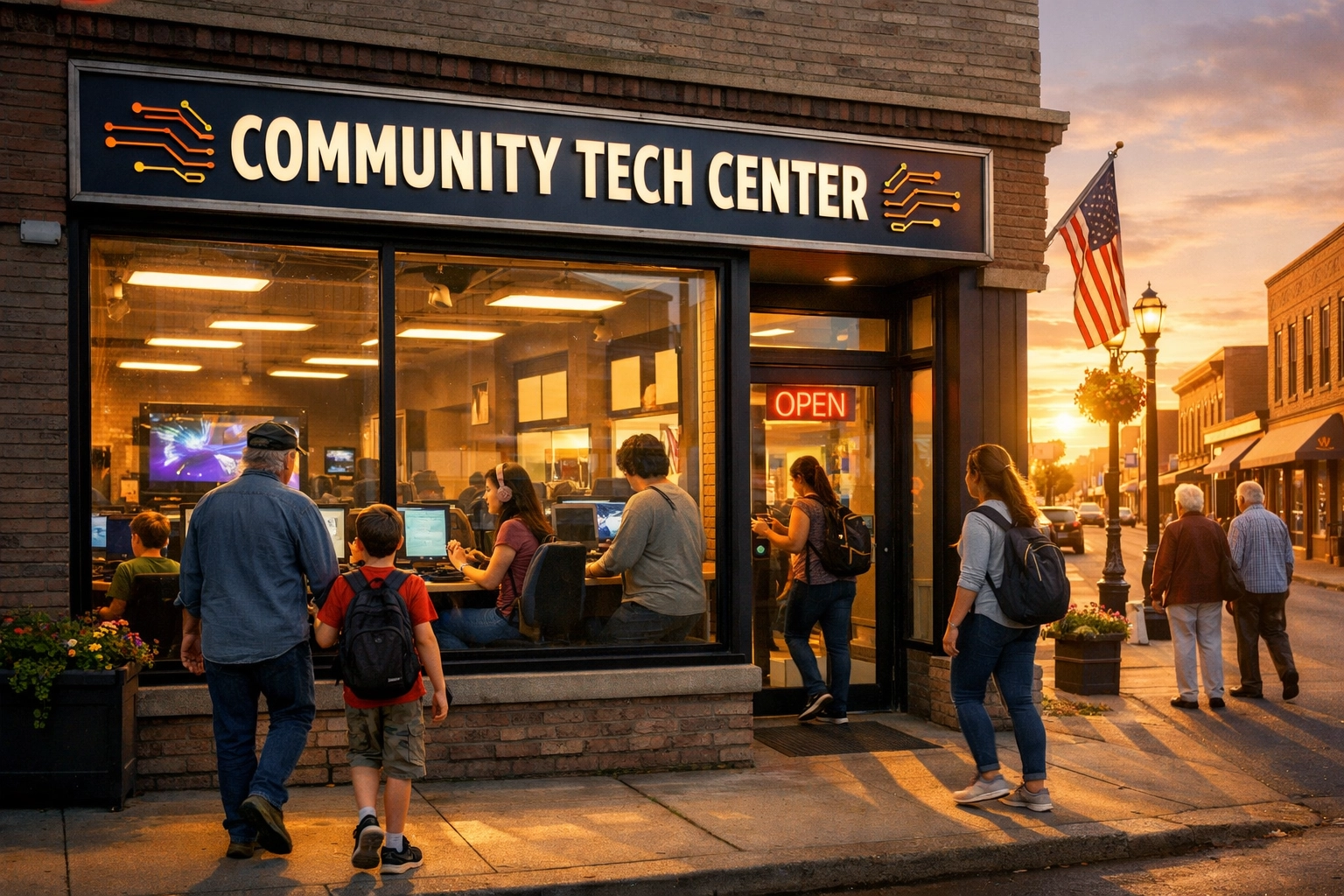
Physical distribution systems address this limitation by establishing tangible presence in underserved markets. Rather than requiring participants to find and access digital platforms independently, physical infrastructure brings career-ready training directly to communities through established facilities, partner networks, and locally managed programs.
Mistake #2: Ignoring the Last-Mile Problem
Logistics companies solved the last-mile delivery challenge years ago by recognizing that the final step of getting products to end consumers required fundamentally different infrastructure than long-haul transportation. Workforce development faces an identical challenge that most executives fail to acknowledge.
Corporate training programs excel at creating content, establishing partnerships with educational institutions, and building impressive digital platforms. Where they consistently fail is in that final connection: getting individual participants engaged, trained, and transitioned into career pathways.
Physical distribution systems for workforce development function like fulfillment centers for career readiness. They provide the local touchpoints, community integration, and hands-on support necessary to complete that last-mile connection. Rather than expecting individuals to navigate complex systems independently, physical infrastructure meets them where they are.

Mistake #3: Deploying Infrastructure Without Local Partnership Networks
Fortune 100 executives frequently approach national rollouts with a centralized mindset, designing programs at headquarters and then attempting to implement them uniformly across diverse markets. This approach ignores the reality that effective workforce development requires deep integration with local ecosystems: schools, community organizations, existing businesses, and civic leadership.
The most successful national rollouts leverage physical distribution systems that prioritize partnership development. These systems don't impose programs on communities; they collaborate with existing structures to create sustainable, locally managed initiatives that align with regional economic needs.
Esports provides a particularly effective example of this principle in action. Gaming naturally attracts youth engagement across demographic boundaries, creating a Trojan Horse opportunity for introducing cloud computing literacy, artificial intelligence fundamentals, and digital collaboration skills. When physical infrastructure supports esports programs through local partnerships, communities embrace the initiative as entertainment while participants develop career-critical technical competencies.
Mistake #4: Underestimating the Engagement Gap
Executive teams consistently overestimate participant motivation and underestimate the friction preventing engagement. The assumption that "if we build it, they will come" has derailed countless workforce initiatives. Career-ready training requires not just access but active participation sustained over months or years.
Physical distribution systems create engagement through tangible presence. Gaming lounges, esports competitions, and technology centers provide immediate value that draws participants in, while embedded training components build skills progressively. This approach recognizes that workforce development succeeds when it meets people's current interests rather than asking them to prioritize distant career goals over immediate needs.
Research from workforce development programs demonstrates that retention rates in hybrid models: combining physical spaces with digital resources: exceed purely online alternatives by significant margins. The physical component provides accountability, community, and the social reinforcement necessary for sustained engagement.

Mistake #5: Building Non-Scalable Deployment Models
Another critical mistake involves creating pilot programs that cannot scale nationally. Executives launch successful initiatives in major metropolitan areas with abundant resources, then struggle when attempting to replicate outcomes in smaller markets with different constraints.
Physical distribution systems solve scalability through standardized infrastructure that adapts to local conditions. Rather than requiring massive capital investment in each market, successful models identify existing facilities: libraries, community centers, schools, retail spaces: and deploy standardized technology packages with training protocols. This approach reduces per-market costs while maintaining program consistency.
The esports infrastructure model demonstrates this scalability advantage. Gaming equipment, tournament formats, and training curricula standardize easily while allowing local customization around community preferences. The same equipment teaching cloud computing through gaming in Los Angeles functions identically in rural Montana, though local partnerships and community integration differ.
Mistake #6: Overlooking the Power of Physical Touchpoints in Digital Skill Development
Perhaps the most counterintuitive mistake executives make is believing that digital skills require purely digital training environments. The opposite proves true: physical spaces significantly accelerate digital literacy acquisition, particularly for populations with limited prior technology exposure.
Physical distribution centers provide hands-on experimentation, immediate technical support, and peer learning opportunities that virtual environments cannot replicate. Participants who struggle with cloud computing concepts in isolation grasp them quickly when working alongside others in physical spaces with accessible expertise.
This principle applies especially to emerging technologies like artificial intelligence. Abstract AI concepts become tangible when participants experiment with AI-powered gaming tools, observe real-time machine learning demonstrations, or collaborate on AI projects in physical makerspaces. The physical environment bridges the comprehension gap between theoretical understanding and practical application.

Mistake #7: Missing the Entertainment-to-Education Pipeline
The final mistake involves treating workforce development as a separate category from entertainment and recreation. Forward-thinking executives recognize that the most effective career-ready infrastructure doesn't announce itself as training: it attracts participation through compelling experiences that embed skill development within engaging activities.
Esports serves as the paradigmatic example. Participants enter gaming environments seeking entertainment and competition. Through that engagement, they develop cloud computing proficiency, learn collaborative problem-solving, master digital communication tools, and build technical troubleshooting capabilities: all career-critical skills for modern workforces.
Physical distribution systems maximize this entertainment-to-education transition by creating spaces where the distinction blurs intentionally. Tournament participation requires team coordination through cloud platforms. Competitive success demands understanding of networking fundamentals. Advancement in gaming ecosystems parallels professional development pathways.
This approach proves particularly effective for populations historically excluded from traditional workforce development: youth from economically disadvantaged backgrounds, individuals without college degrees, and communities with limited corporate presence. Entertainment provides universal appeal that training programs lack, while physical spaces eliminate access barriers.
The Infrastructure Imperative
Fortune 100 companies investing in workforce development for 2027 and beyond must recognize that digital platforms alone cannot deliver national impact. Physical distribution systems provide the essential infrastructure connecting corporate workforce needs to community-level talent development.
The most successful initiatives treat national rollouts as infrastructure projects requiring the same logistical planning, partnership development, and local implementation strategies that companies apply to supply chain management. When workforce development adopts the proven principles of physical distribution: local presence, standardized systems, scalable models, and community integration: outcomes improve dramatically.
The opportunity ahead centers on career-ready infrastructure that meets populations where they are, engages them through compelling experiences, and develops technical competencies essential for cloud computing and artificial intelligence-driven economies. Physical distribution systems make this vision achievable at scale.
For executives planning workforce initiatives, the question is not whether to invest in physical infrastructure but how quickly they can deploy systems that bridge the gap between digital ambition and ground-level reality. The companies recognizing this imperative now will establish competitive advantages in talent acquisition and community partnership that purely digital competitors cannot replicate.





