
The landscape of Super Bowl marketing shifted fundamentally in 2021, though most Fortune 100 brands are only beginning to recognize the magnitude of that change. When the NCAA lifted restrictions on name, image, and likeness (NIL) compensation for student-athletes, it didn't merely create a new endorsement category: it fundamentally altered the economics of authenticity in sports marketing.
As Super Bowl LX approaches, brands face a strategic choice: continue investing millions in traditional celebrity endorsements that generate momentary visibility, or build partnerships with college athletes who offer something far more valuable: sustained engagement, authentic community connections, and a talent pipeline that extends well beyond a single broadcast event.
The Authenticity Deficit in Traditional Super Bowl Marketing
Traditional Super Bowl advertising follows a predictable pattern. Brands invest between $7 million and $8 million for thirty seconds of airtime, recruit celebrity talent, produce elaborate creative concepts, and hope for viral momentum that extends the campaign's reach beyond the broadcast itself. The strategy has worked for decades because the Super Bowl guarantees a massive, captive audience.
Yet consumer response data reveals a growing problem. Audiences have become increasingly sophisticated at detecting transactional celebrity endorsements: partnerships where the connection between athlete and brand exists solely for commercial purposes. When fans sense an endorsement lacks genuine conviction, engagement metrics decline precipitously, regardless of the celebrity's profile or the production budget allocated.

College athletes operating under NIL frameworks present a fundamentally different value proposition. These student-athletes have built engaged social media followings within specific communities: fan bases that trust their recommendations because they've watched these athletes develop over multiple seasons. The relationship between athlete and audience predates any brand partnership, creating a foundation of credibility that traditional endorsement deals cannot replicate on compressed timelines.
Geographic Flexibility and Market Penetration
Fortune 100 brands pursuing Super Bowl strategies typically concentrate resources in the host city: for 2026, that means Phoenix and the surrounding metropolitan area. This approach generates visibility during the event itself but leaves substantial market opportunities untapped.
NIL partnerships enable simultaneous local dominance across dozens of markets. A coordinated strategy involving student-athletes from universities throughout the country allows brands to establish credible local presence in college towns while maintaining visibility in Phoenix during the Super Bowl itself. This geographic flexibility multiplies the effective reach of campaign investments without proportional increases in spending.
Student-athletes bring embedded credibility within their respective communities. A partnership with athletes from Arizona State University, University of Arizona, and Grand Canyon University provides authentic local connections in Phoenix, while similar partnerships at universities in other regions extend brand presence to those markets simultaneously. The approach transforms a single-event marketing strategy into a distributed network activation.
The Talent Pipeline Opportunity
The most strategic Fortune 100 brands are reconceptualizing NIL partnerships entirely: not as endorsement deals but as extended recruitment processes. Student-athletes today are professional-grade content creators who understand audience engagement, platform algorithms, and authentic storytelling in ways that would have required years of training in previous generations.
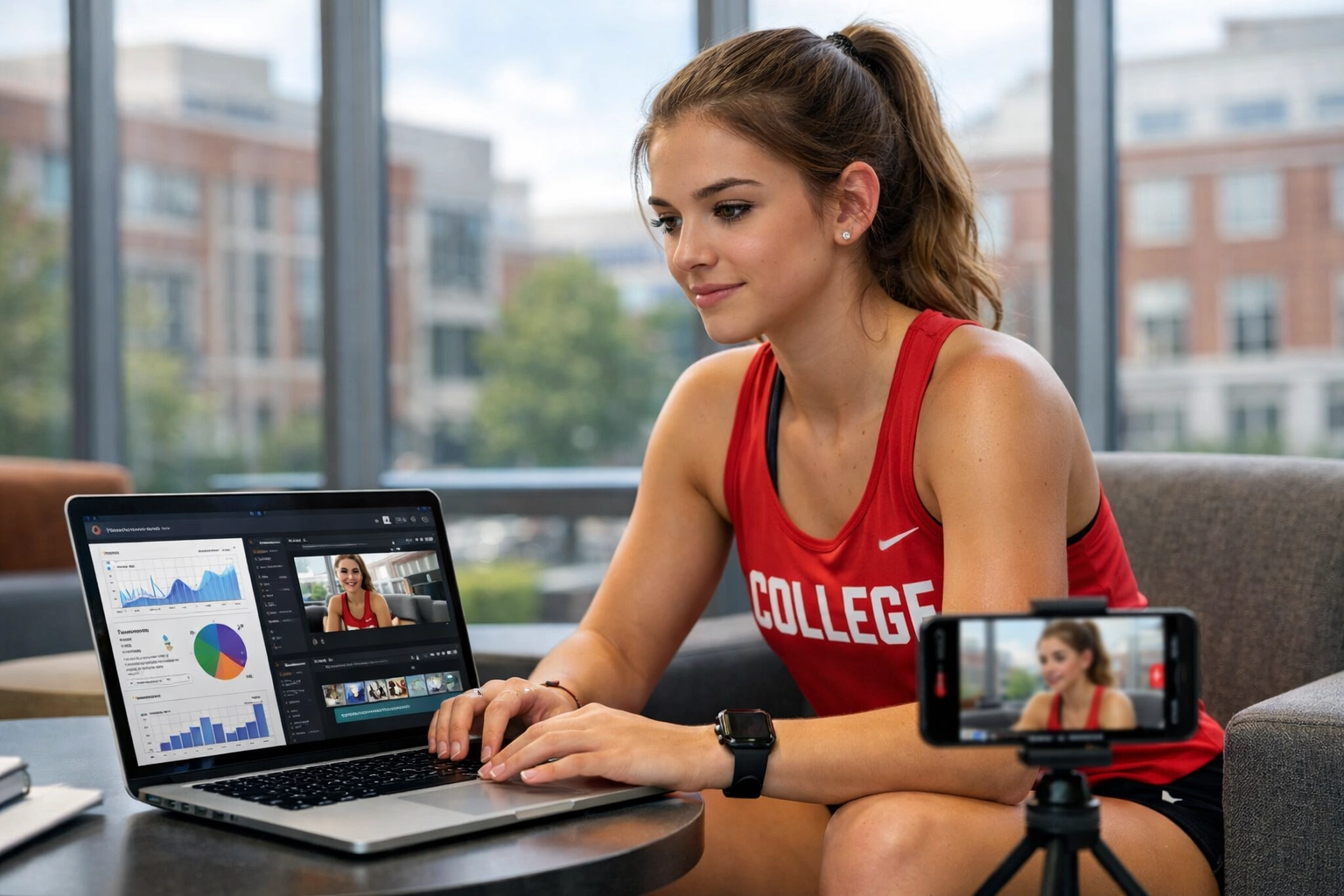
Forward-thinking organizations are sponsoring student-athlete content creation during their college careers, then recruiting those same individuals into marketing, social media strategy, and brand ambassador roles after graduation. This approach delivers dual benefits: it generates marketing content during the partnership period while simultaneously developing future team members whose capabilities have been observed and validated over multiple years.
The strategy also addresses persistent challenges in corporate talent acquisition. Marketing departments increasingly struggle to find candidates who combine digital fluency with authentic community connections and content creation expertise. NIL partnerships serve as extended job interviews, allowing brands to assess capabilities, work ethic, and cultural fit before making formal employment commitments.
Restructuring Partnership Economics
Traditional endorsement deals follow straightforward financial structures: athletes receive payment in exchange for promotional activities, product appearances, or content creation. This transactional approach generates compliance but rarely inspires genuine advocacy.
Student-athletes respond more powerfully to equity arrangements. When athletes receive ownership stakes in brands, revenue sharing agreements, or performance-based compensation tied to measurable outcomes, their incentives align directly with brand success. This alignment transforms the relationship from transactional endorsement to authentic partnership, generating substantially higher engagement rates and more compelling content.
Data from early NIL partnerships confirms this pattern. Athletes with equity stakes produce content at higher frequencies, engage more actively with audience feedback, and demonstrate greater creativity in promotional approaches compared to athletes operating under fixed-fee arrangements. The difference manifests clearly in engagement metrics, with equity-based partnerships generating 40-60% higher audience interaction rates across comparable follower counts.
Building Infrastructure for Sustained Impact
The most significant missed opportunity in traditional Super Bowl marketing involves temporal concentration. Brands invest heavily in campaigns that peak during a single weekend, then dissipate rapidly in subsequent weeks. The approach generates memorable moments but fails to build lasting brand associations or sustained engagement.
NIL partnerships enable infrastructure development that extends far beyond individual events. Rather than treating the Super Bowl as an isolated marketing opportunity, brands can establish ongoing programs that use the Super Bowl as an amplification moment within broader strategic initiatives.
Consider mobile content creation facilities at Super Bowl fan zones: spaces where NIL athletes produce content alongside communications students learning production skills. These installations generate marketing assets during the event while simultaneously training future creative professionals. The approach transforms marketing expenses into talent development investments that yield returns extending years beyond the initial event.
https://www.youtube.com/watch?v=l6J-0zileKE
Similarly, partnerships with university data science programs can produce augmented reality experiences, real-time data visualizations, and interactive fan engagement tools. These collaborations provide students with portfolio pieces that enhance employment prospects while generating cutting-edge brand experiences. The dual-purpose approach amplifies return on investment while building goodwill within academic communities.
Integration with STEM Education Initiatives
Fortune 100 brands increasingly recognize corporate social responsibility as strategic necessity rather than philanthropic obligation. NIL partnerships offer unique opportunities to align marketing investments with education initiatives, particularly in STEM fields where skills gaps persist across multiple industries.
Partnerships with high school coding clubs and university computer science programs can produce interactive Super Bowl experiences: prediction games, statistical analysis tools, or augmented reality features: that engage fans while providing students with real-world development experience. These projects generate usable marketing assets while addressing documented shortages in technical talent pipelines.

The approach also builds brand preference among younger demographics. High school students who participate in brand-sponsored technical projects develop positive associations that influence future employment preferences and purchasing decisions. Research indicates these early-stage relationships generate substantially higher lifetime customer value compared to traditional advertising exposures.
Measuring Beyond Impressions
Traditional Super Bowl marketing metrics focus primarily on reach: total audience size, social media impressions, and brand mention volumes. These measurements capture visibility but provide limited insight into relationship quality or long-term brand impact.
NIL partnerships demand more sophisticated measurement frameworks. Beyond counting impressions, brands must assess engagement depth, audience sentiment, content amplification patterns, and conversion behaviors across extended timeframes. The shift requires updated analytics infrastructure but generates significantly more actionable intelligence about campaign effectiveness.
Student-athletes provide unique advantages in these measurement contexts. Because NIL partnerships typically extend over semesters or academic years rather than single campaigns, brands can track audience relationship development over time, identifying which content approaches generate sustained engagement versus momentary attention spikes.
Strategic Implementation Considerations
Fortune 100 brands approaching NIL strategies for Super Bowl 2026 should begin by auditing current marketing allocations. The critical question is not whether current approaches generate visibility: most traditional Super Bowl campaigns succeed on that metric: but whether they build lasting assets or simply consume resources that generate no residual value after the event concludes.
Partnerships structured as talent development investments rather than expense line items shift organizational incentives fundamentally. Marketing departments become accountable not just for immediate campaign performance but for building capabilities that strengthen the organization's long-term competitive position.
This reframing requires executive-level commitment. NIL strategies that treat student-athletes as future team members rather than temporary promotional resources demand different contract structures, legal frameworks, and internal processes compared to traditional celebrity endorsements. The administrative complexity increases, but so does strategic value.
Looking Forward
The convergence of NIL regulations, Super Bowl marketing traditions, and evolving consumer preferences creates a unique strategic moment. Brands that recognize college athletes as genuine strategic assets: not merely less expensive alternatives to celebrity endorsements: will establish competitive advantages that compound over time as those athletes transition into professional careers and positions of influence.
The question facing Fortune 100 brands is not whether to incorporate NIL partnerships into Super Bowl strategies, but how quickly they can develop the infrastructure, measurement frameworks, and organizational capabilities required to execute these approaches effectively. The brands that answer this question decisively will find themselves building not just marketing campaigns, but sustainable competitive advantages rooted in authentic community connections and continuously developing talent pipelines.
The Super Bowl remains America's largest single marketing opportunity. But the strategic question has evolved. Success no longer comes from maximizing visibility during a single broadcast. It comes from building relationships, infrastructure, and capabilities that generate compounding returns long after the confetti settles.