
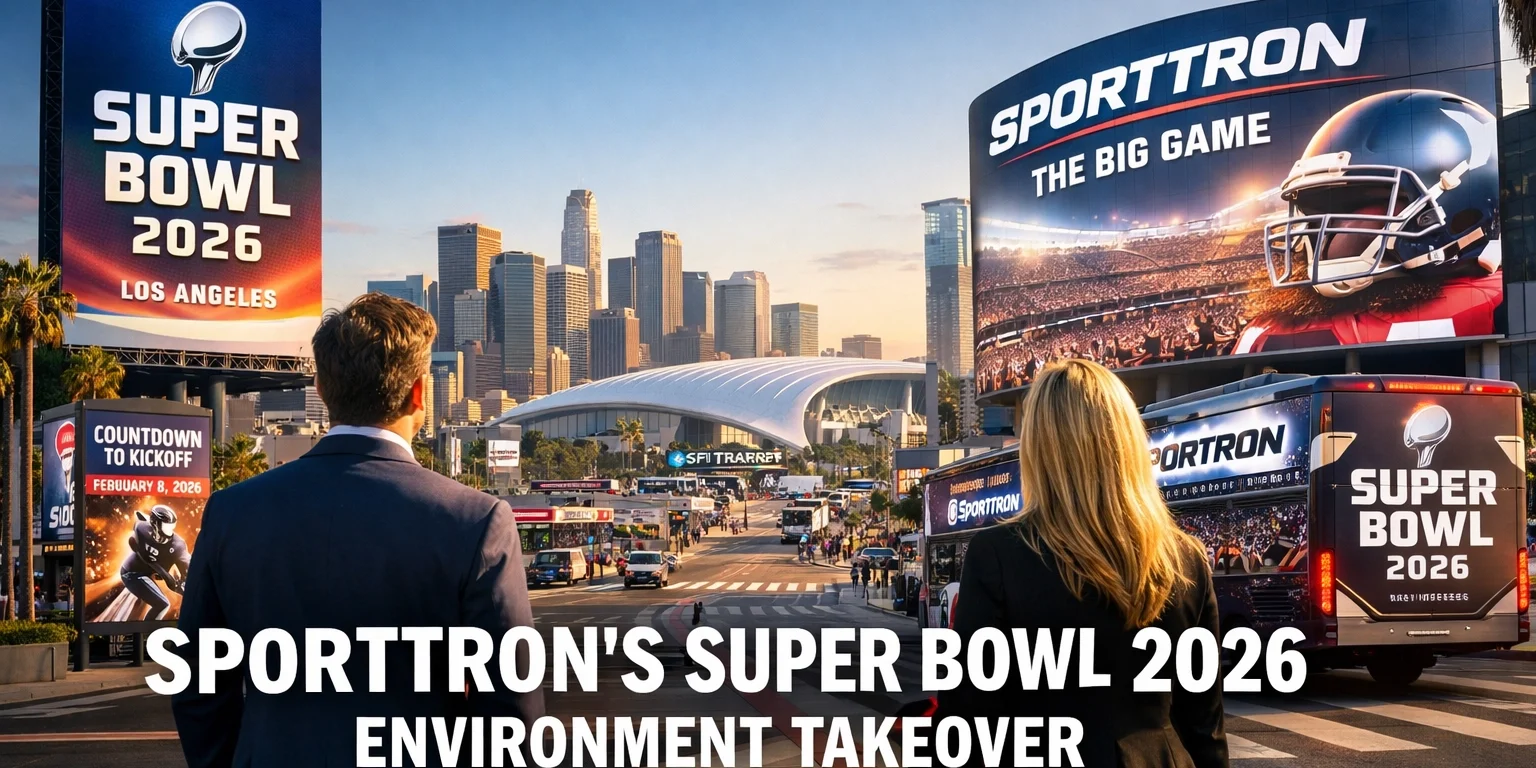
When Traditional Advertising Isn't Enough
In an era where digital ads can be blocked with a single click and television commercials fast-forwarded with ease, brands seeking to make an impact at major sporting events face a fundamental challenge: how do you guarantee your message reaches your audience? The answer, as demonstrated by Sporttron's comprehensive approach to Super Bowl LX in 2026, lies in controlling the physical environment itself.
Out-of-home advertising: commonly referred to as OOH: has experienced a renaissance in recent years. According to industry analysts, OOH advertising spend reached record levels in 2025, driven largely by brands recognizing that physical presence cannot be skipped, muted, or ignored. When executed strategically, environmental takeovers create what marketing professionals call "forced exposure," ensuring that target audiences encounter brand messaging repeatedly throughout their journey.
The Sporttron Blueprint: Seven Strategic Moves
Sporttron's Super Bowl 2026 campaign represented a masterclass in comprehensive environmental branding. Rather than relying on a single high-visibility placement, the digital network provider implemented a coordinated strategy across seven distinct touchpoints throughout the San Francisco Bay Area market.
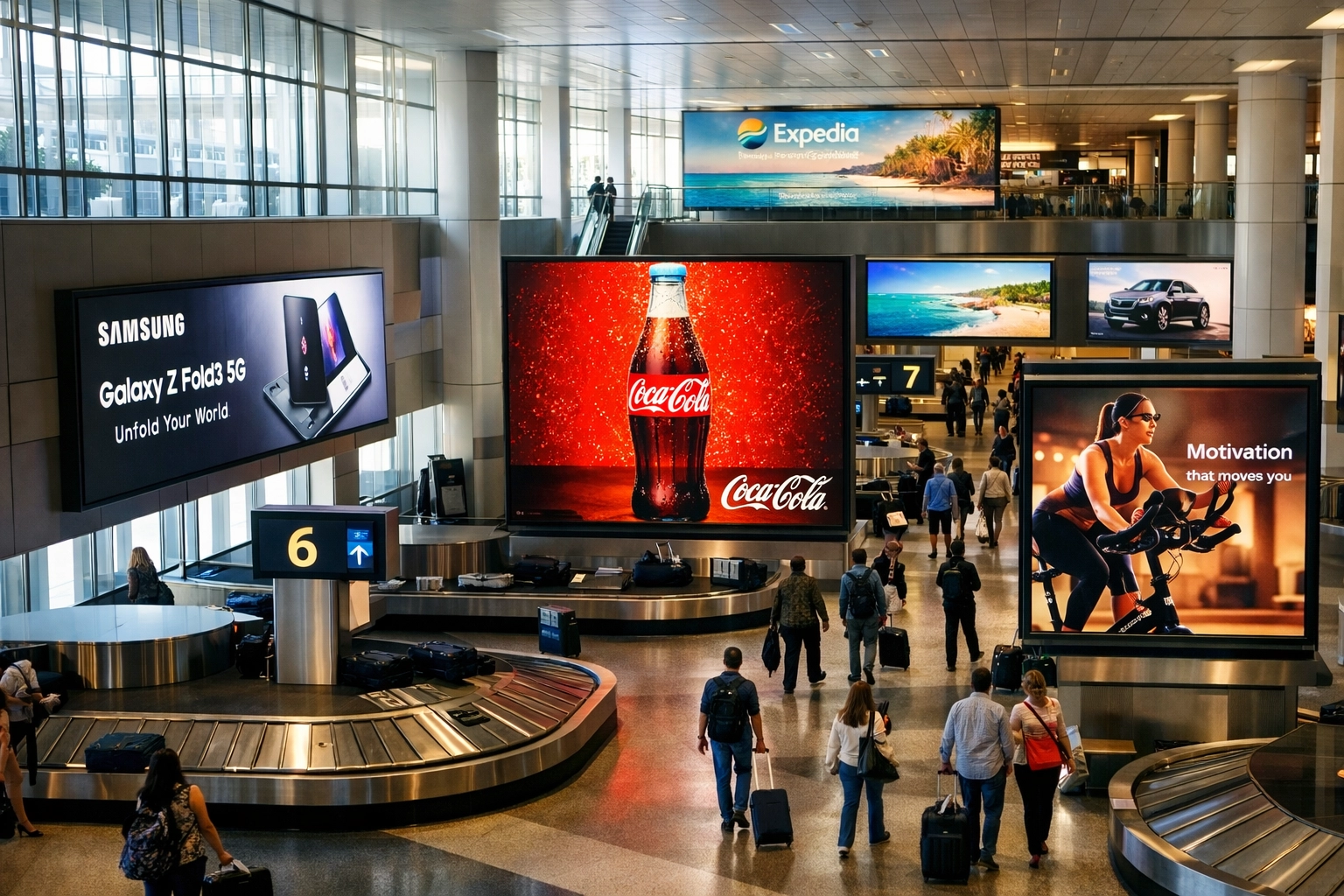
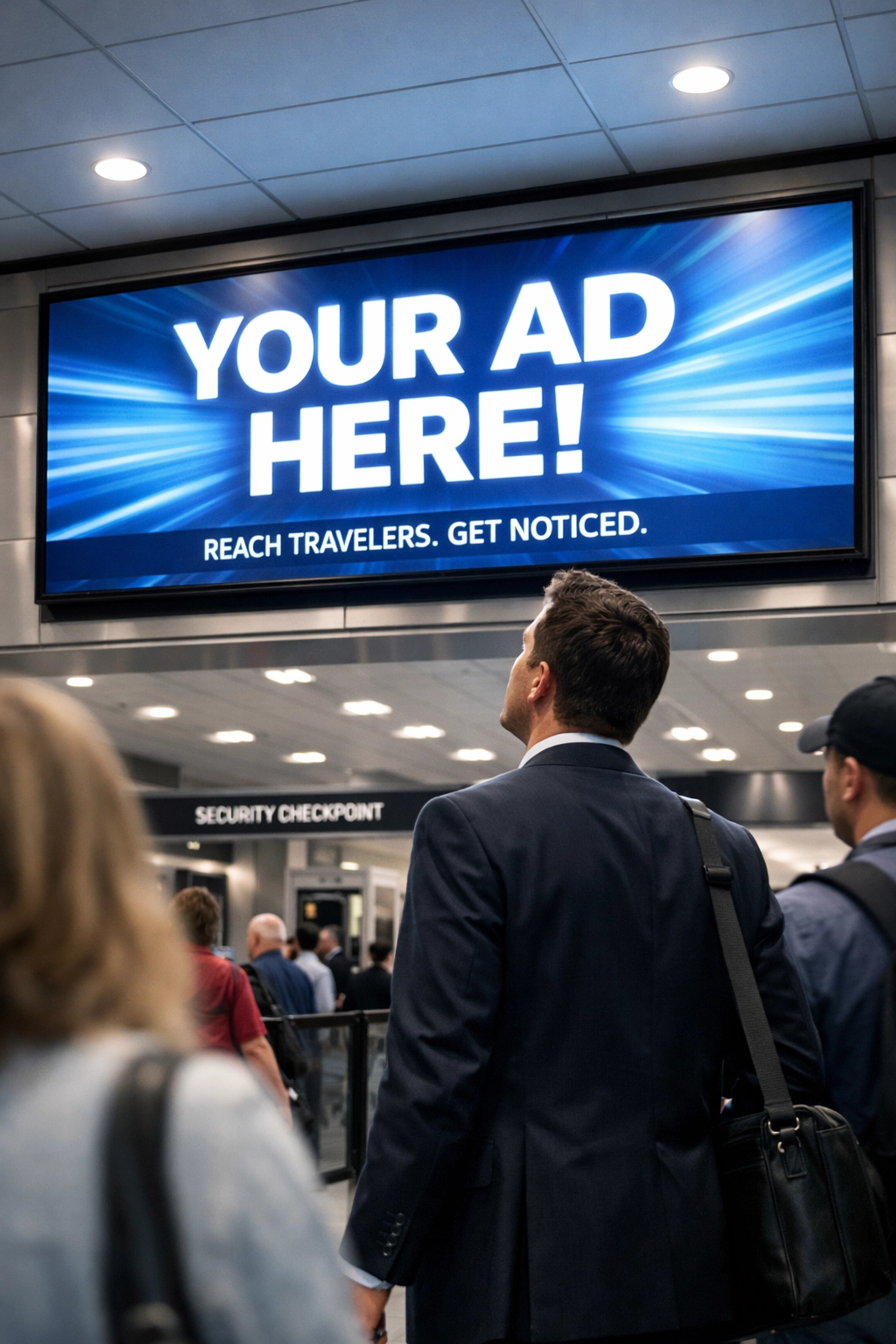
The cornerstone of their approach centered on airport domination. Recognizing that every visiting fan, media member, and corporate executive would pass through San Francisco International Airport, Sporttron secured premium placements across baggage claim areas and security checkpoints. This strategic positioning meant their brand message greeted visitors at their first moment of arrival and remained visible during the typically lengthy security process: a captive audience environment that guarantees extended exposure.
According to sports marketing research, the average visitor to a major sporting event spends between 45 and 90 minutes in airport environments during arrival and departure. This extended dwell time transforms airports into what industry experts describe as "high-value impression zones," where repeated brand exposure occurs naturally as travelers navigate through queues, wait at baggage carousels, and proceed through terminals.
Why Environmental Takeovers Outperform Traditional Placements
The effectiveness of comprehensive environmental strategies like Sporttron's stems from a fundamental principle in consumer psychology: context creates memory. When individuals encounter brand messaging in multiple locations throughout a cohesive journey, neural pathways strengthen, creating what cognitive scientists refer to as "encoding specificity." Simply put, the brain remembers information better when it appears in varied but related contexts.
Research published in the Journal of Advertising Research demonstrates that multi-touchpoint campaigns generate between 35 and 60 percent higher recall rates compared to single-placement strategies, even when the total number of impressions remains equivalent. The difference lies not in frequency alone but in environmental diversity: the brain processes airport signage differently than venue displays, creating complementary rather than redundant memory traces.
Moreover, environmental takeovers communicate brand confidence and market commitment in ways that traditional advertising cannot replicate. When a company demonstrates the willingness to invest in comprehensive physical presence, it signals financial strength, strategic seriousness, and category leadership. For Sporttron, a digital network provider serving enterprise clients, this perception alignment proved particularly valuable, as Fortune 100 decision-makers evaluate vendors partially based on demonstrated market position.
The Integration Imperative
What distinguished Sporttron's campaign from conventional OOH placements was its integration across multiple channels and formats. Rather than treating out-of-home advertising as a standalone tactic, the campaign synchronized physical placements with digital activations, experiential events, and press amplification.
Industry data from major sporting events indicates that integrated campaigns: those combining OOH with experiential components and digital amplification: generate up to three times the earned media value of siloed approaches. This multiplier effect occurs because each channel reinforces and extends the others, creating narrative momentum that transcends individual placements.
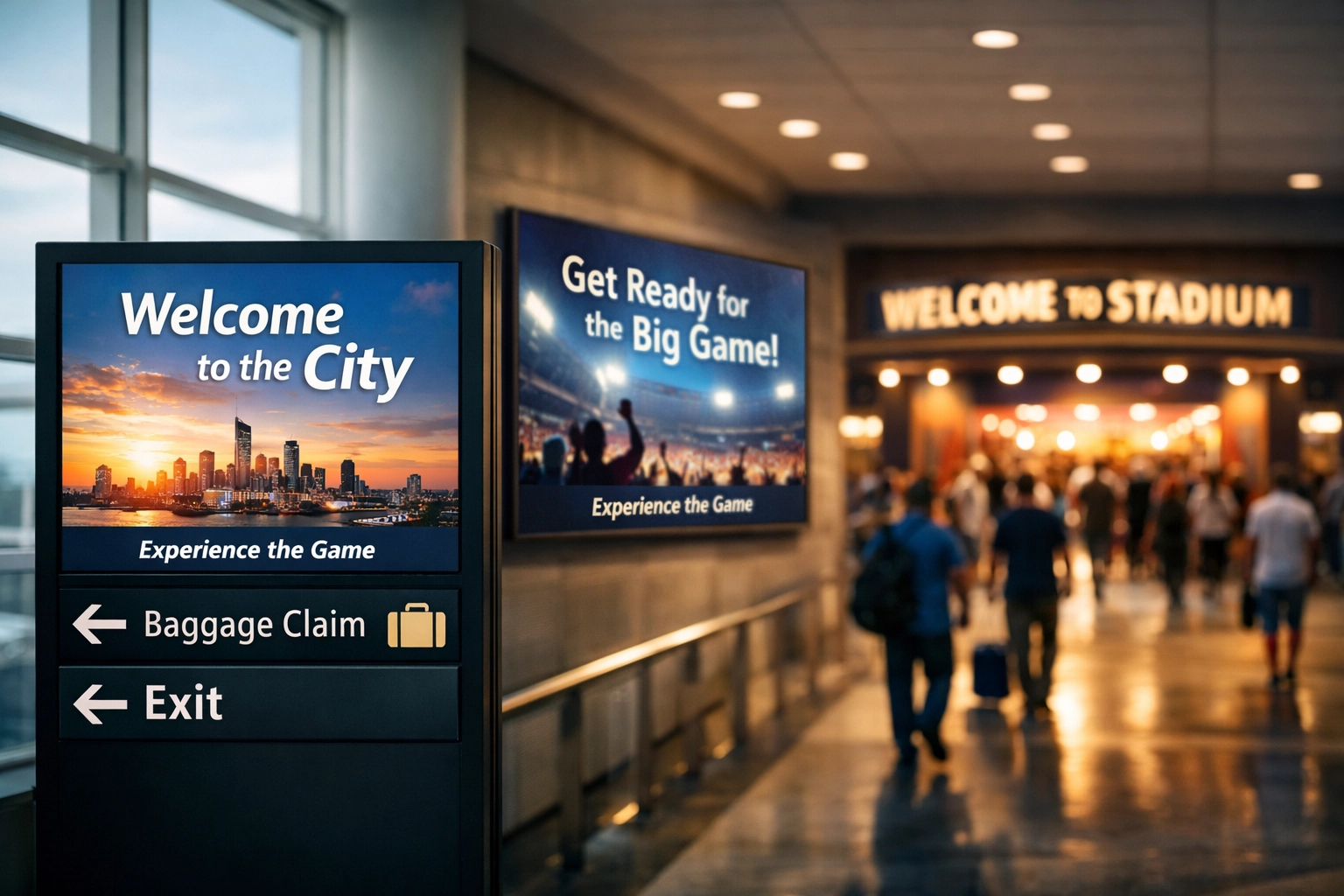
The strategic coordination extended to content delivery as well. Mobile applications and digital displays throughout the venue featured location-specific messaging that referenced and built upon the airport creative, creating a continuous narrative thread from arrival through game day. This approach transformed discrete advertising moments into a cohesive brand experience, fundamentally altering how attendees processed and retained the messaging.
Tactical Lessons for Enterprise Brands
For business consulting firms and Fortune 100 companies evaluating major event sponsorships, Sporttron's Super Bowl 2026 campaign offers several actionable insights.
First, comprehensive environment control delivers disproportionate returns compared to premium but isolated placements. A single in-stadium LED board may cost similar amounts to a coordinated airport takeover, yet the latter guarantees longer exposure times with less competitive clutter. Strategic planners should evaluate opportunities based on total audience time and environmental exclusivity rather than visibility alone.
Second, captive audience environments merit premium investment. Locations where individuals must wait: security lines, baggage claim areas, venue entry queues: provide extended exposure windows that justify higher costs per impression. These environments also eliminate the primary advantage of digital advertising: user control. In physical spaces, audiences cannot skip, close, or block brand messaging.
Third, narrative continuity across touchpoints amplifies effectiveness beyond simple frequency increases. Brands should design environmental campaigns as sequential experiences rather than repetitive exposures, allowing each placement to build upon previous encounters. This approach requires upfront creative investment but generates significantly higher recall and sentiment metrics.

The Future of Event Marketing
As we look toward subsequent Super Bowls and other major sporting events, the evolution of out-of-home advertising suggests several emerging trends. Programmatic digital out-of-home technology now enables real-time content updates across networks of displays, allowing brands to adjust messaging based on game developments, social media trends, or competitive activities. This flexibility transforms static placements into dynamic conversation participants.
Additionally, augmented reality integrations are beginning to bridge physical and digital environments, allowing smartphone users to interact with OOH placements in ways that extend engagement beyond passive viewing. Early implementations demonstrate that AR-enabled outdoor advertising generates between four and seven times longer engagement durations compared to traditional formats.
For enterprise brands considering major event partnerships, the strategic imperative remains clear: comprehensive environmental presence outperforms isolated high-visibility placements in both immediate impact and long-term brand building. The investment required for thorough market domination may exceed single premium placements, but the returns: measured in guaranteed exposure, enhanced recall, and perceived market leadership: justify the allocation.
Taking Action
Organizations evaluating Super Bowl LXI partnerships or other major event opportunities should begin planning twelve to eighteen months in advance, securing key environmental positions before premium inventory depletes. The most valuable placements: airport dominance packages, venue entry corridors, and transit hub takeovers: typically commit earliest, as experienced brands recognize their strategic importance.
The question facing marketing leadership is no longer whether environmental advertising delivers results, but whether organizations possess the strategic vision and budget commitment to dominate rather than simply participate. Sporttron's Super Bowl 2026 campaign demonstrated that comprehensive presence creates competitive advantages that isolated placements cannot replicate, regardless of their individual prominence.
As brands continue competing for attention in increasingly fragmented media landscapes, the physical world offers something digital channels cannot guarantee: unavoidable presence. Those who understand and leverage this fundamental advantage will continue setting the standard for major event marketing effectiveness.
For more insights on strategic workforce development and enterprise brand positioning, visit USA Entertainment Ventures LLC.





