

The conversation around workforce readiness has shifted. Fortune 100 companies are no longer waiting for colleges to produce job-ready graduates. They're looking earlier in the pipeline: at high schools and secondary institutions that demonstrate measurable outcomes in skill development, media literacy, and real-world application.
The question isn't whether schools should prepare students for the modern economy. The question is whether they can prove they're doing it. This requires data: specific, trackable metrics that demonstrate student readiness across competencies that matter in 2026 and beyond.
Executive teams are building dashboards that monitor educational partnerships with the same rigor they apply to supply chain logistics. These aren't vanity metrics. They're predictive indicators of talent pipeline quality, tracking everything from engagement patterns to skill acquisition velocity. Schools that understand these metrics position themselves as strategic partners rather than transactional vendors.
The 10 Data Points That Matter
1. Student Engagement Velocity
This measures how quickly students move from passive consumption to active participation in learning environments. Fortune 100 executives track the time elapsed between content introduction and student-led application. Schools demonstrating engagement velocity under 72 hours signal environments where students don't just absorb information: they act on it.
The metric matters because corporate training programs have moved to just-in-time learning models. Companies need employees who can engage with new information rapidly and apply it without extensive hand-holding. Schools that develop this capacity early create competitive advantages for both students and hiring organizations.
2. Skill Proficiency Growth Rate
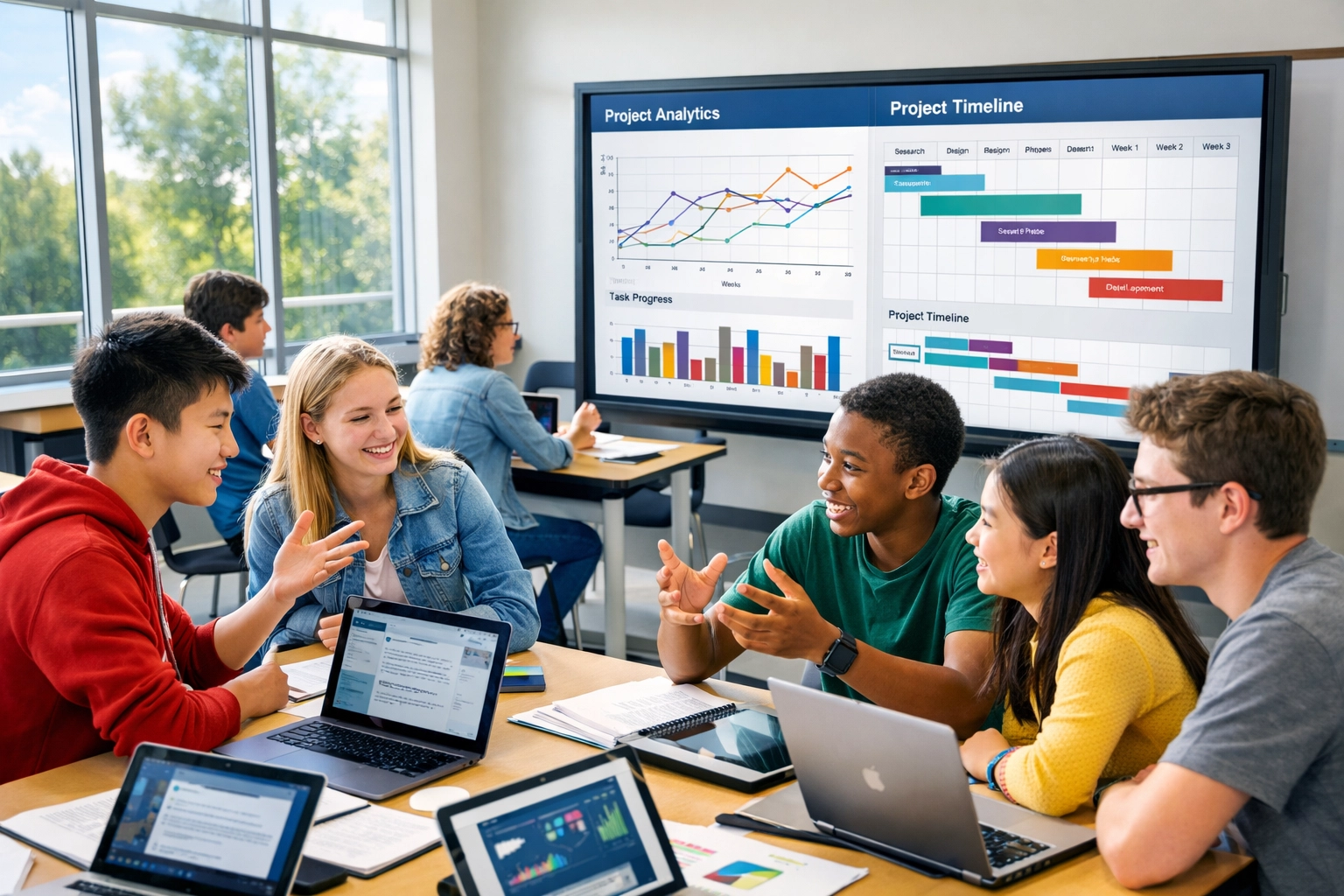
Traditional grade point averages tell executives little about actual capability development. Skill proficiency growth rate tracks how students progress through defined competency levels in specific, job-relevant skills. This includes technical capabilities like data analysis, but also foundational competencies like written communication and problem-solving under constraints.
Companies monitor whether schools measure skills in granular, demonstrable ways. A student who progresses from basic to intermediate data visualization in one semester represents quantifiable value. A student with a 3.8 GPA represents an unknown quantity.
3. Media Literacy Assessment Scores
In an era where misinformation spreads faster than accurate reporting, media literacy has become a business imperative. Fortune 100 companies track which schools teach students to evaluate source credibility, identify bias, and distinguish between correlation and causation.
These scores measure student ability to analyze media content critically, understand platform algorithms, and recognize persuasion techniques. Companies correlate these outcomes with reduced susceptibility to social engineering attacks, better decision-making in ambiguous situations, and improved cross-functional communication.
4. NIL Program Participation and Application Rates
Name, Image, and Likeness education has evolved beyond athletics. Forward-thinking schools now teach all students how to build, protect, and monetize their personal brands. Executives track both participation rates in NIL curriculum and real-world application metrics: how many students actually create content strategies, negotiate partnership terms, or demonstrate understanding of intellectual property rights.
This matters because every employee is now a potential brand ambassador or liability. Companies want to hire individuals who understand the implications of public communication, digital footprints, and personal brand management before they make costly mistakes on company time.

5. Digital Content Creation Competency
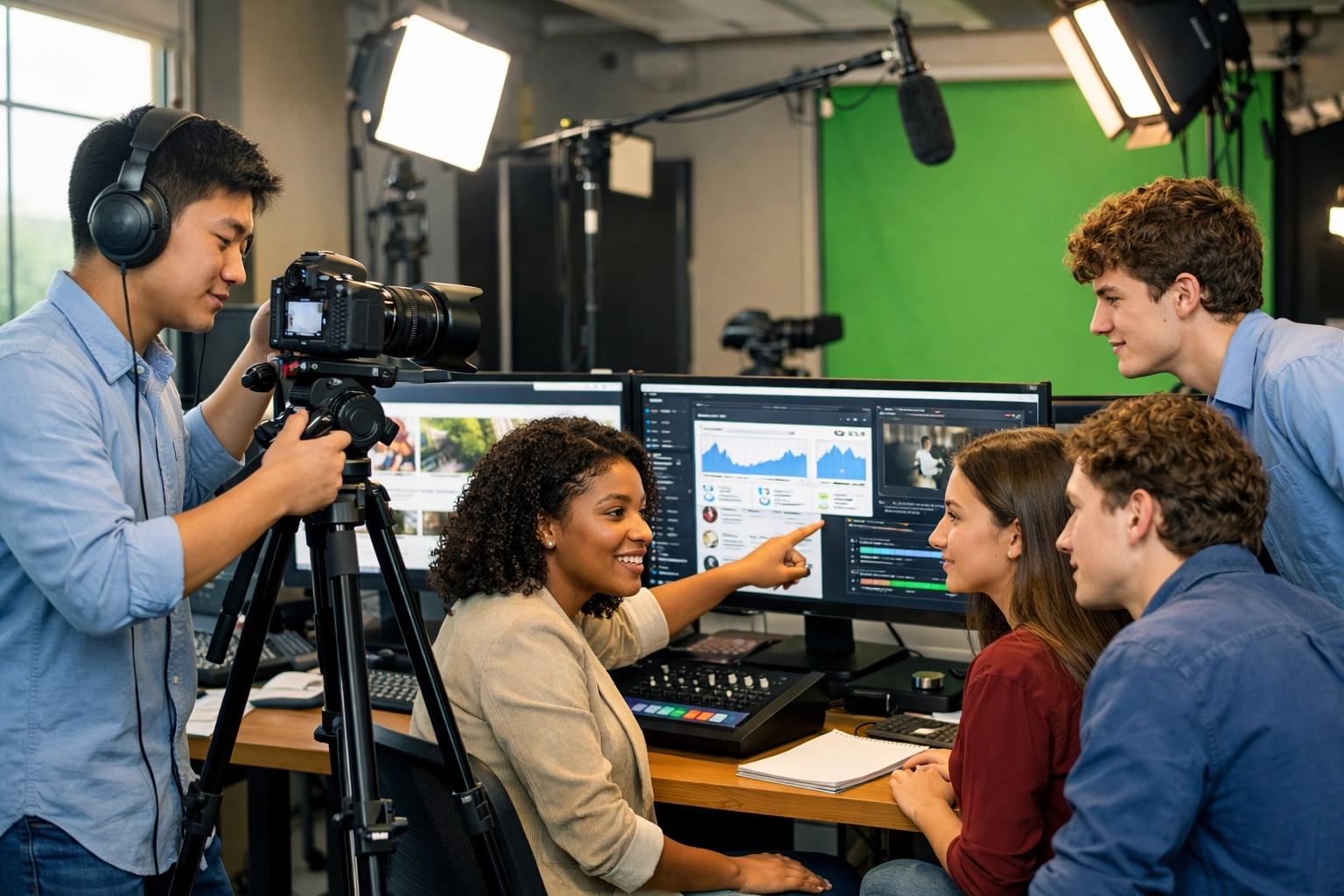
Tracking moves beyond "Can students make a video?" to "Can students produce professional-grade content across multiple platforms with measurable audience engagement?" Executives monitor student portfolios for evidence of cross-platform content strategy, audience analysis, and iterative improvement based on performance metrics.
Schools that teach students to read analytics dashboards, optimize content for different platforms, and adjust strategies based on data demonstrate they're preparing students for the creator economy: whether that's in marketing departments, product teams, or entrepreneurial ventures.
6. Career Pathway Alignment Percentage
This metric measures how well school programs align with documented workforce needs in target industries. Fortune 100 companies track whether schools are teaching skills that companies actually need versus skills that simply exist in established curricula.
The calculation is straightforward: What percentage of skills taught match skills requested in job postings for entry-level and early-career positions? Schools scoring above 70% demonstrate they're actively monitoring workforce trends rather than teaching to outdated standards. Companies prioritize partnerships with institutions that track this metric quarterly.
7. Real-World Project Completion Rates
Theory matters less than application. Executives track how many students complete projects with external stakeholders: actual businesses, nonprofits, or community organizations where failure has consequences and success requires professional-grade execution.
The distinction between classroom simulations and real-world projects is critical. Students who have navigated actual client expectations, dealt with ambiguous requirements, and delivered under external accountability demonstrate readiness that cannot be replicated in controlled environments. Completion rates above 85% correlate with reduced onboarding time in entry-level positions.
8. Industry Partnership Engagement Depth
Schools may list dozens of industry partners. Executives track how deeply those partnerships function. Metrics include: number of industry professionals delivering direct instruction, frequency of curriculum review with employer input, percentage of projects incorporating real business challenges, and bidirectional feedback loops where companies provide specific performance data back to schools.
Surface-level partnerships produce minimal value. Deep partnerships where industry professionals co-create curriculum, provide authentic assessment, and maintain ongoing communication channels produce measurably better outcomes. Companies track which schools invest in partnership depth rather than partnership breadth.
9. Critical Thinking Application Scores
This metric assesses student ability to apply analytical frameworks to novel problems without explicit instruction. Executives track whether students can identify relevant questions, evaluate competing solutions, and defend recommendations with evidence when facing unfamiliar scenarios.
The scoring methodology matters. Multiple-choice tests don't capture critical thinking. Performance-based assessments where students work through case studies, defend positions under questioning, and revise approaches based on new information provide actionable data. Schools demonstrating consistent critical thinking application above 75% accuracy rates on novel problems signal genuine cognitive development.
10. Cross-Platform Communication Proficiency
Modern work requires translating ideas across mediums: from executive summary to detailed report to presentation to social media brief. Executives monitor whether students can maintain message integrity while adapting communication style for different platforms and audiences.
Schools that assess this rigorously require students to take single concepts and express them appropriately for written reports, verbal presentations, visual infographics, and social media formats. Proficiency scores measure both technical execution and strategic appropriateness. High scores correlate with reduced revision cycles and faster integration into cross-functional teams.
From Metrics to Dashboards
Tracking these data points requires infrastructure. Fortune 100 executives expect schools to maintain real-time dashboards showing cohort performance, trend analysis, and comparative benchmarks. Static annual reports don't provide the visibility necessary for strategic partnership decisions.
The schools that excel make this data accessible to potential employer partners. They demonstrate continuous improvement cycles, showing how they adjust programming based on outcome data. They provide transparency around both successes and areas requiring development.
This level of data maturity positions schools as strategic workforce development partners rather than simply educational institutions. It changes the conversation from "Will you hire our graduates?" to "Here's how our graduates solve the specific capability gaps your organization faces."
The Future-Ready Framework
These ten metrics don't exist in isolation. Together, they create a comprehensive picture of institutional capacity to develop future-ready talent. Schools tracking all ten demonstrate commitment to outcomes over process, to evidence over assumption.
For Fortune 100 companies, this data enables portfolio approaches to talent development. Rather than waiting for universities to produce qualified candidates, organizations can identify high schools and secondary institutions producing measurable outcomes years earlier. They can invest in partnerships, create internship pipelines, and influence curriculum development when students still have maximum flexibility.
The implications extend beyond corporate hiring. Students benefit from educational experiences designed around demonstrable capability development. Communities benefit from workforce-ready graduates who contribute economically sooner. Educational institutions benefit from enhanced relevance and stronger stakeholder relationships.
The schools that will thrive through 2030 and beyond are those treating these metrics as foundations rather than aspirations. They're building measurement systems now, establishing baseline data, and creating improvement trajectories that demonstrate commitment to future readiness backed by evidence rather than promises.
Fortune 100 executives are watching. They're tracking. And they're making partnership decisions based on data that proves schools are preparing students for the world that exists rather than the world that used to be.





