
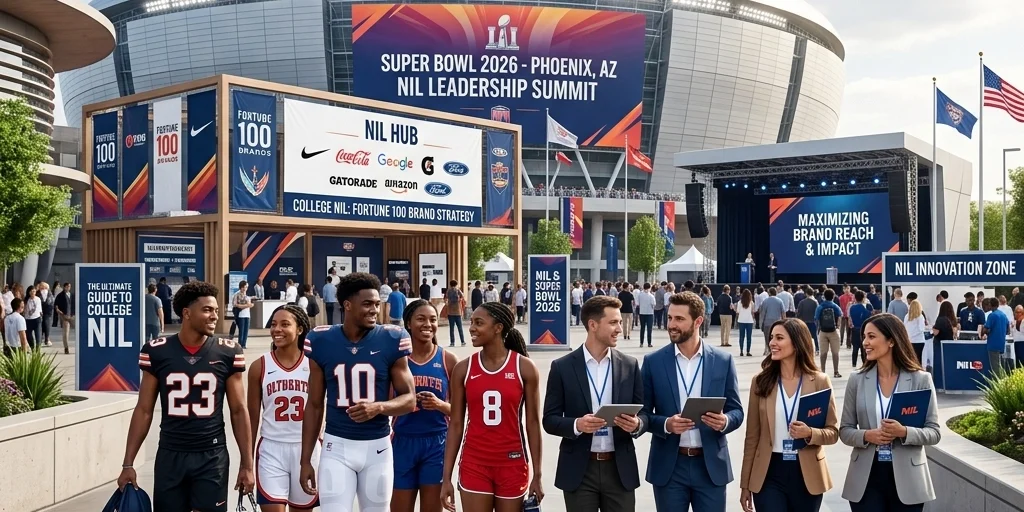
As the dust settles on Super Bowl LX, the marketing landscape has shifted permanently. The 2026 season proved that the "Big Game" is no longer just a four-hour television event; it is a multi-month narrative ecosystem. For Fortune 100 brands, the most significant revelation was not the quality of the million-dollar commercials, but the overwhelming ROI generated through Name, Image, and Likeness (NIL) partnerships with college athletes.
The integration of NIL into the Super Bowl marketing mix has moved from a "test-and-learn" experiment to a mandatory strategic pillar. As brands analyze their performance data from early 2026, the evidence is clear: the traditional $7 million, 30-second spot is increasingly inefficient when standing alone. To truly capture the attention of a fragmented audience, the modern conglomerate must bridge the gap between collegiate influence and professional spectacle.
The NIL Revolution: Bridging the Gap at the Super Bowl
The NIL revolution has fundamentally altered how consumers perceive brand endorsements. In the past, a Fortune 100 brand would secure a retired NFL legend or a high-priced Hollywood celebrity for a Super Bowl cameo. While these provided "star power," they often lacked the raw, authentic engagement metrics that younger demographics: specifically Gen Z and Alpha: demand.
https://www.youtube.com/watch?v=l6J-0zileKE
College athletes represent a unique "sweet spot" in marketing. They possess the athletic prestige of professional stars but maintain the relatable, content-first approach of digital influencers. For a brand to succeed in the Super Bowl environment, they must leverage this authenticity to cut through the corporate noise.
Why Fortune 100 Brands Shifted Budgets in 2026
The shift in budget allocation toward NIL during the 2026 Super Bowl cycle was driven by three primary factors: second-screen dominance, authenticity metrics, and data-driven precision.
1. Second-Screen Dominance
Data from the 2026 broadcast indicates that over 70% of viewers engaged with social media during the game. While the television screen displayed high-budget ads, the "second screen": the smartphone: was dominated by NIL athletes providing real-time reactions, behind-the-scenes content, and interactive engagement. Fortune 100 brands that partnered with athletes saw their brand sentiment rise in real-time, often outpacing the "official" sponsors of the broadcast.
2. Authenticity Metrics
Modern consumers respond more positively to athlete-driven content than to polished corporate messaging. An Instagram Live session with a top-tier college quarterback discussing his pre-game rituals while wearing a branded apparel line feels like a recommendation from a peer. A traditional commercial, by contrast, feels like a sales pitch.
3. Data-Driven Precision
Unlike traditional TV metrics, which rely on estimated reach and GRPs (Gross Rating Points), NIL campaigns offer granular tracking. Through USA Entertainment Ventures LLC, brands can now track sentiment analysis, click-through rates on athlete-specific promo codes, and direct conversion data with a level of precision that was previously impossible in sports marketing.

The Three-Phase Framework for Super Bowl Success
Success at the Super Bowl is not achieved on game day; it is built in the months leading up to the coin toss. Elite brands utilize a three-phase campaign framework to maximize their NIL investments.
Phase 1: The Momentum Phase (Pre-Game Build)
The most successful brands for Super Bowl 2026 began their NIL partnerships during the college playoff run. By creating "Road to the Championship" content series, brands built narrative equity. This phase is designed to lower customer acquisition costs by building a loyal audience before the ad rates skyrocket in February.
Instead of fighting for attention in a saturated market, brands like those represented by 360 Sports Media used this period to establish an organic connection between the athlete’s journey and the brand’s values.
Phase 2: The Engagement Phase (Game Day Integration)
On the day of the Super Bowl, the strategy shifts to real-time integration. NIL athletes are no longer just "posters"; they are active participants in the digital conversation. In 2026, top-performing brands had their NIL partners host TikTok "Watch Parties," post "Outfit of the Day" (OOTD) snippets featuring brand logos, and provide exclusive commentary that bypassed the traditional broadcast delay.
Phase 3: The ROI Phase (Post-Game Saturation)
The week following the Super Bowl represents the peak conversion opportunity. While the rest of the world is moving on, smart brands use their NIL partners to share "Recap" content and exclusive post-game offers. This is where the long-tail value of NIL is realized, as athletes share behind-the-scenes footage from the Super Bowl parties and events, maintaining brand visibility while competitors' expensive commercials are already forgotten.

Talent Selection: Moving Beyond Star Power
The biggest mistake a Fortune 100 brand can make is selecting a partner based solely on their on-field performance or their number of followers. In the 2026 landscape, talent selection is a mathematical exercise.
The goal is to find the intersection between an athlete's audience and the brand's target demographic. A quarterback at a major university might have 500,000 followers, but if those followers are primarily based in a region where the brand has no retail presence, the ROI will suffer.
Effective implementation requires treating college athletes as content partners rather than traditional endorsers. This means giving the athlete creative agency to speak in their own voice. When a brand dictates a rigid, corporate script to a 20-year-old athlete, the audience immediately senses the lack of authenticity, and the engagement plummeted in 2026 case studies.
Multi-Channel and Local Market Strategy
While the Super Bowl is a national event, its impact is felt most intensely in local markets. Fortune 1000 companies in 2026 discovered that hyper-local partnerships often delivered superior ROI compared to national "blanket" campaigns.
For example, a regional partnership with a star athlete from a specific university can dominate a local market. A quarterback at Oklahoma State has significantly more influence in Stillwater and Tulsa than a national celebrity ever could. By synchronizing these local heroes with national Super Bowl themes, brands were able to "own" specific territories at a fraction of the cost of a national TV spot.
Strategic media placement through outlets like Mobile Highway Ads allowed brands to physically follow the excitement, placing athlete-branded content in the path of traveling fans.

Technical Integration and Sustainability
As we look toward future major sporting events, the integration of technology in NIL is paramount. Brands are now utilizing AI-driven sentiment tracking to adjust their messaging in real-time during the game. If an NIL partner's post is receiving negative feedback, the brand can pivot its strategy within minutes.
Furthermore, there is a growing trend toward "developmental partnerships." Rather than a one-off transaction for a single social media post, Fortune 100 brands are investing in the long-term career growth of college athletes. This creates a "halo effect," where the brand is seen as a supporter of the athlete's future, fostering deep brand loyalty among the athlete’s fan base.
The Future of NIL and Major Sporting Events
The shift from purely transactional celebrity endorsements to collaborative partnerships with college athletes reflects a fundamental change in marketing philosophy. By recognizing the strategic benefits of NIL: authenticity, targeted reach, and lower cost-per-impression: brands position themselves for sustained competitive advantage.
The lessons from Super Bowl 2026 are clear:
- Prioritize narrative over noise: Use the months leading up to the game to tell a story.
- Value engagement over reach: A million passive viewers are worth less than ten thousand active participants.
- Empower the creator: Let the athlete be the voice of the brand.
As we move toward the next cycle of major sporting events, the blueprint for success remains rooted in these principles. For brands looking to navigate this complex environment, consulting with experts at USA Entertainment Ventures LLC ensures that your NIL strategy is not just a line item in the budget, but a driver of measurable business growth.
The NIL revolution is no longer coming; it is here. And for the Fortune 100, it is the most powerful tool available to win the Super Bowl of marketing.






