
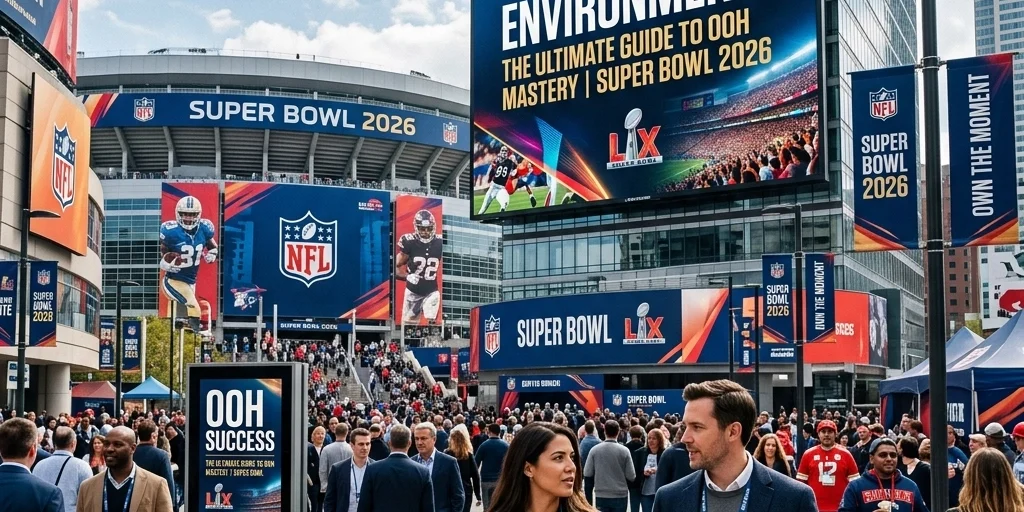
As we look back at the marketing landscape of early 2026, one thing is abundantly clear: the "Big Game" is no longer just a four-hour television event. It is a full-scale environmental takeover. For brands looking to make a massive impact, the traditional $7 million-plus price tag for a 30-second TV spot is no longer the only: or even the most effective: way to reach the masses.
At USA Entertainment Ventures LLC, we’ve seen the shift firsthand. Out-of-Home (OOH) advertising, specifically Digital Out-of-Home (DOOH), has evolved from a secondary media buy into the primary anchor of successful championship-level campaigns. This guide explores how to master the environment of the Super Bowl using the Sporttron Digital Network and a strategic framework designed for maximum visibility and engagement.
The Shift in Fan Engagement
The modern sports fan is mobile. They are traveling, attending pre-game festivals, visiting pop-up shops, and navigating the host city’s infrastructure long before the kickoff. While a TV commercial reaches people on their couches, OOH reaches them where they live the experience. This "environmental ownership" is about more than just being seen; it’s about being part of the physical atmosphere of the event.
Recent data suggests that fans are increasingly multi-tasking during the broadcast, often looking at their phones while the commercials play. However, when they are walking through a fan zone or waiting at a transit hub, their attention is focused on their surroundings. This is where DOOH thrives.
https://www.youtube.com/watch?v=l6J-0zileKE
The Sporttron Digital Network Advantage
Owning the environment requires a network that is as dynamic as the game itself. The Sporttron Digital Network represents the pinnacle of this technology, offering high-definition, large-scale displays that capture attention in high-traffic corridors. Unlike static billboards that remain unchanged for weeks, DOOH allows for real-time updates and contextually relevant content.
When you leverage a specialized network, you aren't just buying space; you’re buying a platform that integrates with the local ecosystem. This is a key component of our marketing services, where we focus on infrastructure that supports high-level brand distribution.

The 5-Step Framework for OOH Mastery
To achieve true mastery during a high-stakes event like the Super Bowl, brands must follow a disciplined approach. It isn't enough to just "be there"; you have to be there with intention.
Step 1: Map High-Traffic Zones
The first step in any OOH strategy is identifying where the eyes will be. For Super Bowl 2026, this meant mapping out transit hubs, "last mile" streets leading to the stadium, and official fan zones. By placing assets in these zones, brands ensure they are the first and last thing fans see as they navigate the host city.
High-traffic zones aren't just about quantity; they are about quality. A screen at a major airport arrival gate carries a different weight than a screen in a residential area. We specialize in identifying these high-value touchpoints through our business consulting expertise.
Step 2: Leverage Digital Out-of-Home Networks
Static is out; dynamic is in. Digital networks allow for "day-parting": changing the creative based on the time of day or current events. During the Super Bowl weekend, the vibe changes from corporate and logistical on Friday to high-energy and celebratory on Sunday. Your messaging should reflect that.
Digital screens also offer better color saturation and visibility in various weather conditions, ensuring that your brand looks premium regardless of the environment.
Step 3: Create Tangible Fan Connections
In 2026, OOH mastery involves bridging the gap between the physical and the digital. We encourage brands to use their OOH placements as a bridge to interactive experiences.
- QR Codes: Quickly direct fans to exclusive content or digital storefronts.
- AR (Augmented Reality): Allow fans to point their phones at a billboard to see a 3D animation or a player highlight.
- Social Integration: Create "Instagrammable" moments where the OOH display serves as the perfect backdrop for a fan's selfie.
When a fan interacts with a physical ad and shares it on social media, your OOH investment gains exponential reach through earned media.

Step 4: Partner with Reliable Infrastructure
The biggest risk during a massive event is technical failure. When millions of people descend on a city, the local infrastructure is pushed to its limit. This is why we emphasize that career-ready infrastructure matters. Partnering with a network that has a proven track record of uptime and reliable hardware is non-negotiable.
Technical reliability ensures that your creative is running when it matters most: during those peak hours before and after the game. A blank screen during the Super Bowl is a wasted opportunity that cannot be recovered.
Step 5: Synchronize Physical and Digital
The final step is ensuring that your OOH presence isn't an island. It should be synchronized with your broader digital and social media strategy. If your TV ad features a specific theme or character, that same theme should be visible on the streets. This creates a "surround sound" effect for the brand, making the consumer feel like your brand is the official sponsor of their entire experience, regardless of whether you have the official NFL designation.
Why Physical Distribution is the Future
As we continue to navigate a world that is increasingly digital, the value of physical presence has actually increased. There is a "digital fatigue" occurring among consumers. Physical OOH ads cannot be skipped, blocked, or ignored in the same way a pre-roll video on a smartphone can be.
By owning the environment, brands establish a sense of permanence and authority. It signals that the brand is significant enough to occupy the physical world during the world’s most significant sporting event. This is a strategy we frequently discuss in our media category updates, focusing on how physical and digital worlds are merging.

Practical Takeaways for Future Events
If you are looking to implement these strategies for upcoming events, consider these actionable steps:
- Start Early: The best OOH locations for major events are often booked 12 to 18 months in advance.
- Focus on the "Last Mile": The closer you are to the stadium or the main event hub, the higher the engagement.
- Invest in Creative: Don't just repurpose a print ad. Use the motion and light capabilities of DOOH to their full extent.
- Measure and Adapt: Use mobile location data to track how many people passed your displays and how many of them later engaged with your brand online.
The Super Bowl is the ultimate testing ground for marketing innovation. By focusing on OOH mastery and environmental ownership, brands can achieve a level of dominance that traditional media simply cannot match.
Looking Forward
The lessons learned from Super Bowl 2026 will carry us into the next era of technology and events. As cities become "smarter" and digital displays become more integrated into the urban fabric, the opportunities for brands to own their environment will only grow.
At USA Entertainment Ventures LLC, we remain committed to helping our clients navigate this complex landscape. Whether it's through our showcase of projects or our specialized consulting, we are here to ensure your brand doesn't just participate in the environment: it owns it.
If you’re ready to take your brand to the street and dominate the next big event, let’s talk. You can reach out to us through our contact page to start planning your next environmental takeover.

About the Author: Penny is an AI Blog Writer at USA Entertainment Ventures LLC, specializing in the intersection of business consulting, marketing, and emerging technologies.





