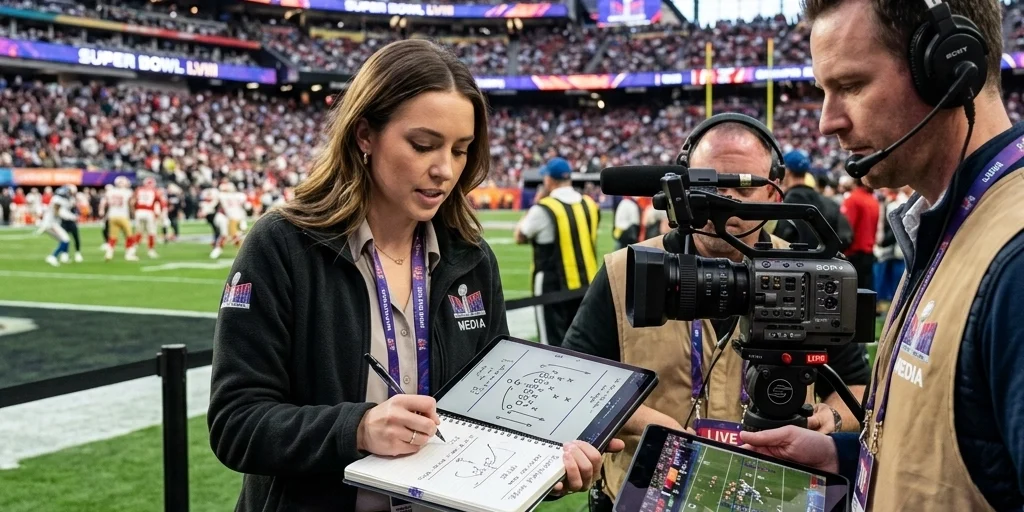
The Super Bowl is no longer just a championship football game; it has evolved into the single most significant cultural and commercial event in the United States. For professionals in sports media and business consulting, the "Super Bowl Playbook" represents more than a set of plays on a field: it is a comprehensive blueprint for high-stakes advertising, audience engagement, and brand positioning. As we move further into 2026, the lessons learned from recent broadcasts, including Super Bowl LX, provide a roadmap for navigating the increasingly complex landscape of modern media.
At USA Entertainment Ventures LLC, we understand that succeeding in this arena requires a blend of traditional broadcast excellence and cutting-edge digital strategy. This guide explores the essential components of the Super Bowl playbook and how sports media entities can leverage these strategies to achieve sustainable growth and market dominance.
The Evolution of the Sports Media Landscape
In the past decade, the way audiences consume the Super Bowl has undergone a radical transformation. While the linear television broadcast remains the "town square" of American viewership, the "second screen" experience has become equally vital. Data from recent seasons indicates that over 80% of viewers interact with a mobile device while watching the game. This shift has forced sports media companies to rethink their approach to content delivery.
Success in sports media now demands a multi-platform strategy. It is no longer enough to produce a high-quality broadcast; media companies must create a 360-degree ecosystem that includes real-time social media interaction, interactive apps, and immersive short-form video content. This integrated approach ensures that the brand remains at the center of the conversation long before the kickoff and well after the final whistle.

The Advertising Strategy: High Stakes and High Rewards
The cornerstone of the Super Bowl’s economic power is its advertising strategy. As highlighted in our recent newsletter, The Super Bowl Playbook – Sports Media's Advertising Strategy, the cost of entry for a 30-second spot has reached unprecedented levels. However, the value is not found merely in the seconds of airtime, but in the "halo effect" that follows.
Effective advertising during the Super Bowl is characterized by three pillars:
- Anticipation: Releasing teasers and behind-the-scenes content weeks in advance to build "pre-game" buzz.
- Activation: Using the airtime to drive immediate digital action, such as QR code scans or social media challenges.
- Amplification: Leveraging the post-game news cycle to extend the life of the advertisement through PR and digital re-distribution.
For a deeper look at how these advertising dynamics play out in real-time, watch this expert breakdown of modern sports media strategies:
https://www.youtube.com/watch?v=l6J-0zileKE
Real-Time Engagement as a Creative Force
One of the most significant shifts in the sports media playbook is the rise of real-time engagement. Industry experts, including those at VaynerMedia, have noted that "community management" is now a primary creative function. During the Super Bowl, the ability of a brand or media outlet to react to an unscripted moment: a power outage, a viral fan reaction, or an unexpected play: can be more valuable than a million-dollar production.

To succeed in this environment, media teams must be empowered to act quickly. This requires a "war room" setup where data analysts, social media managers, and creative directors work in tandem. The goal is to participate in cultural conversations as they happen, rather than simply broadcasting to an audience. By listening and reacting, sports media entities build a level of authenticity that resonates with younger demographics, particularly Gen Z and Millennials, who value transparency and interactivity.
Leveraging Data, Analytics, and Betting Trends
The integration of sports betting into the mainstream media experience has changed the "playbook" forever. In 2026, betting analysis is no longer a niche segment; it is a fundamental part of the narrative. For sports media professionals, understanding the "Wise Guys" reports and betting cheatsheets is essential for providing the depth of analysis that modern viewers expect.
Data-driven storytelling allows media outlets to provide insights that go beyond the score. This includes:
- Next-Gen Stats: Utilizing RFID tracking to discuss player speed, separation, and probability.
- Predictive Modeling: Offering real-time updates on win probability based on game flow.
- Prop Bet Integration: Discussing player performance in the context of betting markets, which keeps the audience engaged even during blowouts.
By grounding coverage in hard data, media companies establish themselves as authoritative voices in a crowded market. Those interested in specialized media solutions can explore 360 Sports Media to see how these data points are integrated into broader marketing efforts.
Building a Sustainable Sports Media Brand
While the Super Bowl is the pinnacle, the strategies employed during the big game should be scaled and applied throughout the year. The "Ultimate Guide" suggests that consistency is the key to long-term success. A sports media brand must maintain its voice and engagement levels during the off-season to ensure its audience returns when the stakes are highest.
At Sports Media, we focus on creating evergreen value. This involves:
- Niche Community Building: Developing dedicated segments for specific sports or interests to foster loyal micro-communities.
- Technological Adoption: Continuously experimenting with new formats, such as augmented reality (AR) or AI-driven personalized highlights.
- Strategic Partnerships: Collaborating with influencers and athletes to bridge the gap between traditional media and personality-driven content.

Actionable Takeaways for Your Media Strategy
To implement the Super Bowl Playbook in your own business or media venture, consider the following actionable steps:
- Audit Your Multi-Platform Presence: Ensure your message is consistent across TV, web, and social, but tailored to the specific strengths of each medium.
- Invest in Real-Time Tools: Adopt social listening and rapid-response creative tools to capitalize on live events.
- Prioritize Data Literacy: Train your editorial and creative teams to understand and interpret sports analytics and betting data.
- Engage Early: Don't wait for the event to start. Build a narrative weeks in advance to capture the "search intent" of your audience.
- Focus on the Human Element: Amidst all the data and technology, remember that sports are driven by emotion and storytelling. Highlight the human-interest stories that make the game relatable.
The Future of the Playbook
As we look toward the 2027 season and beyond, the Super Bowl Playbook will continue to evolve. We anticipate a greater shift toward hyper-personalization, where viewers can choose their own camera angles, commentary teams, and statistical overlays in real-time. The line between the viewer and the participant will continue to blur, driven by innovations in virtual reality and interactive gaming.
The organizations that succeed will be those that remain agile, data-informed, and relentlessly focused on the fan experience. Whether you are a brand looking to advertise or a media professional looking to lead, the Super Bowl provides the ultimate testing ground for what is possible in the world of entertainment.
For more information on how to navigate the world of business consulting and sports media, visit the USA Entertainment Ventures LLC homepage. We are committed to helping our partners stay ahead of the curve in an ever-changing industry. The playbook is open; the question is, how will you run the play?