
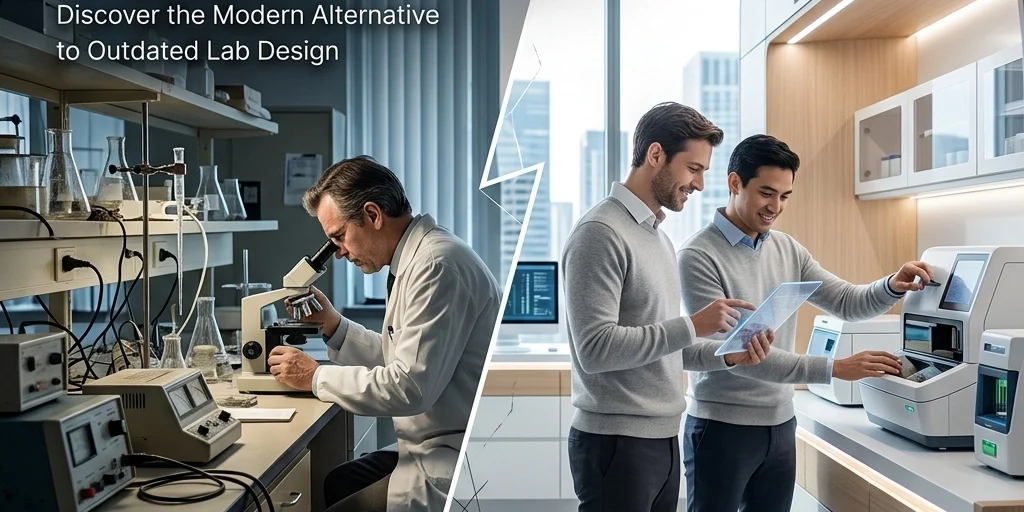
Walking into a traditional computer lab in 2026 often feels like a trip to a museum, but without the cool gift shop. You know the vibe: rows of beige (or dusty black) towers, a tangled "spaghetti" of Ethernet cables behind every desk, and the faint, rhythmic hum of cooling fans struggling to keep 2018-era processors from melting.
While these setups served us well during the dawn of the internet, the world has moved on. We are no longer just teaching "computer literacy"; we are preparing a workforce for high-stakes roles in logistics, cybersecurity, and global content creation. If your infrastructure hasn't changed, your students or employees are already behind.
At USA Entertainment Ventures LLC, we see the shift happening in real-time. The "Pod" is the new gold standard: a modular, high-tech, and flexible environment designed for the way we actually work today. Here are 10 reasons your old-school lab is failing you, and why Pods are the only logical fix.
1. The "Bolted Down" Problem
Old-school labs are static. The desks are often bolted to the floor to hide cabling, creating a rigid environment that forbids collaboration. If you want to move from an individual coding task to a group brainstorming session, you’re out of luck.
Pods, by contrast, are designed for modularity. They are self-contained units that can be reconfigured in hours, not weeks. Whether you are setting up a temporary consulting hub or a permanent training center, Pods adapt to the room, not the other way around.
2. Hardware That Can’t Keep Up
The "spinning wheel of death" is the mascot of the traditional lab. Modern career pathways require massive computing power. You can’t learn real-time logistics tracking or 4K video editing on a machine that struggles to open a spreadsheet.
Pods are built with "Future-Proofing" in mind. Because they are modular, upgrading the internal technology doesn't require overhauling the entire room’s electrical grid. You get the high-end GPUs and processing power needed for today’s demanding software suites.

3. The Cybersecurity Nightmare
In an old lab, every machine is often on the same vulnerable local network. For someone training in cybersecurity, this is a disaster waiting to happen. A single mistake during a malware simulation could take down the entire building's Wi-Fi.
Pods provide isolated, secure environments. Think of them as "digital clean rooms." They allow students and professionals to simulate cyber-attacks and defense strategies in a sandboxed environment that doesn't put the rest of the organization at risk.
4. Ergonomics (Or Lack Thereof)
Let’s be honest: those plastic chairs from the 90s are killing our backs. A traditional lab focuses on "how many bodies can we fit in this room?" rather than "how long can a human comfortably work here?"
Pods are designed with the human element in mind. They incorporate adjustable heights, ergonomic seating, and proper lighting. This isn't just about comfort; it's about productivity. According to recent industry studies, ergonomic workspaces can increase cognitive performance by up to 15%.

5. The Content Creation Gap
We are in the era of the "Creator Economy." From corporate training videos to viral marketing, media production is a core business skill. Traditional labs are too loud, have terrible lighting, and offer zero acoustic privacy for recording.
Pods act as mini-studios. With built-in sound dampening and integrated camera/lighting rigs, a Pod allows a user to switch from a research task to filming a high-quality presentation in seconds. It’s a dedicated space for content creation that a row of open desks simply cannot provide.
6. Logistics and the "Real World" Simulation
The world of logistics and trucking has gone high-tech. Modern dispatchers and supply chain managers use multi-monitor setups and real-time GPS tracking interfaces. Trying to teach this on a single 15-inch monitor is like trying to learn to drive a semi-truck by playing a handheld video game.
Pods can be outfitted with the exact multi-screen arrays used in global logistics hubs. This "environmental fidelity" ensures that when a trainee moves from the Pod to the job, the transition is seamless.
7. Acoustic Chaos
Have you ever tried to conduct a Zoom call in a room where 30 other people are also talking? It’s a nightmare. Old labs are acoustic echo chambers.
Pods provide a "cone of silence." Even in a busy room, the physical structure of a Pod helps dampen ambient noise, making it possible to focus on deep work or sensitive business calls without needing to find a separate "phone booth."
8. Energy Inefficiency
Old-school labs are energy vampires. Keeping 30 desktop towers and 30 monitors running: even on "sleep mode": wastes an incredible amount of power. Furthermore, the heat generated by these machines requires the AC to run at full blast.
Modern Pods are built with integrated power management. They are designed to be "green" from the ground up, utilizing high-efficiency components and smart power-down features that align with modern conservation efforts.

9. Maintenance Burnout
For IT departments, traditional labs are a never-ending cycle of "broken keyboard," "missing mouse," and "this monitor won't turn on." Because everything is exposed, everything is vulnerable.
Pods offer a streamlined maintenance profile. Cables are integrated into the structure, reducing wear and tear. The "all-in-one" nature of the Pod means that if a unit needs service, it can often be swapped or repaired without disrupting the entire lab’s workflow.
10. The Motivation Factor
This is the "X-factor." If you want people to be excited about learning or working, you have to give them an environment that feels like the future, not the past. A traditional lab feels like a chore. A Pod feels like a cockpit.
When students or employees enter a Pod-based environment, their mindset shifts. They feel like they are part of a high-tech research facility or a cutting-edge startup. That psychological boost is invaluable for retention and performance.
The Path Forward: Pods as Career Launchpads
At USA Entertainment Ventures LLC, we believe that the physical space where you learn is just as important as the curriculum itself. Whether we are consulting for a school district or a Fortune 500 company, the advice remains the same: stop investing in furniture and start investing in infrastructure.
The transition to Pods isn't just about "looking cool." It's about creating specialized pathways into the most important industries of the next decade:
- Logistics: Mastering the flow of goods across the globe using real-time data.
- Cybersecurity: Protecting the digital frontiers of our government and private sectors.
- Content Creation: Harnessing the power of digital media to tell stories and build brands.
The old-school lab is failing because it was designed for a world that no longer exists. The Pod is the fix because it was built for the world we are currently creating.
If you’re ready to stop maintaining the past and start building the future, it might be time to look into how Pods can transform your space. After all, you wouldn't use a typewriter to write a blog post in 2026, so why would you use a 1990s lab to train a 2030s workforce?

For more insights on how we are shaping the future of business and technology infrastructure, explore our technology category or see our work in digital transformation. The future is modular( make sure you have a seat in it.)





