
If you close your eyes and think of a "computer lab," what do you see? For most of us, it’s a windowless basement room filled with rows of beige monitors, the faint smell of ozone, and that one printer that was always jammed. It was a place where you went to "get on the internet" or type a paper because you didn’t have a computer at home.
Fast forward to today: we carry supercomputers in our pockets. High-speed Wi-Fi is as ubiquitous as oxygen. The traditional computer lab: the "sea of desktops": is officially on life support. But in its place, something far more exciting is emerging.
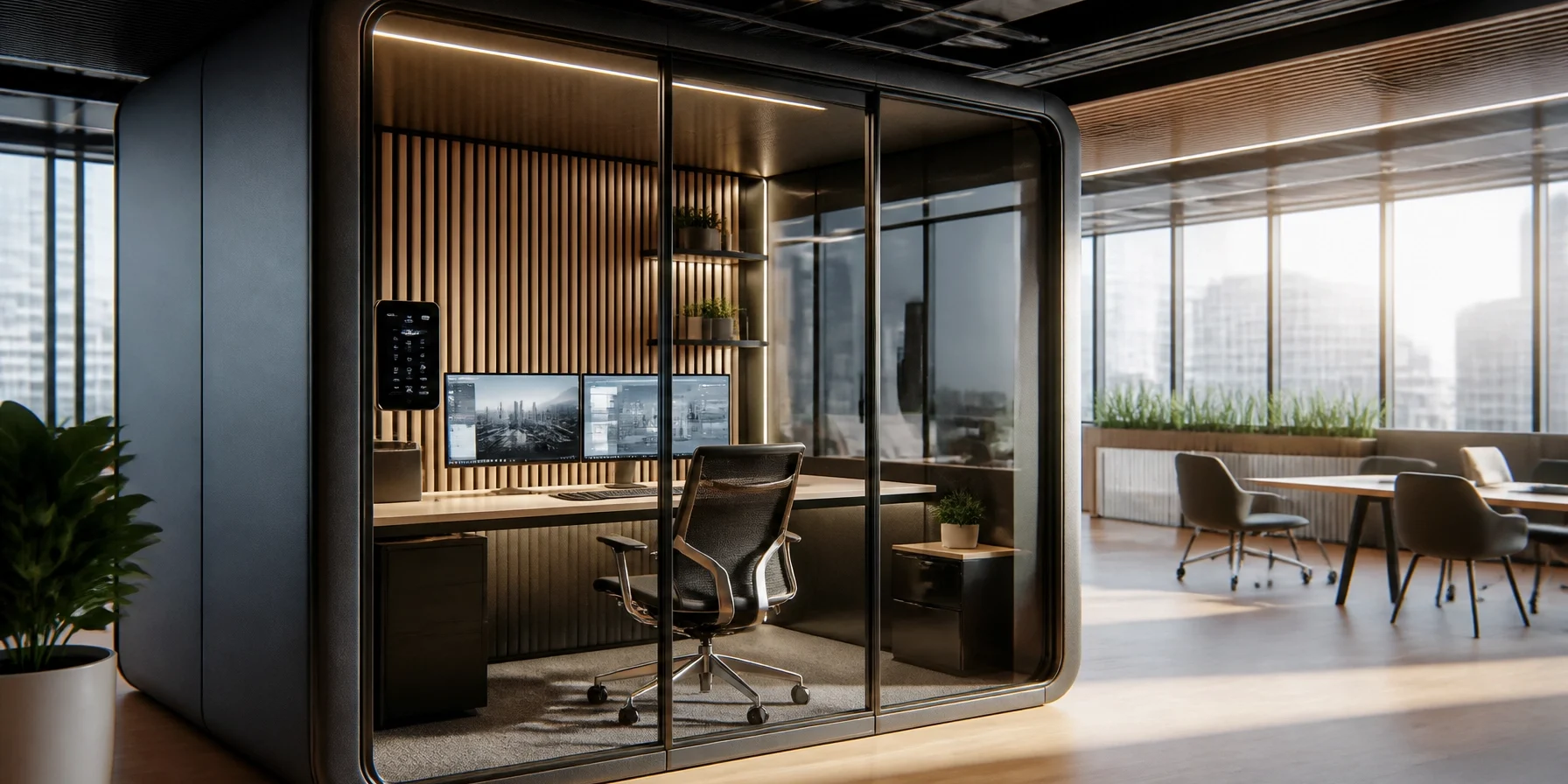
Welcome to the era of the High-Tech Pod.
These aren't just smaller rooms; they are modular, specialized environments built for high-stakes professional workflows. From high-end content creation to national-scale cybersecurity, these pods are becoming the engine rooms of the modern economy. At USA Entertainment Ventures LLC, we’ve watched this shift transform how businesses develop and how the workforce prepares for the future.
The Evolution: From Access to Immersion
In the 1990s, the computer lab was about access. If you didn't have a PC, the lab was your bridge to the digital world. Today, the problem isn't access; it's immersion.
As educational institutions and corporations move away from generic hardware, they are investing in "Pods": self-contained units that offer specialized equipment that individuals cannot easily replicate. Research indicates that students and professionals now value flexible, collaborative, and highly focused spaces over rows of fixed terminals.
The "Pod" model addresses three critical needs that the old-school lab never could:
- Acoustic Isolation: Vital for audio and video production.
- Hardware Specialization: High-powered GPUs for rendering and multi-monitor setups for logistics.
- Network Sandboxing: Crucial for cybersecurity training without risking the main network.
The Content Creation Revolution
Content is the currency of the modern business world. Whether it’s a corporate training video, a viral marketing campaign, or a professional podcast, the demand for high-quality media is at an all-time high. However, your average laptop: no matter how many stickers are on the lid: isn't a substitute for a studio.
The Micro-Studio Model

High-tech pods are being reborn as Content Creation Hubs. These modular units are essentially professional-grade micro-studios. Imagine a 6×6-foot space equipped with studio-grade microphones, 4K cameras, ring lighting, and professional editing suites like Adobe Premiere Pro or DaVinci Resolve.
By centralizing this equipment into bookable pods, organizations are lowering the barrier to entry for the creator economy. For those looking at media and distribution, these pods serve as a portfolio-building factory.
Career Pathway: Digital Media Specialist
In these hubs, users aren't just "surfing the web." They are learning color grading, audio engineering, and narrative pacing: skills that lead directly to roles in digital marketing, film production, and social media management.
Cybersecurity: The Digital Front Line
If content creation is the flashy front end of the pod revolution, cybersecurity is the fortified backbone. Traditional computer labs are notoriously difficult to secure for ethical hacking or network defense simulations. You can't exactly practice "breaking things" on a shared university network.
The Cyber Range in a Box

Enter the Cybersecurity Training Pod. These are isolated, "air-gapped" environments where learners can engage in "Red-Team vs. Blue-Team" exercises. Within the safety of the pod, students can simulate cyberattacks, analyze malware, and practice incident response in a setting that mirrors a real-world Security Operations Center (SOC).
According to industry data, the gap between theory and practice is one of the biggest hurdles for new cybersecurity professionals. Pods solve this by providing the exact tools: SIEM platforms, vulnerability scanners, and forensics kits: that professionals use on the job.
Career Pathway: SOC Analyst
Experience gained in a dedicated cyber pod translates directly to the role of a Security Operations Center analyst. This is a field with massive growth potential and a critical need for hands-on, practical experience.
Logistics: Managing the World from a Pod
Logistics and supply chain management have moved far beyond clipboards and spreadsheets. Today’s logistics professionals are more like air traffic controllers, managing global data streams in real-time.
The Logistics Command Center

A Logistics Pod functions as a mini-command center. Equipped with triple-monitor setups, these pods allow operators to track shipments, monitor weather patterns, and analyze port congestion simultaneously. For businesses involved in trucking and distribution, these hubs are where efficiency is won or lost.
In these environments, users practice "scenario planning": learning what to do when a ship is delayed in the Suez Canal or a blizzard hits a major trucking corridor. It’s about making high-stakes decisions based on data visualizations that would be impossible to manage on a single laptop screen.
Career Pathway: Supply Chain Planner
This is a high-growth sector. Mastery of the logistics pod leads to careers in transportation coordination, fleet operations, and warehouse management: fields that are the literal lifeblood of the global economy.
Transitioning from Service to Tech: The DOD Skill Bridge Connection
One of the most powerful applications of these high-tech pods is in the realm of veteran transition. At USA Entertainment Ventures LLC, we specialize in DOD Skill Bridge recruitment.
For a service member transitioning to civilian life, the leap from the field to a high-tech career can feel daunting. High-tech pods provide the perfect "intermediate" environment. They offer a structured, mission-oriented workspace that feels familiar to military personnel, while providing the specialized training needed for careers in logistics, cybersecurity, and business consulting.
Why Pods Work for Veterans

- Focused Learning: The isolated nature of pods reduces distractions and allows for deep work.
- Tactile Technology: For those used to working with complex machinery, the hardware-heavy environment of a logistics or cyber pod is an intuitive fit.
- Fast-Track Portfolios: By the end of a Skill Bridge program, a veteran can walk away with a portfolio of work: be it a cyber incident report or a logistics optimization plan: that speaks louder than any resume.
Actionable Takeaways for the Future
The death of the computer lab isn't a loss; it's an upgrade. If you are an educator, a business owner, or a professional looking to level up, here is how you can embrace the pod revolution:
- Audit Your Space: Stop trying to maintain 30 identical PCs. Instead, consider repurposing that space into three or four highly specialized pods (e.g., one for video, one for cyber, one for data).
- Focus on the "Un-replicable": Don't provide software that users can run on their own laptops. Provide the hardware (microphones, high-end GPUs, multi-monitor arrays) that they can't.
- Bridge the Career Gap: Align your pod infrastructure with specific job outcomes. A "Content Pod" should lead to a "Media Job." A "Cyber Pod" should lead to a "Security Job."
- Look into DOD Skill Bridge: If you are a veteran or an employer, explore how these specialized environments can facilitate a smoother transition into the business development and consulting sectors.
Conclusion: The Pod is the Portal
Are computer labs dead? The old version: the one with the sticky keyboards and the flickering fluorescent lights: certainly is. But its successor is far more powerful.
High-tech pods are more than just small rooms; they are portals to the new economy. They are where the next generation of filmmakers will edit their first features, where cyber-defenders will stop their first simulated attacks, and where logistics experts will keep the world’s goods moving.
The future isn't a row of computers. It’s a specialized, immersive, and high-tech pod. And it’s open for business.





