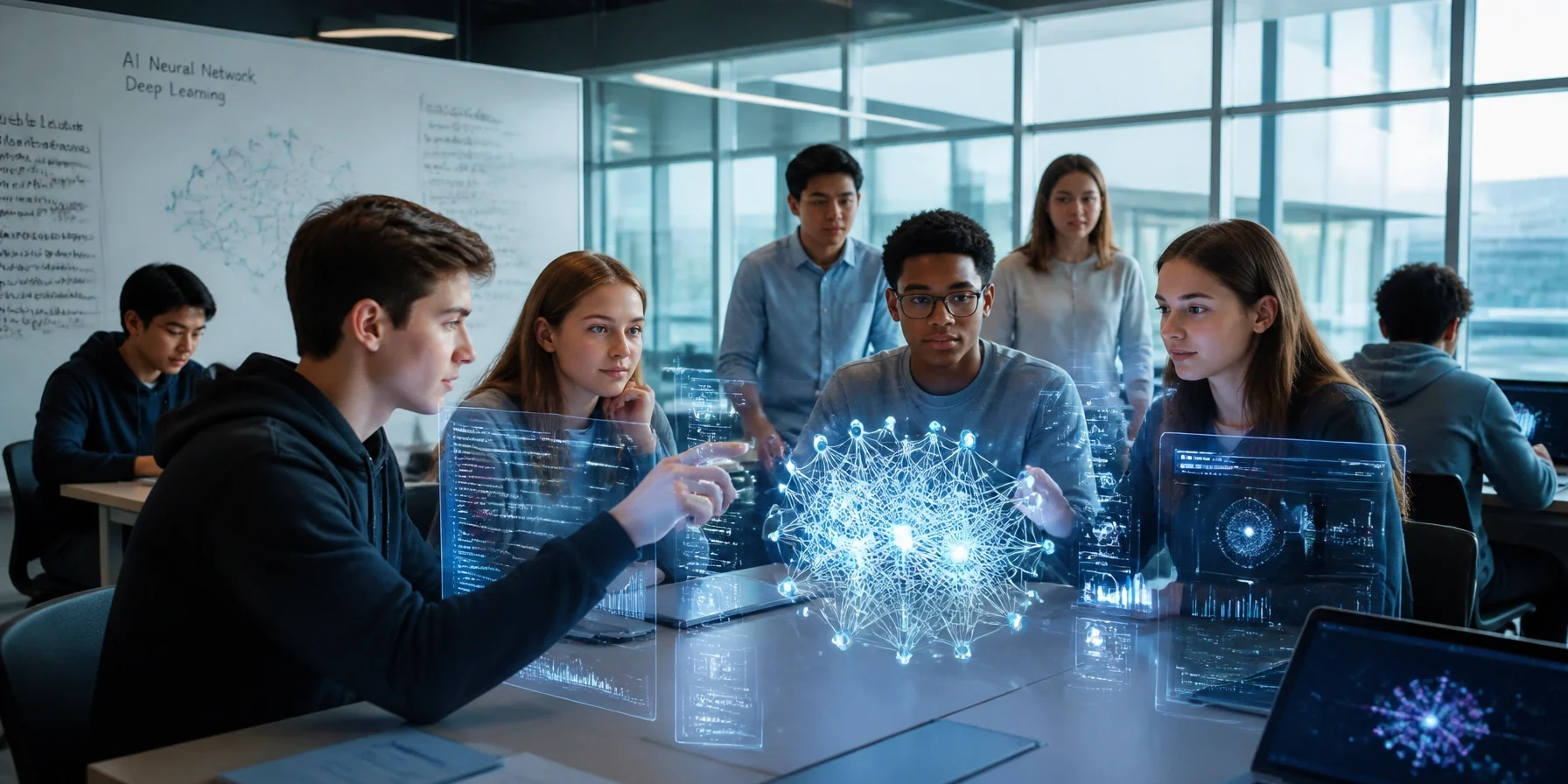
High schools are becoming the primary funnel for AI and data analytics talent as students integrate generative AI into their daily learning. With over 84% of students now using AI tools for schoolwork and 43% reporting that AI will influence their future career choices, companies must engage with K-12 pipelines early to secure a competitive edge in technical recruitment and skill development.
The traditional model of talent acquisition, waiting for a university student to reach their senior year before offering an internship, is rapidly becoming obsolete. In the fields of Cloud computing, Artificial Intelligence (AI), and Data Analytics, the race for proficiency has shifted toward the secondary education level. High schools are no longer just preparatory environments for general studies; they have transformed into the "priming stage" for the global technical workforce.
This shift is driven by a combination of student initiative and institutional adoption. As high schoolers become native users of sophisticated data tools, the "talent funnel" is expanding horizontally and starting earlier than ever before. For businesses, this represents an urgent opportunity to rethink recruitment strategies and community engagement.
The Rising Tide: Statistics of the High School AI Funnel
The adoption of advanced technology in high schools is not a niche trend; it is a statistical reality. According to recent surveys by the College Board, generative AI use among U.S. high school students for schoolwork rose from 79% to 84% in a single academic year between 2024 and 2025. Furthermore, approximately 69% of these students reported using ChatGPT specifically for homework and assignments as of May 2025.
This is not merely about finding shortcuts for essays. Students are increasingly viewing AI as a foundational element of their professional identity. An EAB national survey of 5,000 high school students revealed that 43% believe AI will directly influence the career path they choose to pursue. Additionally, 38% of students anticipate that AI will reduce the necessity of a traditional four year college degree for certain technical roles, suggesting a growing openness to alternative pathways like DOD SkillBridge recruitment and vocational certifications.

Why Waiting for College is a Strategic Error
For decades, the standard corporate playbook was to wait for higher education to filter and train the best minds. However, in the high-velocity worlds of Cloud and AI, waiting four years for a degree can lead to a talent gap that is difficult to bridge.
- Early Fluency: High school students are developing "AI literacy" before they ever set foot on a college campus. By the time they graduate, they have spent years experimenting with prompt engineering, data interpretation, and automated workflows.
- Competitive Advantage: Companies that establish brand presence and mentorship programs at the high school level are essentially securing their pipeline before their competitors even begin their search.
- Cost-Effective Training: Engaging with younger cohorts through consulting programs allows businesses to shape the skills of future employees, ensuring they enter the workforce with the specific competencies the industry requires.
Institutional support for this trend is also surging. Over 85% of school administrators now view the mastery of AI tools as a "very or somewhat valuable" component of a high school education. This top-down validation means that students are being encouraged to explore these fields as core academic competencies, not just extracurricular interests.
The DOD SkillBridge Connection: Bridging the Gap Early
One of the most effective ways to leverage this early talent pool is through structured transition and recruitment programs. While the Department of Defense (DOD) SkillBridge program is traditionally associated with military members transitioning to civilian life, the underlying philosophy of "skills over degrees" is increasingly being applied to the high school-to-workforce pipeline.
By identifying high school seniors with high aptitude in Cloud and Data Analytics, organizations can create "pre-SkillBridge" pathways or government-aligned outreach initiatives. These programs allow students to bypass traditional gatekeeping and enter specialized training environments that lead directly into high-demand roles.

Case Study: Mastery Through AI in K-12
The impact of AI on educational outcomes provides a glimpse into the analytical power of the next generation. Data from Pearson’s Connections Academy reveals that biology students using embedded AI study tools saw an 11% increase in end-of-semester passing rates and a 5% boost in final course scores. Similarly, World History students experienced a 7% rise in passing rates.
These results indicate that AI tools are not just being used; they are being mastered to improve cognitive performance and data retention. Students who utilize these tools are essentially undergoing daily training in data-driven decision-making. They are learning how to interact with algorithms to solve complex problems, a skill that is directly transferable to corporate Data Analytics and Cloud management.
Strategic Implementation: How Businesses Can Engage Now
Transitioning into the high school talent funnel requires a purposeful strategy. Businesses should move away from broad outreach and toward targeted, value-driven engagement.
- Mentorship and Workshops: Establish recurring workshops that focus on real-world applications of Cloud and AI. Showing students how data is used to solve logistics or distribution challenges makes the career path feel tangible.
- Curriculum Partnership: Partner with local school boards to provide case studies or datasets that teachers can use in their classrooms. This embeds your company’s challenges into the students' learning process.
- Alternative Pipelines: Support programs that emphasize certifications and hands-on experience. Not every data analyst needs a PhD; many just need the opportunity to prove their capability in a professional setting.
The goal is to move from being a "recruiter" to being a "partner" in the student's educational journey. By providing the tools and the vision, companies can ensure that the next generation of talent is not just ready for the future, they are ready for your company's future.

Forward-Looking Conclusion
The shift toward a high school-centric talent funnel is not a passing trend; it is a structural change in how talent is cultivated. As AI becomes a baseline skill, the distinction between "technical" and "non-technical" students will continue to blur. The companies that thrive in the coming decade will be those that recognize this shift early and invest in the human capital currently sitting in 11th and 12th-grade classrooms.
By bridging the gap between secondary education and industry requirements, we can create a more resilient, skilled, and innovative workforce. The future of AI and Data Analytics is already being written in high school computer labs; it is time for the business world to start reading.
Want more insights like this? Subscribe at www.usaentertainmentventures.com.
Questions or partnerships? Call our AI Receptionist at +1 (970) 578-4652.
Dan Kost, CEO, USA Entertainment Ventures LLC.
If this helped you, please comment, subscribe, and share.
#Motivation #Branding #Strategy #Marketing #AdvertisingAndMarketing #digitalmarketing #Innovation #BusinessConsulting #AI #DataAnalytics #SkillBridge