
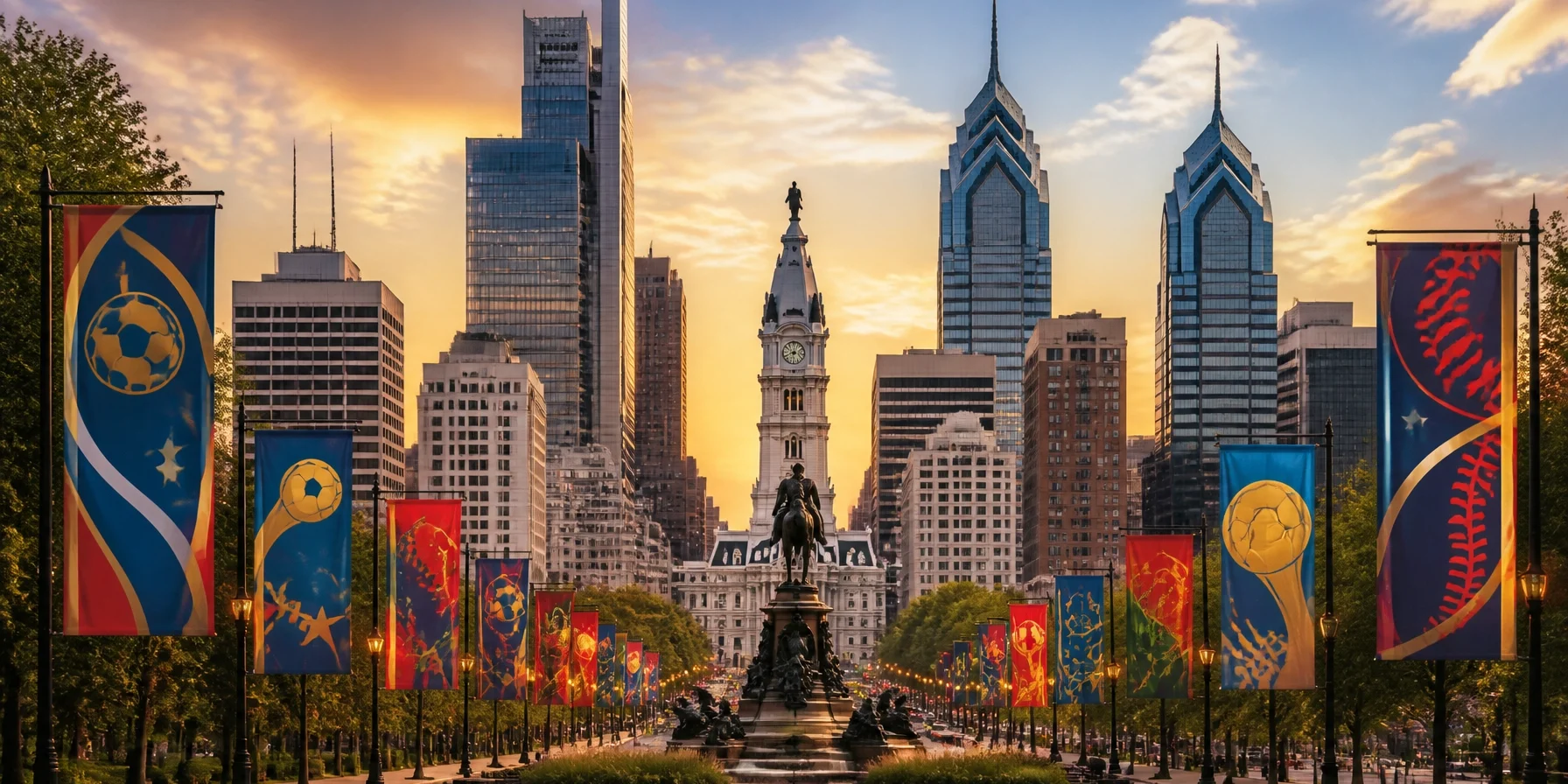
In July 2026, the city of Philadelphia will not just be a location on a map; it will be the undisputed epicenter of the sporting world. With the convergence of the FIFA World Cup 26 matches and MLB All-Star Week, the city is bracing for a "Big Week" that rivals the scale of multiple Super Bowls concentrated into a single metropolitan corridor. For business leaders and brand managers, this presents a rare, high-stakes opportunity to capture global attention.
However, a "Big Week" requires a "Big Strategy." Simply being present is not enough to win in an environment where every major brand is vying for the same eyeballs. To truly resonate with fans and stakeholders, organizations must adopt a sophisticated, multi-phased playbook that prioritizes engagement over mere exposure. As we look toward the horizon of 2026, the question is not whether your brand will be there, but whether your branding strategy is an All-Star.
Below, we outline five essential steps to ensure your brand dominates the arena during Philadelphia's most historic sporting summer.
1. Orchestrate a Phased Offensive: Timing is Everything
The most common mistake in event-based marketing is treating the event as a single-day activation. According to the Super Bowl Playbook, the most successful campaigns are multi-week, full-funnel ecosystems. To win in Philadelphia, your brand must execute a three-phase strategy: Pre-Event, Event Day, and Post-Event.
Phase 1: The Pre-Game Build-Up
Branding success in 2026 begins months before the first pitch is thrown or the first whistle blows. This phase is about storytelling and anticipation. Use this time to introduce your brand’s connection to the city’s heritage and the spirit of competition. Teasers across social media, digital-out-of-home (OOH) displays, and email campaigns should build curiosity and "surround the moment."
Phase 2: Game Day Optimization
When the fans arrive in South Philly and Center City, your brand must be ready for real-time engagement. This is the "war room" phase, where content is published as the action happens. High-impact brands leverage "second-screen" behavior: the tendency for fans to use their mobile devices while watching the game: to provide interactive polls, real-time reactions, and exclusive offers.
Phase 3: The Post-Game Saturation
The conversation does not end when the stadium lights go out. The post-event phase is critical for turning a fleeting moment into a lasting movement. Capitalize on the "water cooler" talk by pushing highlights and "what’s next" narratives. This sustained lift in awareness is what separates temporary hype from enduring brand equity.

2. Surround the Moment: Owning the Physical Environment
In a digital-first world, the power of physical presence remains unmatched during major sports tentpoles. To truly dominate, your brand must "own the environment" through strategic sports advertising and out-of-home (OOH) media.
Philadelphia’s geographic layout during the Big Week: stretching from the historic sites in Old City to the stadium complex in South Philly: creates "event corridors." These are high-traffic zones where fans live, eat, and travel.
"Out-of-home ensures your brand owns the environment," notes industry experts. "From billboards to the very floors your customers walk on, the goal is to create a tangible fan experience."
Actionable Takeaway:
Consider high-impact placements like digital ribbon boards, jumbotrons in fan zones, and even "high-touch" concession platforms. When a fan holds a branded cup or sees a message on a stadium screen, the brand moves from a background noise to a part of their personal memory of the game. This level of consulting and environmental design is what builds deep-seated brand recall.
3. The Human Element: Leveraging Authentic Voices and Talent
While logos and taglines are important, human connections drive brand loyalty. In the modern sports landscape, this is achieved through two primary avenues: Name, Image, and Likeness (NIL) and strategic recruitment.
Authentic Voices (NIL)
The rise of NIL has allowed brands to tap into thousands of authentic voices: student-athletes who define culture for the next generation. By partnering with athletes who embody your brand’s values, you bridge the gap between corporate messaging and authentic fan affinity. These athletes act as storytellers, providing a relatable face to your organization.
Strategic Recruitment and DOD Skill Bridge
For companies looking beyond consumer sales, the Big Week in Philadelphia is a premier networking opportunity. At USA Entertainment Ventures LLC, we emphasize the importance of human resources and recruitment pipelines.
Major events are a magnet for top talent, including transitioning military members. Programs like DOD Skill Bridge allow businesses to recruit high-caliber individuals who bring discipline and leadership to the corporate sector. Branding your company as a "veteran-friendly" and "opportunity-rich" workplace during these high-visibility weeks can significantly bolster your long-term talent acquisition strategy.

4. Precision Targeting: Leveraging Data and Sentiment
In 2026, "spray and pray" advertising is obsolete. To be an All-Star, your branding strategy must be grounded in data and predictive modeling. Understanding fan sentiment is the key to delivering the right message at the right time.
By utilizing advanced analytics, brands can segment their audience by high-value behaviors, such as team loyalty, purchase history, and media consumption. This allows for personalized interactions that outperform broad, generic reach. For example, a campaign targeting local Philadelphians who are also international soccer enthusiasts will yield a much higher ROI than a generic "Welcome to Philly" banner.
The Sports Media Perspective
As highlighted in the Super Bowl Playbook, the future of advertising is about proving ROI through predictive modeling. Watch the video below to see how sports media's advertising strategy has evolved to dominate the arena:
https://www.youtube.com/watch?v=l6J-0zileKE
"We prove your ROI by using predictive modeling and fan sentiment," the playbook suggests. "Don't just advertise; dominate the arena by aligning your vision with unmatched expertise."

5. Future-Focused Legacy: Building Sustainable Brand Equity
The final step in a winning branding strategy is looking beyond the immediate financial gains of the Big Week. Philadelphia’s 2026 celebrations are tied to the city’s 250th birthday and a broader vision of sustainability and community benefit.
Brands that incorporate conservation marketing and social responsibility into their strategy will find a more profound resonance with modern audiences. Today’s consumers: and tomorrow’s employees: are drawn to organizations that express optimism and a commitment to the greater good.
Whether it is through "cup holders for charity" initiatives or supporting local community accessibility, your brand should aim to leave the city better than it found it. This forward-looking approach ensures that your brand isn't just a visitor for a week, but a permanent part of Philadelphia’s growth story.

Conclusion: Seizing the Moment
The "Big Week" in Philadelphia during July 2026 is more than a series of games; it is a cultural phenomenon that will define the city for a generation. By following a phased playbook, owning the physical environment, leveraging authentic talent, utilizing data-driven targeting, and committing to a sustainable legacy, your brand can achieve All-Star status.
The opportunity for business development and DOD Skill Bridge recruitment in this window is unprecedented. As we project current trends into the future, it is clear that those who plan today will be the ones standing on the podium in 2026.
Is your branding strategy ready for the big stage? Now is the time to refine your playbook and ensure you win the hearts of fans from around the world.





