
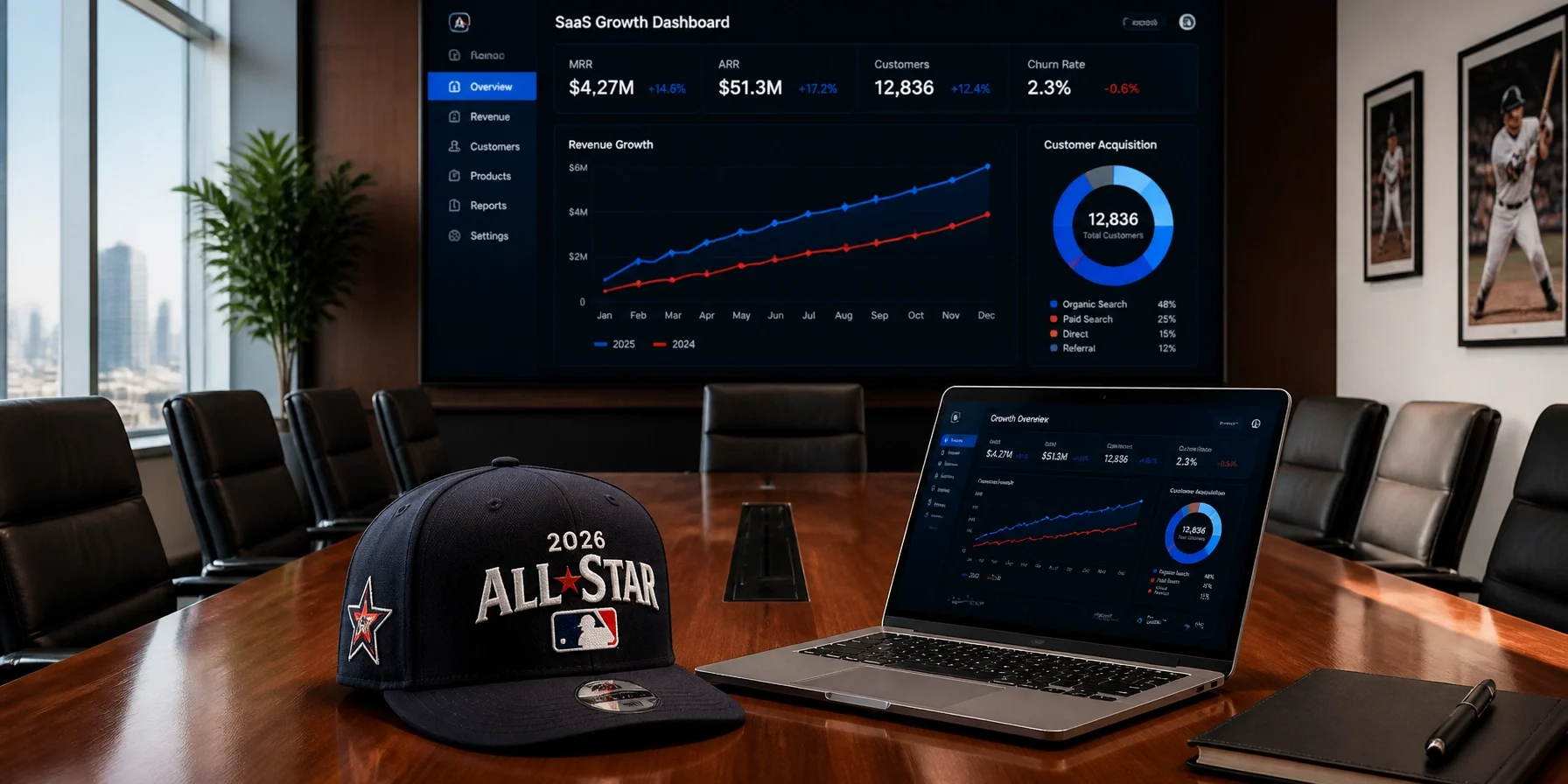
As the summer of 2026 approaches, the sporting world is preparing for a milestone that transcends the diamond: the MLB All-Star Game in Philadelphia. This isn’t just another mid-summer classic; it is a meticulously engineered branding powerhouse anchored to the "America 250" celebration: the 250th anniversary of the United States.
For modern business leaders and SaaS founders, the All-Star "merch machine" offers more than just jerseys and caps; it provides a blueprint for scalable growth, community engagement, and narrative-driven marketing. In an era where software features are quickly commoditized, the ability to build a "tangible fan experience" is what separates market leaders from also-rans.
At USA Entertainment Ventures LLC, we specialize in managing complex business ecosystems: from government consulting and DOD skill bridge recruitment to high-touch sports media. We believe that the principles driving the world's largest sporting events are the same principles that drive high-velocity SaaS growth.
Here are five critical branding lessons from the MLB All-Star merch strategy that you can apply to your SaaS growth strategy today.
1. Anchor Your Brand to a Macro Narrative
The 2026 All-Star Game isn’t being marketed as a standalone event. Instead, MLB has anchored it to the America 250 milestone. By integrating patriotic red, white, and blue designs and the "USA 250" patch into the very fabric of the event’s identity, MLB has elevated a seasonal game into a national historical moment.
The SaaS Lesson:
Don't just sell features; sell a movement. SaaS companies often fall into the trap of "feature-itis," shouting about technical specs while the market tunes out. To achieve non-linear growth, your product should ride a macro narrative: whether that is the AI revolution, the shift to data privacy, or the future of work.
When you align your product launch with a larger cultural or industry shift, you create an "urgent relevance" that moves prospects to action. Just as MLB uses the "America 250" theme to drive record-breaking merchandise sales, you can use narrative-led growth to increase your pricing power and shorten sales cycles.

2. Segment Your Offering Like a "Team-Specific Cap"
One of the most effective strategies in the MLB playbook is hyper-segmentation. While there is a unified 2026 All-Star logo, every club has its own specific New Era cap. Fans are not just buying "All-Star gear"; they are buying their team’s specific version of the All-Star experience.
The SaaS Lesson:
In software, a one-size-fits-all approach often fits no one. To maximize conversion, you must verticalize your packaging.
- Verticalized Landing Pages: Create versions of your product story tailored to specific industries (Fintech vs. Healthcare).
- Persona-Driven Onboarding: Ensure that a CMO sees a different dashboard than a DevOps Engineer.
- Tiered Feature Access: Mirror the MLB "VIP package" vs. "general admission" by offering specialized modules that cater to the unique needs of enterprise-level clients.
By providing a "team-specific" feel to your software, you increase the perceived value and ensure that every user feels the product was built specifically for them.
3. Create Tangible Fan Experiences in a Digital World
In our recent newsletter, Creating Connections, we highlighted the importance of "Tangible Fan Experiences at Super Bowl 2026." The MLB All-Star Week follows this same philosophy through the Capital One All-Star Village: an indoor theme park filled with interactive games and exclusive physical merch.
The SaaS Lesson:
Software is inherently intangible, which can make brand loyalty difficult to sustain. To combat this, successful SaaS brands are finding ways to manifest physically. This could mean hosting high-touch regional roadshows, sending "founding customer" welcome kits, or creating exclusive user community events.
Our division, Sports Media, has spent 40 years mastering this "high-touch" approach. From branded cup holders for charity to digital "Sporttron" networks in over 780 venues, we understand that connections are made when brands enter the physical environment of their customers.
Watch how we bridge the gap between digital branding and physical experience in this overview:
https://www.youtube.com/watch?v=l6J-0zileKE
4. Leverage a Unified Ecosystem (The Power of Co-Branding)
MLB doesn't build the All-Star machine alone. They leverage an ecosystem of powerful partners like Nike, New Era, and Mitchell & Ness. This co-branding strategy extends the reach of the event and adds layers of credibility and style that a single brand could not achieve.
The SaaS Lesson:
Your SaaS product should not be an island. Treat your integrations: whether with Salesforce, HubSpot, or Snowflake: as "co-branded jerseys."
- Joint Go-To-Market (GTM): Launch co-marketed solution pages with your integration partners.
- Ecosystem Distribution: Don't just rely on your own sales team; leverage the marketplaces where your customers already spend their time.
Strategic partnerships allow you to "borrow" the trust and audience of established players, accelerating your growth in competitive markets. At USA Entertainment Ventures LLC, we help companies manage these complex partnerships to ensure every division of the business is pulling in the same direction.

5. Bridge the Physical-Digital Divide with Data
Perhaps the most sophisticated part of the MLB strategy is the All-Star Experience Pass. To access meet-and-greets at the physical All-Star Village, fans must download the MLB Ballpark app. This turns a physical interaction into a digital relationship, providing MLB with invaluable first-party data.
The SaaS Lesson:
Every offline interaction (a conference booth, a physical mailer, a billboard) must have a digital "Experience Pass." Use QR codes to jump attendees directly into a trial environment or a specialized "event-only" feature flag.
By instrumenting your funnel so that physical attendance leads to digital activation, you can track the ROI of your brand awareness campaigns with the same precision as your PPC ads. As stated by industry experts, "The future of marketing isn't just digital or physical; it's the seamless movement between the two."

Conclusion: Dominating Your Arena
The 2026 MLB All-Star Game will be a masterclass in narrative, segmentation, and experiential marketing. For SaaS companies looking to scale, the takeaway is clear: success requires more than code; it requires a brand that fans: and customers: want to wear.
Whether you are looking to refine your business consulting strategy or improve your DOD skill bridge recruitment efforts, the lessons of the "merch machine" apply. By anchoring to a macro narrative and creating tangible connections, you don't just find customers: you build a fan base.
At USA Entertainment Ventures LLC, we are committed to helping businesses manage these transitions and seize the opportunities of the future. The arena is ready. Is your brand?
Interested in learning how to apply high-level sports marketing tactics to your business development? Contact our team at USA Entertainment Ventures to schedule a consultation.





