
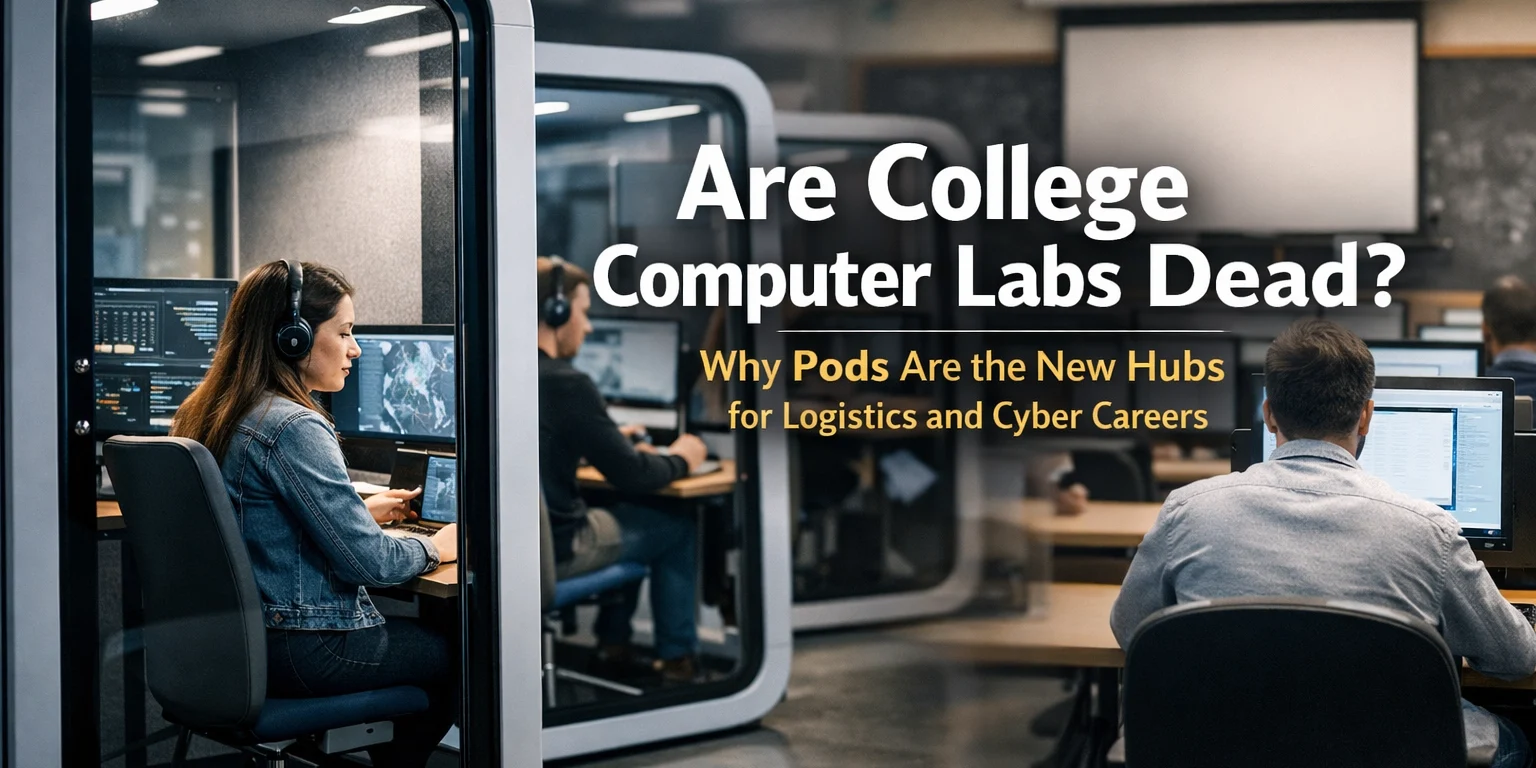
Walk into any university campus today, and you might notice something eerie. Those massive, fluorescent-lit rooms filled with rows of beige desktop computers, the classic "computer labs", are looking a little like digital graveyards. Remember the smell of ozone and the frantic clicking of mechanical keyboards at 2:00 AM? That’s becoming a relic of the past, right up there with floppy disks and dial-up tones.
But don’t mourn the death of the lab just yet. Technology isn’t leaving the building; it’s just getting a massive glow-up. As we navigate the mid-2020s, the "Pod" has emerged as the new sovereign of the campus ecosystem. These aren't just smaller versions of labs; they are specialized, high-octane infrastructure hubs designed for the specific demands of logistics, cybersecurity, and content creation.
At USA Entertainment Ventures LLC, we see this shift daily. The world doesn’t need more rows of general-purpose PCs; it needs focused environments where the next generation of supply chain wizards and digital defenders can hone their craft.
The Great Extinction of the General-Purpose Lab
For decades, the college computer lab was a necessity because hardware was expensive and portability was a joke. You went to the lab because that’s where the "good" computers lived. Today, every student has a laptop in their backpack that packs more punch than the entire lab did in 2005.
Research shows a steady decline in traditional undergraduate enrollment for general computer science as students pivot toward hyper-specialized tracks like AI, cybersecurity, and practical logistics. When students can do their basic coding from a coffee shop, the physical university space has to offer something the local Starbucks can't: high-end, industry-specific infrastructure.
Enter the Pod. A Pod is a modular, integrated workspace designed for deep work, real-world simulation, and collaborative tech deployment. Think of it as a cockpit rather than a cubicle.

Logistics: Not Just Trucks, but Tech Hubs
When people hear "logistics," they often think of a guy with a clipboard standing in a dusty warehouse. In 2026, logistics is a high-stakes game of data science, real-time tracking, and automated coordination. The "Logistics Pod" on a modern campus looks more like a NASA mission control center than a classroom.
These pods are equipped with multi-screen setups that track global supply chains in real-time. Students aren't just reading about shipping routes; they are using proprietary software to manage "digital twins" of actual fleet operations. This is where logistics and trucking education meets the real world.
In these pods, students learn to navigate the complexities of international trade, last-mile delivery puzzles, and the massive data flow that keeps our economy moving. By moving away from the "row of desks" model, universities can create "war rooms" where students work in teams to solve simulated supply chain crises, like a digital blockage in the Suez Canal, using the same tools they’ll find in the corporate world.
The Cybersecurity Fortress: Why the "Pod" is a Necessity
If you’re training to be an ethical hacker or a network security specialist, a standard computer lab is actually a bit of a liability. You need an "air-gapped" environment, a space where you can run malware simulations or "red team vs. blue team" exercises without accidentally nuking the university’s main registrar's office.
Cybersecurity Pods provide a sandbox. These physical units are built with specialized server racks, hardware firewalls, and enough cooling to keep a small village comfortable. They are designed for intensity.
The casual, collaborative nature of these pods allows for "capture the flag" style learning. Instead of sitting in a lecture hall listening to a professor drone on about SQL injection, students are huddled in a Pod, physically and digitally isolated, trying to break into a mock corporate server. This level of research-backed hands-on training is what prepares them for the high-pressure environment of a modern SOC (Security Operations Center).
Content Creation: From Lab to Studio
We can't talk about modern career pathways without acknowledging the elephant in the room: the creator economy. Today’s students are building brands before they even graduate. A standard lab PC with a webcam won't cut it anymore.
The new "Media Pods" are essentially micro-studios. We’re talking acoustic treatment, 4K cameras on articulating arms, professional-grade lighting, and high-spec rigs for video rendering and 3D modeling. This is where digital content and media converge.
These pods allow students to move beyond "learning" and into "producing." Whether it’s a podcast on market trends or a complex AR overlay for a marketing campaign, the infrastructure is there to support the professionalization of the student’s output. It’s about giving them the "keys to the kingdom" early on.
Why Physical Infrastructure Still Wins in a Remote World
You might ask: "Dan, if everything is moving to the cloud, why do we need these expensive physical Pods at all?"
It’s a fair question. But the answer lies in human psychology and high-performance requirements.
- Zero Latency: While the cloud is great, certain tasks, like real-time cybersecurity defense or high-end 3D rendering, benefit from local hardware. Fiber-optic connections inside a specialized pod ensure that students aren't throttled by the campus Wi-Fi.
- Mentorship & Synergy: You can’t replicate the energy of a "war room" on a Zoom call. When students are physically present in a Pod, the "side-talk" and collaborative problem-solving happen naturally. It’s where the best ideas are born.
- Professional Identity: Stepping into a specialized Pod changes your mindset. It’s the difference between practicing piano on a cardboard cutout and sitting at a Steinway. It tells the student, "You are a professional now."

Building the Bridge: The Role of Consulting
Transitioning from a legacy lab model to a Pod-based infrastructure isn’t just about buying new chairs and fancy monitors. It requires a complete rethink of how a university or training center delivers value. This is where business consulting becomes vital.
At USA Entertainment Ventures LLC, we help organizations bridge the gap between "where we were" and "where the world is going." This includes designing the physical layouts, sourcing the tech stacks, and ensuring that the curriculum aligns with actual industry needs in logistics, cyber, and media. We look at the big picture, how these physical spaces can drive enrollment, foster industry partnerships, and ultimately produce graduates who are ready to hit the ground running on day one.
The Verdict: The Lab is Dead, Long Live the Pod
The era of the "one size fits all" computer lab is over. If a university is still bragging about having 100 PCs in a single room, they’re about ten years behind the curve. The future is modular, specialized, and intense.
The Pod is more than just a place to sit; it’s a launchpad. Whether a student is navigating a global supply chain, defending a network from a foreign adversary, or building a media empire, the infrastructure they use will define their trajectory.
As we continue to evolve at USA Entertainment Ventures LLC, we remain committed to the idea that physical space matters. Even in a digital world, where you sit and who you sit with can change everything.

So, are college computer labs dead? In their old form, yes. But their evolution into Pods represents one of the most exciting shifts in higher education and professional training we’ve seen in a generation. It’s time to move out of the basement and into the hub.
If you’re looking to redefine how your organization approaches technology infrastructure or if you’re interested in how these shifts impact the future of work, let’s talk. The future is being built one Pod at a time, and it’s looking smarter than ever.
To learn more about our projects and how we’re shaping the intersection of tech, media, and business, visit us at usaentertainmentventures.com.





