
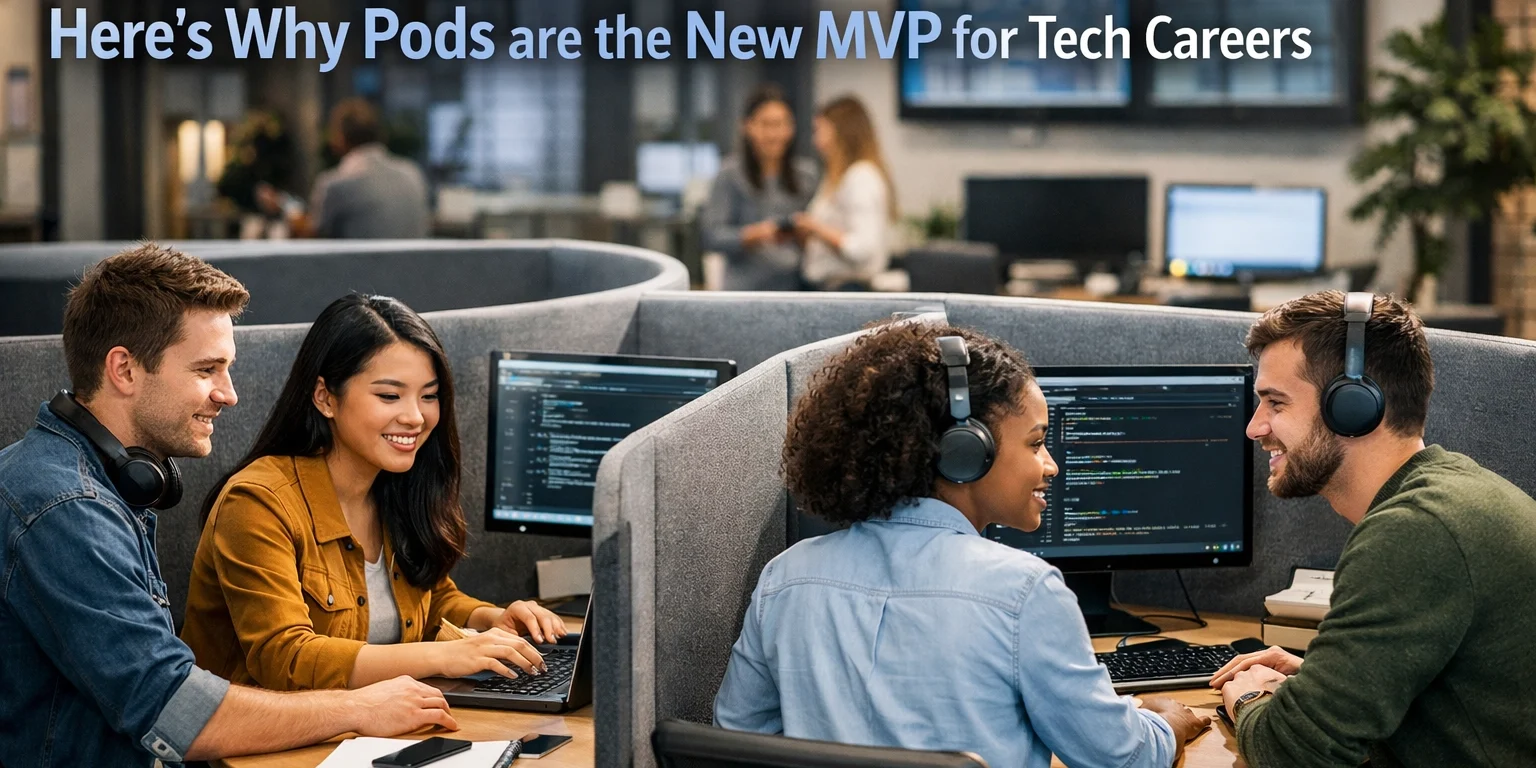
If you close your eyes and think of a "computer lab," what do you see? Probably a sterile room filled with rows of beige towers, the faint hum of cooling fans, and that one printer that’s been jammed since 2004. For decades, the computer lab was the sanctuary of the "tech-savvy," a place where you went to type up a report or, if you were feeling rebellious, play a pixelated game of Oregon Trail.
But it’s 2026, and the world has moved on. The traditional computer lab: once the crown jewel of school basements and office hallways: is looking a lot like a dinosaur in a world of space travel. In its place, a new MVP has emerged: the Pod.
At USA Entertainment Ventures LLC, we spend a lot of time looking at how infrastructure affects business outcomes. We’ve seen the shift firsthand. Pods aren’t just a "cooler" way to house computers; they are a fundamental rethinking of how we train the next generation of tech talent. From cybersecurity warriors to logistics wizards and content kings, the Pod is the new frontier of the modern career.
The Death of the Row: Why the Old Way Failed
The traditional computer lab was built on a "one size fits all" philosophy. You had forty identical stations, forty identical monitors, and one instructor at the front of the room. This worked fine when everyone was learning how to use Microsoft Word, but today’s tech careers are highly specialized.
Modern tech work isn't about sitting in a row; it’s about collaboration, multi-tasking, and immersion. You can’t learn how to defend a server from a ransomware attack while sitting shoulder-to-shoulder with someone trying to figure out how to crop a photo. The environment needs to match the mission.
That’s where the Pod comes in. Instead of a generic room, a Pod is a purpose-built environment designed for a specific career pathway. It’s the difference between a general-purpose gym and a specialized training facility for pro athletes.

Cybersecurity Pods: The Digital War Room
Let’s talk about cybersecurity. In the old days, you’d read a textbook about firewalls and maybe run a simulation on a local machine. Today, that’s like trying to learn to swim by reading a pamphlet.
Cybersecurity Pods are designed to be "Digital War Rooms." They often feature network simulation equipment and penetration testing tools that allow trainees to engage in real-world scenarios without the risk of taking down an actual corporate network.
According to industry research, these specialized environments allow for "practical preparation" that mirrors actual professional workflows. When a trainee is in a Pod, they aren't just a student; they are a security analyst in a SOC (Security Operations Center). Using tools like NETLAB+, these Pods simulate high-stakes environments where the "blue team" (defenders) and "red team" (attackers) can duke it out in real-time. This isn't just education; it’s a dry run for the real thing.
Logistics: The Invisible Backbone Goes High-Tech
When most people think of "logistics," they think of trucks and warehouses. But in 2026, logistics is a tech career. It’s about data, warehouse optimization, and fleet management.
A Logistics Pod doesn't look like a computer lab; it looks like a command center. Trainees here are working with industry-standard transportation management systems (TMS) used by Fortune 500 companies. They are managing real-time data feeds, tracking assets across the globe, and using AI to optimize routes.
The shift to Pods in this sector is driven by the need for "multi-device fluency." In a modern logistics job, you aren't just using a desktop. You’re using a tablet to scan inventory, a smartphone to communicate with drivers, and a dual-monitor setup to analyze supply chain bottlenecks. Pods are designed to accommodate this multi-screen reality, something a 1990s-style computer desk simply can't do.
Content Creation: The New Industrial Revolution
Perhaps the most visible shift toward Pod-based learning is in the world of content creation. The creator economy is no longer a "side hustle": it’s a multi-billion dollar industry.
A Content Creation Pod is essentially a mini-production studio. We’re talking professional-grade lighting, sound-treated walls, streaming stations, and high-end editing rigs. You can’t teach high-level video production or professional podcasting in a room with forty other people talking.
These Pods provide the privacy and the high-spec hardware required for 4K video rendering and real-time streaming. They allow creators to build their "personal brand" in an environment that mimics a professional studio. It’s about giving people the tools to turn their creativity into a career, and you need a specialized physical space to make that happen.
The "Soft" Benefits of the Pod System
While the hardware is important, the real magic of the Pod system lies in the "soft" skills it fosters.
- Collaboration: Pods are naturally designed for small-team interaction. In the real tech world, nobody works in a vacuum. You’re constantly communicating with your team, and the physical layout of a Pod encourages that "huddle" mentality.
- Scalability: For organizations like USA Entertainment Ventures LLC, scalability is key. Traditional labs are expensive to build and hard to move. Pods, especially those leveraging virtual environments, can be deployed across different locations: from urban centers to rural areas: ensuring that high-level tech training isn't just for people in big cities.
- Cost Efficiency: You might think a specialized Pod is more expensive, but research suggests otherwise. Organizations have reported cost savings of 50-75 percent compared to maintaining traditional, massive labs. Why? Because you’re only investing in the specific tech needed for that pathway, rather than over-speccing an entire room of forty computers.

Are Computer Labs Totally Dead? (The Hybrid Reality)
Now, let's be fair. We shouldn't go out and start a bonfire with all the old computer lab desks just yet. There is still a place for the traditional lab.
They remain vital for foundational skills. If you’re teaching someone how to use a mouse for the first time or providing basic internet access to a community that lacks it, a traditional lab is a great, equitable solution. They offer a structured environment with minimal distractions for those who just need a quiet place to work.
However, the "MVP" title has definitely moved to the Pod. Successful training programs in 2026 are adopting a hybrid approach: they use a small general lab for the basics and then transition students into specialized Pods as they choose their career paths.
Final Thoughts: The Future is Modular
As we look toward the rest of 2026 and beyond, the trend is clear. We are moving away from the "big room of computers" and toward specialized, modular, and collaborative environments.
For the CEO, the business owner, or the educator, the takeaway is simple: if you want to prepare people for the future of work, you have to give them a workspace that looks like the future. Whether it's defending against a cyber attack, managing a global supply chain, or producing a viral video series, the Pod is where the work gets done.
At USA Entertainment Ventures LLC, we believe in the power of infrastructure to transform lives and businesses. The computer lab isn't exactly "dead": it’s just evolved into something much, much better. It’s time to step out of the rows and into the Pod.
If you’re interested in how technology and infrastructure are reshaping business, check out our insights on Super Bowl 2026 fan engagement to see how physical spaces are being used to create massive tangible connections. The world is changing fast; make sure your "lab" is keeping up.





