
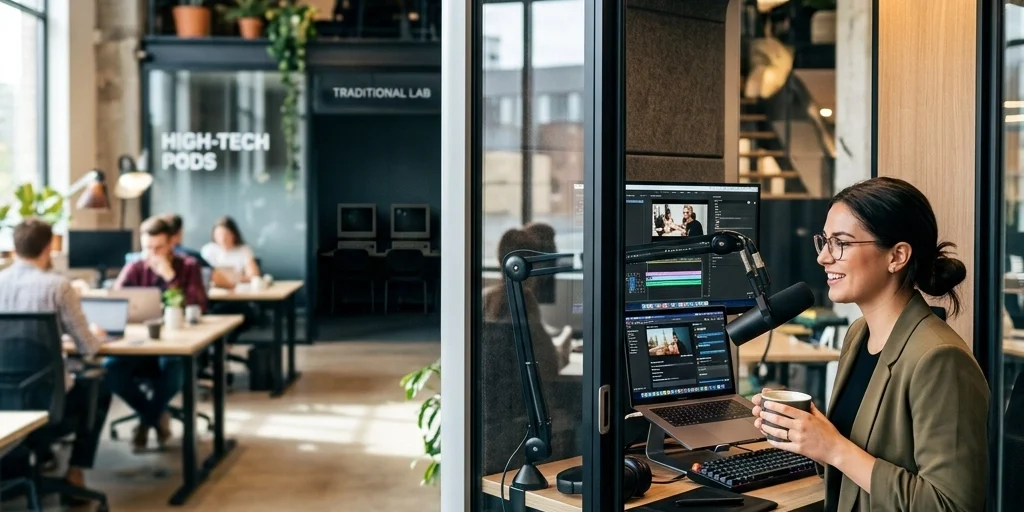
If you close your eyes and think of a "computer lab," what do you see? For most of us, it’s a windowless basement room filled with the hum of beige towers, the smell of ozone, and that one printer that was perpetually "low on toner" despite having been refilled yesterday. It was a place of utility: a necessity for those of us who didn’t have a $3,000 rig at home just to write a term paper.
But fast forward to 2026, and the landscape has shifted. The traditional computer lab isn’t just on life support; it’s largely been replaced by the "Bring Your Own Device" (BYOD) movement and the ubiquity of high-speed Wi-Fi. However, as the old-school lab dies, a new titan is rising from its ashes: the High-Tech Pod.
These aren't just desks with computers; they are the new headquarters for the modern content creator, the cybersecurity analyst, and the logistics strategist. They are specialized, modular, and built for a world where "just having a laptop" isn't enough to stay competitive.
The Slow Fade of the Beige Box
According to recent data, campus computer labs have seen a significant decline in usage over the last decade. The shift wasn't sudden, but it was decisive. Three main factors drove the stake through the heart of the traditional lab:
- Software as a Service (SaaS): We no longer need to go to a specific machine to use Photoshop or CAD software. Cloud-based licensing allows students and professionals to access heavy-duty tools from almost anywhere.
- The COVID-19 Pivot: The pandemic forced a global experiment in remote access. When we couldn't go to the lab, the lab (virtually) came to us.
- The Power of Portability: Modern laptops now pack more punch than the desktop towers of five years ago.
So, if everyone has a powerful laptop, why do we need physical infrastructure at all? The answer lies in the limitations of the "coffee shop" office. You can’t record a professional podcast in a Starbucks, and you certainly shouldn't be managing high-level logistics or cybersecurity protocols on a public, unsecured Wi-Fi network.
Enter the Pod: The Content Creator’s Sanctum
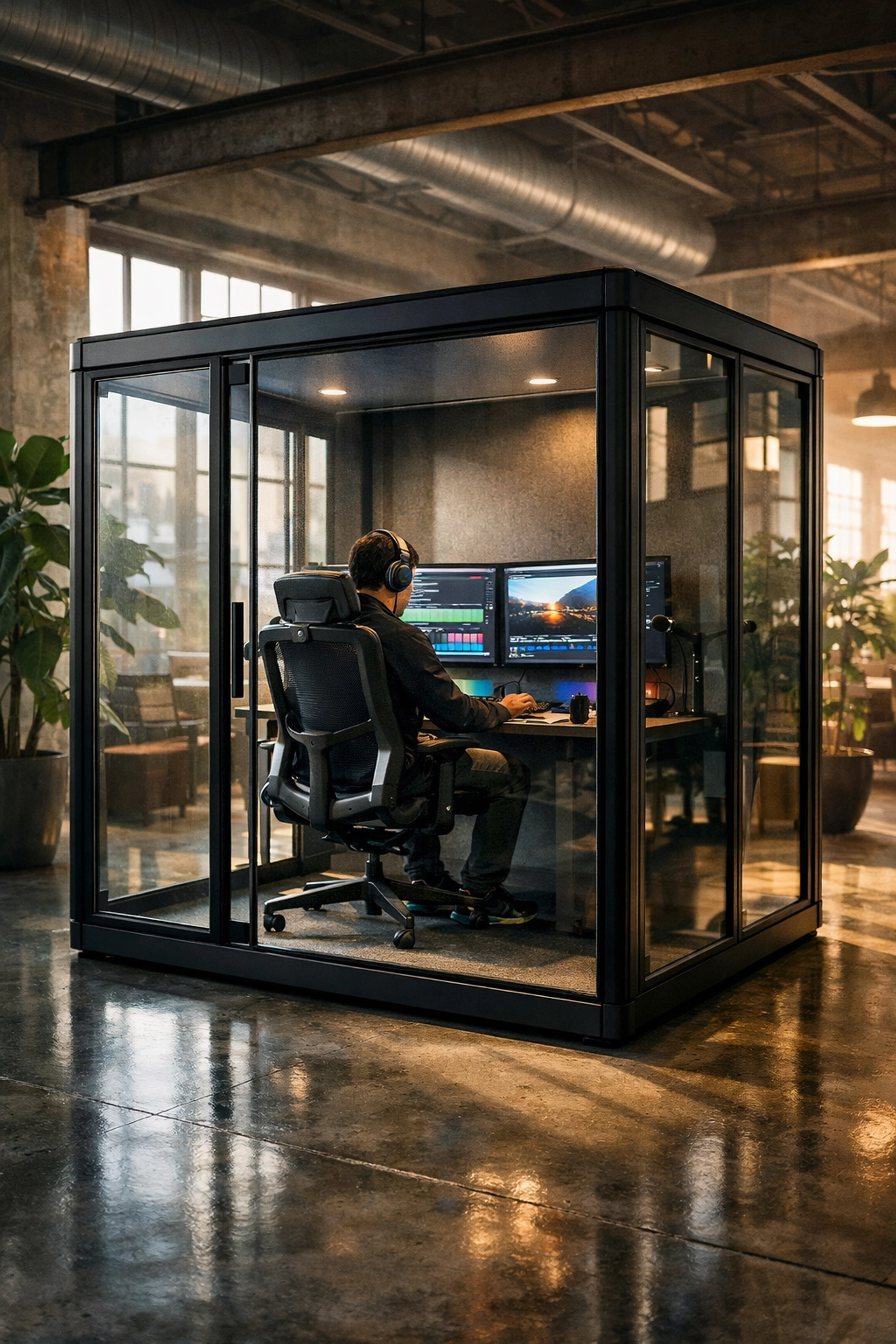
Content creation has evolved from a hobby into a multi-billion dollar industry. Whether it’s 4K video editing, 3D rendering, or high-fidelity streaming, the hardware requirements are staggering. This is where the "High-Tech Pod" comes in.
Think of a Pod as a modular, soundproof, tech-saturated environment designed for peak performance. It’s a "lab" in the sense that it provides specialized equipment, but it’s a "headquarters" in the sense that it’s where the actual business of creation happens. These units are appearing in co-working spaces, corporate offices, and even transit hubs.
For companies like USA Entertainment Ventures LLC, the focus is on how these physical spaces facilitate the next generation of media. It’s not just about having a screen; it’s about the ecosystem. We’re talking about integrated lighting, acoustic treatment, and 10-gigabit hardwired connections that make "uploading to the cloud" happen in seconds rather than hours.
Career Pathways: Logistics and the Moving Parts
When we talk about Pods, we aren't just talking about a box. We are talking about a massive logistics challenge. Imagine managing a fleet of 5,000 modular pods across the country. This has opened up an entirely new career pathway in high-tech logistics.
Modern logistics isn't just about moving boxes from A to B; it’s about the "Just-in-Time" deployment of technology. If a Pod in Denver needs a hardware upgrade to support the latest Unreal Engine update, the logistics chain behind that move is a complex dance of supply chain management and technical precision. Professionals entering this field are finding that the intersection of physical infrastructure and digital needs is a goldmine for career growth.
Cybersecurity: The Invisible Walls of the Pod
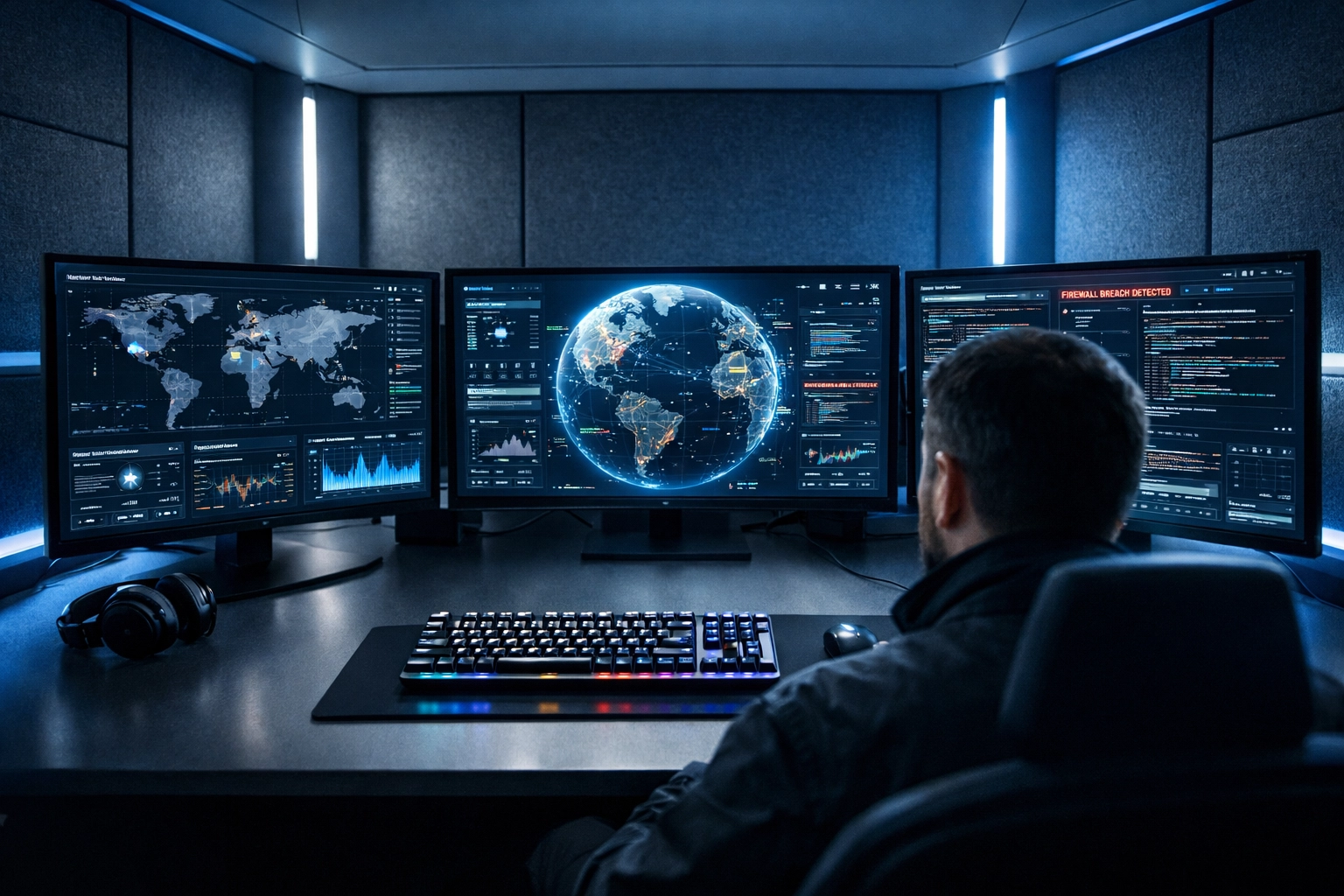
One of the biggest arguments for the return to physical "labs" or Pods is security. As we’ve seen in the news lately, remote work has created a massive surface area for cyberattacks. If you are a content creator working on a sensitive film project or a developer working on proprietary code, your home network is a liability.
High-tech Pods offer a "Clean Room" environment for data. By using specialized pods, companies can ensure that their creators are working behind enterprise-grade firewalls, using encrypted hardware tokens, and operating in an environment where "shoulder surfing" is impossible.
For those looking into career changes, cybersecurity within the realm of modular infrastructure is a booming niche. It’s one thing to secure a server in a data center; it’s another to secure a mobile, modular pod that might be sitting in a mall or a corporate lobby.
The Social Factor: Why Isolation Isn’t the Goal
You might think that a Pod sounds a bit lonely. Isn't the whole point of a "lab" to be around other people?
Interestingly, the new Pod model actually encourages better social interaction. By handling the "deep work" and high-tech needs inside the Pod, the common areas of offices and schools can return to being truly social spaces. You go into the Pod to crush your 8K video edit or run your cybersecurity audits, and you step out into the lounge to actually talk to people, rather than everyone sitting in a room together but ignoring each other because they’re wearing noise-canceling headphones.
This evolution is particularly relevant for entities like 360 Sports Media, where the blend of high-energy sports content creation and professional networking is key. The Pod provides the silence and power needed for the "grind," while the surrounding infrastructure supports the "hustle."
Redefining the "Headquarters"
The term "Headquarters" used to mean a giant building with a sign on top. Today, for a content creator or a small tech team, the HQ is wherever their most powerful tools are.
We are seeing a trend where businesses are moving away from long-term leases on massive office spaces and instead investing in "Pod Clusters." This allows for a decentralized workforce that still has access to centralized power. It’s a hybrid model that respects the flexibility of the modern worker while acknowledging that a MacBook Air on a dining room table is not a professional studio.
Key Takeaways for the Future-Focused:
- For Students: Don't mourn the computer lab; look for the "Innovation Hubs" and "Media Pods." These are where the real tools are.
- For Professionals: Consider how a modular "Pod" strategy might solve your cybersecurity and noise-pollution issues.
- For Career Changers: Look into logistics and cybersecurity roles that specifically deal with modular, high-tech infrastructure.
The Road Ahead
As we look toward the rest of 2026 and beyond, the trend is clear. We are moving away from "general purpose" spaces and toward "high-performance" environments. The old computer lab was a generalist; the new High-Tech Pod is a specialist.
Whether you're producing content for ZooMedia or managing the cybersecurity for a multi-national logistics firm, the environment you work in matters. The beige boxes may be dead, but the era of the high-tech, soundproof, neon-lit, ultra-fast Pod is just beginning.
In the end, it’s not about the computer; it’s about what the space allows you to do. And right now, the Pod is allowing us to do more than we ever thought possible in a basement lab thirty years ago.
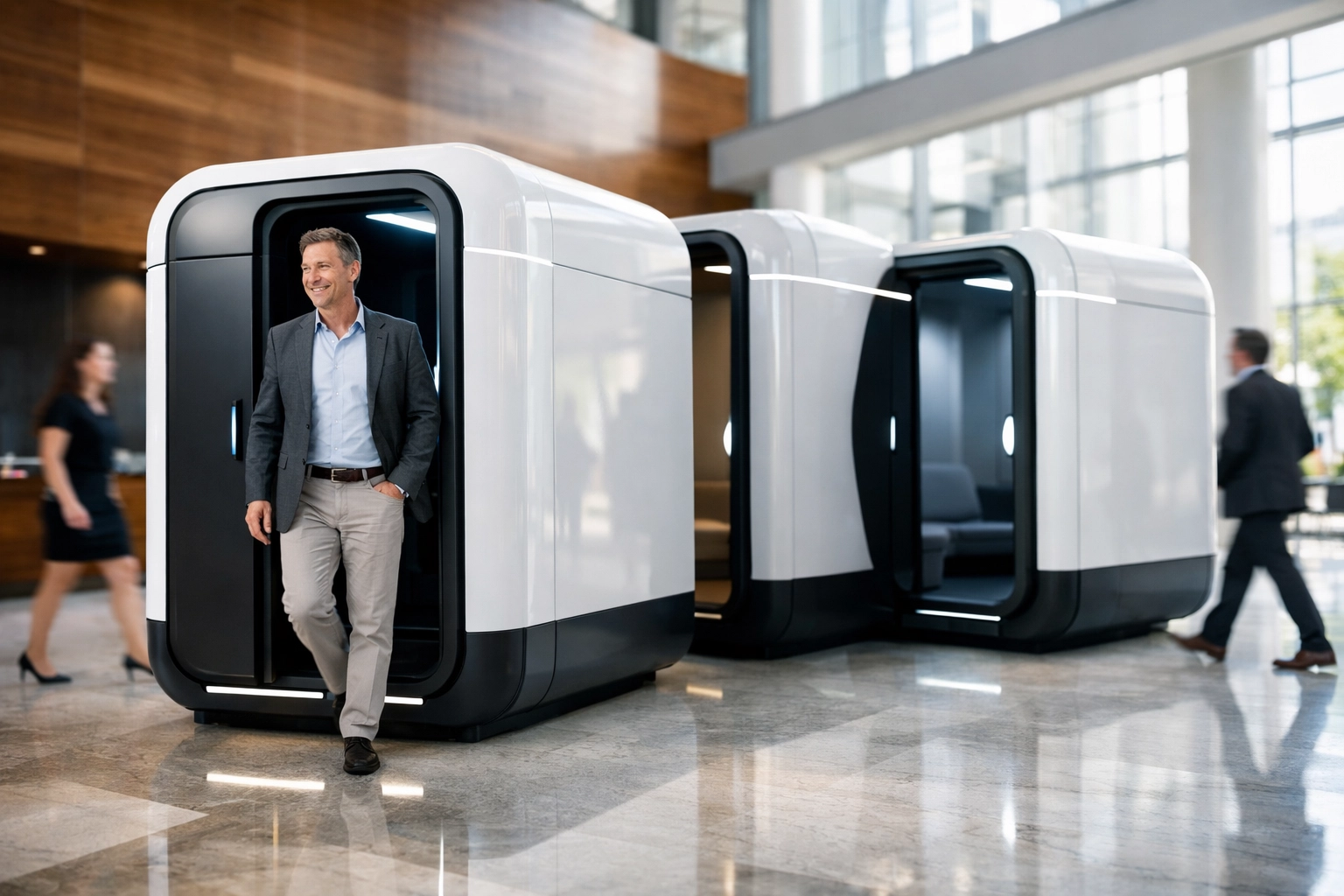
So, the next time you see a sleek, modular unit tucked into a corner of a building, don't think of it as a fancy phone booth. Think of it as the most powerful headquarters a creator could ask for.
To stay updated on the latest trends in entertainment, tech infrastructure, and business consulting, visit USA Entertainment Ventures LLC.





