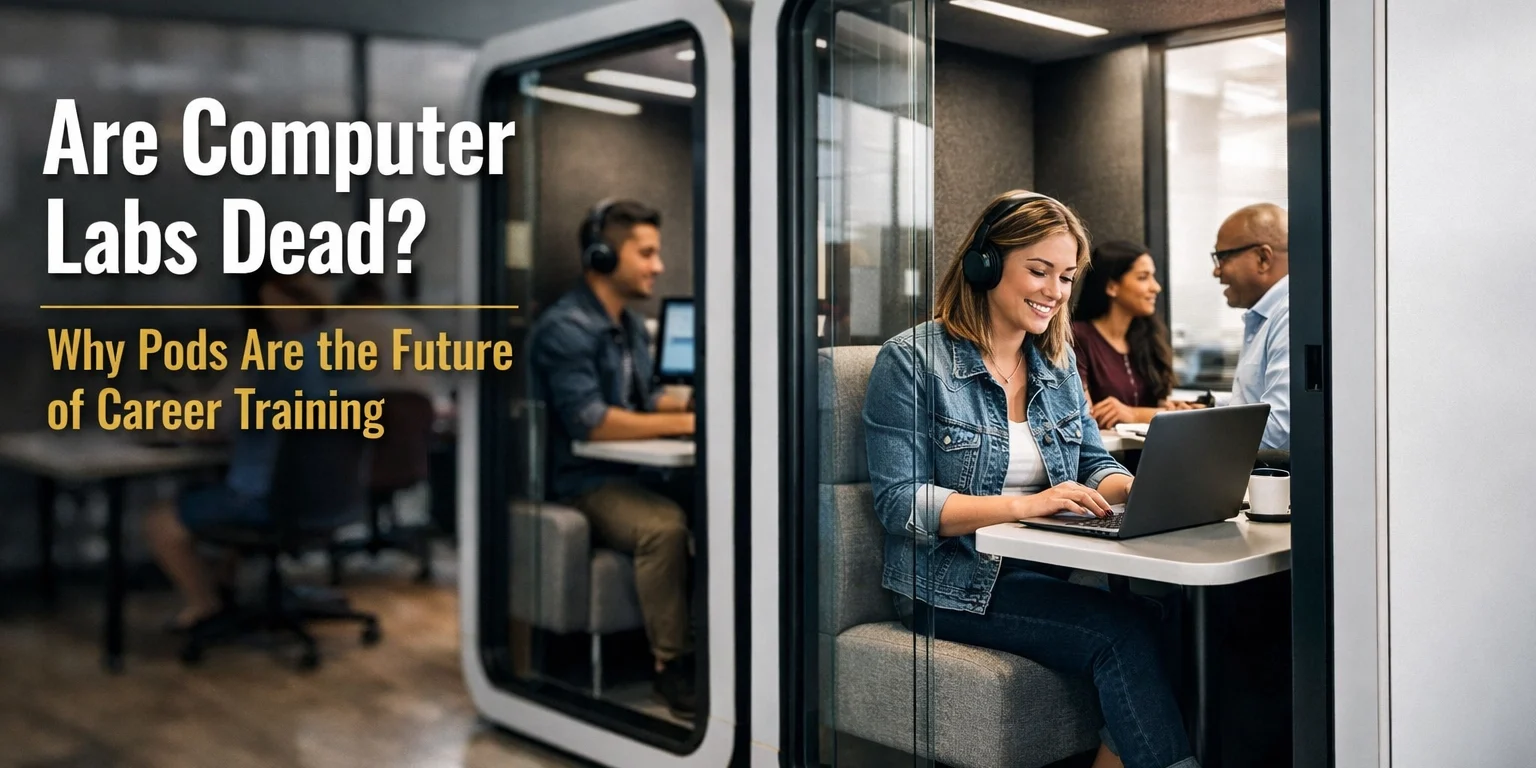
Remember computer labs? Those fluorescent-lit rooms filled with identical desktop towers, all running the same basic software package, where students would shuffle in for a scheduled hour of typing practice or internet research? They served their purpose for decades, offering access to technology that many couldn't afford at home. But let's be honest: they're about as relevant to modern career training as a rotary phone is to telecommunications.
The career training landscape has fundamentally shifted. Workers today need specialized skills aligned with specific industries, not general computer literacy. They need hands-on experience with the exact tools they'll use on day one of employment. And they need learning environments that mirror actual workplace conditions, not sterile rows of workstations running outdated software.
Enter the pod model: a purpose-built approach to career training that's replacing traditional computer labs across technical education centers, workforce development programs, and corporate training facilities. These aren't just computer labs with a fresh coat of paint. They represent a complete reimagining of how physical learning spaces can accelerate career readiness.
What Makes a Pod Different from a Lab
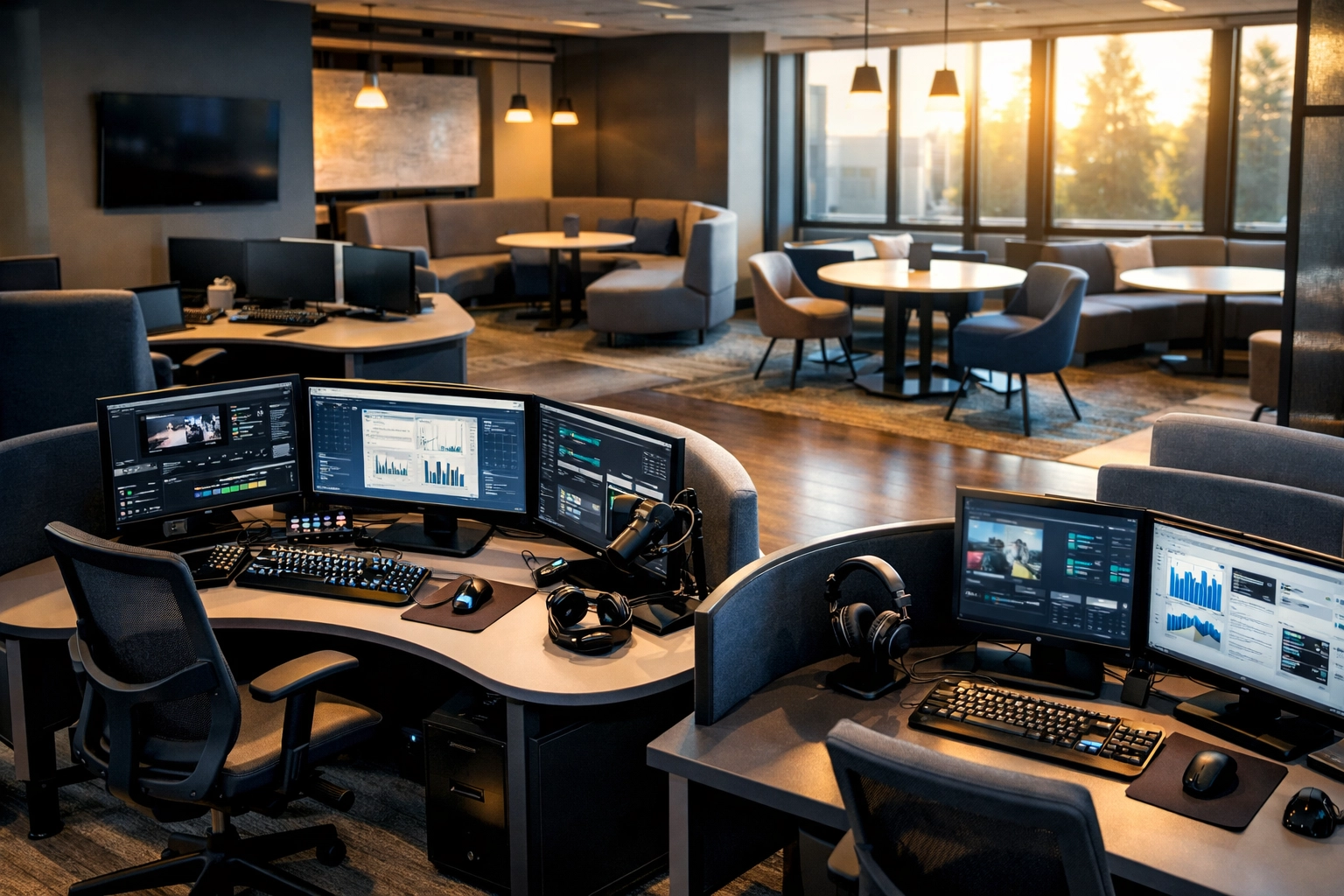
The distinction matters more than semantics suggest. Traditional computer labs operate on a one-size-fits-all philosophy. Install a standard software suite, arrange identical workstations in neat rows, and let different classes cycle through the same space throughout the day. It's efficient from a facilities management perspective, but it fails the fundamental test of career preparation.
Pods flip this model entirely. Each pod is designed around a specific career pathway, equipped with industry-standard tools, configured to match actual workplace environments, and staffed by professionals who understand the field's current demands. A cybersecurity pod doesn't just have computers: it has enterprise-grade network monitoring platforms, vulnerability scanning tools, incident response frameworks, and the same security information and event management systems that analysts use in corporate security operations centers.
The physical layout differs too. Instead of isolated workstations, pods incorporate collaborative spaces where teams tackle realistic projects together. Instead of generic furniture, they feature the equipment configurations professionals actually use. Instead of controlled, sanitized environments, they embrace the complexity and occasional chaos of real work.
This approach acknowledges a simple truth: career training isn't about learning to use computers. It's about learning to solve problems using the specific tools, workflows, and collaboration patterns that define success in a particular field.
Three Career Pathways Where Pods Excel
While the pod model can apply to numerous fields, three career pathways demonstrate its transformative potential with particular clarity: logistics, cybersecurity, and content creation. Each represents a high-demand field where the gap between traditional education and workplace reality has grown especially wide.
Logistics and Supply Chain Management
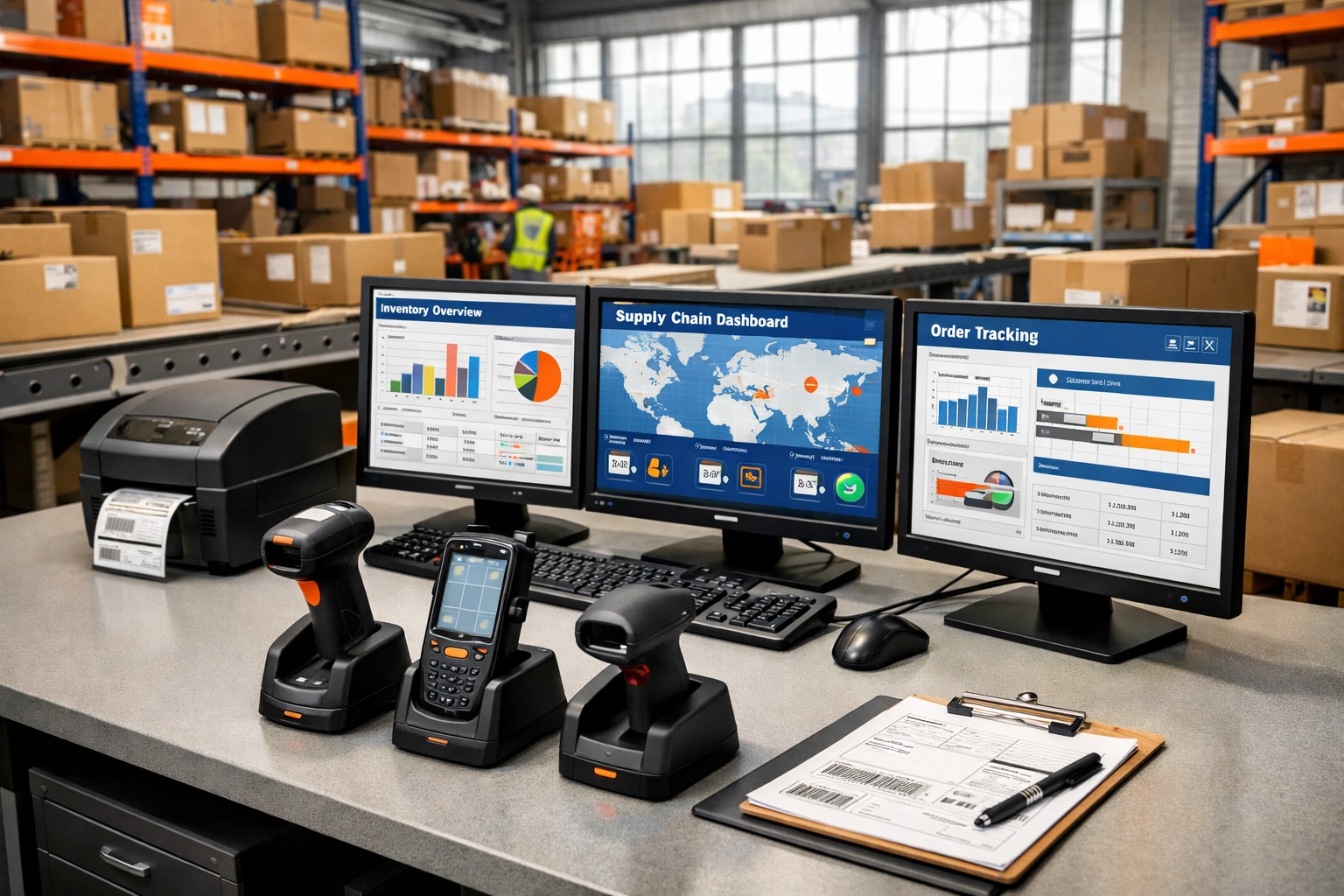
The logistics industry has undergone radical digitization over the past decade. Modern logistics professionals don't just manage inventory: they optimize complex supply chains using sophisticated warehouse management systems, transportation management platforms, and real-time tracking technologies. Yet traditional career training often teaches logistics concepts in theory while offering minimal exposure to the actual software systems that drive the industry.
A logistics pod changes this equation. It's equipped with the same warehouse management systems students will encounter at Amazon, Target, or regional distribution centers. Learners practice with radio-frequency scanners, barcode systems, and inventory optimization tools. They work through real scenarios: managing seasonal demand spikes, coordinating multi-modal transportation, responding to supply disruptions: using the actual digital infrastructure of modern logistics operations.
The result is graduates who arrive at their first logistics job already familiar with the tools in front of them. No lengthy onboarding period. No steep learning curve. Just professionals ready to contribute from day one.
Cybersecurity
The cybersecurity skills gap continues to widen, with hundreds of thousands of positions remaining unfilled across North America. Part of this gap stems from a fundamental challenge: aspiring security professionals can't practice on the tools they need to master. Enterprise security platforms, threat intelligence systems, and network monitoring solutions exist exclusively within corporate environments. They're not available for individual purchase, and they're too complex and expensive for traditional computer labs to maintain.
Cybersecurity pods solve this access problem. They provide shared access to professional-grade security infrastructure: the same tools used by analysts at Fortune 500 companies, government agencies, and specialized security firms. Students practice detecting intrusions on actual networks, responding to simulated incidents using real response frameworks, and analyzing threats with enterprise-level intelligence platforms.
This hands-on experience with authentic tools separates certified security professionals from those who've simply memorized concepts. Employers recognize this difference immediately. Pod-trained candidates arrive at interviews able to discuss specific tools, demonstrate practical skills, and apply their knowledge to real scenarios.
Content Creation and Digital Media

Content creation has evolved from a niche hobby into a legitimate career pathway, but the barrier to entry remains steep. Professional content creation requires expensive software: video editing suites that cost thousands of dollars annually, audio production platforms with enterprise licensing, graphic design tools with subscription models beyond most individuals' budgets. Traditional computer labs can't afford to maintain these tools, leaving aspiring creators stuck with consumer-grade alternatives that don't translate to professional environments.
Content creation pods bridge this gap by providing shared access to industry-standard tools. A properly equipped pod includes professional video editing workstations running Avid Media Composer or Adobe Premiere Pro, audio production systems with Pro Tools, graphic design stations with the full Creative Cloud suite, and even streaming infrastructure for live content production.
More importantly, these pods are configured as actual production environments. They're not just individual workstations: they're collaborative studios where teams practice the workflows used at media companies, marketing agencies, and production houses. Students learn to manage projects from concept through final delivery, working with the same tools and processes they'll use in professional settings.
The Core Advantages of Pod-Based Training
The shift from labs to pods delivers measurable advantages across multiple dimensions of career training effectiveness.
Workplace alignment eliminates the relearning curve. Traditional graduates often face weeks or months of adjustment when they encounter workplace tools for the first time on the job. Pod-trained professionals start contributing immediately because they're already familiar with the infrastructure. This immediate productivity translates directly into stronger employment outcomes and higher retention rates.
Shared access democratizes professional tools. Individual access to enterprise software and professional equipment remains financially impossible for most career learners. Pods make these tools available through shared infrastructure, ensuring that economic constraints don't prevent talented individuals from accessing the training they need for high-demand careers.
Constraint breeds creativity and adaptability. When learners must accomplish objectives using specific tools: rather than defaulting to familiar applications: they develop the problem-solving skills and adaptability that distinguish exceptional professionals from merely adequate ones. This forced engagement with authentic tools accelerates skill development in ways that generic environments never achieve.
Measurable outcomes transform training economics. Pod systems enable detailed tracking of certification pass rates, project completion metrics, and employment outcomes. This data transforms career training from an unmeasurable expense into a quantifiable investment with demonstrable returns. Programs can optimize curriculum, refine teaching methods, and prove value to funders and stakeholders with concrete evidence.
The Infrastructure Investment Challenge
None of this comes cheap or easy. Establishing purpose-built pods requires significant upfront investment: specialized equipment, professional software licenses, industry-standard infrastructure, and ongoing maintenance. Traditional computer labs spread costs across multiple programs through shared generic resources. Pods concentrate investment into specialized environments serving narrower populations.
This economic reality explains why pod adoption remains most developed in technical fields with clear workforce demand and strong industry partnerships. Employers willing to co-invest in training infrastructure that produces job-ready candidates help offset the costs. Workforce development agencies focusing on high-demand careers can justify the specialized investment through employment outcomes.
The transition from labs to pods won't happen uniformly or universally. General computer literacy training: teaching basic digital skills, word processing, internet navigation: still finds appropriate homes in traditional lab environments. Not every learning objective requires specialized infrastructure.
But for career training aimed at technical fields with specific tool requirements and clear industry standards, the pod model offers demonstrable advantages. As more programs adopt this approach and document outcomes, the evidence base supporting purpose-built learning environments will only strengthen.
Looking Forward
The computer lab served its era well. It democratized technology access when personal computers remained expensive and internet connectivity was scarce. But career training has outgrown this generic model. Modern workers need specialized skills developed in authentic environments using professional tools.
Pods represent the logical evolution: learning spaces purpose-built around career outcomes rather than equipment efficiency. As workforce demands continue shifting toward technical specialization, expect this model to expand beyond logistics, cybersecurity, and content creation into additional high-demand fields where the gap between generic training and workplace reality remains wide.
The question isn't whether computer labs are dead. It's whether career training programs will invest in the specialized infrastructure required to produce genuinely job-ready professionals. Those that make this transition position themselves at the forefront of workforce development. Those that cling to generic labs risk producing graduates unprepared for the technical demands of modern employment.
The future of career training is specialized, hands-on, and aligned with industry reality. That future is built in pods, not labs.