If you close your eyes and think of a "computer lab," what do you see? If you’re a child of the 80s or 90s, it’s probably a windowless room filled with beige towers, the faint smell of ozone, and a teacher yelling at you to stop playing Oregon Trail and start practicing your home row keys. Fast forward to Friday, April 10, 2026, and that image feels as ancient as a rotary phone or a physical map.
The traditional computer lab, those rows of tethered workstations where humans sat in silent, flickering isolation, is effectively on life support. But don't go mourning just yet. Computing hasn't left the building; it’s just changed its shape. We are moving away from the "lab" and into the "Pod."
At USA Entertainment Ventures LLC, we spend a lot of time looking at how infrastructure affects business outcomes. As a business consulting firm, we’ve seen the shift firsthand: the physical environment where your team works is no longer just a place to put desks, it’s a high-tech tool in its own right.
The Slow Fade of the Beige Box
Why are the old labs dying? It’s not a mystery. It’s a combination of BYOD (Bring Your Own Device) policies, the total dominance of cloud-based SaaS (Software as a Service), and a global realization during the early 2020s that we don't actually need to be chained to a specific desk to be productive.
When everyone has a smartphone in their pocket that has more computing power than the Apollo 11 guidance computer, and a laptop that can handle 4K video editing from a coffee shop, the "lab" starts to look like a museum exhibit. Schools and corporations alike are realizing that maintaining 500 identical PCs is a logistical nightmare and a budget black hole.
But here’s the kicker: while everyone has a device, not everyone has the right environment. That’s where the Pod comes in.
What Exactly is a "Pod"?
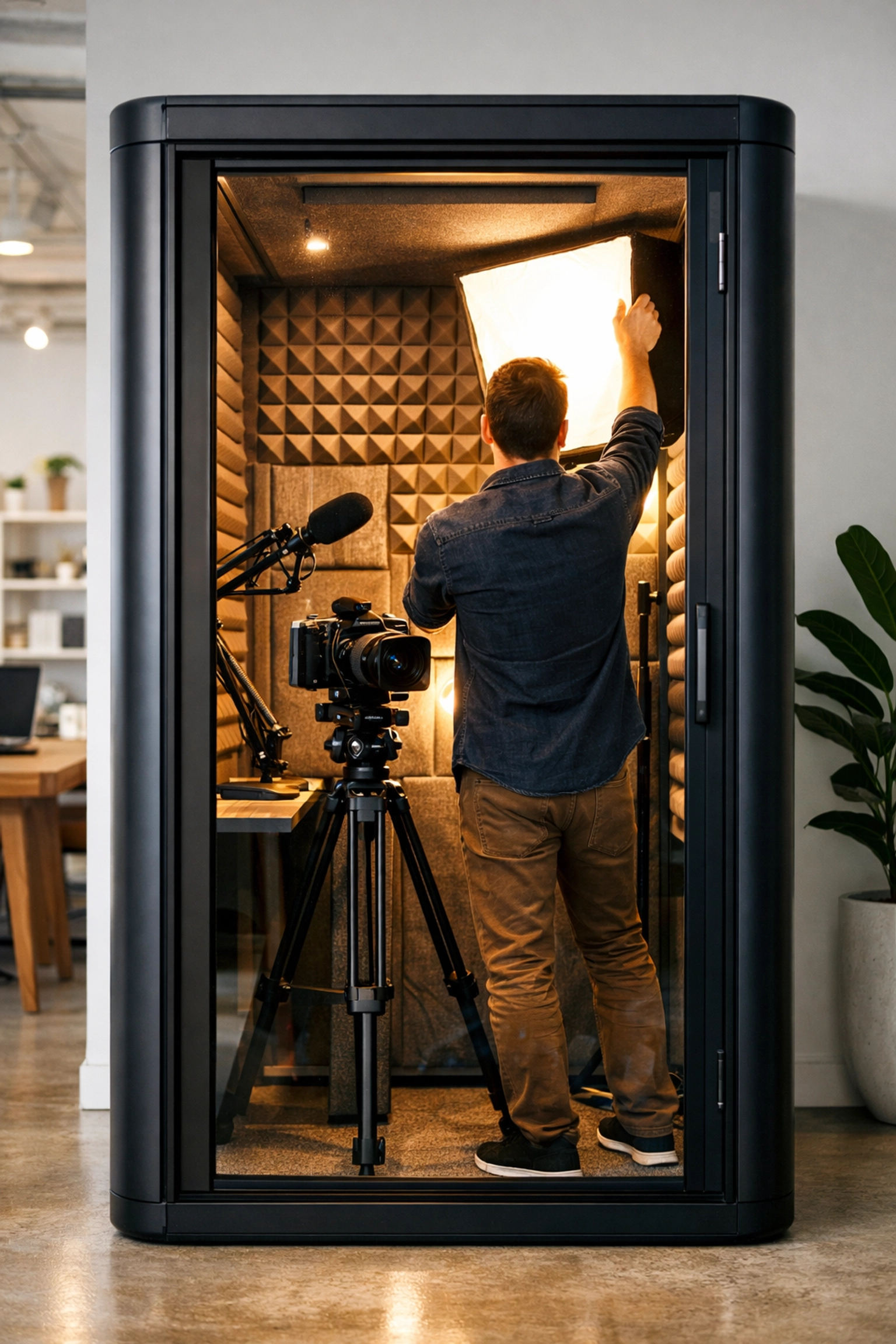
Think of a Pod as a modular, high-tech hub designed for a specific purpose. Instead of a room full of general-purpose computers, you have specialized zones. These are semi-private, acoustically treated, and hyper-connected spaces that allow for the kind of deep work and collaboration that an open-plan office (or a crowded library) destroys.
Pods represent the "decentralization" of the computer lab. Instead of one giant room, you have clusters of high-performance infrastructure distributed where people actually need them. They are the new inspiration for infrastructure because they are flexible, scalable, and, honestly, much cooler than a row of cubicles.
Logistics: The Skeleton of the New Infrastructure
When we talk about shifting from one big lab to a hundred distributed pods, we’re talking about a massive shift in Logistics. This isn't just about moving furniture; it’s about the "supply chain of productivity."
In the old days, logistics meant ordering 50 computers from a vendor and hiring a guy named Gary to plug them in once every five years. In 2026, logistics is a high-stakes career path. We’re seeing a surge in demand for professionals who can manage the lifecycle of modular tech.
If you're looking at career opportunities in this field, you’re looking at roles that blend project management with systems engineering. How do you deploy 200 collaborative pods across a multi-state campus? How do you ensure the hardware is refreshed without disrupting the workflow? It’s a puzzle that requires a logistical mind and a love for efficiency.

Cybersecurity: Guarding the Nodes
In a traditional lab, you had one big "perimeter." You put a firewall at the door (metaphorically speaking) and called it a day. But when your infrastructure is broken up into individual pods, the "attack surface" changes.
Every pod is a node. Every pod is an endpoint. This has turned Cybersecurity from a "back-room IT job" into the fundamental architecture of the modern workspace.
We are seeing a move toward Zero-Trust environments. In this model, the network assumes nothing is safe, not even the person sitting in Pod 42. Career pathways in cybersecurity are now focusing heavily on edge computing and decentralized security protocols. If you can secure a distributed network of high-tech pods, you’re basically a digital superhero.
For businesses, this is a consulting priority. You can't just buy a pod; you have to integrate it into a secure ecosystem. This is the kind of high-level strategy we discuss in our services division. It’s about protecting the talent while enabling the technology.
Content Creation: The Pod as a Studio
Perhaps the most exciting evolution of the "lab" is the rise of the Content Creation Pod.
Let’s be real: the "computer lab" of 2010 was for typing essays. The "Pod" of 2026 is for producing a global podcast, editing a VR experience, or streaming a high-definition tutorial to ten thousand people.
Content creation has moved from a hobby to a core business function. Companies now need in-house "creator spaces" that don't take up 2,000 square feet. A content pod is a marvel of infrastructure:
- Integrated 8K cameras.
- Sound-dampening materials that make a busy office sound like a professional studio.
- GPU-heavy workstations built specifically for rendering, not just browsing.
This shift has opened up massive career pathways for those who understand both the "art" and the "infrastructure." Being a content creator in 2026 isn't just about having a good personality; it's about understanding the high-tech environment that makes your work possible.

Why This Matters for Business Consulting
You might be wondering why a company like USA Entertainment Ventures LLC is writing about computer pods. The answer is simple: Efficiency is the ultimate entertainment.
Okay, that’s a bit witty, but the truth is that our about us story is rooted in helping businesses navigate change. When a company realizes its "tech lab" is a graveyard of unused equipment, that’s a consulting opportunity. We help them pivot to a pod-based infrastructure that actually drives ROI.
Modern infrastructure isn't about how many computers you have; it’s about how many "moments of inspiration" your environment facilitates. A pod provides the privacy, the power, and the focus that a traditional lab never could.
The Human Element: Collaboration Over Isolation
The biggest criticism of the old computer lab was that it was a lonely place. You sat shoulder-to-shoulder with people but never spoke to them.
The new "Pod" infrastructure is intentionally collaborative. Many pods are designed for two or three people, equipped with shared screens and interactive whiteboards. They are built for "Agile" workflows. They are where the brainstorming happens.
In our showcase, we’ve highlighted several projects where moving to modular, collaborative tech spaces revitalized a company’s culture. It turns out that when you give people a high-tech "home base" rather than a generic desk, they actually want to show up to the office.
Practical Takeaways for 2026 and Beyond
If you are an educator, a business owner, or an aspiring professional, here is the "Pod Reality Check":
- Stop buying "General" and start buying "Specific": Don't build a room for "computers." Build a room for "Video Production," "Data Analysis," or "Collaborative Design."
- Focus on the Network, not the Box: The hardware inside the pod will change every two years. The infrastructure: the power, the cooling, the fiber-optic backbone: is what stays.
- Invest in the "Soft" Infrastructure: Logistics and Cybersecurity are the two pillars that keep pods standing. If you’re looking for a career with longevity, start there.
- Embrace Modularity: The world moves too fast for permanent walls. If your tech infrastructure isn't on wheels (or at least easily movable), it’s already obsolete.
Final Thoughts: The Lab is Dead, Long Live the Pod
The death of the computer lab isn't a sign that we’re moving away from technology. It’s a sign that technology has become so integrated into our lives that it no longer needs its own dedicated "shrine."
The Pod is the new inspiration because it treats technology as a teammate, not a tool. It’s a specialized, secure, and mobile environment that empowers the next generation of logistics experts, cyber-warriors, and content creators.
At USA Entertainment Ventures LLC, we’re excited to see where this infrastructure goes next. Whether you're looking for internship opportunities to learn the ropes or you need high-level business consulting to redesign your workspace, the future is modular.
Have questions about how to transition your infrastructure? Check out our Q&A or reach out to us directly through our contact page.
The beige boxes are gone. The pods are here. It’s time to plug in.