If you close your eyes and think of a "computer lab," what do you see? If it involves rows of beige towers, tangled nests of VGA cables, and a carpet that hasn’t seen a vacuum since the early 2000s, you’re not alone. For decades, the computer lab was the holy grail of "high tech" in schools and office buildings. It was a place of fluorescent lights and the faint, rhythmic whirring of fifty cooling fans trying to keep outdated processors from reaching critical mass.
But it’s Friday, May 8, 2026. The world has moved on. The "Dusty Lab" is officially on life support, and the "Sleek Pod" has arrived to pull the plug.
The transition from sprawling, static computer rooms to modular, high-tech "Pods" isn't just an aesthetic upgrade. It’s a fundamental shift in how we approach logistics, cybersecurity, and content creation. Whether you are looking for career opportunities or trying to optimize a corporate footprint, understanding the "Pod" revolution is the key to staying relevant in the modern economy.
The Problem with the "Dusty Lab"
Traditional computer labs were built on a 20th-century philosophy: centralized resources. Because computers were expensive and heavy, you put them all in one room and made people come to them. This created several bottlenecks that modern business simply cannot afford.
First, there was the "Single Point of Failure" issue. If the lab’s cooling system went out, the entire operation shut down. Second, there was the lack of flexibility. If you wanted to pivot from teaching data entry to teaching drone logistics, you had to spend three months rewiring the entire room.
In a fast-paced environment, static infrastructure is a liability. According to recent industry observations, the cost of maintaining a traditional lab setup has increased by 40% over the last five years, largely due to energy inefficiency and the physical real estate costs of housing oversized equipment.

Enter the Pod: Modular, Mobile, and Magnificent
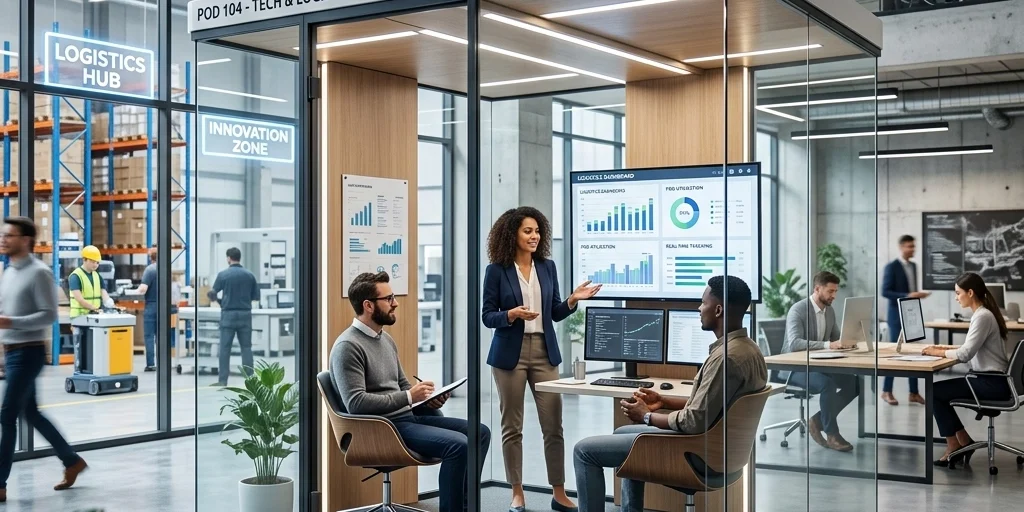
So, what exactly is a "Pod"? Think of it as a self-contained, high-performance ecosystem. Instead of a room filled with desks, a Pod is a modular unit: often soundproofed, climate-controlled, and pre-integrated with specific hardware and software for a dedicated task.
These aren't just fancy cubicles. Modern pods are designed with ergonomics and focused productivity in mind. They represent a "Plug-and-Play" approach to physical infrastructure. If a company needs to scale its logistics department, they don't lease a new floor and hire a contractor; they order five "Logistics Pods," drop them into their existing space, and they are operational by lunch.
1. The Logistics Revolution
Logistics is no longer just about moving boxes from Point A to Point B. In 2026, logistics is about data, real-time tracking, and automated fleet management.
Traditional labs weren't built for the sensory load of modern logistics. A "Logistics Pod" is equipped with wraparound displays, haptic feedback systems for remote drone piloting, and AI-driven dashboards that analyze supply chain disruptions in real-time. This specialized environment allows professionals to manage global operations without the distractions of a noisy, open-office plan. For businesses looking to optimize their supply chain, consulting with experts at USA Entertainment Ventures LLC can provide insight into how this hardware can be integrated into existing models.
2. Cybersecurity: The Digital Fortress in a Box
If there is one field where "dusty" and "old" are dangerous words, it’s cybersecurity. Hackers don’t use outdated tools, so the people stopping them shouldn't either.
Cybersecurity pods provide a "Zero Trust" physical environment. They are often air-gapped from the main office network and shielded against electromagnetic interference. When a security analyst steps into a pod, they are entering a high-security "War Room" that is physically and digitally optimized for threat detection. This level of isolation is impossible in a traditional lab where anyone can walk behind your monitor with a flash drive and a dream.

Career Pathways in the Age of Pods
The shift to pod-based infrastructure is creating a massive demand for new skills. We are seeing a convergence of physical logistics and digital expertise. Here are three career paths that are exploding thanks to this technology:
The Logistics Strategist
This isn't your grandfather’s warehouse manager. Today’s logistics strategist uses pod-based simulation environments to run "Digital Twin" scenarios of supply chains. They must be comfortable with AI-driven analytics and remote-operated hardware. If you enjoy solving puzzles on a global scale, this is the field for you.
The Cybersecurity Architect
As companies move toward pod-based security, they need people who understand both the software and the physical hardware requirements of these units. This role involves designing the "Fortress in a Box" and ensuring that the physical environment is as secure as the firewall.
The Content Creator (The Pro Version)
Forget the teenager in their bedroom. Professional content creation in 2026 happens in specialized "Media Pods." These units are soundproofed, equipped with 8K cameras, and integrated with real-time rendering farms. The career path for content creators has moved into the corporate world, where companies use internal pods to produce high-quality training, marketing, and internal communications at a fraction of the cost of a traditional studio.

Why "Sleek" Matters: The Psychological Impact
It might sound shallow to focus on "sleekness," but the design of our workspace profoundly affects our cognitive load. Traditional labs, with their clutter and poor lighting, contribute to mental fatigue and "technostress."
A sleek pod, by contrast, utilizes biophilic design: incorporating natural light patterns and ergonomic flow: to keep workers in a "flow state" for longer. When the environment is simple and intuitive, the brain can focus entirely on the task at hand. This is a core principle we follow at USA Entertainment Ventures LLC; we believe that business consulting should be simple and effective, much like the pods we advocate for.

The Economic Argument: Less Space, More Value
From a business perspective, the "Pod" model is a financial slam dunk. Real estate is expensive. Maintaining 5,000 square feet of "computer lab" that is only used 40% of the time is a waste of capital.
Pods allow for "Dense Infrastructure." Because they are self-contained, you can stack them, move them, or even place them in "dead zones" like warehouse corners or lobby mezzanines. They turn underutilized space into high-value production zones. This flexibility is essential for startups and established enterprises alike as they navigate the shifting sands of the 2026 economy.
For more information on how our company approaches these innovations, you can check out our showcase or read our disclaimer regarding technological implementations.
Future-Proofing Your Business
The "Dusty Lab" isn't just dying; it’s being replaced by something more agile, more secure, and frankly, much cooler. Whether you are a student looking at internships or a CEO looking to modernize your headquarters, the message is clear: modularity is king.
As we look toward the end of the decade, the line between our physical surroundings and our digital tools will continue to blur. The pod is the bridge between those two worlds. It provides the quiet needed for deep work, the security needed for high-stakes tech, and the mobility needed for a world that never stays still.

Final Thoughts
The era of the "General Purpose Computer Lab" is over. We are entering the era of the "Purpose-Built Pod." It’s a cleaner, faster, and more efficient way to work. So, if you’re still sitting in a room with beige monitors and a faint smell of 1998, it’s time to stand up, walk out, and find your pod.
If you have questions about how these trends might impact your specific industry, feel free to reach out to us via our contact page or browse our Q&A for more insights. The future is sleek, and it’s already here.