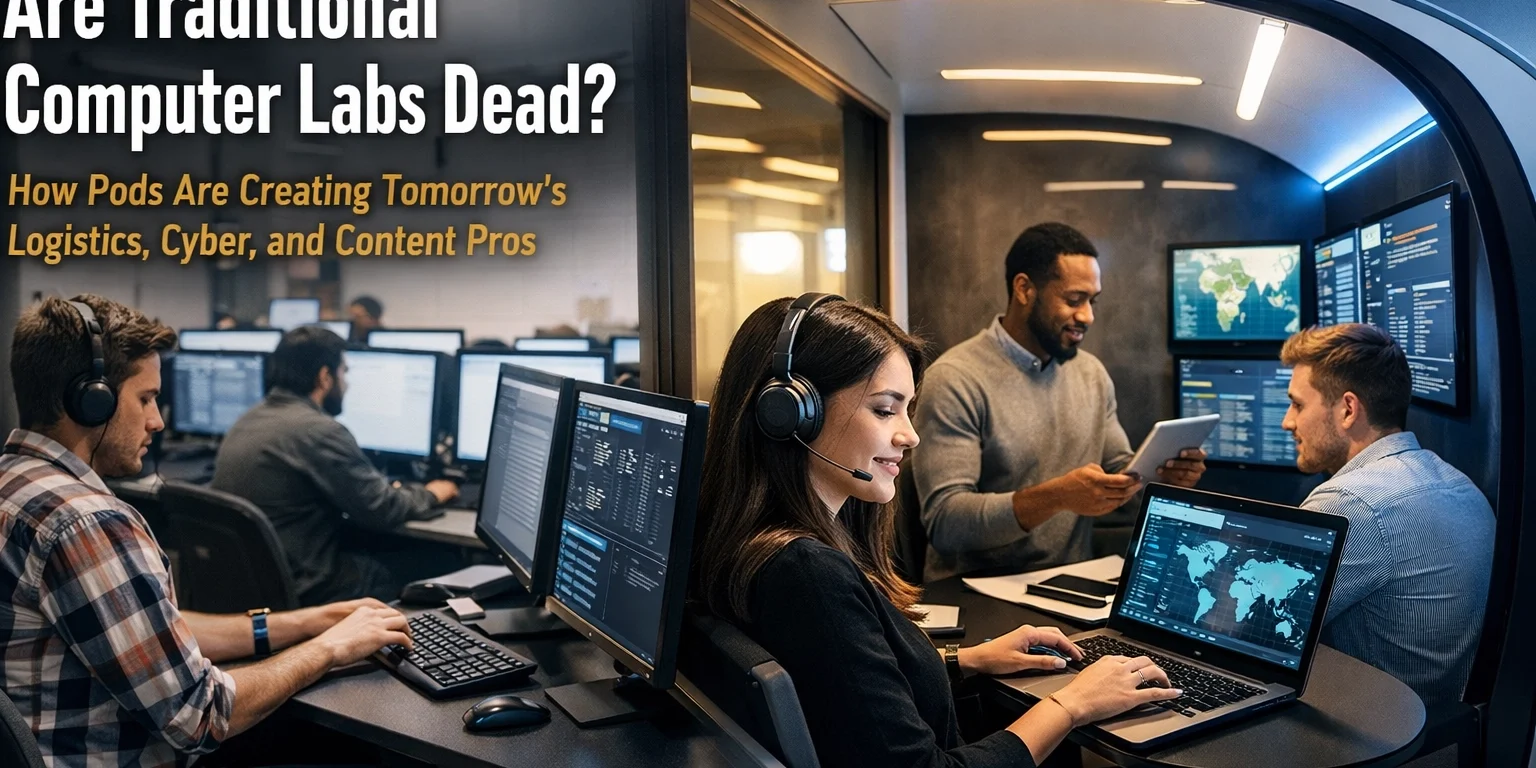
Remember the computer lab? Rows of beige towers humming under fluorescent lights, each station separated by those awkward dividers, and that one printer that jammed every third page? If you're feeling nostalgic, you might want to sit down. Those labs are going the way of the floppy disk.
With 95% of students now carrying their own laptops to class, the traditional computer lab has lost its primary reason for existing. What was once the democratizing force of campus technology: providing affordable computing power to students who couldn't afford their own machines: has become an expensive relic. Institutions are spending significant resources on hardware refreshes every few years while these spaces occupy premium real estate that could serve other purposes.
The data tells a compelling story. Universities like Penn State and Grand Valley State University tracked a significant decline in overall lab visits over the past decade. But here's the interesting part: when students did visit these labs, they spent more time per session working on substantive, focused tasks rather than basic assignments. This usage pattern revealed an important truth: students still need dedicated computing spaces, just not the ones we've been building.
Enter the Pod: Collaboration Meets Computing

Forward-thinking institutions aren't simply shuttering computer labs and calling it progress. Instead, they're reimagining these spaces as collaborative pods designed around how people actually work in 2026. These aren't your grandfather's computer labs. They're flexible, open environments where spontaneous collaboration happens naturally.
Modern pods feature large monitors mounted for group viewing, movable furniture that accommodates teams of varying sizes, and extended hours that respect the reality of student schedules. The rigid, isolating structure of traditional labs has given way to spaces that mirror contemporary workplace environments. Specialized software still justifies dedicated computing space, particularly when such tools remain impractical for individual laptops due to processing power, licensing costs, or security requirements.
These redesigned spaces also incorporate virtual lab capabilities accessible from any location with internet connectivity, laptop loan programs for students facing temporary hardware issues, and cloud-based resources that distribute IT services across campus rather than confining them to fixed locations. The result is a hybrid model that maintains accessibility while eliminating the inefficiencies of traditional labs.
Building Logistics Professionals in Pod Environments

The logistics industry has transformed into a technology-intensive field requiring proficiency in supply chain management software, data analytics platforms, and real-time tracking systems. Pod-based learning environments excel at preparing students for these careers because they replicate the collaborative, data-driven nature of modern logistics operations.
In a pod setting, students working on logistics projects can simultaneously access enterprise resource planning (ERP) systems, visualization tools, and communication platforms while collaborating face-to-face. This mirrors the actual work environment where logistics coordinators juggle multiple systems while coordinating with team members across departments. The large displays common in pod configurations prove particularly valuable when analyzing complex supply chain networks or tracking shipments across multiple time zones.
Moreover, logistics careers increasingly demand cross-functional collaboration skills. Professionals must communicate effectively with warehouse managers, transportation coordinators, customer service representatives, and executives: all while interpreting data to make time-sensitive decisions. Pod environments naturally cultivate these skills by creating spaces where diverse perspectives come together around shared challenges. Students learn to present data visually, defend their analytical conclusions, and incorporate feedback in real-time: all essential competencies in logistics roles.
The specialized software used in logistics education, from transportation management systems to warehouse simulation platforms, often requires computing power and licensing structures that make individual installation impractical. Pods maintain centralized access to these professional-grade tools while allowing students to collaborate on projects that require collective problem-solving.
Cybersecurity Training Demands Collaborative Pods
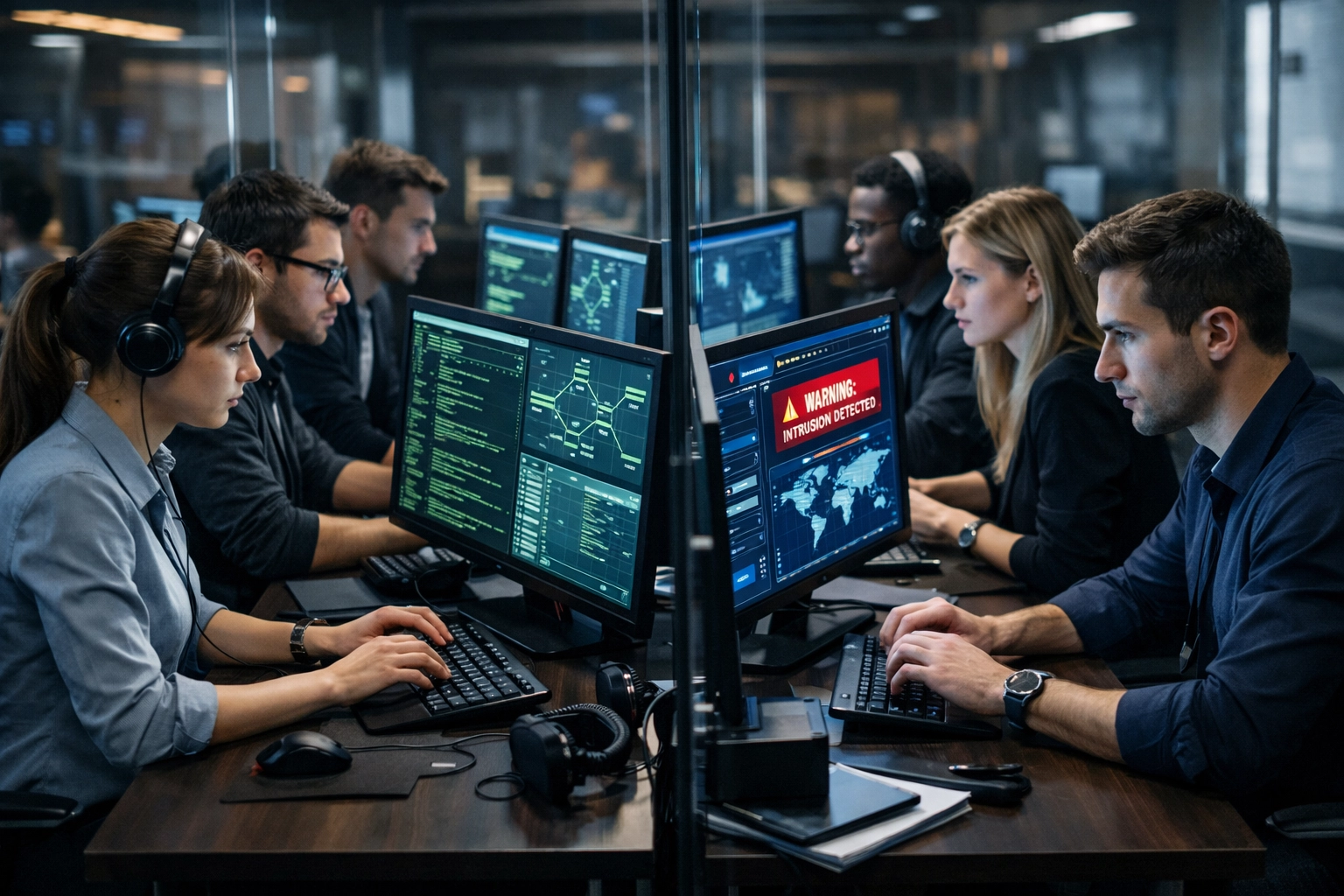
Cybersecurity might seem like a solitary pursuit: the lone hacker in a darkened room, lines of code scrolling across multiple monitors. Reality tells a different story. Modern cybersecurity operations depend on teams working together to identify threats, coordinate responses, and implement defensive measures across complex networks.
Pod-based learning environments serve cybersecurity education particularly well because they enable students to conduct red team versus blue team exercises, where one group attempts to penetrate a network while another defends it. These scenarios require constant communication, strategy adjustment, and collaborative problem-solving: all occurring in real-time. Traditional computer labs, with their isolating dividers and individual workstations, actively hindered this type of collaborative learning.
Security operations centers (SOCs) in professional settings feature multiple analysts monitoring threat dashboards, sharing intelligence, and coordinating responses. Pods replicate this environment by providing shared displays where teams can collectively analyze network traffic, identify anomalies, and develop mitigation strategies. Students learn to articulate technical findings to non-technical team members, a critical skill given that cybersecurity professionals must regularly communicate with executives, compliance officers, and other stakeholders.
The specialized tools required for cybersecurity education: from vulnerability scanning software to penetration testing platforms: often require isolated network environments and significant computing resources. Pods can maintain these sandboxed environments while allowing multiple students to work together on complex security challenges. Virtual lab components extend this capability, enabling students to access secure environments remotely while still benefiting from collaborative learning when they work in pod spaces.
Additionally, cybersecurity careers require staying current with rapidly evolving threats and defensive techniques. Pod environments facilitate peer learning, where students share newly discovered vulnerabilities, discuss emerging attack vectors, and collectively develop defensive strategies. This collaborative approach to continuous learning mirrors professional development in the cybersecurity field.
Content Creation's Natural Home in Pod Spaces

Content creation has exploded as a career field, encompassing video production, graphic design, podcast creation, social media management, and multimedia storytelling. These disciplines share a common requirement: specialized software that demands significant computing power and collaborative workflows that benefit from shared creative spaces.
Pod environments excel at supporting content creation education because modern content rarely emerges from individual effort. Video projects require coordination between videographers, editors, sound designers, and scriptwriters. Graphic design often involves feedback loops between designers and clients or team members. Podcasts need coordination among hosts, audio engineers, and promotional specialists. The collaborative nature of pod spaces matches the collaborative reality of professional content creation.
The large displays common in pod configurations prove invaluable for content review and critique. Teams can gather around a monitor to evaluate rough cuts, provide feedback on design iterations, or discuss narrative structure: all activities that feel awkward when hunched around a laptop screen. This mirrors professional environments where creative teams regularly convene to review work-in-progress and provide collective input.
Content creation software: from Adobe Creative Suite to professional video editing platforms: requires computing power that exceeds what many students can afford in personal machines. Pods maintain access to professional-grade tools while allowing students to learn collaborative workflows. A student might capture footage on personal equipment, then move to a pod environment where they access high-powered editing stations while consulting with peers who provide fresh perspectives on their work.
Furthermore, content creation increasingly demands cross-platform thinking. A single project might require creating video content, designing accompanying graphics, writing social media copy, and analyzing engagement metrics. Pod environments facilitate this integrated approach by enabling teams to work across multiple tools and platforms simultaneously, preparing students for the multi-disciplinary nature of content careers.
The Future of Learning Infrastructure
Traditional computer labs served their purpose in an era when personal computing remained financially out of reach for many students. That era has passed. The question isn't whether traditional labs will disappear: usage trends already answer that definitively. The question is what replaces them.
Pod-based environments represent a thoughtful evolution rather than simple elimination. They maintain the accessibility and specialized resources that justified computer labs while eliminating the isolation and inefficiency that made those spaces increasingly obsolete. By creating flexible, collaborative environments equipped with professional-grade tools, institutions prepare students for careers that demand both technical proficiency and teamwork skills.
As career pathways in logistics, cybersecurity, and content creation continue expanding, the physical infrastructure supporting education in these fields must evolve accordingly. Pods aren't just about saving money or following trends: they're about creating learning environments that reflect the collaborative, technology-intensive nature of contemporary work.
The traditional computer lab might be dead, but what's emerging in its place looks far more alive. And considerably more useful for preparing the professionals these industries actually need.