
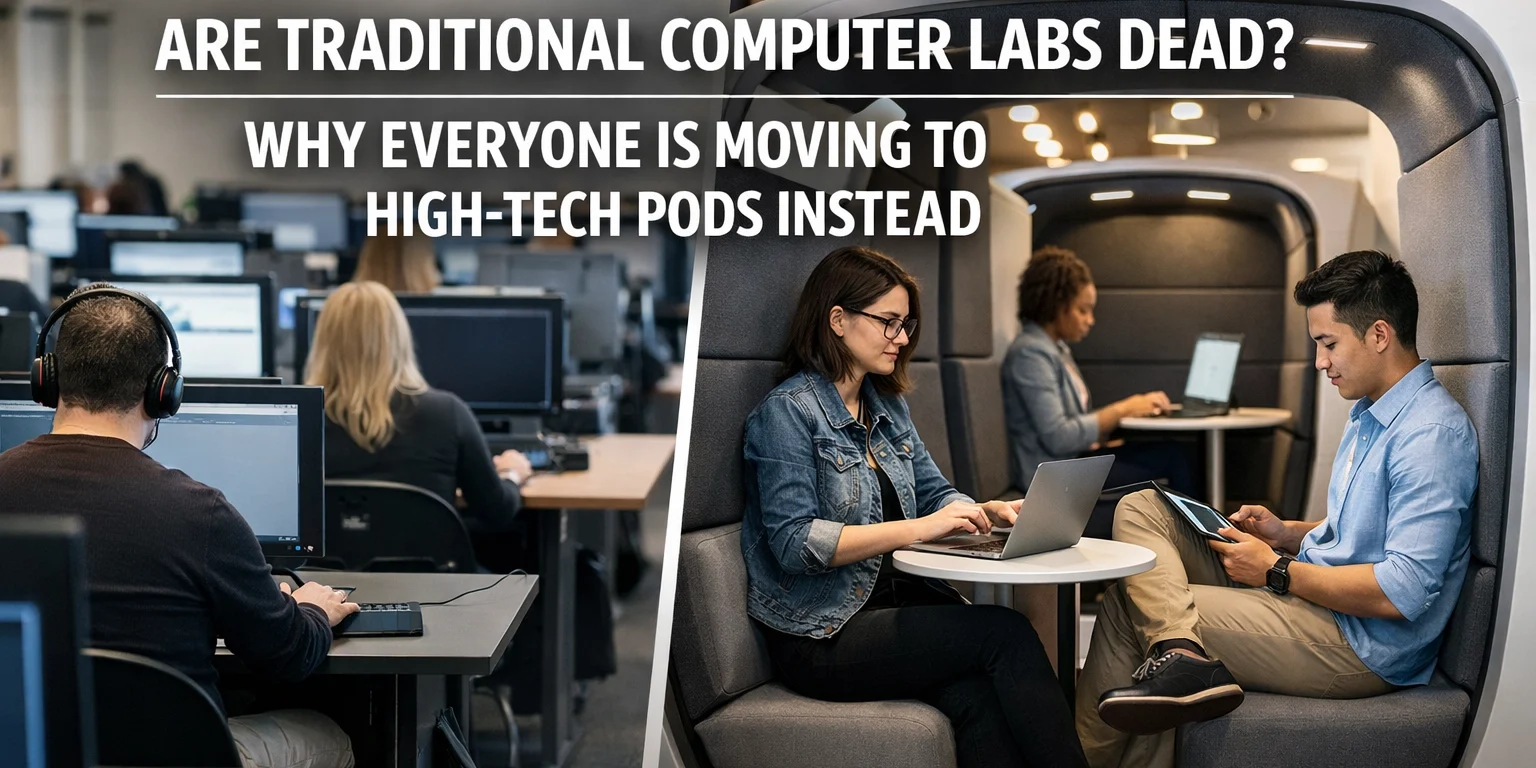
Let’s take a quick trip down memory lane. Close your eyes and think about the "Computer Lab" of the early 2000s. You probably see a windowless room, rows of beige towers humming like a swarm of bees, and those wonderful mechanical mice with the little rubber balls that everyone used to steal. It was the peak of high-tech back then, but if you walked into that same room today, it would feel less like a center for innovation and more like a museum for obsolete plastic.
The truth is, the traditional, fixed computer lab is on life support. Across the country, schools, universities, and corporate training centers are realizing that the old model of "30 computers in a locked room" just doesn’t cut it anymore. Instead, the world is moving toward High-Tech Pods. These modular, flexible, and highly specialized units are the new gold standard for infrastructure.
But why the sudden shift? And more importantly, what does this mean for the next generation of professionals in logistics, cybersecurity, and content creation? Let’s dive into why the beige boxes are dying and why the pod is the future.
The Problem with the "Big Room" Model
Traditional computer labs face three major enemies: cost, inflexibility, and the dreaded "hardware refresh cycle."
If you’re running a business or an educational institution, physical space is your most expensive asset. Dedicating a 1,000-square-foot room to a single purpose: especially when that room sits empty for 60% of the day: is basically like burning money to keep warm. It’s inefficient.
Then there’s the hardware. Research indicates that institutions face a massive financial burden maintaining fixed rooms. Top-of-the-line machines need to be replaced roughly every four years to stay relevant. When you have to replace 50 machines at once, along with the networking, the specialized furniture, and the HVAC systems required to keep those machines from melting, you’re looking at a budget nightmare.
High-tech pods solve this by being "right-sized." Instead of a generic room for everyone, you have specialized pods for specific tasks. This shift alone can lead to cost savings between 50 and 75 percent. That is not a typo. By focusing resources on smaller, high-intensity units rather than sprawling, underutilized labs, organizations can do more with significantly less.

Cybersecurity: The Sandbox in a Box
Let’s talk career pathways. One of the biggest drivers for the pod movement is the explosion of the cybersecurity industry. You can’t exactly teach "ethical hacking" on a standard school network. If a student makes a mistake or a "test virus" gets loose on a traditional lab’s shared network, you could accidentally take down the entire building’s payroll system.
This is where pods shine. A cybersecurity pod acts as a "sandboxed" environment. It’s a self-contained ecosystem with its own servers and network switches. This allows students and trainees to simulate cyber-attacks, defend against ransomware, and practice digital forensics in a safe, isolated space.
By using these pods, institutions can provide high-level training that actually mirrors the real-world environments professionals will encounter. If you’re looking into our services or exploring career opportunities, you’ll see that the demand for these specialized environments is skyrocketing. The future isn't about being a general "computer guy"; it's about having the specific, hands-on experience that only a specialized pod can provide.
Logistics: The Power of Mobility
One of the coolest things about the pod model is that it doesn’t have to stay in one place. Traditional labs are bolted to the floor. Pods, however, can be mobile.
We are seeing a massive trend in "logistics-as-a-service" for education and training. Imagine a high-tech cybersecurity or content creation pod that can be loaded onto a truck and deployed to a rural community, a corporate headquarters, or even a local event.
This mobility bridges the "equity gap." Instead of requiring students or employees to travel hours to reach a high-tech facility, the facility comes to them. For those interested in the logistics side of things, this creates an entire career path in the management, deployment, and maintenance of mobile tech infrastructure. It’s about more than just moving boxes; it’s about managing complex, high-value technical assets across a geographic network.

Content Creation and the "Creator Economy"
If you’ve spent any time on YouTube or TikTok, you know that content creation is no longer a hobby: it’s a multi-billion dollar industry. But creating high-quality 4K video, 3D animations, or VR experiences requires massive processing power.
Traditional labs often struggle here because "generic" computers aren't built for heavy rendering. High-tech pods, however, are often built as dedicated "Creative Suites." These pods come equipped with the high-end GPUs, dual-monitor setups, and acoustic treatments necessary for professional-grade production.
Think of it as a professional studio that fits in a fraction of the space. For students looking to break into the entertainment or digital media industries, training in these pods is a game-changer. They aren't just learning software; they are learning how to operate in a professional-grade physical environment.
Why the Transition is "Mixed" (But Inevitable)
Now, to be fair, the old-school lab isn't going to vanish overnight. As our research shows, many institutions are still in a "transition phase." Some are turning their old labs into "Collaborative Learning Spaces": more of a lounge vibe with flexible seating and interactive screens.
But the "hard" work: the coding, the rendering, the hacking, the heavy lifting: is moving to the pods. Larger institutions with the budget for innovation are already there. They realize that the pod model is more sustainable. If technology changes in two years, you don't have to renovate a whole room; you just swap out a pod or upgrade its internal components.
It’s about being agile. In the modern business world, agility is the only way to survive. If you’re curious about how these shifts affect the broader landscape of entertainment and business, checking out our Q&A or our digital insights can give you a clearer picture of where the puck is headed.
The Future: Pods as the "New Normal"
So, are computer labs dead? The traditional ones? Pretty much. They are the landline phones of the educational world. They still exist, but nobody is excited to use them.
The future belongs to the pod. These units are more than just a place to sit; they are career-launching platforms. Whether you are aiming for a role in cybersecurity, managing the logistics of mobile tech units, or becoming the next big content creator, the infrastructure you train on matters.
At USA Entertainment Ventures LLC, we keep a close eye on these trends because they dictate how we approach consulting and business development. The physical spaces where work happens are changing, and the people who adapt to these new "High-Tech Pods" will be the ones leading the charge into the 2030s.

Practical Takeaways for Decision Makers
If you are a business owner or an administrator looking at your current infrastructure, here are a few things to consider:
- Assess Your "Dead Space": How often is your current computer lab actually full? If it's less than 50% of the time, you are wasting money on real estate.
- Specialization over Generalization: Stop buying 100 "okay" laptops. Buy 10 "incredible" specialized pods that serve specific high-value career paths.
- Think Mobile: Can your tech move? If it can't, you're missing out on the flexibility that modern logistics can provide.
- Focus on Outcomes: Don't build a room; build a career pathway. A pod should be a direct bridge to a job in cybersecurity, logistics, or media.
The era of the "one-size-fits-all" computer lab is over. It’s time to embrace the modular, the mobile, and the specialized. The pod isn't just a piece of furniture: it’s the future of how we learn and work.
If you want to learn more about how we’re navigating these changes in the industry, feel free to visit our About Us page or Contact us directly. We’re always looking for what’s next.





