
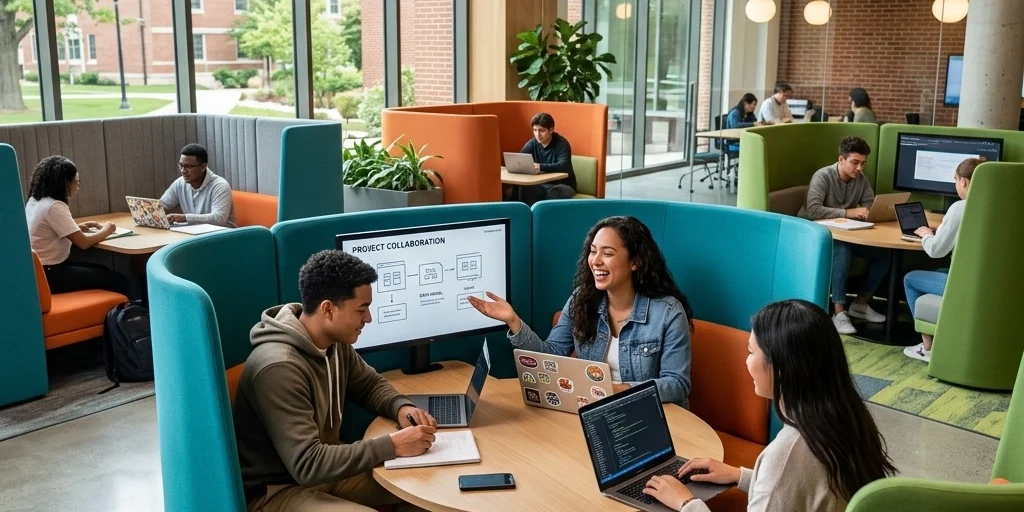
If you close your eyes and think of a "computer lab," what do you see? For most of us, it’s a dimly lit basement room filled with the hum of a hundred cooling fans, rows of beige towers, and the faint, unmistakable scent of stale coffee and ozone. It was the place where you’d pull an all-nighter to finish a term paper because your own laptop: if you even had one: was essentially a glorified typewriter.
Fast forward to April 14, 2026. The world has changed, and so has the hardware. Today’s students are walking around with more computing power in their backpacks than the average university lab had in its entire inventory a decade ago. This shift has left colleges asking a fairly existential question: Are traditional computer labs dead?
The short answer? Yes. The slightly longer answer? They’re being reincarnated as something much cooler, much more flexible, and infinitely more useful: The Pod.
At USA Entertainment Ventures LLC, we’ve spent a lot of time looking at how physical infrastructure meets digital demand. Whether you’re looking at consulting or media, the trend is clear: modularity is king.
The Slow Fade of the "Row of Desks"
For years, the computer lab was a necessity because hardware was expensive and immobile. If you needed to use AutoCAD, Photoshop, or a high-end compiler, you had to go to the machine. But the "Bring Your Own Device" (BYOD) revolution effectively killed that model.
According to recent data from early 2026, institutions like the Illinois Institute of Technology have slashed their physical PC counts by nearly 50%. Why? Because maintaining 1,000 desktop units that require a hardware refresh every three years is a financial nightmare. It’s not just the cost of the computers; it’s the real estate. In a world where campus space is at a premium, having a room that sits empty for 12 hours a day is a waste of business resources.
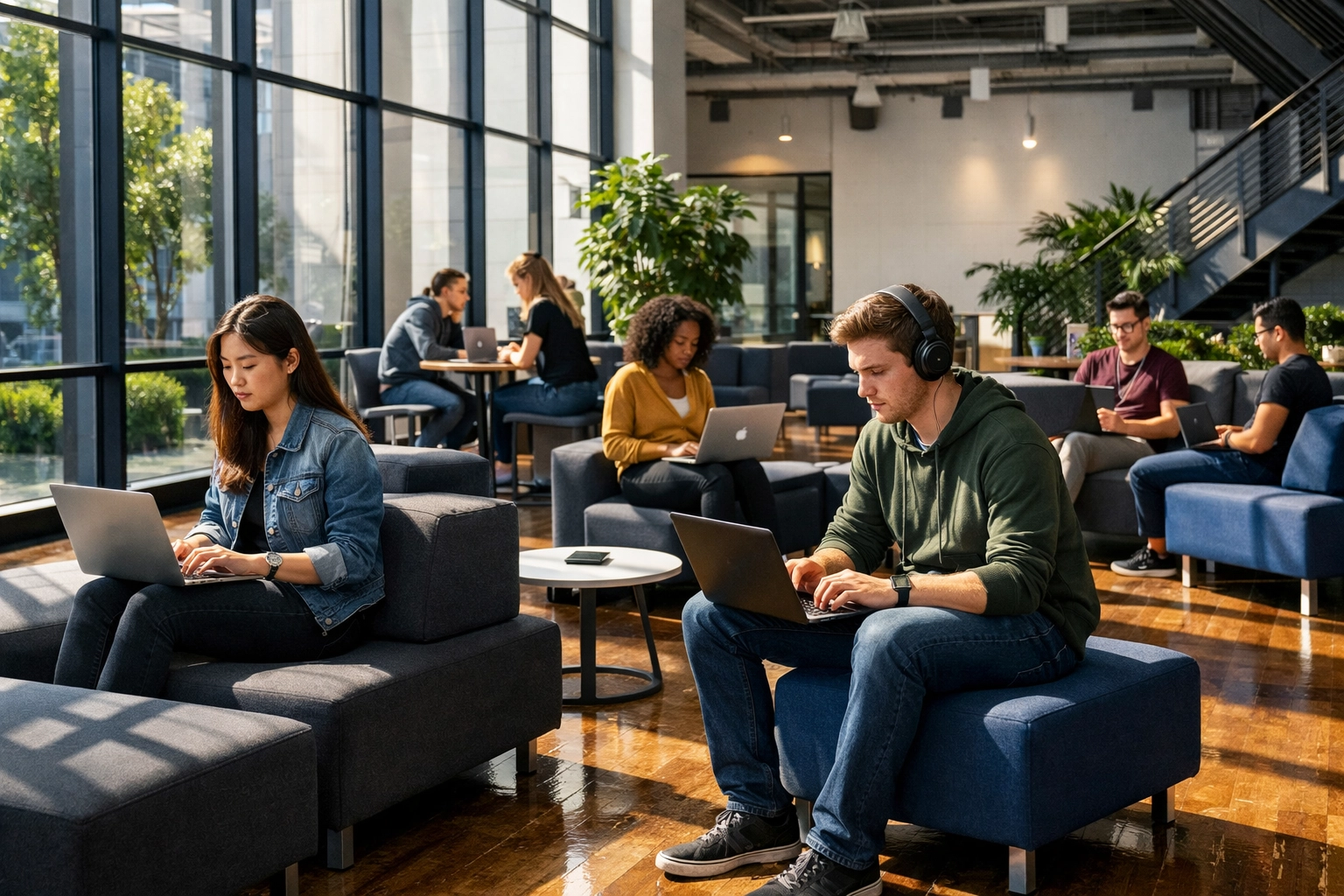
Students don't want to sit in a cubicle anymore. they want to sit in a space that feels like a startup office, a gaming lounge, or a high-end studio. They want the "vibe."
Enter the Pod: Modularity over Monotony
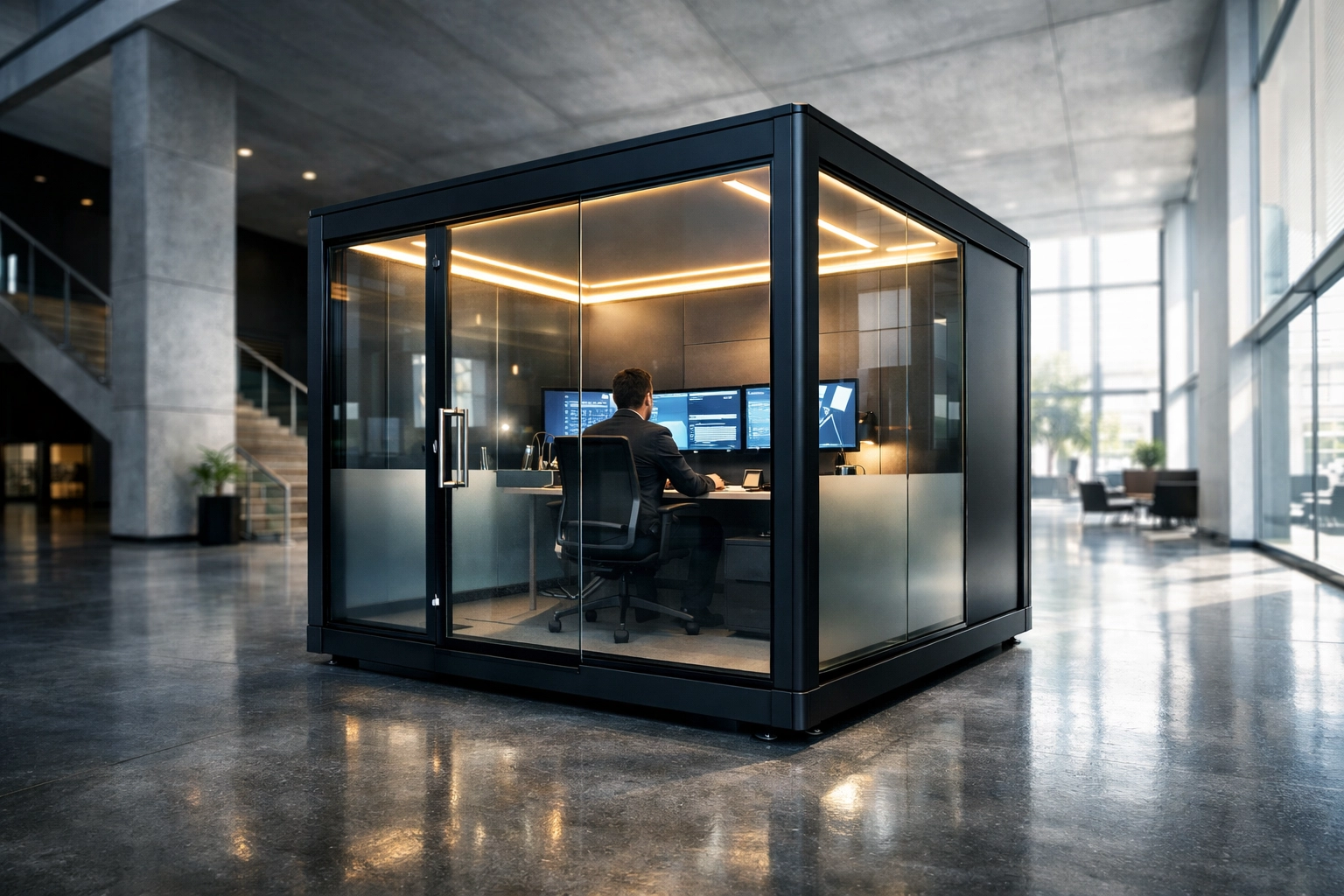
So, what exactly is a "Pod"? Think of it as a modular, high-tech hub that can be dropped into a student union, a library, or even a converted hallway. Unlike the old labs, pods aren't just rows of computers; they are self-contained ecosystems designed for specific functions.
A Pod might be a soundproofed glass cube for three people to collaborate on a coding project. It might be a specialized workstation with a $5,000 GPU specifically for 8K video rendering. Or, it might be a mobile unit that can be moved from the engineering building to the art department depending on where the demand is that week.
These Pods represent a shift from "general access" to "specialized experience." And this shift is opening up incredible career pathways for students who understand that the future of tech is as much about the physical environment as it is about the code.
Career Pathway: The Logistics of the Future
When we think of "Logistics," we often think of trucking or warehouse management. But in the world of modern tech hubs, logistics is the secret sauce.
Designing, deploying, and maintaining a network of modular pods across a massive university campus: or a corporate headquarters: is a massive logistical challenge. Careers in this field now require a blend of supply chain knowledge and IT infrastructure expertise. Someone has to figure out the power requirements, the cooling, the data security of mobile units, and the lifecycle management of the hardware inside.
For students entering the workforce in 2026, specialized distribution and logistics roles are no longer just about moving boxes. They’re about moving the future of work.
Cybersecurity: High-Stakes Training in Controlled Environments
Traditional computer labs were a nightmare for security. Hundreds of students logging in and out, plugging in random USB drives, and clicking on questionable links. Pods, however, offer a "sandboxed" physical environment that is perfect for the burgeoning field of cybersecurity.
Modern college tech hubs are using Pods as "Cyber-Ranges." These are isolated environments where students can simulate massive network attacks and defenses without risking the rest of the university’s grid.
As cybersecurity becomes the most critical pillar of government and private infrastructure, the demand for "Pod-trained" professionals is skyrocketing. These aren't just "IT guys": they are digital first responders who know how to work in high-pressure, specialized environments.
Content Creation: The New Gold Standard
Perhaps the biggest driver of the Pod movement is the explosion of the creator economy. In 2026, every student is a brand, and every project is a piece of media.
Traditional labs weren't built for creators. You can’t record a high-quality podcast in a room with 50 other people typing. You can’t live-stream a product demo in a fluorescent-lit basement.
Pods solve this. Many new college hubs are installing "Creation Pods" equipped with:
- Professional-grade microphones and mixers.
- Acoustic treatment.
- High-end cameras and lighting.
- Streaming-optimized workstations.
This is training a new generation of professionals in content creation, digital marketing, and multimedia production. These students aren't just learning how to use a camera; they are learning how to manage a studio environment, which is a key skill set for the future of digital entertainment.

Why Organizations Are Betting on Pods
It’s not just colleges. Major corporations are ditching the "cube farm" for pod-based layouts. The logic is simple: pods reduce the real estate footprint while increasing employee satisfaction.
If you have a 10,000-square-foot office, you don’t need 100 desks. You need 20 high-performance pods and a lot of flexible, open space for collaboration. This reduces overhead and allows the company to invest more in the tech itself rather than the rent.
As Dan Kost, CEO of USA Entertainment Ventures LLC, often emphasizes, staying ahead of the curve means embracing the tools that allow for agility. Traditional labs are static; Pods are agile. In the business world, agility wins every time.
The Human Element: It's Still About People
While we talk a lot about the hardware and the modular walls, the real "inspiration" for these tech hubs is the human element. The old computer labs were lonely places. You sat with your headphones on, staring at a screen, ignored by everyone else in the room.
Pods are designed for interaction. Even the single-user pods are usually placed in a way that encourages a "community" feel. They are often surrounded by coffee bars, lounge seating, and "collision spaces" where an engineering student might run into a media major.
This cross-pollination is where the real magic happens. It’s where the next big startup is born. It’s where the research of today becomes the industry of tomorrow.
Final Thoughts: Building the Future, One Pod at a Time
So, are traditional computer labs dead? In their old, dusty, beige form: absolutely. And we should be happy about it.
The transition to Pods and specialized tech hubs isn't just a change in furniture; it’s a change in philosophy. It’s a recognition that technology should be flexible, specialized, and, most importantly, designed around how people actually work and create.
Whether you are a college administrator looking to revamp your campus, or a student looking for a career in human resources or logistics, the Pod revolution is something you can’t ignore. The infrastructure of 2026 is modular, mobile, and massive.
If you’re looking to navigate these changes in your own organization, USA Entertainment Ventures LLC is here to help bridge the gap between traditional setups and the tech-hub future. Because at the end of the day, it's not just about the computer: it's about the space where inspiration strikes.
To learn more about our projects and how we’re shaping various industries, check out our sitemap or explore our portfolio categories. The future is being built right now( one pod at a time.)





