Leading organizations invest millions in workforce analytics systems, yet most fail to extract meaningful insights that drive strategic decisions. The difference between organizations that transform data into competitive advantage and those that accumulate unused reports often comes down to seven critical mistakes.
Recent analysis of Fortune 100 workforce analytics practices reveals a consistent pattern: successful organizations approach human capital data fundamentally differently than their peers. They avoid common pitfalls that trap smaller organizations and educational institutions in reactive decision-making cycles.
Mistake 1: Ignoring Future Growth in Current Planning
Most organizations build workforce analytics models based on current headcount and immediate needs. This approach creates significant blind spots when organizational growth accelerates or market conditions shift unexpectedly.
Fortune 100 companies instead implement scalable analytics frameworks from the outset. They recognize that policies effective for 50 employees become counterproductive at 500 or 5,000. Leading organizations design their workforce analytics dashboards with growth trajectories built into every metric, ensuring that today's tracking systems remain relevant as the organization expands.
Educational institutions preparing for "Future Ready" status face similar challenges. Schools implementing Name, Image, and Likeness (NIL) programs cannot rely on static headcount models. Student-athlete analytics, coaching staff needs, and compliance requirements scale differently than traditional academic programs. Organizations that fail to account for this growth create data systems that require complete overhauls rather than gradual evolution.

Mistake 2: Skipping Comprehensive Skills Gap Analysis
The assumption that current workforce capabilities align with future organizational needs represents one of the most expensive blind spots in workforce analytics. Organizations routinely track attendance, productivity, and tenure while overlooking the critical question: Do we have the right skills for tomorrow's challenges?
Fortune 100 companies conduct regular skills gap analyses that map current competencies against strategic objectives. These assessments extend beyond technical skills to include media literacy, data interpretation, and cross-functional collaboration capabilities. The gap analysis becomes a living document that informs recruiting priorities, training investments, and succession planning.
For educational institutions, this mistake manifests in overlooked opportunities around media literacy outcomes. Schools implementing comprehensive analytics programs discover significant gaps in student abilities to interpret data, evaluate digital information sources, and communicate findings effectively. These institutions track not just whether students complete assignments, but whether they develop competencies that employers consistently demand.
Mistake 3: Prioritizing Short-Term Hiring Over Strategic Alignment
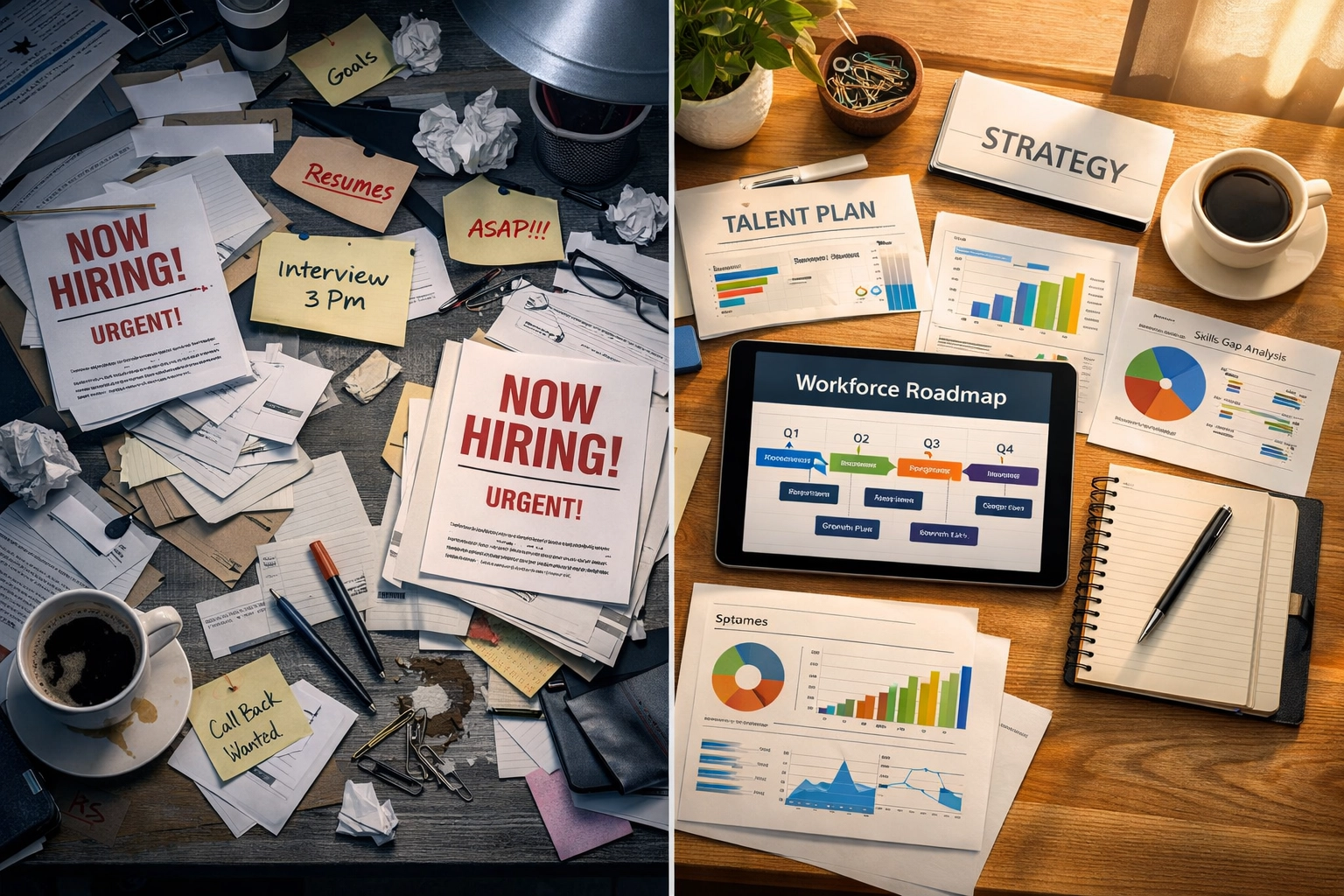
Reactive hiring: filling positions as they open without considering long-term organizational direction: creates workforce analytics data that describes what happened rather than predicting what should happen next. This approach treats people decisions as isolated events rather than components of a coherent talent strategy.
Leading organizations flip this model. They use workforce analytics to identify skill requirements two to three years ahead, then build hiring and development programs that position them to meet future needs. Their dashboards track not just current vacancies but projected capability requirements based on strategic plans.
Educational institutions preparing students for rapidly evolving career landscapes face particularly acute versions of this challenge. Schools that track only current enrollment and graduation rates miss opportunities to prepare students for emerging industries. Future Ready schools instead use analytics to identify trending skill requirements in local and regional economies, then adjust curriculum and support services accordingly.

Mistake 4: Limiting Metrics to Headcount Alone
The most common workforce analytics mistake involves tracking too few variables. Organizations that monitor only headcount and basic turnover rates develop an incomplete understanding of workforce dynamics and miss early warning signs of systemic issues.
Fortune 100 companies expand their analytics frameworks to include:
- Voluntary versus involuntary turnover ratios segmented by department and role
- Salary scale distribution relative to market rates
- Risk of loss distribution for high-performers
- Span of control metrics for managerial effectiveness
- Time-to-productivity for new hires
- Internal mobility patterns
These expanded metrics create a multidimensional view of workforce health. When combined with predictive analytics, they enable proactive interventions before small problems become major disruptions.
Educational institutions benefit from similar metric expansion. Schools tracking only enrollment and attendance miss crucial insights about student engagement, learning outcomes, and career readiness. Comprehensive analytics programs incorporate media literacy assessment results, NIL program participation and outcomes, post-graduation employment rates, and employer satisfaction surveys. This expanded view transforms schools from credential factories into genuine preparation engines for modern careers.
Mistake 5: Failing to Forecast Financial Implications
Workforce decisions carry significant financial consequences that extend far beyond base salaries. Organizations that implement workforce changes without modeling their financial impact consistently underestimate true costs and overestimate return on investment.
Fortune 100 companies build financial modeling directly into their workforce analytics platforms. Every hiring decision, organizational restructuring, or skills development program includes projected costs for:
- Compensation and benefits over multiple years
- Recruiting and onboarding expenses
- Training and development investments
- Productivity ramp-up periods
- Technology and infrastructure requirements
This financial integration enables leadership teams to evaluate workforce decisions with the same rigor applied to capital expenditures or major contracts.
For educational institutions, financial forecasting becomes particularly critical when implementing new programs like NIL education. These programs require investment in specialized staff, legal compliance systems, and student support services. Schools that model these costs comprehensively make informed decisions about program scope, phasing, and expected outcomes. Those that skip financial forecasting often launch programs they cannot sustain or abandon initiatives prematurely before they generate intended results.
Mistake 6: Proceeding Without Stakeholder Buy-In
Analytics initiatives fail most often not because of technical limitations but because of organizational resistance. Workforce analytics programs implemented without broad stakeholder support generate reports that sit unused in shared drives while decision-makers rely on intuition and anecdotal evidence.
Leading organizations invest substantial time securing buy-in before launching analytics initiatives. They involve department heads, frontline managers, and employee representatives in defining metrics, interpreting results, and applying insights. This collaborative approach ensures that analytics serve organizational needs rather than generating data for its own sake.
Educational institutions implementing Future Ready programs must navigate particularly complex stakeholder landscapes. Effective analytics initiatives require support from administrators, faculty, students, parents, and community partners. Schools that engage these stakeholders in defining success metrics and reviewing outcomes create sustainable programs. Those that impose analytics systems from the top down face resistance that undermines data quality and utilization.
Mistake 7: Treating Analytics as Annual Events Rather Than Continuous Processes
Perhaps the most fundamental mistake involves conducting workforce analysis as a yearly exercise tied to budget cycles rather than maintaining it as a continuous strategic capability. Organizations that generate annual workforce reports miss the dynamic shifts, emerging patterns, and leading indicators that enable proactive decision-making.
Fortune 100 companies implement real-time analytics dashboards that update continuously. Leadership teams review workforce metrics weekly or monthly, identifying trends early and adjusting strategies rapidly. These organizations treat workforce analytics as business intelligence systems rather than compliance documents.
This continuous approach requires integrating workforce analytics with other business systems. Financial data, operational metrics, customer satisfaction scores, and workforce analytics combine to create comprehensive views of organizational health. When workforce trends correlate with performance changes, leadership teams can respond immediately rather than waiting for annual reviews to surface problems.
Educational institutions adopting Future Ready frameworks face similar needs for continuous analytics. Student learning outcomes, media literacy assessments, and NIL program results generate insights most valuable when reviewed regularly. Schools that implement dynamic dashboards tracking these metrics in real-time can identify struggling students earlier, adjust instructional approaches more rapidly, and demonstrate program effectiveness more convincingly to stakeholders and funders.

Building Future Ready Analytics Capabilities
The gap between organizations that leverage workforce analytics effectively and those that accumulate unused data continues widening. Fortune 100 companies demonstrate that success requires not just better technology but fundamentally different approaches to data governance, stakeholder engagement, and continuous improvement.
Educational institutions preparing students for modern careers face parallel challenges. Schools implementing comprehensive analytics around traditional academic metrics, media literacy outcomes, and emerging programs like NIL education position themselves as true anchors for Future Ready communities. These institutions demonstrate that data-driven decision-making applies equally to educational outcomes as to business performance.
Organizations and institutions ready to move beyond these seven common mistakes should begin with honest assessments of current capabilities. Which mistakes currently limit your analytics effectiveness? What quick wins might demonstrate the value of expanded approaches? How can leadership teams model data-informed decision-making that encourages organization-wide adoption?
The path from basic reporting to strategic workforce analytics requires investment, patience, and sustained commitment. Organizations that avoid these seven mistakes position themselves to transform workforce data from compliance burden into competitive advantage. The question facing leaders today is not whether to invest in better analytics, but whether they can afford not to.