
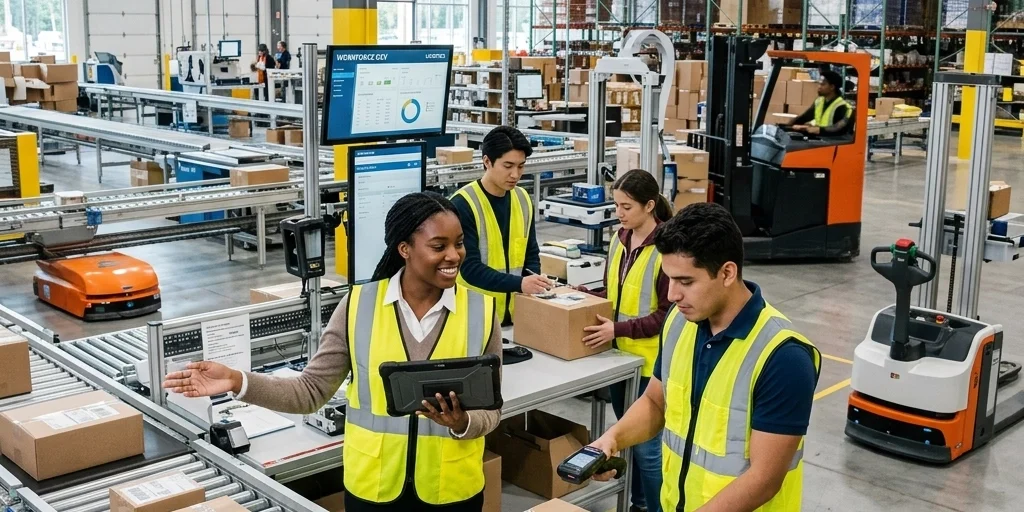
In the current economic landscape of 2026, the gap between technological advancement and human capital readiness has reached a critical inflection point. While the "Digital Transformation" of the early 2020s successfully moved data to the cloud, it failed to solve a fundamental physical problem: the distribution of skills. As Fortune 100 executives look toward the next decade of growth, it is becoming increasingly clear that the traditional education-to-employment pipeline is no longer sufficient.
The solution lies not in more virtual webinars or remote modules, but in a robust, national rollout of career-ready infrastructure. This approach treats workforce development as a physical logistics challenge, ensuring that the "last mile" of talent delivery is as efficient as the global supply chains that power our industries.
The Infrastructure Gap: Moving Beyond the Digital Divide
For years, the conversation surrounding workforce readiness focused on the "Digital Divide": the gap between those with high-speed internet and those without. Today, that challenge has evolved into a "Distribution Divide." High-quality training and high-tech career paths remain concentrated in a handful of urban tech hubs, leaving vast swaths of the American talent pool underutilized and underserved.
To bridge this gap, enterprises must view talent development through the lens of physical distribution. Workforce development is increasingly being recognized as a utility: something that must be as accessible and reliable as electricity or water.
When we look at federal funding, the statistics are telling. Approximately 72% of federal workforce-related funds flow through the Department of Transportation. This highlight's a fundamental truth: if a worker cannot physically reach a training center, or if that training center does not exist within their community infrastructure, the digital skills being taught remain inaccessible. Career-ready infrastructure solves this by embedding training facilities into the physical fabric of our communities: utilizing retail centers, transportation hubs, and local civic spaces.
The "Trojan Horse" Strategy: Esports as a Gateway to AI Literacy
One of the most effective vehicles for this physical distribution of skills is often misunderstood by the traditional corporate world: esports. While many view competitive gaming as a leisure activity, savvy executives are beginning to see it as a "Trojan Horse" for cloud and AI literacy.
By building physical esports arenas and community hubs, we are not just creating spaces for play. We are deploying high-performance computing environments into local neighborhoods. These facilities serve as the entry point for youth and transitioning workers to engage with:
- High-Performance Computing: Understanding the hardware requirements of modern AI and machine learning.
- Cloud Infrastructure: Real-time data management and low-latency networking.
- Collaborative Problem Solving: The teamwork required in professional gaming translates directly to the agile, cross-functional teams required in the Fortune 100 workplace.

When a community has a physical "hub" for esports, it inherently possesses a center for technical literacy. This infrastructure provides a low-friction environment where individuals can develop enterprise-level skills without the intimidating atmosphere of a traditional classroom. It is a vital component of a modern human resources strategy, creating a pipeline of talent that is already comfortable with the technologies of tomorrow.
The Hub-and-Spoke Distribution Model
The future of workforce development mirrors the logistics industry's hub-and-spoke model. In this framework, large regional "hubs" (often located in manufacturing or transportation centers) provide deep technical resources, while local "spokes" (community centers and libraries) provide the last-mile engagement.
This physical distribution system ensures that workforce development is not a localized event, but a national rollout. For a Fortune 100 enterprise, this means the ability to scale talent acquisition across the entire country simultaneously. By partnering with organizations that provide this infrastructure, companies can move away from the "hire and hope" model and toward a "distribute and develop" model.
Key Benefits of Physical Distribution:
- Geographic Equity: Accessing talent in rural and suburban areas that have been historically overlooked by tech recruitment.
- Reduced Friction: Training occurs where people live and work, reducing the barriers of transportation and time.
- Rapid Implementation: Modernized infrastructure projects are designed for an 18-24 month rollout, matching the speed of business rather than the multi-year cycles of traditional academia.

Scaling Human Capital at the Speed of Business
The 18-24 month implementation timeline is a critical metric for any executive. In a world where AI models and software architectures shift quarterly, waiting four years for a traditional degree program to produce a specialized worker is a strategic liability.
Career-ready infrastructure allows for the modular delivery of skills. Just as a physical distribution center can pivot from shipping consumer electronics to medical supplies, a career-ready hub can pivot its curriculum to meet the immediate needs of the regional economy. Whether the requirement is for consulting expertise or advanced manufacturing certifications, the physical space remains the constant.
This flexibility is essential for maintaining a competitive edge. It allows organizations to respond to market shifts with a precision that was previously impossible. When the infrastructure is in place, the "software" (the curriculum) can be updated instantly, but the "hardware" (the physical location and the community relationship) is what provides the long-term stability.
Removing Systemic Barriers to Entry
A significant portion of the talent gap is not due to a lack of aptitude, but a presence of barriers. Career-ready infrastructure addresses these head-on. When we design physical workforce centers, we must integrate the support systems that allow a workforce to thrive.
This includes:
- Integrated Childcare: Ensuring that parents are not excluded from the technical workforce.
- Transportation Access: Co-locating training centers with transit hubs.
- Earn-While-You-Learn Models: Moving training from an expense to an investment for the participant.
By removing these friction points, we diversify the talent pool and bring new perspectives into the enterprise. A more diverse workforce is not just a social good; it is a business necessity for problem-solving in a global market.

The Executive Mandate for 2026 and Beyond
As we look toward the future, the mandate for Fortune 100 leadership is clear: stop viewing workforce development as a secondary HR function and start viewing it as a primary infrastructure requirement. The physical distribution of career-ready facilities is the only way to ensure a resilient, scalable, and literate workforce.
At USA Entertainment Ventures LLC, we understand that the intersection of technology, entertainment, and physical distribution is where the future of work is being built. By leveraging highly engaging platforms like esports and utilizing a robust distribution network, we can transform how America prepares for the future.

The national rollout of this infrastructure is not just a possibility; it is already underway. For organizations willing to invest in the physical distribution of talent, the rewards include a more loyal workforce, a faster path to innovation, and a sustainable competitive advantage that cannot be replicated by digital tools alone.
Career-ready infrastructure is the foundation upon which the next era of American industry will be built. It is time to treat our human capital with the same logistical rigor we apply to our most critical physical assets.
For more information on our strategic approach to workforce development and distribution, visit our consulting services page or explore our digital initiatives.





