

If you close your eyes and think of a "computer lab," what do you see? For most of us, it’s a fluorescent-lit room filled with rows of identical beige towers, the faint hum of cooling fans, and that unmistakable scent of ozone and floor wax. It was the place where we learned to type without looking at our fingers or, if we were lucky, where we played Oregon Trail until a pixelated ox succumbed to a river crossing.
But it’s April 2026, and the professional world has moved on. The "lab" isn’t just a room anymore; it’s an ecosystem. As we look at the next decade of career growth, a new contender has entered the ring: the Pod.
If you’re looking to level up your skills in logistics, cybersecurity, or content creation, you’re likely standing at a crossroads. Should you stick with the traditional structured environment of a computer lab, or is it time to step into a Pod? Let’s break down the infrastructure of the future.
The Anatomy of the Upgrade: Labs vs. Pods
To understand which is better for your career, we first have to define what they actually are in today’s context.
A Computer Lab is the "Old Reliable" of the tech world. It’s built on the principle of standardized access. Every workstation is the same, every software license is identical, and the goal is to provide a baseline level of computing power to as many people as possible. It’s a horizontal model: broad, but often shallow.
A Pod, however, is a specialized learning environment designed around a specific career pathway. Think of it as a "lab-plus." While a lab gives you a computer, a pod gives you an environment. It combines physical infrastructure: often modular and collaborative: with cloud-integrated tools and specialized hardware. According to recent industry shifts, pods are increasingly preferred for professional development because they mirror the actual workflows of modern industries rather than just providing a place to sit and type.

Why Pods are Winning the Infrastructure War
Why are we seeing such a massive shift toward pod-based learning? It boils down to three words: specialized, scalable, and social.
In a traditional lab, you are one of many. In a pod, you are part of a cell. This isn't just about small groups; it’s about the integration of "workplace reality." Pods are designed to be agile. If the industry changes: which, let’s be honest, happens about every six minutes in the tech sector: a pod can be updated via the cloud or modular hardware shifts much faster than a legacy lab can be overhauled.
Research indicates that universities and corporate training centers implementing pod-based models have seen cost savings between 50 and 75 percent compared to maintaining traditional, static labs. These savings aren't just in the hardware; they come from the efficiency of the learning. When you learn in an environment that looks like your future office, the "onboarding" time at a new job drops significantly.

Cybersecurity: The Sandbox vs. The Fortress
If your goal is a career in cybersecurity, the choice between a lab and a pod isn't just about preference: it’s about safety and realism.
In a standard computer lab, you’re often working on a shared network. This makes high-level "red team" (offensive) training difficult because you don't want a student accidentally taking down the entire building’s Wi-Fi.
Cybersecurity Pods solve this by creating isolated network environments. Within a pod, you can safely detonate malware, practice penetration testing, and simulate massive data breaches. It’s a digital "sandbox" where the stakes are high for your brain but low for the physical hardware. You aren't just reading about firewalls; you are building them in a space designed to be broken into. This transition from "generic computing" to "tactical environment" is what turns a student into a professional.
Content Creation: Beyond the Keyboard
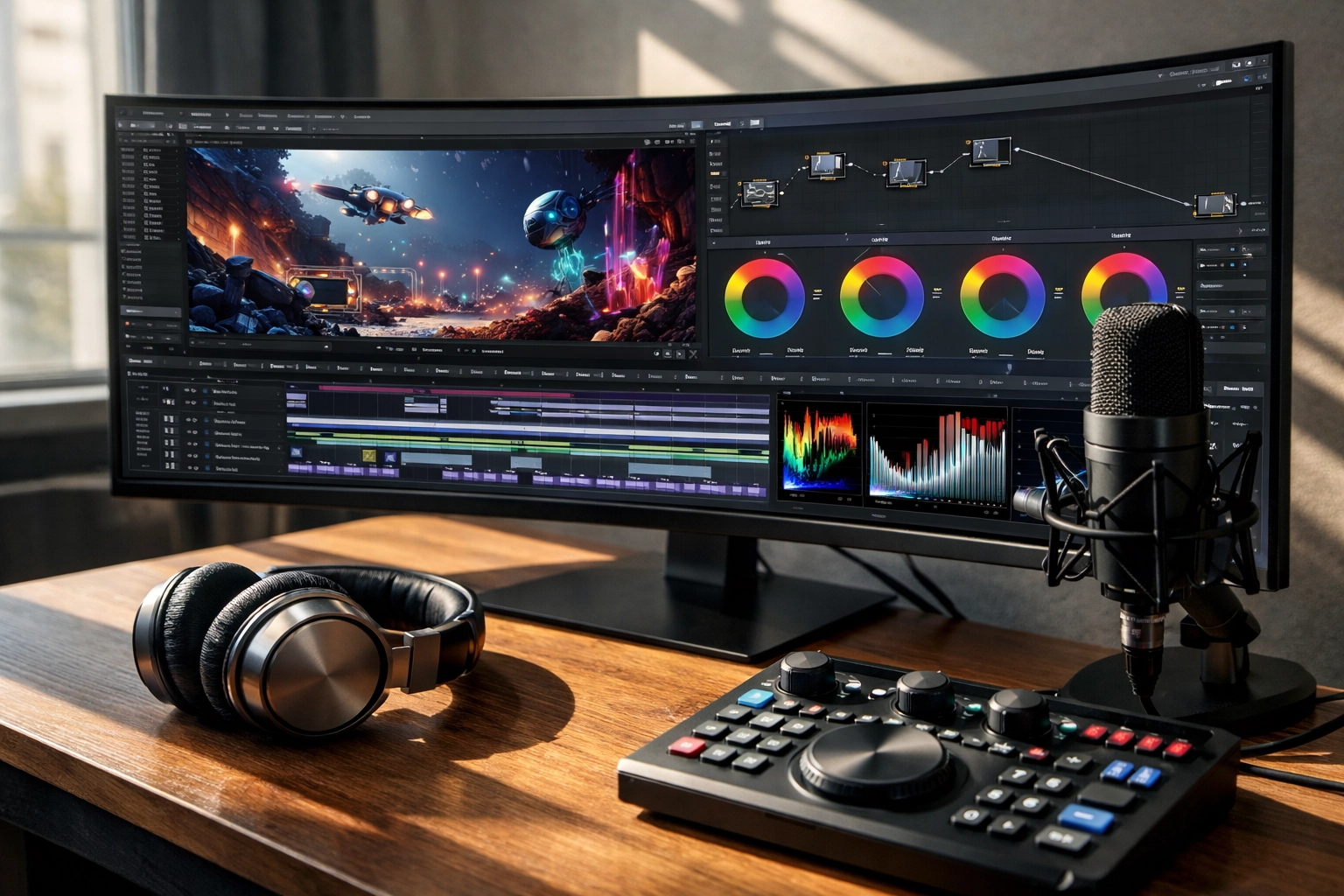
For those looking into the creative fields: video production, digital marketing, or immersive media: the traditional lab is often a bottleneck. Content creation today requires more than a mouse and a monitor. It requires haptic interfaces, high-speed rendering nodes, and collaborative "war rooms."
Content creation pods are built to accommodate diverse hardware. One pod might feature specialized editing workstations linked to a local high-speed server, while another is set up for VR development. More importantly, these spaces support collaborative workflows. In the real world, a creative director, an editor, and a sound designer don't sit in three separate rows; they huddle. Pods facilitate this "creative friction" that leads to better output.
If you’re tracking the latest in media trends, you’ve likely seen how organizations like Zoomedia News leverage fast-paced, collaborative environments to stay ahead of the curve. The pod is the physical manifestation of that speed.
Logistics and the Modern Supply Chain
Perhaps the most surprising beneficiary of the pod revolution is the logistics sector. We aren't just talking about driving trucks; we're talking about the massive, AI-driven infrastructure that moves the world’s goods.
Modern logistics training requires managing complex data streams in real-time. A pod-based environment allows trainees to interact with digital twins of warehouses or global shipping routes. Because pods are cloud-connected and highly scalable, a student in Denver can collaborate with a logistics pod in Singapore to solve a simulated supply chain crisis.
This level of global connectivity is hard to replicate in a local-only computer lab. The pod isn't just a place to learn; it’s a node in a global network.
The Verdict: Which One Should You Choose?
So, back to the big question: Which is better for your next move?
Choose a Computer Lab if:
- You are starting from zero. If you need to learn basic software literacy or foundational skills, the structured, supervised nature of a lab is fantastic.
- You don't have consistent access to high-end hardware at home and need a reliable "home base" for general study.
- The discipline you are studying is strictly theoretical and doesn't require specialized hardware or collaborative workflows.
Choose a Pod if:
- You are aiming for a high-demand, specialized career like cybersecurity, logistics, or content creation.
- You value "demonstrable competency." Pods allow you to build a portfolio of work using the exact tools used in the industry.
- You want to develop "soft skills" (communication, teamwork) alongside your technical training.

The Hybrid Future
As a business consulting entity, we at USA Entertainment Ventures LLC often see that the best solution isn't "either/or" but "both/and." The most forward-thinking institutions are moving toward a hybrid model. They maintain small, efficient computer labs for foundational work while investing heavily in pod-based virtual and physical environments for advanced, specialized instruction.
This approach provides the best of both worlds: the consistency of a lab with the flexibility and scalability of a pod. It ensures that learners aren't just "computer literate," but "career ready."
Final Thoughts
The transition from labs to pods is more than just a change in furniture; it’s a change in philosophy. It’s a move away from the idea that everyone needs to learn the same thing at the same time, toward a world where learning is tailored, immersive, and directly linked to professional outcomes.
Whether you’re looking to secure the next great digital frontier in cybersecurity or manage the global flow of goods in logistics, your environment matters. Don’t just look for a seat at a desk. Look for a space that challenges you to think like the professional you're becoming.
If you're interested in how these technological shifts are affecting the broader landscape of entertainment and business, feel free to explore our insights on Zoomedia or check out our latest updates on MobileHwyAds. The future is modular, it’s connected, and it’s waiting for you to step into the pod.





