
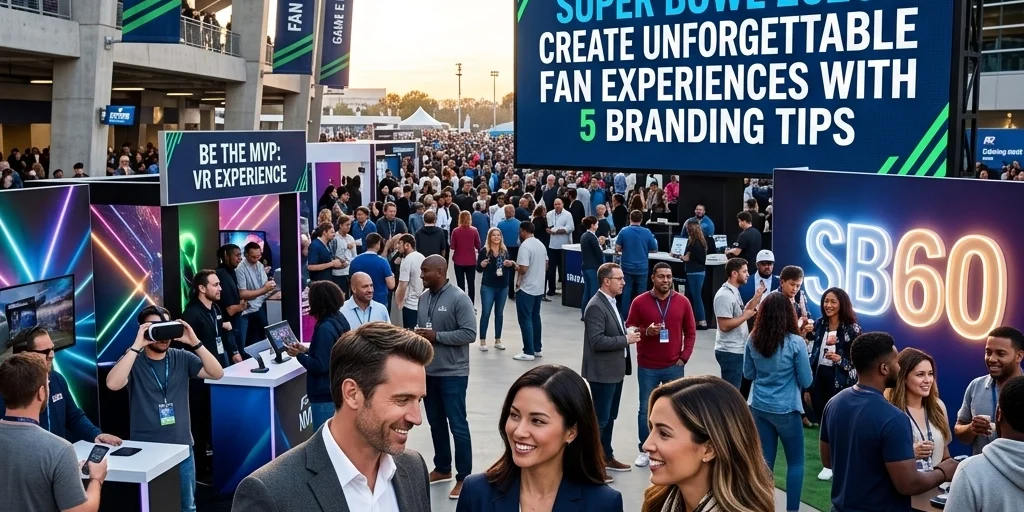
The Super Bowl isn't just a game; it is a cultural phenomenon that stops the clock for millions of people across the globe. As we navigate the landscape of 2026, the stakes for brands have never been higher. With the evolution of consumer technology and the increasing demand for authenticity, simply buying a commercial slot is no longer enough to win the hearts and minds of fans. To truly stand out, businesses must pivot toward creating tangible fan experiences that bridge the gap between the screen and the stadium.
At USA Entertainment Ventures LLC, we believe that business consulting in the entertainment sector requires a deep understanding of how fans interact with their favorite brands in the real world. The 2026 season has shown us that the most successful campaigns are those that move beyond passive viewing and into active participation.
In this guide, we will explore five essential branding tips to help your business create unforgettable fan experiences that resonate long after the final whistle.
1. Build Momentum Across Three Strategic Phases
One of the most common mistakes brands make is treating the Super Bowl as a one-day event. In reality, the "Big Game" is a month-long narrative. Data from recent marketing cycles suggests that brands that engage audiences early see significantly higher conversion rates during the game-day window.
To maximize impact, you should structure your campaign into three distinct phases:
Phase 1: The Audience Builder (Early January)
This is the "teaser" phase. Your goal is to create curiosity and build a retargeting pool. Use digital platforms to drop hints about your upcoming activation. By using short-form video and social media teasers, you can identify which segments of your audience are most engaged. This allows you to spend your budget more efficiently as the game approaches.
Phase 2: The Product Proof (Late January)
Two weeks before the game, transition from curiosity to credibility. This is where you demonstrate why your brand belongs in the Super Bowl conversation. Share behind-the-scenes content of your event preparations or highlight the "why" behind your brand’s involvement. This builds the psychological foundation for the fan experience you are about to launch.
Phase 3: The Game-Week Blitz (February)
This is when you deploy high-conversion creative. By now, your audience is primed and ready. Your physical and digital activations should be in full swing, targeting the fans who have already shown interest in Phases 1 and 2.

2. Create Tangible Fan Experiences (Experiential Activations)
The digital world is crowded. To break through the noise, you need to give fans something they can touch, feel, and share. "Tangible Fan Experiences" are the spine of modern branding. When a fan interacts with your brand in a physical space: whether it is a pop-up lounge, an interactive fan zone, or a branded hospitality suite: the connection becomes personal.
Consider the power of experiential activations. Instead of just showing a logo, create a "Social Currency" moment. This is an experience so unique or visually stunning that fans feel a social drive to share it on their own feeds. Think of branded photo opportunities with iconic sports props or interactive kiosks that use augmented reality (AR) to put the fan "inside" the game.
To see how these connections are built on the ground, watch this video on creating tangible fan experiences:
https://www.youtube.com/watch?v=l6J-0zileKE
As highlighted in the video, the goal is to transform a spectator into a brand advocate. When a fan walks away from your activation with a photo or a piece of limited-edition merchandise, they aren't just a customer; they are a walking advertisement for your brand.
3. Integrate Influencers as Cultural Bridges
Influencer marketing has evolved beyond simple product placements. In 2026, influencers serve as cultural bridges between a brand and the diverse fan base of the Super Bowl. Statistics indicate that influencer-driven content can deliver up to 70% higher efficiency in cost-per-click compared to traditional brand-led creative.
However, the key is choosing the right partners. Rather than just looking at follower counts, look for "Cultural Alignment." You want influencers who can naturally integrate your brand into the larger conversation of the game.
- The Bridge Strategy: Position the influencer as a host of your fan experience.
- Authentic Storytelling: Allow influencers to create content in their own voice. Fans trust people more than they trust logos.
- Real-Time Engagement: Have influencers go "Live" from your activation site to draw in their digital audience to your physical location.
By leveraging the established trust of influencers, your brand gains immediate credibility in a crowded marketplace.

4. Combine Physical and Digital Presence Strategically
We live in a world of "multi-screening." While a fan is watching the game or attending a physical event, they are almost certainly also on their phone. Your branding strategy must account for this by creating a seamless "Physical-to-Digital" bridge.
This is often referred to as an omnichannel strategy. You can achieve this by integrating several layers of media:
- Out-of-Home (OOH) Advertising: Use billboards or wrapped vehicles (like those managed by Mobile Hwy Ads) to dominate the visual landscape of the host city.
- Mobile Proximity Messaging: Use geofencing to send notifications to fans' phones when they are near your physical activation.
- User-Generated Content (UGC) Campaigns: Encourage fans at your physical event to post using a specific hashtag to win prizes. This turns your physical footprint into a digital trend.
This combination creates a "halo effect," making your brand feel omnipresent. When a fan sees your brand on a billboard, then on their phone, and then walks into your branded lounge, the psychological impact is massive. It establishes your brand as a major player in the industry.
5. Prioritize Personalization and Fan Data Collection
The final tip for an unforgettable 2026 experience is personalization. Fans today expect a tailored experience. The more you can make a fan feel seen, the more loyal they will become.
Implementing interactive kiosks is a great way to achieve this. Imagine a booth where fans can design their own personalized digital jersey or receive a custom-tailored recommendation for a product based on their favorite team. These interactions are fun for the fan, but they also serve a strategic purpose for the business: data collection.
By offering a high-value, personalized experience, you can encourage fans to opt-in to your marketing ecosystem. This allows you to:
- Collect valuable fan data (with permission).
- Follow up with personalized offers after the Super Bowl.
- Build a long-term relationship that extends far beyond a single weekend in February.
Furthermore, consider aligning your activations with values that matter to modern fans, such as sustainability. Sustainable branding practices: like using recycled materials for your pop-up shops: show that your company is forward-thinking and responsible. This adds an extra layer of "feel-good" branding to the fan experience.

The Path to Unforgettable Branding
As we look toward the future of entertainment and business consulting, it is clear that the brands that win are the ones that prioritize the fan. The Super Bowl provides a unique platform to test new technologies, engage with massive audiences, and define your brand’s identity for the year ahead.
By building momentum early, creating tangible experiences, leveraging influencers, bridging the physical and digital worlds, and prioritizing personalization, your brand can do more than just show up: it can lead.
At USA Entertainment Ventures LLC, we are dedicated to helping businesses navigate these complex opportunities. Whether you are looking into sports media or exploring new ways to engage audiences through 360 sports media, the core principle remains the same: the connection is everything.
The 2026 fan experience is not about the 30-second commercial; it is about the 30-minute conversation you have with your audience on the ground. It is about the memory they take home and the story they tell their friends. Start planning your strategy today to ensure your brand is the one fans are talking about long after the lights at the stadium go down.





