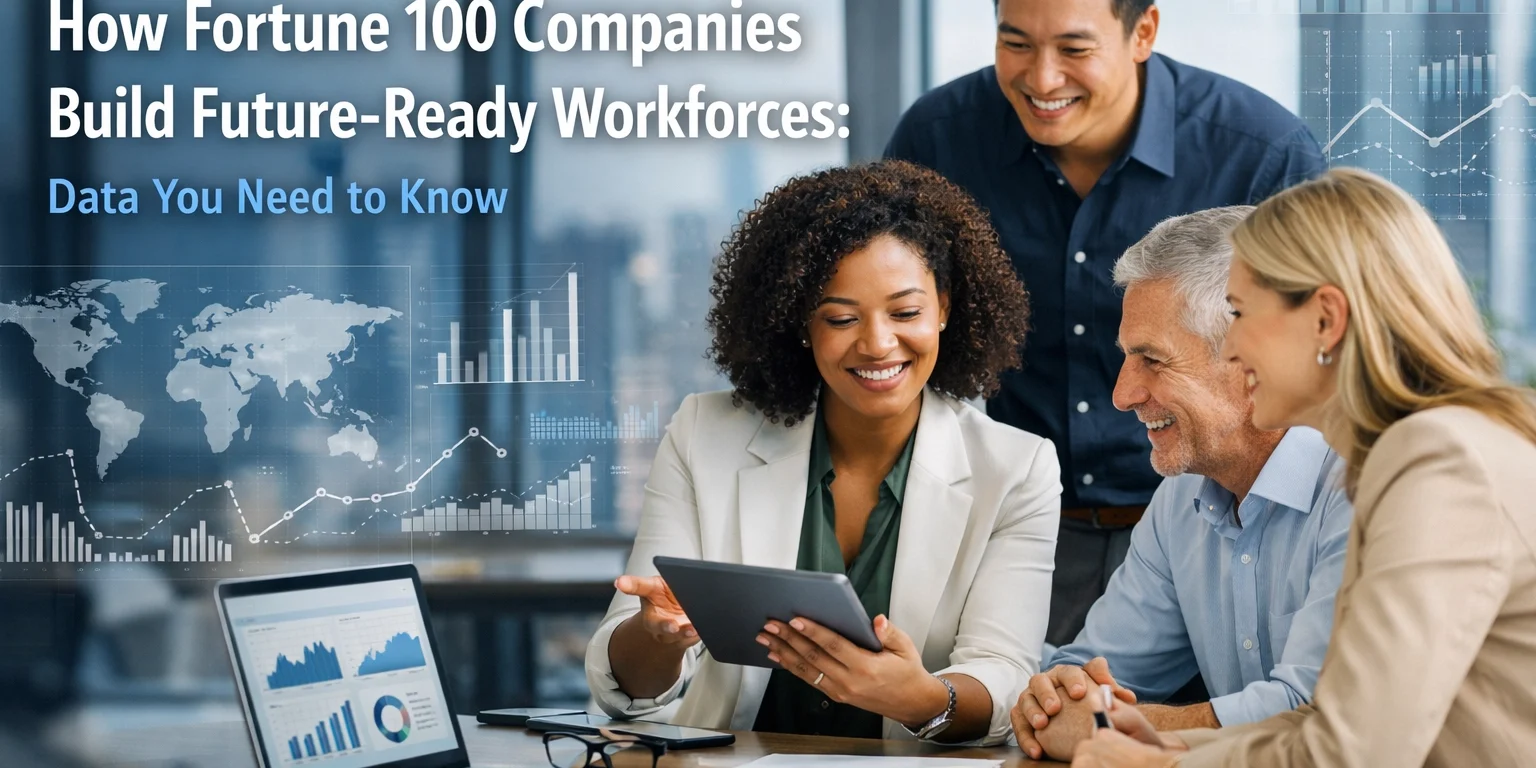
The competitive landscape for talent has fundamentally changed. Fortune 100 companies are no longer building workforces around traditional hierarchies and credential-based hiring. Instead, they are constructing adaptive, skills-centered organizations designed to meet the demands of an economy increasingly shaped by artificial intelligence, rapid technological change, and evolving workforce expectations.
The data tells a compelling story. Only 12% of large organizations currently sustain skills-based practices across their operations. Yet those who succeed in this transformation are not necessarily the ones with the largest training budgets or the most sophisticated technology platforms. They are the organizations that embed skills thinking into every decision, every role, and every conversation throughout the company.
The Skills-Based Hiring Revolution
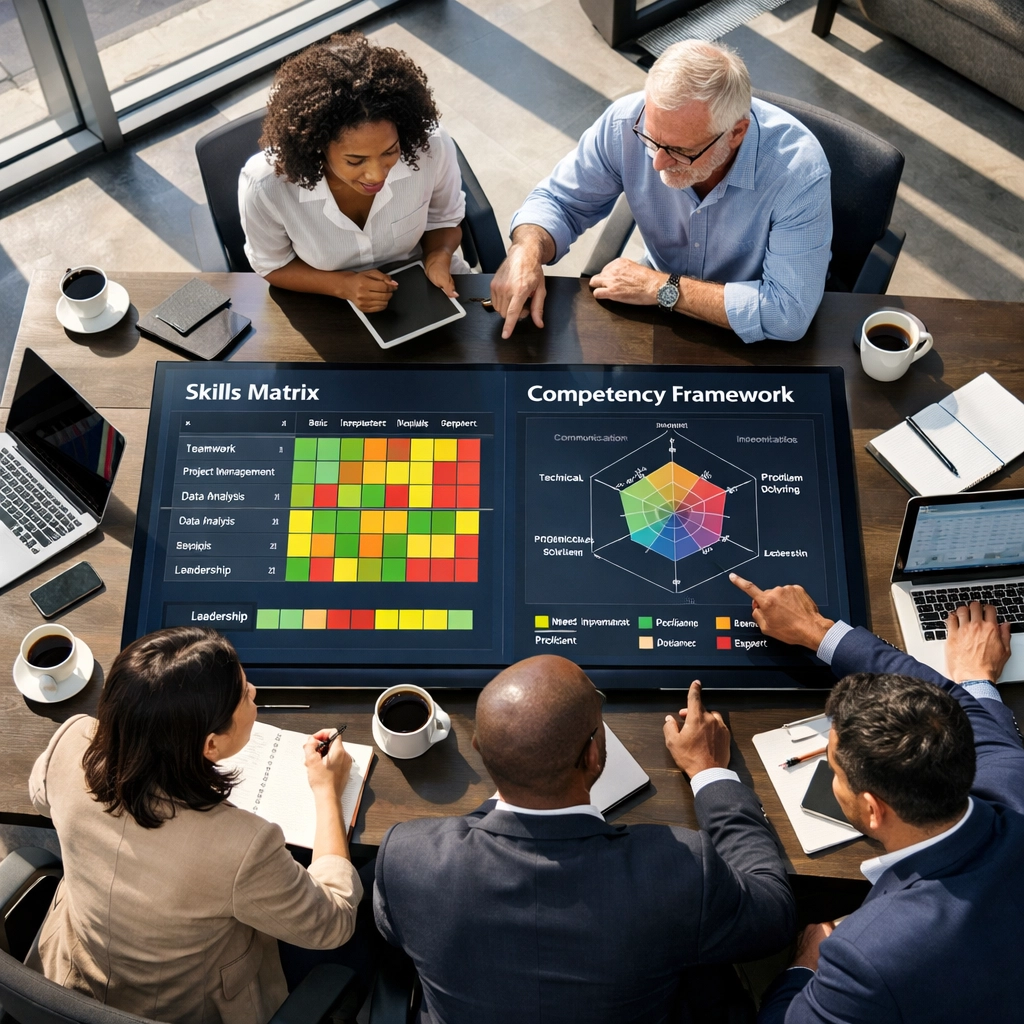
Traditional hiring practices centered on degrees and years of experience are giving way to competency-based evaluation. Leading companies now treat skills as the operating system of their entire workforce strategy, fundamentally rethinking how they identify, develop, and deploy talent.
This shift represents more than a change in recruiting tactics. It reflects a broader recognition that credentials alone no longer predict success in roles that demand continuous learning and adaptation. Companies that have embraced this approach report stronger retention rates, improved performance metrics, and greater agility in responding to market changes.
The transformation requires more than policy changes. It demands new assessment methodologies, updated job architectures, and reimagined career pathways that value demonstrated capabilities over traditional markers of qualification. Organizations are developing internal skills taxonomies, implementing competency-based performance reviews, and creating transparent frameworks that allow employees to understand exactly which skills will advance their careers.
Designing Fluid and Modular Workforces
Rather than asking how many people they need, forward-thinking companies are asking who is best suited for each task. This fundamental reframing treats work as a living system, continuously redesigned around strategy, skills, and technology.
The implications are significant. Agility replaces hierarchy as the dominant organizing principle. Teams form and reform based on project requirements rather than departmental boundaries. Work flows to those with the right capabilities, regardless of their position in the organizational chart.

This modular approach to workforce design allows companies to respond more quickly to market opportunities, reallocate resources efficiently, and tap into talent that might otherwise remain underutilized. It also creates new challenges around coordination, communication, and ensuring that organizational culture remains cohesive even as team structures shift.
Companies successfully implementing this model invest heavily in the infrastructure that makes fluid work arrangements possible. This includes robust project management systems, clear frameworks for assigning and tracking work, and communication platforms that keep distributed teams connected and aligned.
Building the Education-to-Workforce Pipeline
Perhaps the most significant competitive advantage emerging among Fortune 100 companies is their investment in educational partnerships that prepare future-ready talent before it enters the workforce. Organizations are recognizing that workforce readiness begins long before the hiring process.
Programs focused on Name, Image, and Likeness (NIL) education, media literacy, and data analytics are becoming anchors for what many now call "Future Ready" schools. These initiatives bridge the gap between traditional education and the competencies that modern employers actually need.
Media literacy outcomes, in particular, are proving essential. In an environment where employees must navigate complex information landscapes, evaluate sources, and communicate across digital platforms, these foundational skills matter as much as technical expertise. Companies tracking these metrics in their hiring pipelines report stronger performance indicators across critical thinking, communication, and collaborative problem-solving.

Data analytics capabilities are equally crucial. Organizations that partner with educational institutions to build data fluency from the ground up are developing talent pools that can interpret dashboards, draw insights from complex datasets, and make evidence-based decisions from day one. This early exposure to analytical thinking creates employees who can contribute immediately rather than requiring extensive onboarding and training.
The return on investment for these educational partnerships extends beyond individual hire quality. Companies gain access to diverse talent pools, build stronger community relationships, and shape curricula to align with their actual needs rather than hoping traditional education catches up to market demands.
The Human Skills Advantage
As artificial intelligence handles an increasing share of routine work, the premium on distinctly human capabilities has never been higher. Creative problem-solving, authentic relationship building, complex interpersonal dynamics, and strategic direction are competencies that machines cannot replicate.
Nearly 40% of employees now reject job offers lacking flexible working arrangements, creating pressure on organizations to accommodate distributed work models. Yet this flexibility must be balanced against the need for team cohesion, spontaneous collaboration, and the cultural elements that emerge from shared physical presence.
Emotional intelligence, adaptability, communication, collaboration, and critical thinking are increasingly valuable in hiring decisions. These qualities, once considered secondary to technical skills, are now recognized as essential foundations upon which technical excellence can be built. Organizations that prioritize these capabilities in their hiring and development strategies report stronger team performance, higher engagement scores, and better innovation outcomes.

The challenge lies in accurately assessing these human-centered skills. Unlike technical competencies that can be tested through standardized assessments, evaluating emotional intelligence or adaptability requires more nuanced approaches. Leading companies are developing simulation-based assessments, structured behavioral interviews, and trial project arrangements that reveal how candidates actually perform in realistic work scenarios.
Measurement and Continuous Improvement
Data-driven decision-making separates successful workforce transformations from failed initiatives. Companies at the forefront of this evolution implement comprehensive analytics frameworks that track not just hiring outcomes but the entire employee lifecycle.
These measurement systems go beyond traditional metrics like time-to-fill or cost-per-hire. They evaluate the quality of skills matching, track internal mobility patterns, measure the effectiveness of learning interventions, and correlate workforce investments with business outcomes.
Dashboards providing real-time visibility into workforce capabilities, skills gaps, and talent development progress allow leaders to make informed decisions about resource allocation, identify emerging needs before they become critical, and demonstrate the business impact of human capital investments.
Organizations that excel at workforce analytics typically integrate data from multiple sources: performance management systems, learning platforms, project tracking tools, and business results: to create holistic views of how talent strategies drive organizational success.
The Implementation Imperative
Transformation at this scale cannot happen through isolated initiatives. It requires sustained executive commitment, cross-functional collaboration, and willingness to challenge long-standing assumptions about how work should be organized and talent should be managed.
Companies successfully building future-ready workforces share several characteristics. They communicate a clear vision for change, invest in the technology and processes that enable new ways of working, develop leaders who can operate in more fluid organizational structures, and create cultures that value continuous learning and adaptation.
They also maintain realistic expectations about timelines and setbacks. Workforce transformation is measured in years, not quarters. Organizations that approach it with both ambition and patience, pairing curiosity with discipline, are the ones achieving sustainable results.
The most successful implementations begin with focused pilots that demonstrate value, then expand systematically based on what works. This approach builds organizational capability gradually while managing risk and maintaining operational continuity.
Looking Forward
The organizations building future-ready workforces today are not simply responding to immediate pressures. They are positioning themselves for sustained competitive advantage in an environment where adaptability, continuous learning, and human-centered capabilities determine success.
The data is clear. Companies that embed skills thinking throughout their operations, design flexible workforce models, invest in educational partnerships, prioritize human capabilities, and measure rigorously will outperform peers who cling to traditional approaches.
The question facing executives is not whether to undertake this transformation but how quickly they can move and how effectively they can execute. The companies that act decisively, guided by data and committed to developing human potential, will define what workforce excellence means in the decades ahead.