American workforce development is undergoing a fundamental restructure. The transition happening in 2026 extends beyond incremental policy adjustments: it represents a coordinated national effort to build career-ready infrastructure that aligns skills development with economic demand, leverages unexpected pathways to technical literacy, and establishes physical systems that ensure equitable access across geographic boundaries.
For Fortune 100 executives navigating talent acquisition challenges and workforce planning, understanding these infrastructure developments offers strategic insight into where qualified candidates will emerge and how technical competencies are being cultivated at scale.
The Foundation: Skills-Based Infrastructure at State Level
The National Governors Association and American Institutes for Research launched a pilot program in early February 2026 that marks a significant departure from traditional workforce development approaches. Rather than focusing on credentials or degrees as hiring prerequisites, the initiative helps up to five participating states identify and validate specific knowledge, skills, and abilities required for high-demand public sector positions.

This skills-first methodology creates cross-state taxonomies that standardize competency definitions, enabling employers to evaluate candidates based on demonstrated capabilities rather than educational pedigree alone. The pilot includes return-on-investment studies that quantify the economic impact of skills-based hiring, providing participating states with evidence-based implementation toolkits designed for replication across additional job categories.
The implications extend beyond public sector hiring. When state governments adopt skills-based frameworks, private sector employers gain access to standardized competency assessments that reduce friction in talent evaluation. The validated skills statements emerging from these pilots serve as a common language between education providers, training programs, and hiring organizations: eliminating translation barriers that historically slowed workforce pipeline development.
The Unexpected Gateway: Esports as Technical Literacy Infrastructure
One of the more strategically sophisticated elements of current workforce infrastructure involves competitive gaming ecosystems. Esports has emerged as what industry analysts describe as a "Trojan Horse" for cloud computing and artificial intelligence literacy: embedding technical skill development within an engagement framework that attracts participants who might not otherwise pursue technology training.
Competitive gaming infrastructure requires participants to develop fluency with cloud-based platforms, understand network architecture fundamentals, navigate API integrations, and troubleshoot distributed computing environments. Players configure streaming setups that mirror enterprise cloud deployments, manage data pipelines for performance analytics, and collaborate through digital tools that replicate modern workplace environments.

This learning pathway operates with an inherent motivational structure. Participants acquire technical competencies not through mandated training curricula, but through voluntary engagement driven by competitive interest and community participation. The skills developed: cloud platform navigation, systems optimization, data analysis, collaborative problem-solving in distributed teams: translate directly to enterprise technology roles.
Forward-thinking workforce development initiatives are recognizing this alignment. By establishing esports programs within community colleges, workforce centers, and career pathways programs, administrators create entry points for technical literacy that attract demographics traditionally underrepresented in technology fields. The infrastructure being built includes physical gaming centers, network installations capable of supporting cloud-based applications, and training frameworks that explicitly connect competitive gaming skills to professional technology competencies.
For executives evaluating talent pipelines, this represents a significant expansion of the candidate pool. Technical skills traditionally cultivated through computer science programs or IT certifications are now developing organically through recreational activities, creating a broader base of cloud-literate and AI-familiar candidates entering the workforce.
Physical Distribution Systems: Workforce Development as Logistics Challenge
The most tangible aspect of career-ready infrastructure involves physical distribution systems that deliver training resources, technology access, and career services to communities regardless of geographic location. This approach treats workforce development as a logistics challenge requiring the same supply chain sophistication applied to physical goods distribution.
The model establishes hub-and-spoke networks where centralized training resources, technology equipment, and career counseling services are distributed through local access points. Community centers, libraries, and regional workforce offices function as last-mile delivery locations, ensuring that individuals in rural or underserved areas access the same quality of training materials and technological tools available in metropolitan regions.
This infrastructure addresses a persistent barrier in workforce development: the concentration of high-quality training programs in urban centers creates geographic inequity that limits talent pool diversity. By building distribution systems that deliver standardized training modules, virtual reality equipment for hands-on technical training, and remote access to career counselors, the infrastructure enables skill development independent of proximity to major employment centers.
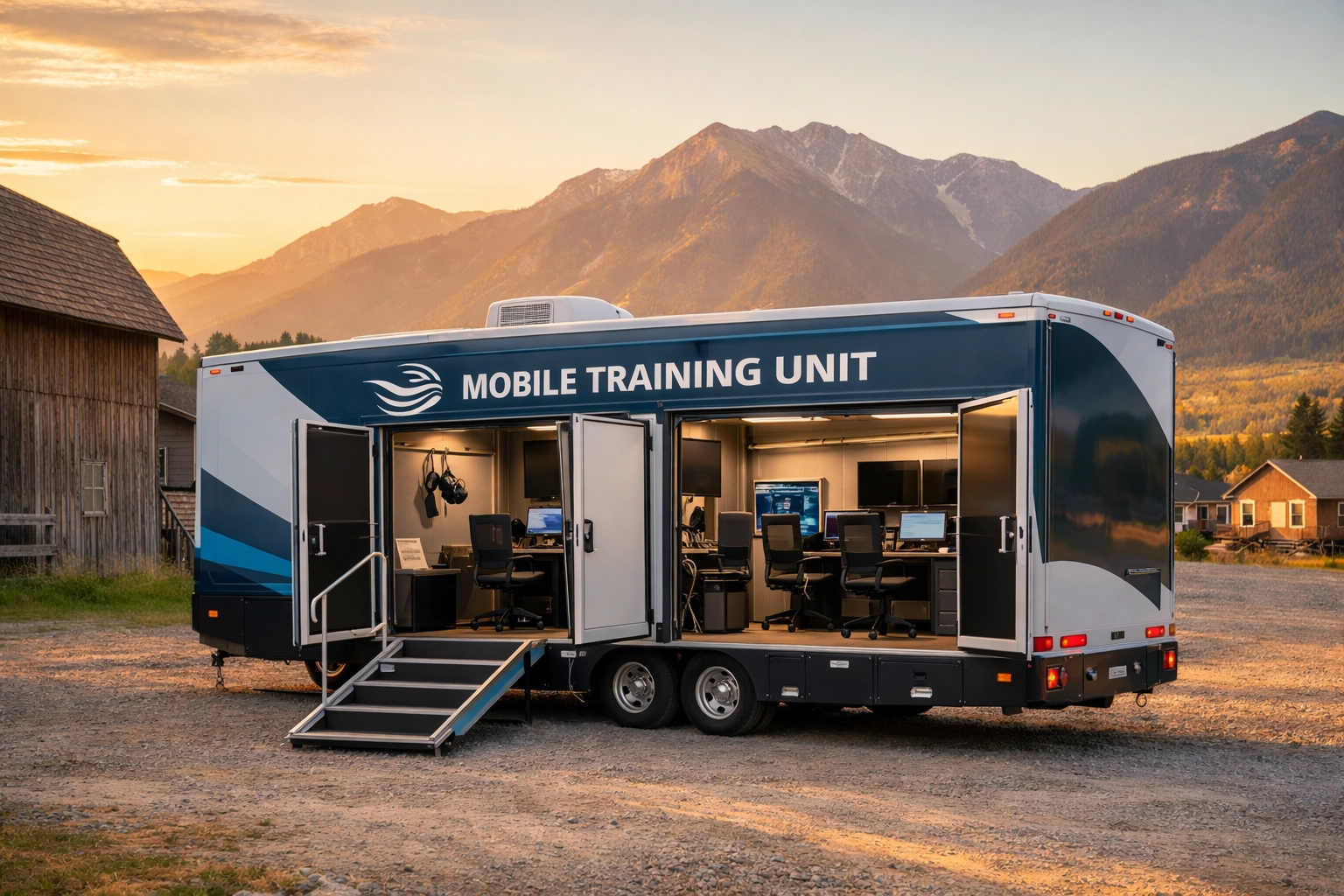
The physical systems being deployed include mobile training units equipped with cloud-connected workstations, inventory management systems that track training resource distribution, and scheduling platforms that coordinate virtual instructor availability across time zones. These operational components mirror the logistics sophistication of modern retail distribution, applied to workforce development outcomes.
State Partnerships and Modernized Data Infrastructure
The National Association of State Workforce Agencies is advocating for federal flexibility that positions state workforce agencies as primary coordinators of development initiatives. This approach aims to eliminate duplication between parallel federal programs while ensuring sustainability beyond individual grant cycles.
Key priorities include scaling registered apprenticeship programs through recurring formula funding rather than competitive grants, increasing Workforce Innovation and Opportunity Act allocations, and modernizing technology infrastructure to support hybrid service delivery models. The emphasis on state leadership reflects a recognition that workforce needs vary significantly by regional economic composition and that centralized federal solutions often fail to accommodate local industry requirements.
Federal investments are supporting state-driven improvements to labor market information systems, creating collaborative data networks that connect education outcomes with employment trajectories. These enhanced systems provide real-time visibility into skills gaps, emerging occupation categories, and credential value in specific labor markets: enabling more responsive program design and resource allocation.
States are also receiving support to adopt artificial intelligence solutions for service delivery optimization. AI-powered career counseling tools analyze individual skill profiles against labor market demand to recommend personalized training pathways. Chatbot systems handle routine inquiries, freeing human counselors to focus on complex case management. Predictive analytics identify individuals at risk of falling out of training programs, triggering early intervention.
Infrastructure Workforce Pathways: Sector-Specific Development
Federal initiatives are establishing dedicated pathways into infrastructure careers through expanded Job Corps Centers and sector-based training strategies. These programs specifically target transit, clean energy, and construction sectors where workforce shortages threaten infrastructure modernization timelines.

The approach emphasizes industry-recognized credentials and paid on-the-job training, addressing the economic barriers that prevent many individuals from pursuing multi-year degree programs. By partnering directly with employers to define required competencies and establish earn-while-you-learn models, these programs create immediate pathways to middle-class wages without prerequisite debt accumulation.
For Fortune 100 organizations operating in infrastructure-adjacent sectors, these pipelines represent a coordinated solution to talent shortages that have constrained project timelines and increased labor costs. The standardized credentials emerging from these programs provide quality assurance that reduces employer training investments for new hires.
Strategic Implications for Enterprise Workforce Planning
The infrastructure being built in 2026 fundamentally alters the landscape for corporate talent acquisition and workforce development strategies. The shift toward skills-based evaluation creates opportunities to access talent pools previously excluded by credential requirements that served as imperfect proxies for capability.
The emergence of non-traditional pathways to technical literacy: particularly through esports and gaming infrastructure: expands the demographic profile of candidates with cloud and AI competencies. Organizations that recognize and validate these skill development pathways gain competitive advantages in recruiting from underutilized talent segments.
The physical distribution systems establishing geographic equity in training access will, over time, diversify the talent pool by location. Roles previously requiring relocation to urban centers can source candidates who developed equivalent skills in rural or suburban communities, enabling distributed workforce strategies that reduce real estate costs and improve employee retention.
Most significantly, the data infrastructure being modernized at state level will provide enterprises with improved labor market intelligence. Real-time visibility into skills availability, training program outcomes, and credential values enables more strategic workforce planning and more effective partnerships with education providers.
The transformation underway represents a rare alignment of public infrastructure investment with private sector workforce needs. Fortune 100 executives who understand these systems and adapt talent strategies accordingly will be better positioned to navigate the evolving labor market and secure access to the next generation of skilled workers entering the economy.