The Super Bowl represents far more than a championship football game. It stands as one of the most significant advertising events in the annual marketing calendar, attracting over 100 million viewers and commanding ad rates exceeding $7 million for a 30-second spot. Yet the real value of Super Bowl advertising extends well beyond those expensive television placements.
What most businesses miss is this: you don't need a multimillion-dollar budget to harness the strategic framework that makes Super Bowl advertising so effective. The principles that drive successful Super Bowl campaigns can be adapted and applied to businesses of any size, in any industry, with results that extend far beyond a single day.
The Full-Funnel Marketing Approach
The most successful Super Bowl advertisers understand a fundamental truth: the game day spot represents just one component of a comprehensive marketing ecosystem. This approach, known as full-funnel marketing, treats the Super Bowl as a three-phase campaign structure rather than a single moment in time.
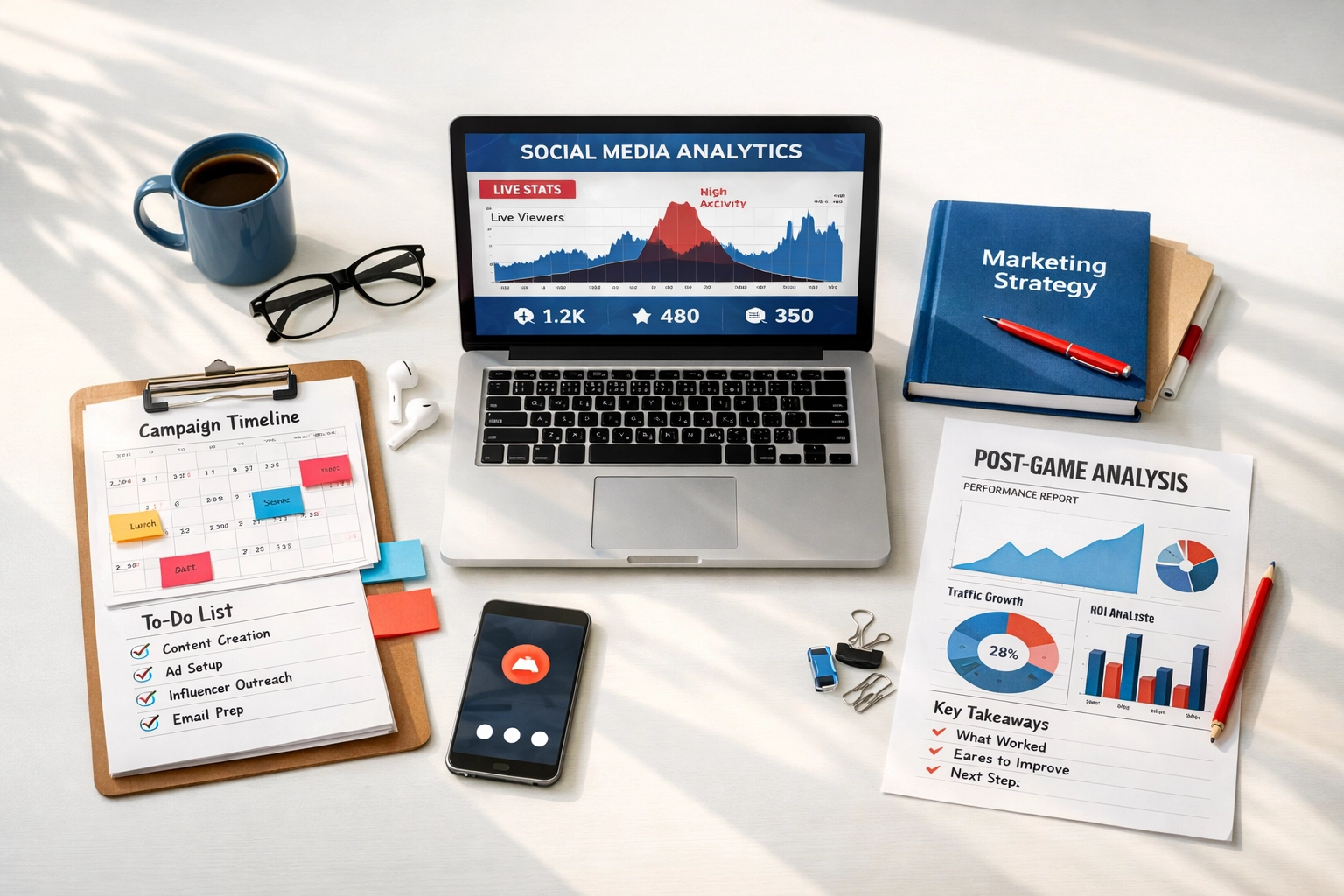
Industry research consistently demonstrates that brands employing extended campaigns with supporting digital content outperform those relying on last-minute, single-spot approaches. The reason centers on audience engagement patterns. Viewers begin discussing and anticipating Super Bowl commercials weeks before kickoff, continue engaging throughout the game, and extend conversations for days afterward. Brands that activate across this entire timeline maximize their return on investment.
The Three-Phase Ecosystem
Phase One: Pre-Game Buildup
The first phase begins two to three weeks before game day. During this period, successful brands focus on building awareness and generating anticipation. Teaser content serves as the primary vehicle: short clips, behind-the-scenes footage, or cryptic social media posts that hint at the full campaign without revealing everything.
This pre-game phase achieves several strategic objectives. It primes your audience to watch for your message during the game. It generates earned media coverage as outlets discuss upcoming campaigns. It allows you to begin collecting data on audience response, which can inform real-time adjustments during the event itself.
Phase Two: Game Day Activation
The second phase encompasses the game itself and represents peak engagement opportunity. Whether your business invests in traditional television spots, digital streaming ads, or social media content, the focus shifts to maximum visibility during this concentrated window.
Real-time engagement proves particularly valuable during this phase. Brands monitoring social conversation can respond to trending moments, participate in viral discussions, and capitalize on unexpected opportunities as they emerge. The goal centers on converting the heightened attention into tangible business outcomes: website visits, social follows, email signups, or direct purchases.
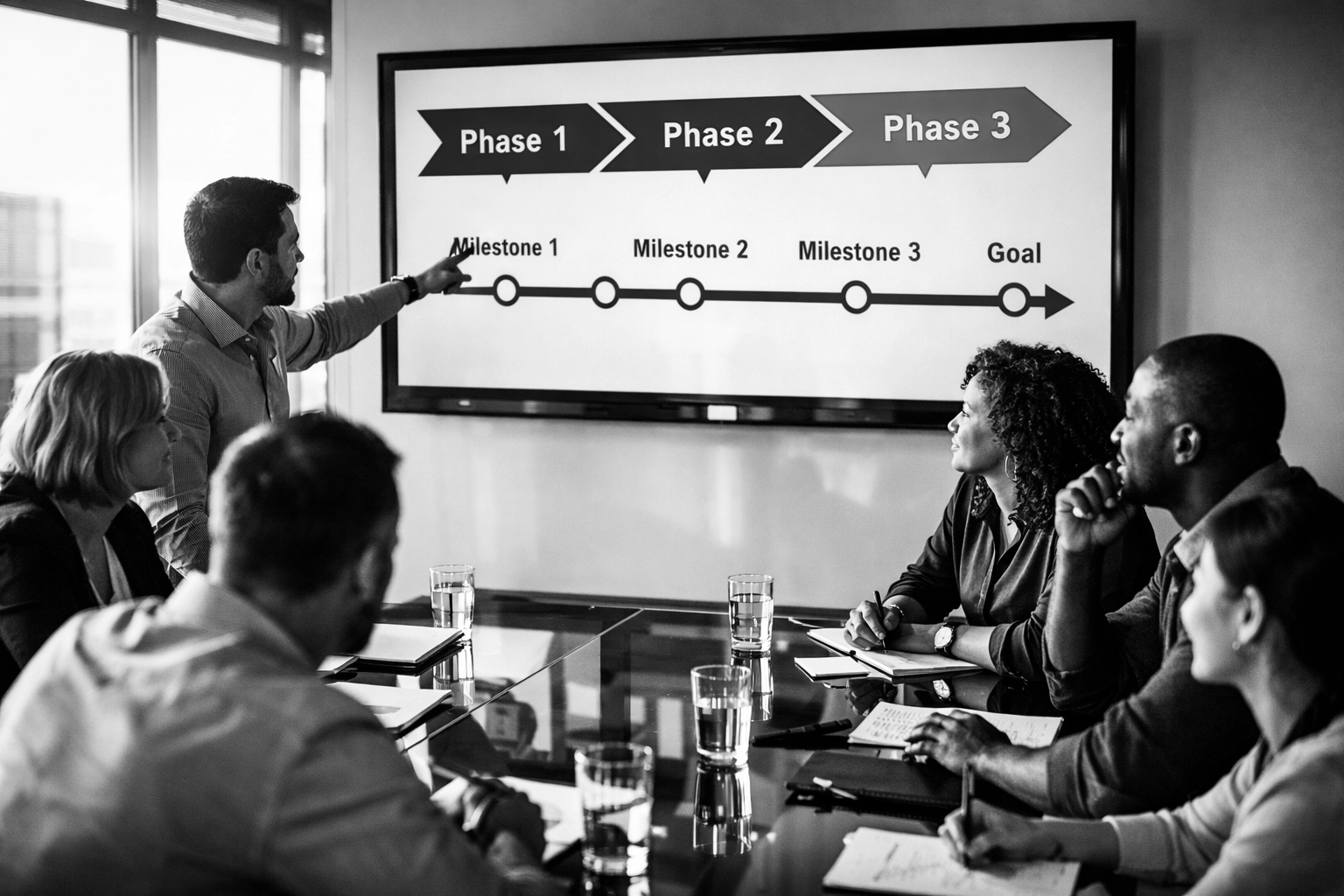
Phase Three: Post-Game Follow-Through
The third phase, often neglected but critically important, extends two to three weeks following the game. This period focuses on converting interest into action through strategic retargeting campaigns. Audiences who engaged with your content during the first two phases represent warm leads: individuals who have already demonstrated interest in your brand or message.
Retargeting through social media advertising, search campaigns, and email marketing allows you to nurture these leads toward conversion. Post-game content can include extended cuts of video ads, product demonstrations, special offers tied to the event, or additional storytelling that builds on the game day message.
Channel Selection Based on Your Budget
The strategic framework remains consistent regardless of budget, but channel selection varies significantly based on available resources.
High-Budget Approach: National Television
For organizations with substantial marketing budgets, national television spots provide unmatched reach and cultural impact. These placements require extensive advance planning: creative development typically begins six to nine months before air date, and media buying occurs even earlier. The investment delivers broad exposure but demands significant upfront commitment.
Medium-Budget Approach: Surround Moments
A more accessible strategy focuses on "surround moments": pre-game and post-game television units, local market buys in priority regions, and coordinated streaming placements. This approach captures much of the audience attention without the premium cost of in-game spots. Combined with social media amplification, surround-moment strategies can deliver comparable awareness at a fraction of the investment.
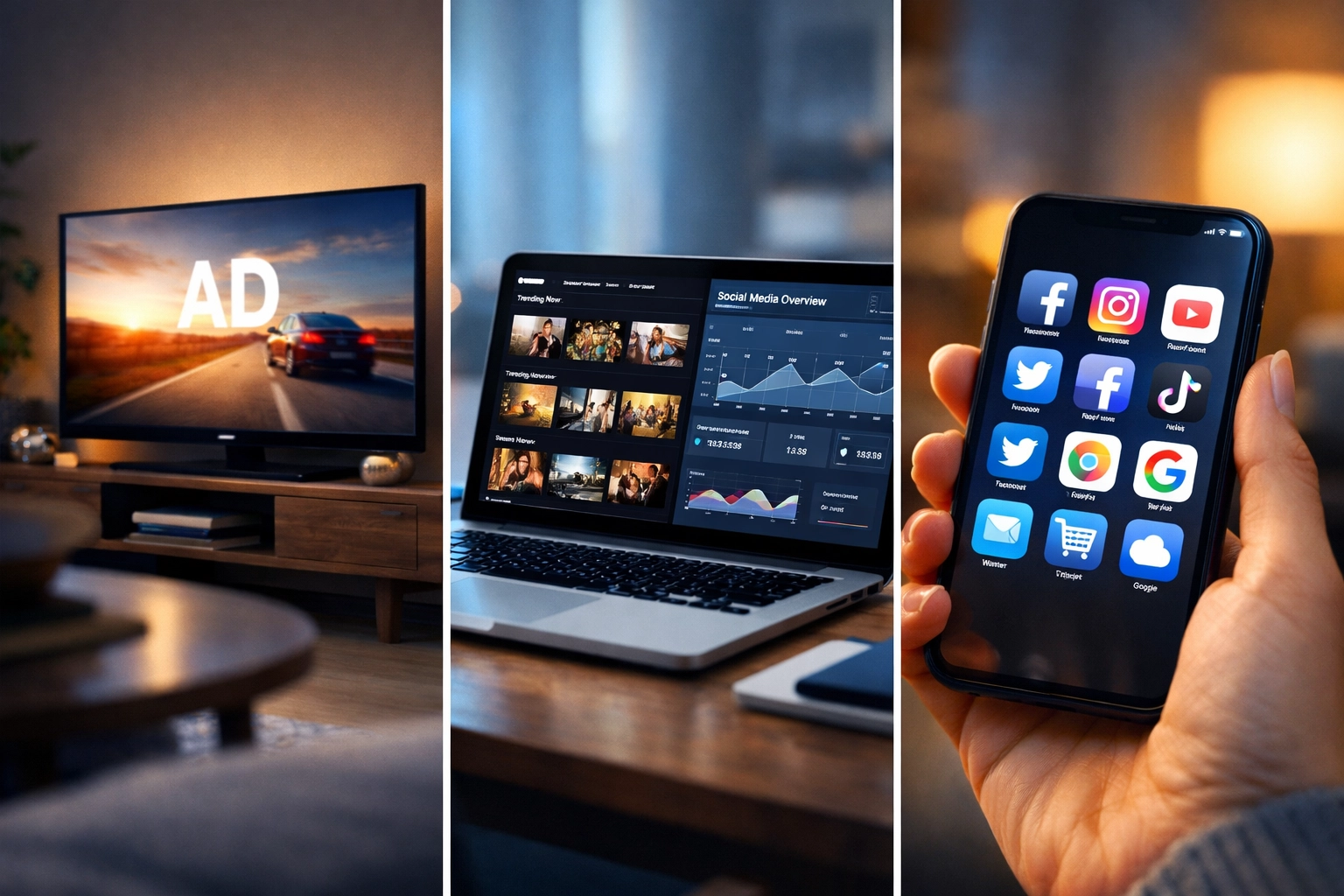
Lower-Budget Approach: Digital-First Strategy
For small to medium businesses, digital channels provide the most cost-effective entry point. Connected television advertising, YouTube pre-roll, targeted social media campaigns, and influencer partnerships allow precise audience targeting with flexible budget allocation. Performance metrics prove more accessible through these channels, enabling real-time optimization based on campaign response.
Watch the Super Bowl Playbook
Tactical Implementation: What to Do Right Now
Several specific tactics can be implemented quickly, regardless of your business size or industry:
Create Social Media Engagement Campaigns
Launch interactive content tied to the event: polls predicting game outcomes, trivia contests, or user-generated content challenges. These initiatives cost little to execute but generate significant engagement when properly promoted. The key lies in making participation simple and rewards meaningful to your specific audience.
Develop Teaser Content
Even without a television spot, your business can create anticipation through teaser campaigns on owned channels. Email subscribers, social media followers, and website visitors represent your immediate audience. Build excitement for a special announcement, product launch, or exclusive offer timed to the Super Bowl weekend.
Establish Influencer Partnerships
Micro-influencers within your industry or geographic market can amplify your message to engaged audiences at reasonable cost. Partner with creators who align with your brand values and whose followers match your target customer profile. Provide them with compelling content to share before, during, and after the game.
Deploy Retargeting Infrastructure
Install the technical foundation for post-event retargeting now. Website pixels, custom audience creation, and campaign frameworks should be operational before the event begins. This preparation ensures you can quickly activate follow-up campaigns while audience attention remains elevated.
Consider Local Sponsorships
Small businesses benefit significantly from local Super Bowl activations: sponsoring watch parties at community venues, offering game day specials, or partnering with complementary businesses for joint promotions. These grassroots approaches build community connection while capitalizing on increased consumer activity during the event.

The Critical Success Factor: Measurement-Driven Strategy
The most common mistake in event-based marketing involves inadequate measurement planning. Before launching any Super Bowl-related campaign, clearly define what success looks like for your specific business. Brand awareness campaigns require different metrics than direct response efforts, which differ from customer acquisition initiatives.
Plan backward from your measurement framework. Identify the key performance indicators that matter most: website traffic, social engagement, email signups, sales conversions, or customer acquisition cost. Wire your entire strategy to track these metrics across all three phases of the campaign. This approach enables objective assessment of what works and what doesn't, informing future marketing investments.
Industry analysis confirms that extended, multi-channel campaigns consistently outperform concentrated, single-channel efforts. The brands achieving the strongest returns invest in comprehensive tracking infrastructure that follows audience journeys from initial awareness through final conversion. They test creative variations, optimize channel mix based on performance data, and ruthlessly eliminate underperforming tactics.
Moving Forward With Your Strategy
The Super Bowl advertising playbook offers valuable lessons for any business seeking to maximize impact during high-attention events or seasonal moments. The framework transcends the specific context: product launches, industry conferences, seasonal shopping periods, or competitive events in your market can all benefit from this three-phase, full-funnel approach.
Start with modest experiments. Select one upcoming event relevant to your business and apply these principles at a scale appropriate to your resources. Build the teaser content, activate during the event, and follow through with strategic retargeting. Measure results carefully and refine your approach based on actual performance data.
The opportunity lies not in replicating Super Bowl advertising budgets but in adopting the strategic thinking that makes those campaigns effective. When you treat high-attention moments as multi-week ecosystems rather than single-day events, when you coordinate across channels rather than relying on one platform, and when you measure what matters rather than vanity metrics, you position your business to compete effectively regardless of budget constraints.
The playing field for strategic marketing continues to level as digital channels provide unprecedented targeting precision and measurement capabilities. The question facing business leaders centers not on budget size but on strategic sophistication: are you prepared to think and execute like the brands commanding those multimillion-dollar Super Bowl spots, adapted to your specific market and resources?