
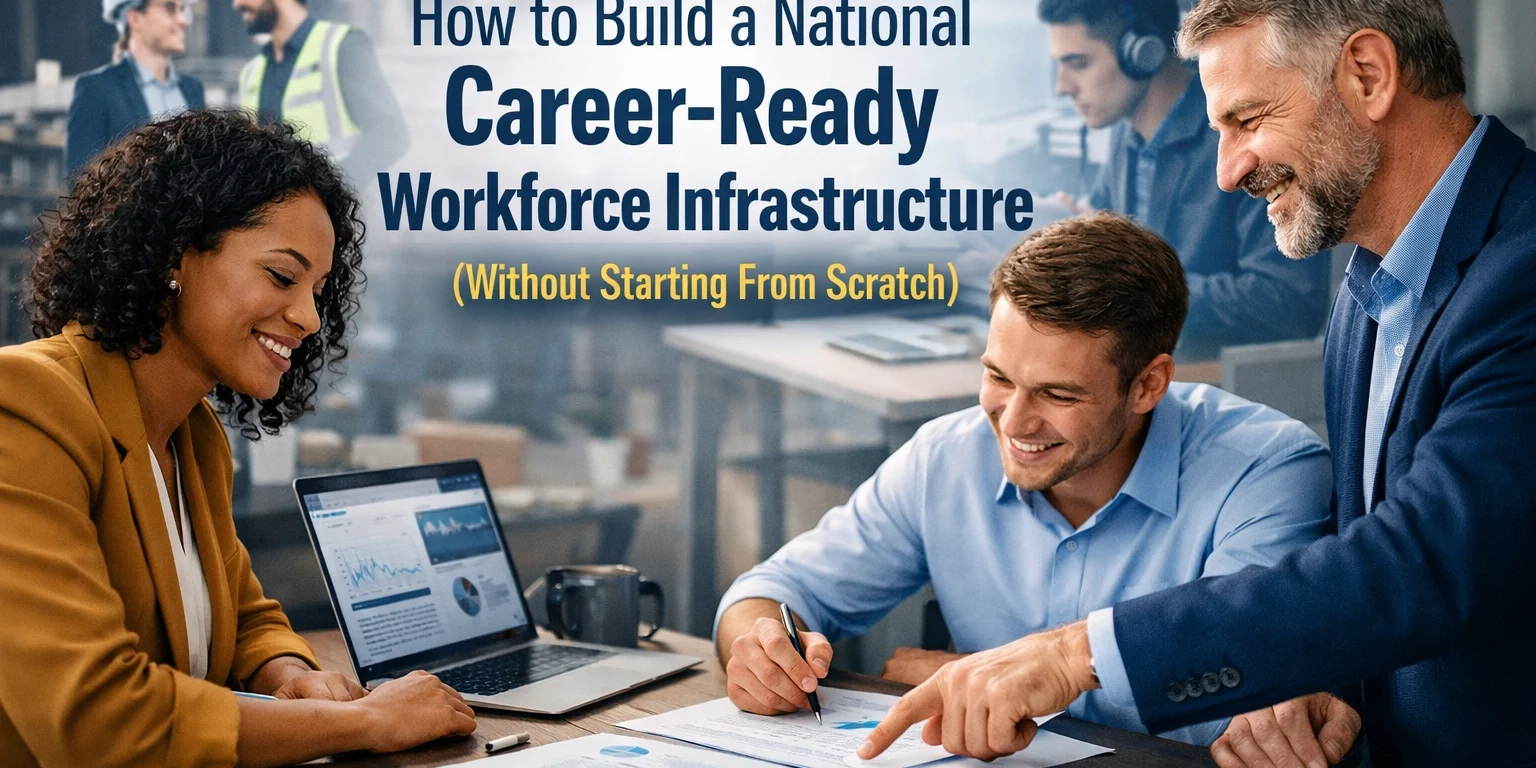
The American economy is currently facing a dual challenge: a massive infusion of federal infrastructure funding and a widening gap in the technical skills required to execute these projects. As billions of dollars flow through the Infrastructure Investment and Jobs Act (IIJA) and the American Rescue Plan, Fortune 100 executives are increasingly concerned with a single question: Where will the talent come from?
Building a national career-ready workforce infrastructure does not require reinventing the wheel. Instead, it requires the strategic alignment of existing funding, physical distribution networks, and innovative engagement models. At USA Entertainment Ventures LLC, we advocate for a system that leverages established frameworks to create a scalable, future-proof workforce.
The Foundation: Leveraging Existing Federal and State Funding
The most common misconception in workforce development is that new programs require entirely new funding sources. In reality, the resources are already on the table. The IIJA provides substantial resources, with over 70 programs allowing for workforce development activities. As of mid-2024, approximately 91 programs have been identified as qualifying for workforce funding.
Crucially, the Department of Transportation controls nearly 72 percent of IIJA funds that allow for workforce development. This presents a unique opportunity for corporations to partner with state agencies to utilize these funds for "last-mile" training. By aligning corporate social responsibility (CSR) initiatives with federal priorities, executives can offset the costs of building their own talent pipelines.

The "Trojan Horse" Strategy: Esports as a Gateway to AI and Cloud Literacy
To reach the next generation of workers, we must meet them where they already live: in digital environments. Esports has emerged as a powerful "Trojan Horse" for workforce development. While often viewed simply as competitive gaming, the underlying infrastructure of esports is a masterclass in modern technology requirements.
Managing a high-level esports ecosystem requires proficiency in:
- Cloud Computing: Real-time data processing and server management.
- AI and Machine Learning: Predictive analytics for gameplay and fan engagement.
- Cybersecurity: Protecting digital assets and networks.
- Broadcast Engineering: Managing complex digital distribution systems.
By framing technical education through the lens of esports, organizations can drive cloud and AI literacy among demographics that might otherwise be uninterested in traditional STEM paths. This isn't just about play; it is about building the foundational skills necessary for the 21st-century economy. When a student learns to optimize a network for zero-latency gaming, they are inadvertently learning the skills required to manage a smart-city power grid or a logistics hub.
The Physical Distribution System for Workforce Development
Digital literacy requires a physical anchor. A national workforce infrastructure must include a physical distribution system that brings training to local communities. We have seen the success of designated "Workforce Hubs" in cities like Columbus, Ohio; Phoenix, Arizona; and Pittsburgh, Pennsylvania. These hubs act as centers of gravity for employers, unions, and community colleges.
However, for a national rollout, we must look at underutilized physical assets. Business consulting often identifies "dead space" in corporate real estate or community infrastructure that can be converted into high-tech training centers. These centers serve as the physical nodes of a national network, providing the hardware and hands-on experience that digital-only platforms cannot offer.

Learning from Proven State Models
Successful workforce infrastructure is already being built at the state level. Fortune 100 leaders should look to these models for inspiration:
- Louisiana’s Fiber Optic Training: Bossier Parish Community College established a certification path that trains field-ready technicians in just 144 hours. This model demonstrates how targeted, short-term training can solve immediate labor shortages.
- South Carolina’s REVVED Collaborative: By bringing together multiple technical colleges and universities, the state created a unified talent pipeline for the electric vehicle sector, funded by the National Science Foundation.
- Maryland’s Recruitment Grants: The "Jobs That Build" initiative provided direct grants to help employers support recruitment and retention, proving that financial incentives for workers are just as important as the training itself.
These examples highlight a critical lesson: coordination is more valuable than innovation. By connecting infrastructure agencies with education providers, these states have bypassed the "start from scratch" mentality.
Bridging the Gap: The Role of Strategic Consulting
The complexity of navigating federal grants, state regulations, and technological shifts can be overwhelming for even the most well-resourced corporations. This is where specialized business consulting becomes essential. Building a workforce infrastructure requires a holistic view that combines real estate, technology, and human capital.
For instance, understanding the nuances of the Infrastructure Workforce Resource Mapping Tool provided by the National Governors Association can help firms identify exactly where their training investments will yield the highest ROI based on sector and geography.

Addressing Barriers to Entry Through Supportive Services
A national infrastructure is only as strong as its weakest link. For many potential workers, the barrier to entry isn't a lack of interest, but a lack of support. Data shows that the most successful infrastructure programs provide "wraparound" services, including:
- Transportation to training sites.
- Access to high-speed internet.
- Childcare support.
- Provision of necessary tools and personal protective equipment (PPE).
By integrating these services into the workforce development model, companies can ensure a higher completion rate and better long-term retention. It is a shift from viewing workers as mere labor to viewing them as critical infrastructure themselves.
Future-Proofing the National Economy
As we look toward 2030 and beyond, the demand for AI-literate and cloud-capable workers will only intensify. The national rollout of a career-ready infrastructure is not a one-time project but an ongoing commitment to adaptability.
The convergence of physical distribution systems and digital engagement platforms (like esports) offers a blueprint for a resilient workforce. By leveraging existing federal funding and state-level successes, Fortune 100 executives can lead the charge in creating a talent pipeline that is both diverse and highly skilled.
For organizations looking to begin this journey, the first step is to audit existing assets and identify potential partners within the ecosystem. Whether you are looking at career opportunities or looking to scale a national program, the infrastructure is waiting for activation.
Conclusion
Building a national career-ready workforce is an executive imperative. The tools, funding, and models exist today. By adopting a "Trojan Horse" approach to tech literacy and utilizing existing physical and financial frameworks, we can build a workforce that is not just ready for today’s jobs, but prepared for the innovations of tomorrow.
USA Entertainment Ventures LLC is committed to facilitating these connections, turning complex infrastructure challenges into streamlined business opportunities. To learn more about how we can help your organization navigate this landscape, please visit our about us page or contact our team directly.

The future of American work isn't about starting over: it's about building up. By strategically deploying resources and rethinking engagement, we can ensure that the massive investments in our nation's physical infrastructure are matched by an equally robust investment in our people.





