
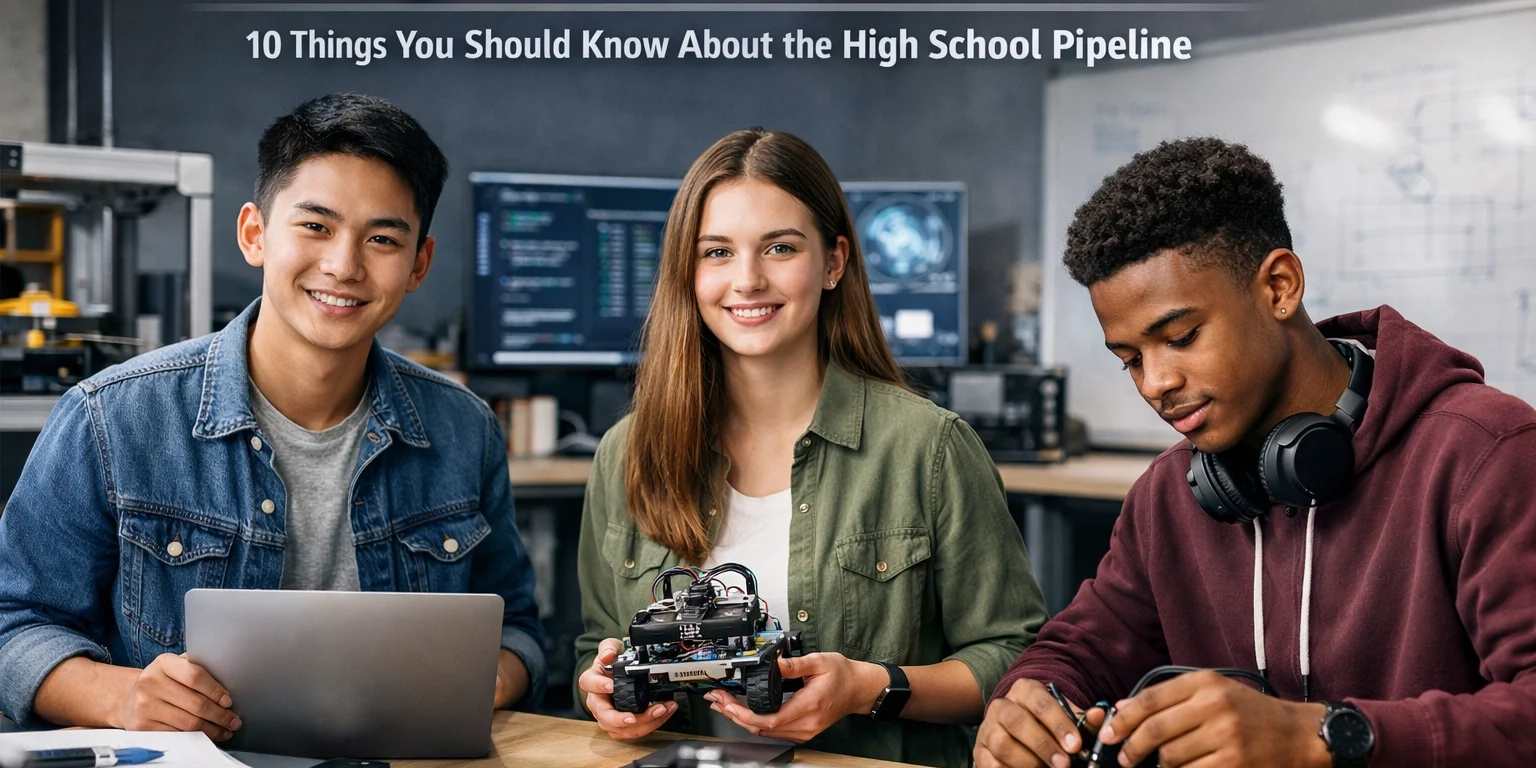
The global race for technical talent is no longer confined to the recruitment offices of top-tier universities. For companies specializing in Cloud, AI, and Data Analytics, the competition has shifted earlier in the timeline. To secure a sustainable workforce, forward-thinking organizations are looking toward the high school pipeline: a "Next-Gen Talent Funnel" that is rapidly evolving to meet the demands of a digital-first economy.
Waiting until a student has completed a four-year degree often means missing the window of peak influence and engagement. High school students today are not just consuming technology; they are building it, auditing it, and in many cases, teaching themselves how to master it. For a business to thrive in 2026 and beyond, understanding how to tap into this pipeline is no longer optional: it is a strategic necessity.
Here are 10 critical insights every business leader and hiring manager should know about the current high school technology pipeline.
1. Early Exposure Drives Mastery
Research consistently shows that early exposure to professional-grade tools is a primary driver of student engagement and long-term career success. When students are introduced to high-level technology in their mid-teens, they develop a level of comfort and intuition that is difficult to replicate later in life.
A notable example occurred in a Brooklyn high school where students, given access to Autodesk and other professional software, took it upon themselves to master the applications outside of their standard curriculum. They didn't wait for a lecture; they explored the tools because they saw their real-world utility. Businesses that engage with schools early can provide the "scaffolding" needed to help students transition from passive users to active creators.
2. AI Literacy Is the New Foundation
There is a growing divide in education, but it isn't just about who has access to AI tools. The real gap is between districts that teach students how to think with AI versus those that allow AI to think for them.
Future leaders are being trained in AI literacy, which emphasizes understanding algorithmic bias, data privacy, and the art of prompt engineering. These students are taught to treat AI as a partner rather than a shortcut. As companies integrate AI into every facet of their operations, they will need employees who understand the ethical and logical framework behind the code. This literacy starts in the high school classroom, where students learn to ask better questions rather than just seeking the "right" answer.

3. The Transformation of Career and Technical Education (CTE)
The old "vocational school" model has been replaced by sophisticated Career and Technical Education (CTE) programs. Modern CTE pathways are focused on high-growth sectors like cybersecurity, cloud architecture, and data science.
The current gold standard for the talent funnel involves pre-apprenticeships that start in high school and lead directly into registered industry apprenticeships. These programs allow students to earn industry-standard certifications while still in their teens, making them "work-ready" much sooner than traditional paths might suggest. Companies looking for specialized skills can find a wealth of talent in these programs. For more information on how we view professional development and growth, visit our About Us page.
4. Cloud-Based Platforms Are Closing the Equity Gap
One of the historical barriers to high-tech education was the cost of hardware. Schools in under-resourced communities often could not afford the high-powered computers required for rendering or complex data analysis.
However, the shift to cloud-based platforms has leveled the playing field. Virtual applications and cloud environments now allow students to run professional-grade software on simple Chromebooks. This democratization of technology means that the next great data scientist or AI researcher could come from any zip code. For businesses, this expands the talent pool significantly, allowing for a more diverse and inclusive workforce that reflects the global market.
5. Project-Based Learning as a "Workplace Simulation"
The modern high school experience is moving away from rote memorization and toward project-based learning. Students are now building 3D-printed robotics, leading AI workshops for their peers, and managing complex digital workflows.
These experiences serve as authentic workplace simulations. When a student manages a project from conception to execution, they are developing the "soft skills": communication, collaboration, and time management: that are often cited as missing in entry-level hires. By the time these students enter the workforce, they already have a portfolio of tangible results that demonstrate their capabilities far better than a standard transcript.

6. Student Agency and the "Non-Factory" Model
The "factory model" of education: where every student moves through the same curriculum at the same pace: is being dismantled. In its place is a model that prioritizes student agency. Students today have more say in what they learn and how they learn it.
When students are allowed to follow their interests into specific tech niches, their engagement skyrockets. This self-directed learning is a trait highly valued in the tech industry, where the pace of change requires constant upskilling. Businesses that support this agency through mentorship or specialized internships can help guide these interests toward high-demand sectors like Cloud and AI.
7. The Need for Physical Infrastructure Talent
While much of the focus is on software and code, the high school pipeline is also producing the workers needed to build and maintain the physical world of tech. AI and emerging technologies require a robust physical infrastructure: data centers, high-speed fiber networks, and sustainable energy sources.
There is a growing workforce pathway for students interested in the hardware and infrastructure side of technology. These roles are essential for the survival of the tech ecosystem, and students who enter these paths are finding stable, high-paying careers immediately after high school or specialized training.
8. Professional Development for the Mentors
The success of the high school pipeline depends heavily on the educators. Districts are increasingly investing in professional development programs like "WeTeach_AI" to ensure teachers stay ahead of the curve.
For companies, this presents an opportunity for partnership. By providing educators with insights into current industry trends and tools, businesses can ensure that the curriculum remains relevant. Investing in the teacher is, by extension, an investment in the hundreds of students that teacher will mentor over their career.

9. Industry Certifications Over Degrees
In many technical fields, an industry-recognized certification can be as valuable as: or more valuable than: a college degree. High school students are increasingly graduating with certifications in AWS, Microsoft Azure, and various cybersecurity frameworks.
This shift allows companies to hire for specific, verified skills. It also creates a "learn while you earn" environment where students can enter the workforce in a junior capacity and continue their higher education with the support of their employer. If you are interested in how these pathways can be integrated into a business model, explore our Services to see how we consult on talent and growth strategies.
10. The Power of Strategic Partnerships
The most successful talent funnels are those built on a foundation of collaboration between schools and local industry. Strategic governance and leadership buy-in at the school district level are necessary to create consistent, high-quality programs.
Companies cannot simply wait for the talent to arrive; they must be active participants in the ecosystem. This can include offering internships, sponsoring hackathons, or serving on advisory boards for CTE programs. Engaging with students through an Internship program is one of the most effective ways to build brand loyalty and identify high-potential candidates early.
Actionable Takeaways for Businesses
To secure your future talent in Cloud, AI, and Data Analytics, consider the following steps:
- Engage Locally: Connect with high school CTE directors in your region to understand their current curriculum.
- Offer Mentorship: Encourage your senior engineers and analysts to volunteer as guest speakers or project mentors.
- Prioritize Skills: Re-evaluate entry-level job descriptions to include industry certifications and project portfolios as alternatives to traditional degrees.
- Invest in Equity: Support initiatives that provide cloud access and hardware to under-resourced school districts.
The high school pipeline is no longer a distant prospect; it is a current reality. The students in classrooms today are the architects of the digital economy of tomorrow. By understanding and investing in this funnel now, businesses can ensure they have the leadership and technical expertise required to navigate the complexities of the future.
For further insights on business growth and talent development, you can always Contact our team to discuss how to optimize your organization's approach to the next generation of tech.





